






Manila Bulletin
 Philippines
National
AFP 'calls out' China for locking fire control radar on PH frigate, says Brawner
Philippines
National
AFP 'calls out' China for locking fire control radar on PH frigate, says Brawner
Philippines
National
AFP 'calls out' China for locking fire control radar on PH frigate, says Brawner
AFP 'calls out' China for locking fire control radar on PH frigate, says Brawner
Published Mar 24, 2026 04:05 pm


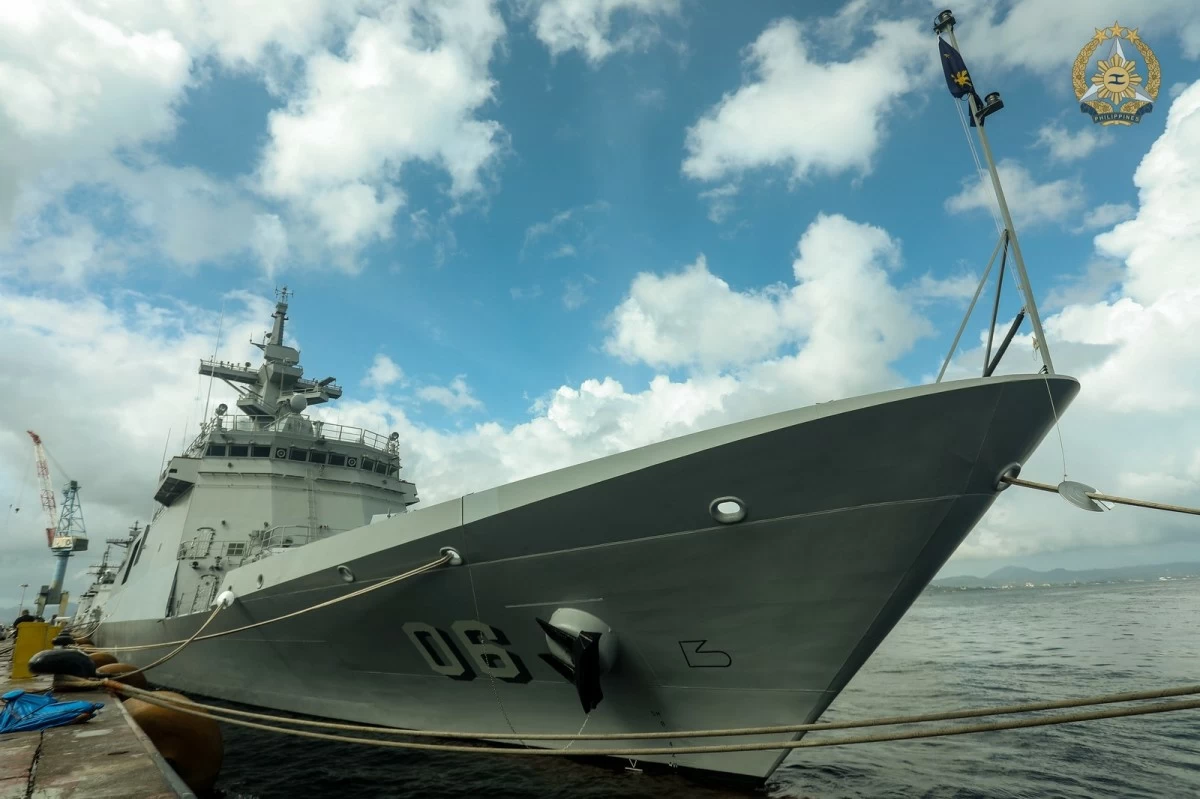
BRP Miguel Malvar (FFG-06) joins the seventh bilateral maritime cooperative activity (MCA) between the Armed Forces of the Philippines (AFP) and US Indo-Pacific Command (Indopacom) in the West Philippine Sea (WPS) on June 4, 2025. (Photo: AFP)
The Armed Forces of the Philippines (AFP) revealed Tuesday, March 24, that it has called out China after the latter’s warship allegedly pointed its fire control radar on BRP Miguel Malvar (FFG-6), a guided-missile frigate of the Philippine Navy (PN), during a maritime patrol near Escoda (Sabina) Shoal in the Kalayaan Island Group (KIG) or Spratly Islands earlier this month.
AFP Chief of Staff, General Romeo Brawner Jr. said a Chinese People’s Liberation Army-Navy (PLA-N) ship with bow number “622” approached and directed its fire‑control radar toward BRP Miguel Malvar last March 7 within the vicinity of the shoal.
Fire‑control radar is a precision system used to track a target and guide weapons. Locking it on another ship is widely seen as a hostile act because it mimics the targeting process before a firing solution is engaged.
Brawner noted that troops immediately challenged the action, and that the Chinese warship stopped locking the radar after the crew of BRP Miguel Malvar raised a radio challenge.
“It's like you pointed a gun at someone, that action China took, and we called them out for that,” Brawner said on the sidelines of a Stratbase Institute forum in Makati City.
“When we issued the challenge, they stopped what they were doing,” he added.
Escoda Shoal lies about 75 nautical miles off Palawan, and it is within the country’s 200-nautical mile exclusive economic zone (EEZ), but China also claims the atoll as part of its own waters, calling it Xianbin Reef.
The AFP has repeatedly protested the “dangerous and aggressive” naval maneuvers by Beijing as part of broader tensions in the West Philippine Sea (WPS), where China claims several features despite a 2016 international arbitration award that invalidated those claims regarding Philippine waters.
The Chinese Embassy in Manila has not publicly responded to the AFP’s allegations.
Meanwhile, Brawner lauded the calm and restrained response of the troops as opposed to the combative stance of the Chinese warship.
“The reaction of our troops was good because we challenged that action by China,” the military chief said.