






Manila Bulletin
 Embassies & Foreign Affairs
Women at the table: UK marks Women's Month with focus on leadership and protection
Embassies & Foreign Affairs
Women at the table: UK marks Women's Month with focus on leadership and protection
Embassies & Foreign Affairs
Women at the table: UK marks Women's Month with focus on leadership and protection
Women at the table: UK marks Women's Month with focus on leadership and protection
Published Mar 23, 2026 09:36 am


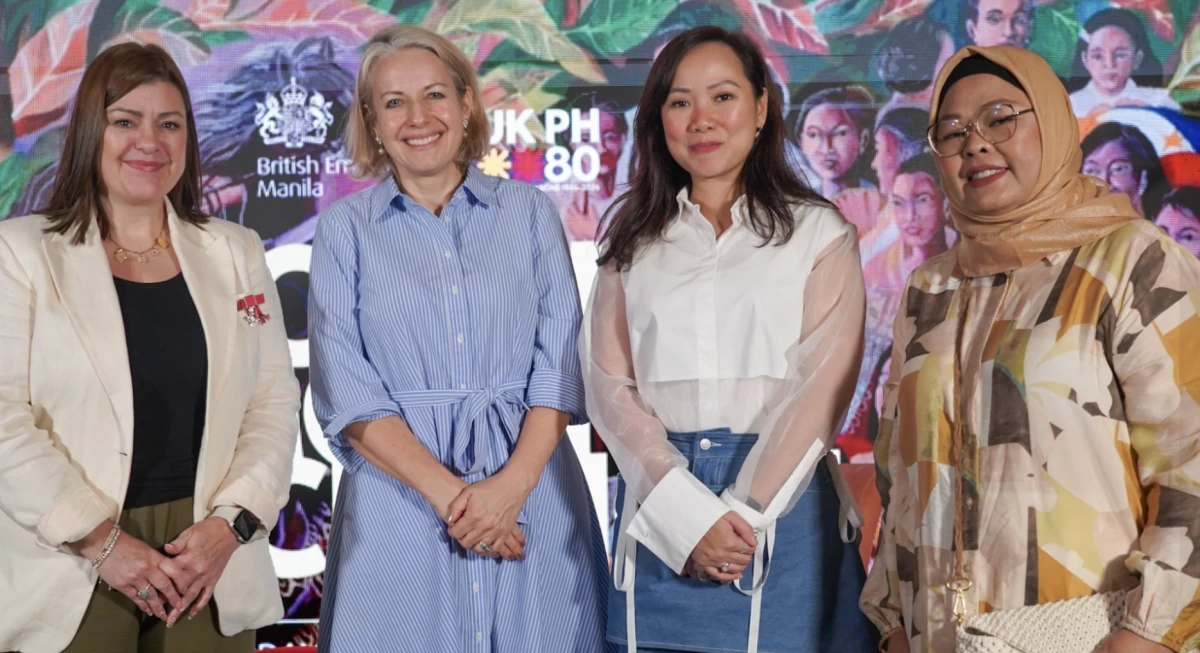
Claire Henderson of NGO Helping Hands Healing Hearts Ministries, UK Ambassador Sarah Hulton, Department of Justice's Asec. Michelle Lapuz, and Bangsamoro Member of Parliament Atty
Diplomacy is often measured in agreements and policy, but its direction can also be seen in who is leading the conversation. In Manila, the British Embassy marked Women’s Month with two gatherings that reflected a shift already underway: women are taking on a more visible and decisive role in shaping diplomacy.
One brought together women ambassadors in the Philippines for a lunch hosted by British Ambassador Sarah Hulton, joined by First Lady Liza Marcos. The other convened policymakers, advocates, and civil society leaders to confront a more urgent question: how to protect women and girls in a rapidly changing world. Taken together, the events highlighted a shift that has been gaining ground. Women are no longer peripheral figures in diplomacy. They are shaping its direction.
The lunch for women ambassadors offered a clear view of how representation in diplomacy is evolving. Across Manila’s diplomatic community, more women now serve as heads of mission, leading conversations at the highest levels.
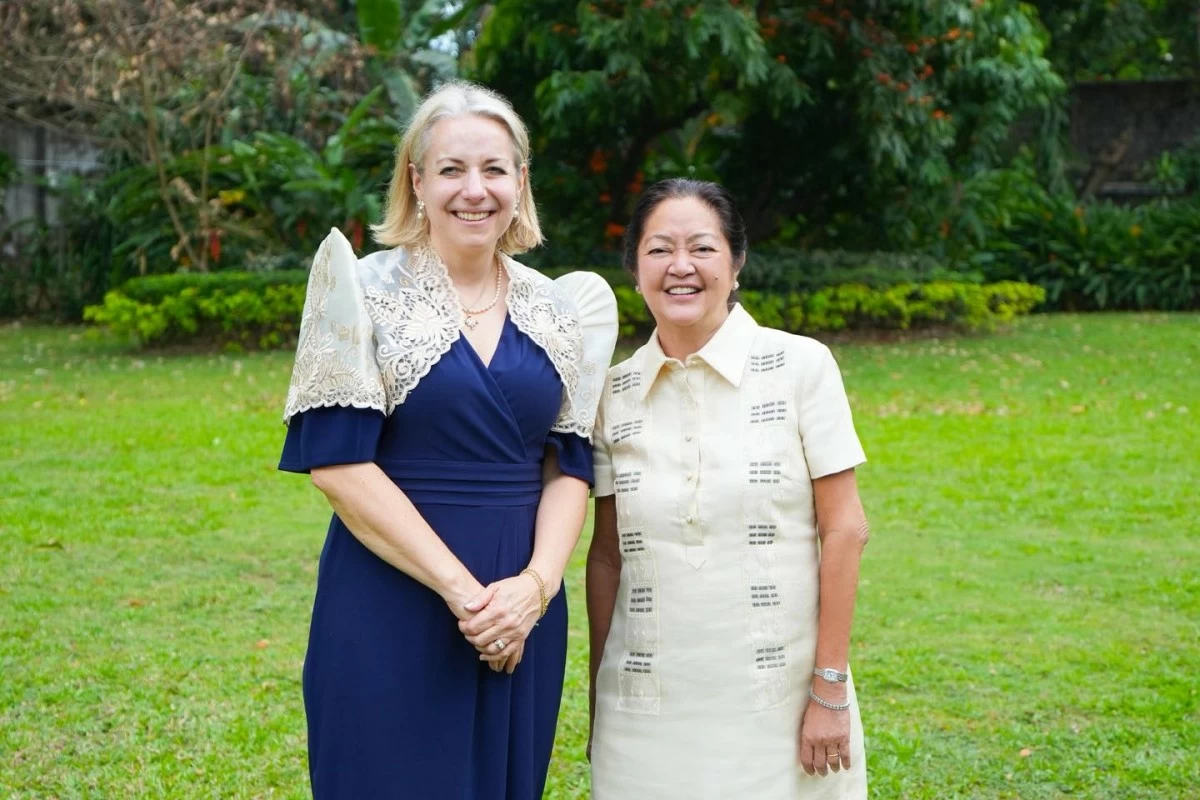
British Ambassador to the Philippines Sarah Hulton and First Lady Liza Araneta Marcos
In a social media post following the gathering, First Lady Liza Marcos described the experience as being “among such inspiring women—each committed, in her own way, to building bridges and shaping meaningful conversations,” adding that it reflected a shared sense of purpose and quiet strength.
Within that context, the embassy’s Women’s Month events placed a spotlight on the individuals who have helped sustain that relationship over time. From public servants to community leaders and advocates, their contributions reflect how diplomacy is carried out in practice—through cooperation, trust, and sustained engagement.
From representation to responsibility
If the lunch recognized presence, the March 18, 2026 reception turned to responsibility. Moderated by Ambassador Hulton, the panel brought together Asec. Michelle Lapuz of the Department of Justice, Claire Henderson of Non-Govermental Organization (NGO) Helping Hands Healing Hearts Ministries (HHM), and Bangsamoro Member of Parliament Atty. Maisara Dandamun-Latiph. The discussion centered on violence against women and girls—an issue that continues to evolve alongside technology and social change.
“Tackling violence against women and girls and securing their equality and freedom is fundamental to global security and sits at the heart of the UK’s Foreign Policy,” Hulton said. She emphasized that the challenge is not confined to any one country. “It’s a sad reality that affects communities in every corner of the world.”
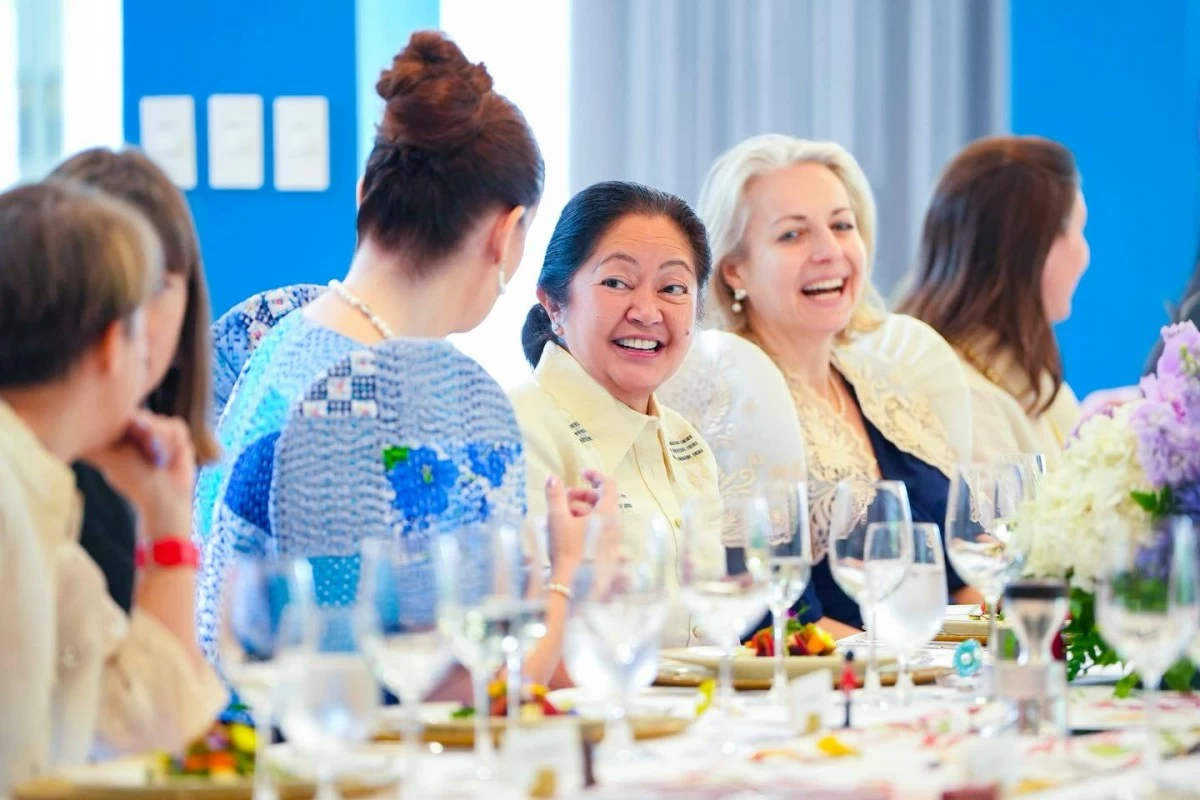
First Lady Liza Araneta Marcos engages in conversation with Hungarian Ambassador Titanilla Tóth and UK Ambassador Sarah Hulton during a luncheon at the latter’s official residence
For Henderson, the risks facing women and children are becoming more complex, particularly in the digital space. “Anytime we talk about women and gender balance, we have to also think of child protection,” she said, noting that “over 50% of the cases involve children.”
She pointed to the growing prevalence of online sexual abuse and exploitation, even in remote communities, driven by widespread access to mobile devices and internet connectivity. At the same time, she highlighted a shift in how young people experience relationships.
“We’re also seeing increased emotional and psychological abuse among young people,” she said.
Prevention, she stressed, must go beyond awareness campaigns and begin within families and communities.
Laws, systems, and their limits
From a policy standpoint, Lapuz noted that while the Philippines has strong legal frameworks, deeper challenges persist. “In the Philippines, we have one of the strongest laws against violence against women and children,” she said, but many cases never reach the legal system. Abuse often occurs within trusted circles, making it harder to identify and report. “They don’t even realize that they are being exploited. They are being abused.”
She emphasized the need to address root causes rather than symptoms alone. “These are not just crimes, but they have underlying root causes,” she said, framing the issue as a shared responsibility. “If you think that it’s their problem, no, it’s our problem.”
Community, culture, and solutions
Dandamun-Latiph brought the discussion to the grassroots level, emphasizing that solutions must be grounded in local context and cultural realities. Speaking from her experience in the Bangsamoro region, she noted that approaches to protecting women and girls must take into account community norms, belief systems, and the role of faith.
“What we see is prevention’s most effective when it’s rooted in the local values,” she said, highlighting the influence of community and religious leaders in shaping attitudes toward gender-based violence.
She pointed to initiatives that integrate these sensitivities into policy and practice, alongside innovations such as digital case management systems designed to reduce retraumatization for survivors. Efforts to expand education and economic opportunities for women, she added, remain equally critical.
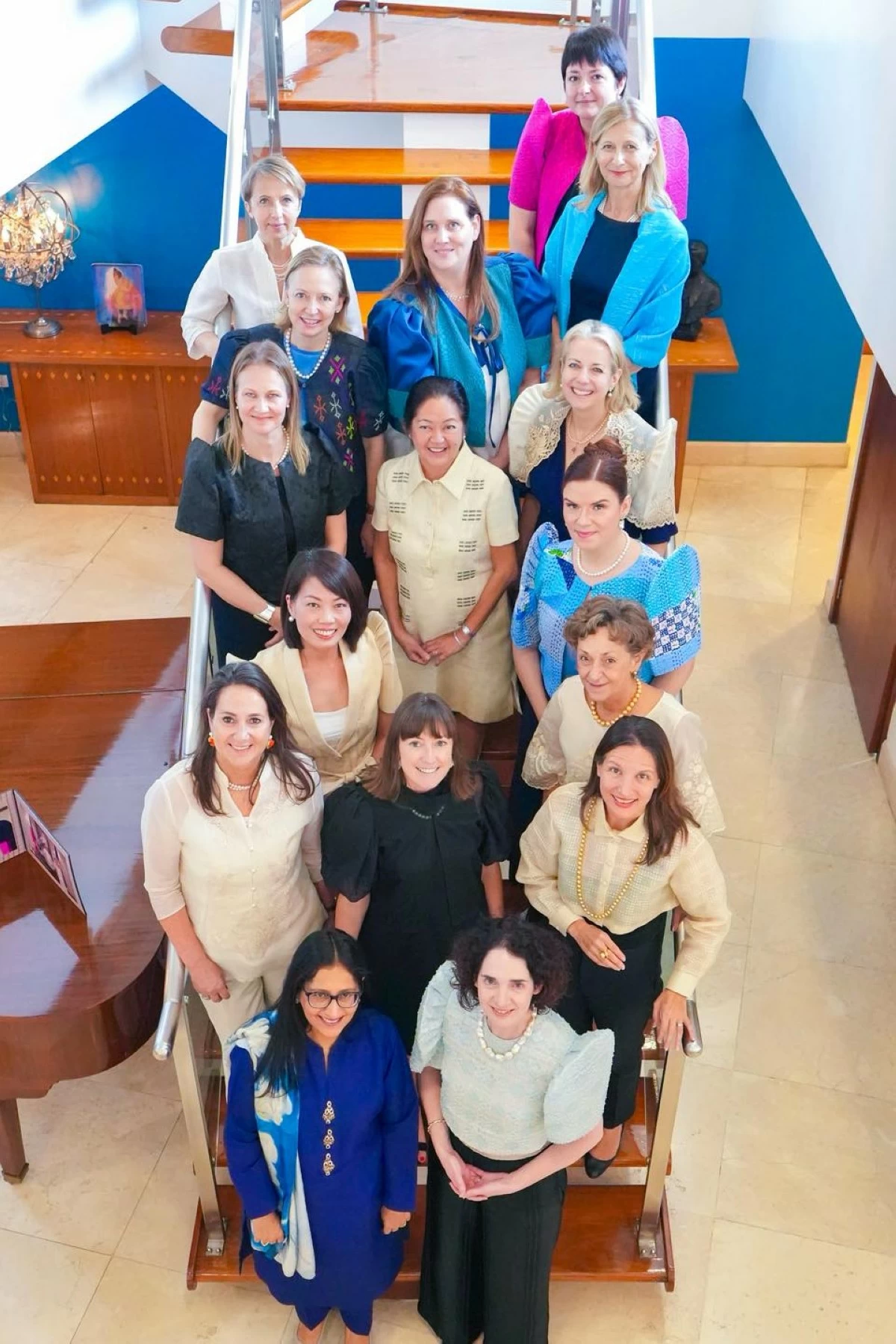
First Lady Liza Araneta Marcos joins women ambassadors for a luncheon at the British Ambassador’s official residence. Pictured with her are UK Ambassador Sarah Hulton; Hungarian Ambassador Titanilla Tóth; Romanian Ambassador Răduţa Dana Matache; Dutch Ambassador Marielle Geraedts; Singaporean Ambassador Constance See; French Ambassador Marie Fontanel; New Zealand Ambassador Catherine Rosemary McIntosh; Irish Ambassador Emma Hickey; Slovenian Ambassador Smiljana Knez; Swedish Ambassador Anny Pernilla Ferry; Ukrainian Ambassador Yuliia Fediv; Pakistani Ambassador Asima Rabbani; and Israeli Ambassador Dana Kursh
Across the panel, a consistent theme emerged. Systems matter, but people—and the contexts they live in—matter just as much.
As the UK and the Philippines mark 80 years of diplomatic relations, the focus on women’s leadership offers a clear direction for the partnership ahead.
The embassy reaffirmed its commitment to deepening cooperation in areas such as sustainable development, education, innovation, and peacebuilding. At the center of that agenda is support for the rights of women and girls.
Because when women are included—whether at the diplomatic table or within their own communities—the impact extends far beyond representation. It shapes the future of societies themselves.