






Manila Bulletin
 Opinion
When global conflicts hit home: Oil prices, the Philippine economy, and the role of microfinance
Opinion
When global conflicts hit home: Oil prices, the Philippine economy, and the role of microfinance
Opinion
When global conflicts hit home: Oil prices, the Philippine economy, and the role of microfinance
When global conflicts hit home: Oil prices, the Philippine economy, and the role of microfinance
Published Mar 23, 2026 12:05 am
|
Updated Mar 22, 2026 03:28 pm


FROM THE MARGINS
The war involving Iran, Israel, and the United States may feel distant to many Filipinos, but its consequences are already being felt in the most ordinary of places: jeepney stops, sari-sari stores, public markets, and households. Our institutions and employees are also affected. To ensure continuous service to clients, we have adopted energy-and fuel-saving contingency plans.
Global headwinds are not abstract — they are lived realities, especially for the poor who carry the heaviest burden when oil prices surge.
The Middle East conflict and oil shock
The Strait of Hormuz, a narrow waterway through which nearly a fifth of the world’s oil supply passes, has become a flashpoint. As tensions escalate, oil prices have soared past the US$100 per barrel mark. For oil-importing countries like the Philippines, this is a direct hit. Every liter of gasoline that becomes more expensive translates into higher fares, pricier food, and a weaker peso.
The government has adopted measures to reduce fuel consumption, like the four-day work week in public offices, and gave subsidies to affected sectors. But such stopgap solutions cannot shield the most vulnerable households from the inflationary storm.
The ripple effect on the Philippine economy
Oil is the lifeblood of transport and logistics. When its price rises, everything else follows. Jeepney drivers are forced to raise fares, delivery costs spike, and food prices climb. The peso weakens further as the country spends more on imports, while inflation spreads across daily essentials. The situation is even worsened by remittance uncertainties.
For low-income households, the impact is severe. A few pesos added to the cost of rice or a jeepney ride can mean skipping meals or cutting back on essentials.
Microfinance clients: Silent casualties
From our experience, microfinance borrowers — rural women, microentrepreneurs, farmers, and others — are remarkably resilient in facing external shocks like this oil crisis. Still, preparation is critical to ensure that we will not veer away from our mission of poverty eradication.
Our clients’ businesses run on thin margins, and rising input costs can quickly wipe out their profits. A food vendor who relies on LPG or a tricycle driver dependent on gasoline faces shrinking earnings even as loan repayments remain due.
The risk is clear: delayed payments may rise, not because clients are irresponsible, but because survival has become challenging. Without intervention, the very people microfinance aims to empower could slide back to poverty.
How MFIs can respond
This is the moment for microfinance institutions (MFIs) to demonstrate both resilience and relevance. The sector must adapt and innovate to protect clients by:
• Supporting clients directly by purchasing their products to help sustain income.
• Offering short-term emergency loans for fuel and other basic necessities during inflation spikes.
• Encouraging shifts to less fuel-dependent livelihoods such as urban farming, digital services, or crafts.
• Providing flexible repayment schemes.
• Promoting financial literacy and use of digital tools.
• Expanding access to solar-powered loans and business interruption microinsurance.
Protecting the institutions
While helping clients is paramount, MFIs must also safeguard their own sustainability. Experience shows that during crises, more clients seek access to loans. We must be ready to meet this demand while insuring our own financial stability, especially if the oil crisis persists over a prolonged period.
Increasing delayed payments and rising operational costs can weaken institutions if left unchecked. To protect themselves, MFIs should:
• Closely monitor accounts whose income streams are heavily affected, like the transport sector and OFW-dependent households.
• Diversify their portfolios and manage loan volumes to avoid excessive risk exposure.
• Build liquidity buffers to absorb shocks without disrupting services.
• Invest in digital infrastructure to save on fuel and energy, lower transaction costs and reduce reliance on physical branch operations.
• Strengthen risk management systems to anticipate repayment challenges and adjust lending strategies proactively.
• Adopt energy-efficient transport options, such as hybrid vehicles or e-bikes, where feasible.
• Maximize use of virtual or hybrid meetings to reduce operational costs, building on practices adopted during the pandemic.
By protecting their own financial health, MFIs ensure continuity of service in times of crisis.
A call to action
The conflict in the Middle East is a reminder that global crises ripple across borders, reaching even the poorest communities. For many Filipinos, rising oil prices are daily struggles affecting food, transport, and dignity.
MFIs stand at a critical juncture. They can retreat in the face of risk, or step forward as lifelines. By combining flexibility, innovation, and resilience, they can help clients weather this storm.
In times of crisis, the true measure of an institution lies not in balance sheets, but in its ability to protect the most vulnerable. The microfinance industry must rise to this challenge because when global headwinds blow, it is the poor who need shelter the most.
* * *
“When the Middle East burns, the Filipino Nanay feels the heat.” – Rafael Lopa
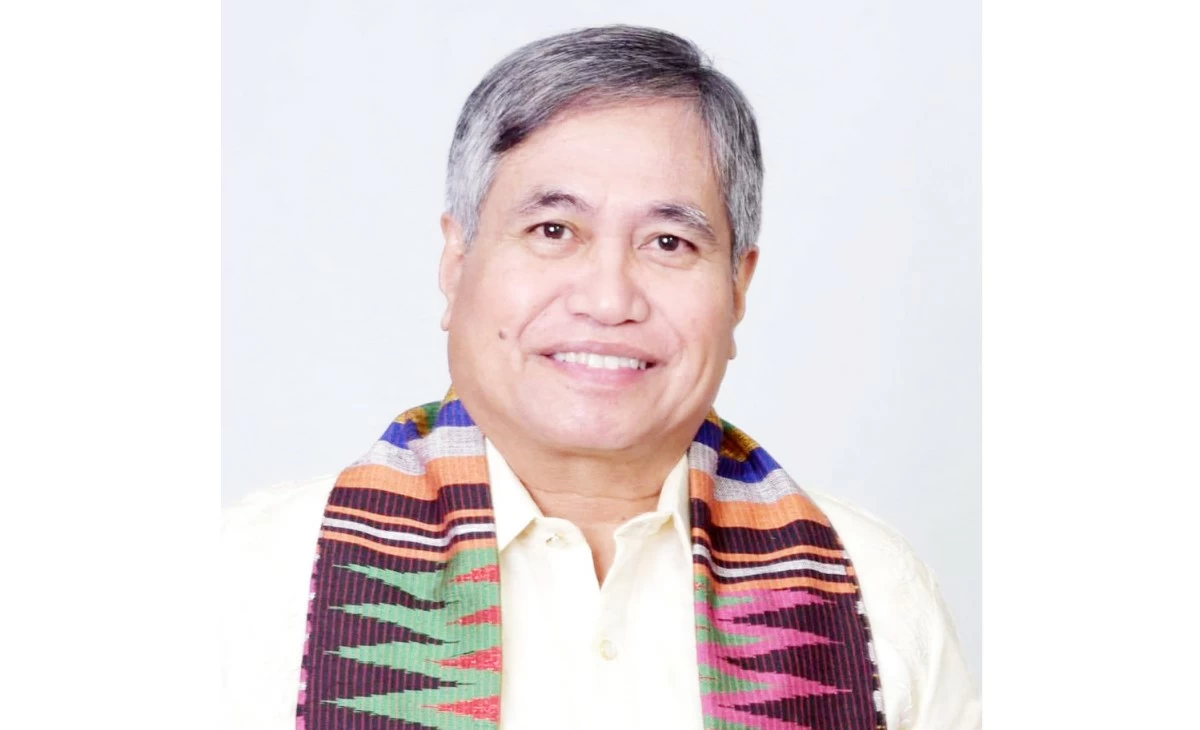
(Dr. Jaime Aristotle B. Alip is a poverty eradication advocate. He is the founder of the Center for Agriculture and Rural Development Mutually-Reinforcing Institutions (CARD MRI), a group of 23 organizations that provide social development services to 8 million economically-disadvantaged Filipinos and insure more than 27 million nationwide.)