






 Business
The Stock Market
SEC tightens sustainability disclosure requirements to build market credibility
Business
The Stock Market
SEC tightens sustainability disclosure requirements to build market credibility
SEC tightens sustainability disclosure requirements to build market credibility


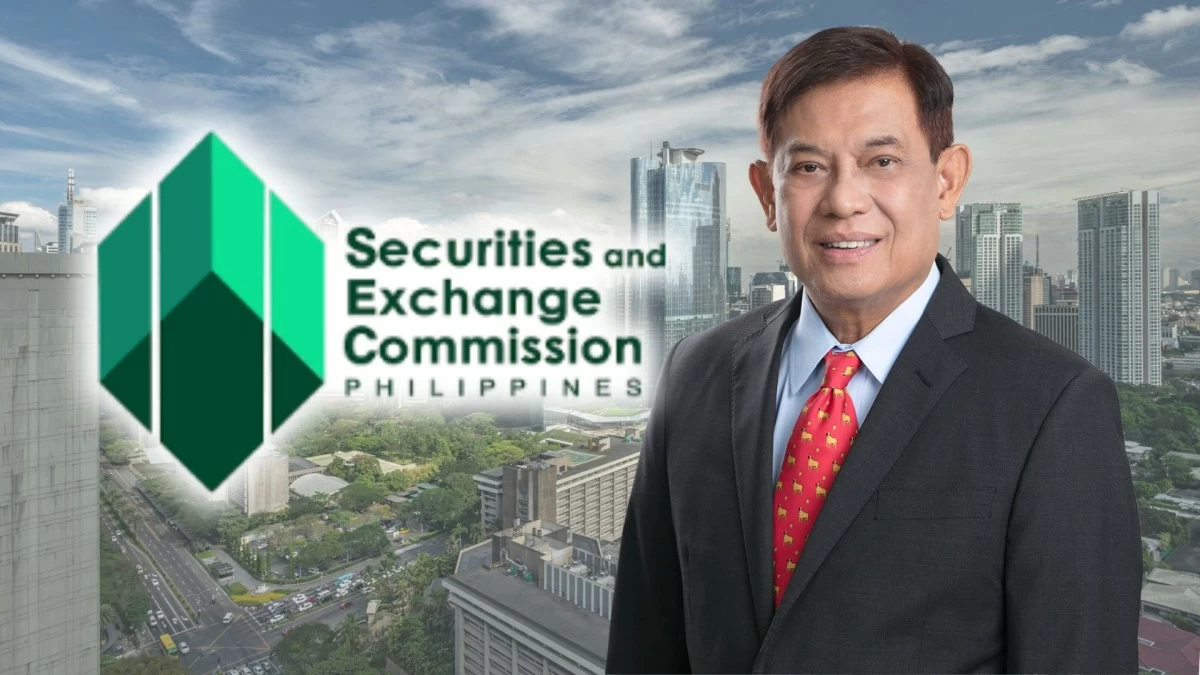
Starting this year, the Securities and Exchange Commission (SEC) will be more stringent in ensuring that large corporations and publicly listed firms raise the bar in sustainability reporting to support market credibility.
“This is why the SEC issued Memorandum Circular (MC) No. 16 in 2025. By aligning with ISSB [International Sustainability Standards Board] standards under PFRS [Philippine Financial Reporting Standards] S1 and S2, we are raising the quality of disclosure—not to require more words, but to demand better information,” said SEC Chairman Francis E. Lim.
For years, sustainability sat at the margins—important, but not decisive. However, this is no longer the case, as investors are asking harder questions on climate risk, transition risk, governance weakness, and social fragility.
“These are no longer distant concerns. They are measurable. They are material. And they are shaping how capital is allocated. Which means sustainability disclosure can no longer be narrative. It must be decision-useful. Not aspirational—but evidentiary. Not selective—but comparable. Not peripheral—but embedded in governance and strategy,” said Lim.
He noted that markets run on trust, and trust depends on what can be verified. Thus, sustainability claims must not run ahead of fact but must be grounded, measured, and governed with discipline.
“Anything less does not just weaken disclosure. It weakens the market. This reform is not about compliance. It is about credibility,” said Lim.
Beginning in 2026, the SEC will implement this through a phased, tiered approach—starting with the largest listed companies and moving across the market through 2029—with transition reliefs and assurance requirements to ensure both rigor and practicality.
“Because reform must not only be firm—it must also be workable. We recognize that not all institutions are equally prepared. Some have moved ahead. Others are still transitioning from broad narratives to structured, financially relevant disclosures. That is expected,” he said.
This is why the SEC is pairing regulation with capacity-building—through training, guidance, and market engagement—to build the foundation for lasting reform.
“Because in the end, this is not just about reporting. It is about the kind of market we choose to build—a market anchored on substance, governed with discipline, and worthy of public trust. This is how integrity continues to flow as the invisible currency of our markets. This is how trust is sustained. And this is how we move forward—steadily, responsibly, and together—toward a stronger and more credible future for Philippine capital markets,” said Lim.