






 Business
Trade & Industry
Philippines pushes inclusion in US-led critical minerals alliance
Business
Trade & Industry
Philippines pushes inclusion in US-led critical minerals alliance
Philippines pushes inclusion in US-led critical minerals alliance


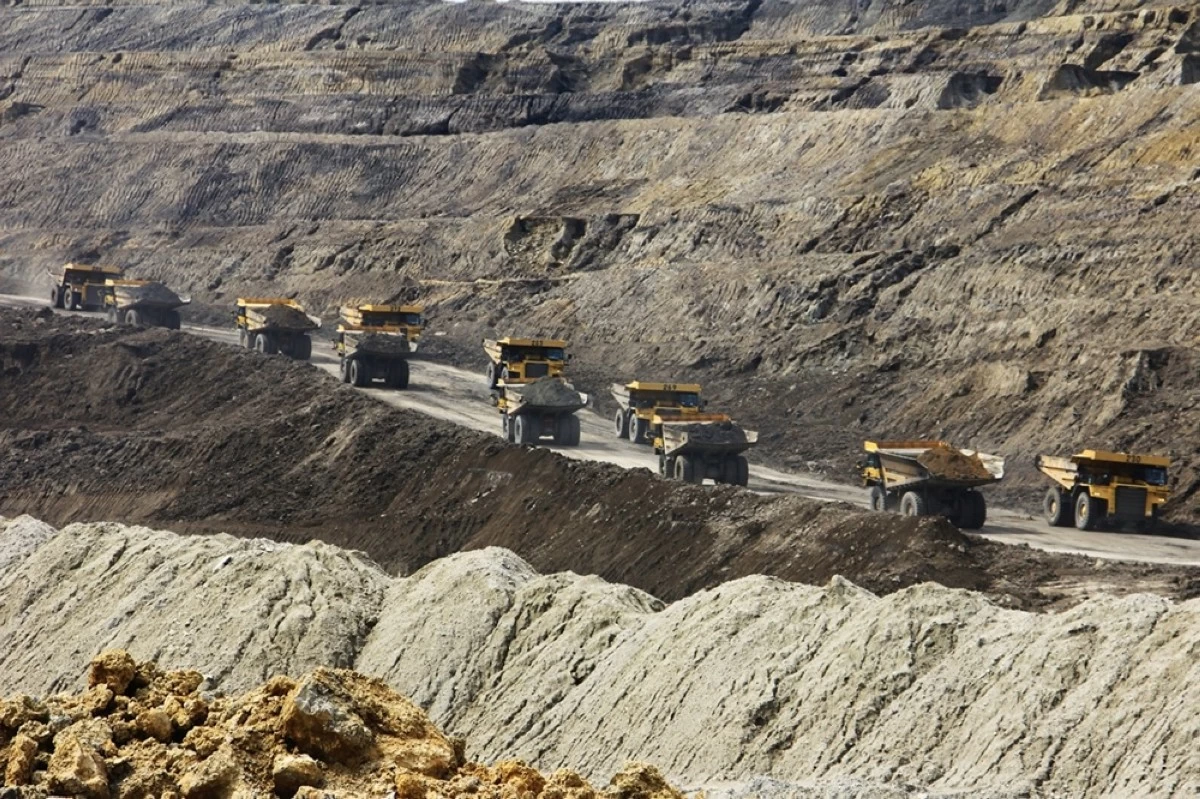
The Philippines is eager to explore broader collaboration with like-minded trading partners to encourage investments and growth in the critical minerals sector through its inclusion in a global trade bloc led by the United States (US), according to the Department of Trade and Industry (DTI).
Based on comments it submitted to the Office of the US Trade Representative (USTR) last week, seen by Manila Bulletin, the DTI said the country supports the US’ proposed plurilateral agreement and policy actions on critical minerals trade.
Highlighting both countries’ enduring alliance, the DTI said, “the Philippines should be the priority trading partner for the plurilateral agreement.”
The US has been working to secure commitments from trading partners as it seeks to establish trade cooperation to enhance the security and resilience of critical mineral supply chains worldwide.
This multi-country partnership would develop strategic trade policies and border mechanisms, including price floors and tariffs, to “build a resilient and non-distorted marketplace,” according to the USTR.
It is expected to shield the US and its allies from supply disruptions, especially from China, which dominates the critical minerals market, as these resources become increasingly vital for defense, manufacturing, and the clean energy transition.
When the initiative was announced last month during the US-led Critical Minerals Ministerial, it coincided with the signing of several memoranda of understanding (MOUs) between the US and 11 countries.
The Philippines was among those that signed an MOU to begin collaboration with the US on critical minerals, which the DTI said “reflects the shared objective of achieving resilience and security of critical minerals and rare earths supply chains.”
The DTI said the country is well positioned to be included in the plurilateral agreement, as it holds substantial reserves of critical minerals, meaning it can provide long-term supply security for the US.
In determining specific minerals to be prioritized in the trade bloc, the DTI said it should consider commodities that, if left unchecked, would directly undermine the US’ industrial policies, such as nickel and copper.
As the world’s second-largest nickel producer, the Philippines holds more than 440 million metric tons (MT) of nickel reserves. It also has around four billion MT of copper reserves across three of its 11 copper mines, based on DTI data.
In terms of the proposed price floor scheme, the DTI said the agreement should cover intermediate processed critical minerals to ensure that long-term investments “have fair and appropriate financial returns across the value chain.”
For the investment aspect, it said the agreement should provide for investment screening to flag potential risks in critical mineral supply, while also offering non-fiscal incentives for environmentally sound projects.
Further, the DTI is recommending the creation of a joint coordinating committee to monitor implementation and enforce the commitments of parties as a safeguard against breaches of the agreement.
The government’s push to join the US-led critical minerals trade bloc comes as the Philippines aims to expand its role in the global supply chain, moving beyond shipping raw ore and into advanced mineral processing.
The Board of Investments (BOI), chaired by the DTI, earlier identified mineral processing as one of its primary investment targets for the year.