






Manila Bulletin
 Embassies & Foreign Affairs
Philippines deepens Pacific engagement with opening of embassy in Fiji
Embassies & Foreign Affairs
Philippines deepens Pacific engagement with opening of embassy in Fiji
Embassies & Foreign Affairs
Philippines deepens Pacific engagement with opening of embassy in Fiji
Philippines deepens Pacific engagement with opening of embassy in Fiji
Published Mar 23, 2026 06:57 am


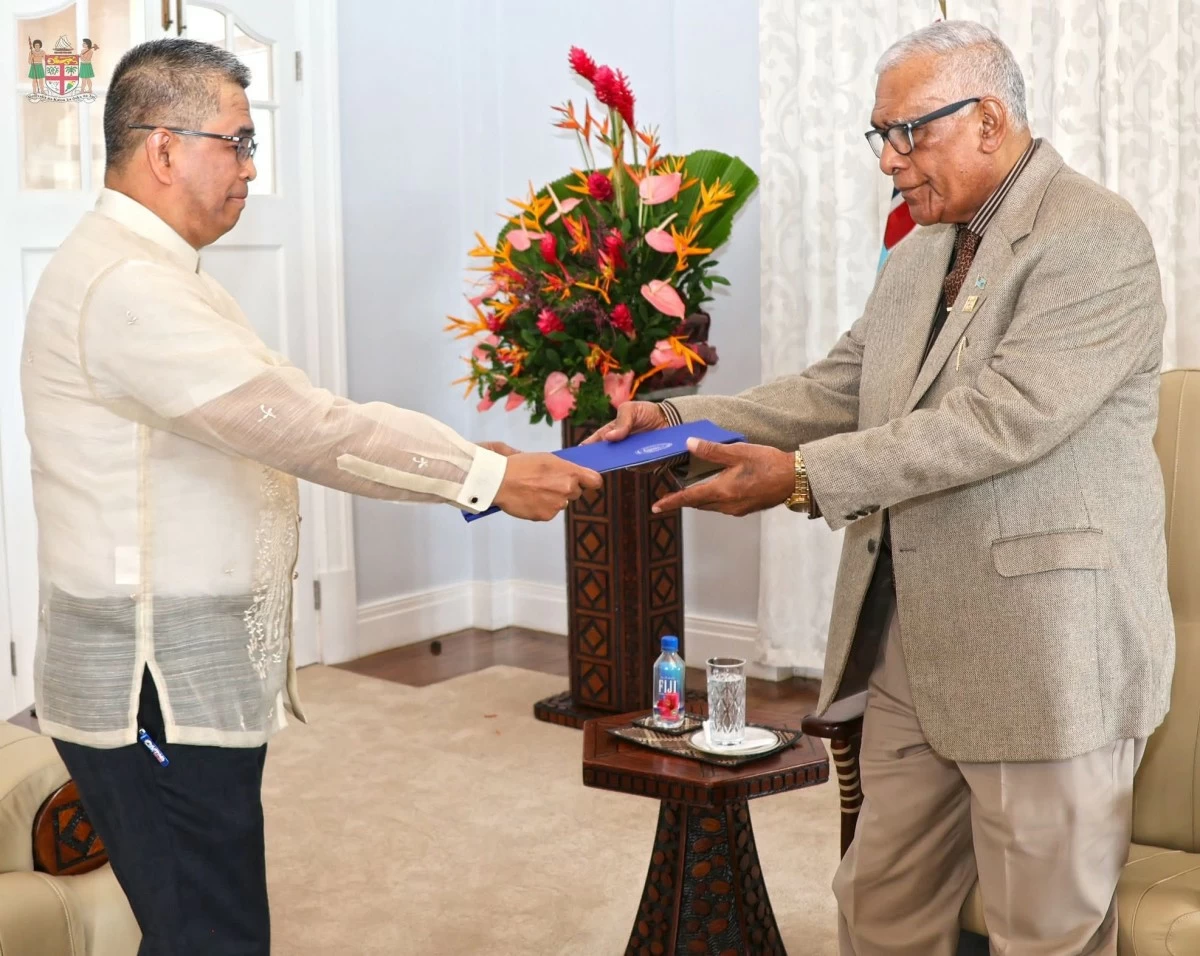
Ambassador Noel M. Novicio presented his credentials to Fiji President Ratu Naiqama Tawakecolati Lalabalavu on February 26, 2026.
The Philippines has taken a significant step in expanding its diplomatic footprint in the Pacific with the opening of its resident embassy in Suva, Fiji, marking a new phase in relations between the two countries.
The embassy, which began offering consular services in early March, is the Philippines’ first resident diplomatic mission in Fiji. Its establishment reflects Manila’s broader effort to strengthen engagement with Pacific island nations, an area of growing strategic importance in the Indo-Pacific.
The milestone was formalized with the presentation of credentials by Ambassador Noel M. Novicio to Fijian President Ratu Naiqama Lalabalavu on February 26, 2026, signaling the start of a resident diplomatic presence in the country.
Since its opening, the embassy has moved quickly to establish its presence on the ground. Within days of beginning operations, it processed its first visa applications, including those from nationals of neighboring Pacific states—an early indication of its role not only as a bilateral mission, but as a regional hub for consular services. Ambassador Novicio has also begun engaging with local stakeholders, including economic agencies and development partners, as part of efforts to identify areas of cooperation in trade, investment, and development. These early activities reflect a mission that is already looking beyond formal diplomacy, focusing instead on practical engagement and building connections across the Pacific.
Diplomatic relations between the Philippines and Fiji date back to 1973, but until recently, engagement had been managed through non-resident missions. The opening of an embassy in Suva marks a shift toward deeper, more sustained cooperation across multiple areas, including development, labor mobility, and regional dialogue.
Fijian officials welcomed the move, noting that the establishment of a resident Philippine mission reflects a shared commitment to strengthening bilateral ties at all levels.
For the Philippines, the move is also part of a broader diplomatic recalibration. In a recent interview, Foreign Affairs Secretary Ma. Theresa Lazaro emphasized the importance of opening new embassies as the country seeks to play a more active role in global affairs and respond to shifting geopolitical dynamics.
The decision to establish a mission in Fiji aligns with that direction. It allows the Philippines to engage more directly with Pacific partners on issues that increasingly define the region, including climate resilience, disaster preparedness, public health, and food security.
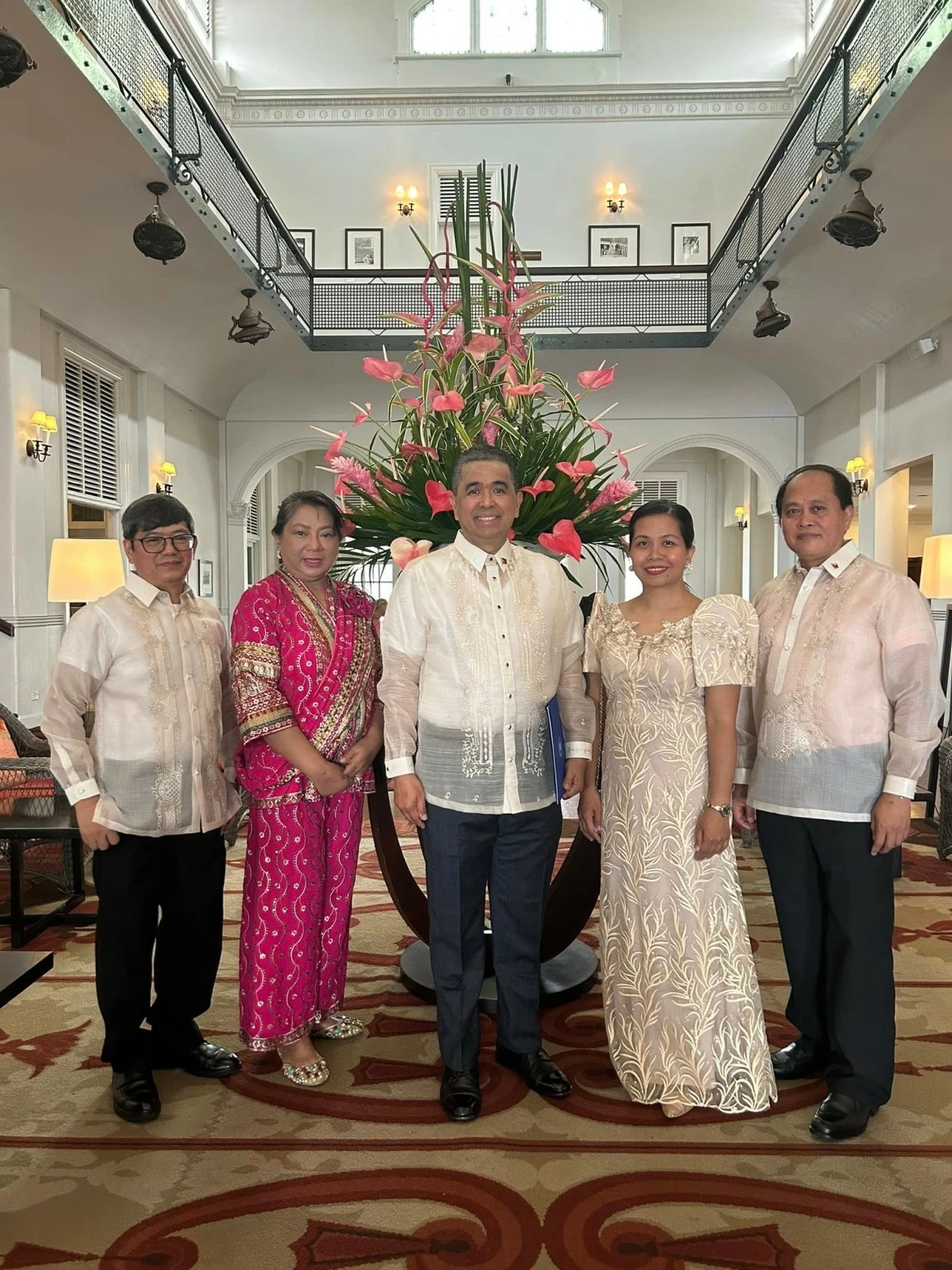
The Philippine Embassy in Suva formally begins operations as the country’s first resident mission to the Republic of Fiji, led by Ambassador Novicio and his team. (Philippine Embassy in Suva)
These areas have already been identified as priorities under the Philippines’ Pacific engagement initiatives, which aim to strengthen cooperation beyond Southeast Asia and build partnerships with island states facing shared challenges.
At the same time, the embassy is expected to enhance consular services for Filipinos in Fiji and nearby Pacific island countries, while supporting economic and cultural exchanges.
In his remarks following the presentation of credentials, Ambassador Novicio reaffirmed Manila’s commitment to strengthening friendly relations and expanding cooperation between the two countries, including through regional platforms such as ASEAN and the Pacific Islands Forum. ““It is my greatest honor to be appointed as the first resident Ambassador Extraordinary and Plenipotentiary of the Republic of the Philippines to the Republic of Fiji. I’ll work hard to further strengthen the friendly relations between our two countries and peoples,” Ambassador Novicio told President Lalabalavu.
As global attention increasingly focuses on the Indo-Pacific, the opening of the Philippine Embassy in Fiji marks a clear and deliberate shift in foreign policy—one that positions its Pacific neighbors not as a distant frontier, but as a vital part of its diplomatic horizon.