ADVERTISEMENT

FAO: Middle East conflict risks doubling fertilizer costs

Published Mar 23, 2026 12:00 am  |  Updated Mar 21, 2026 04:27 pm
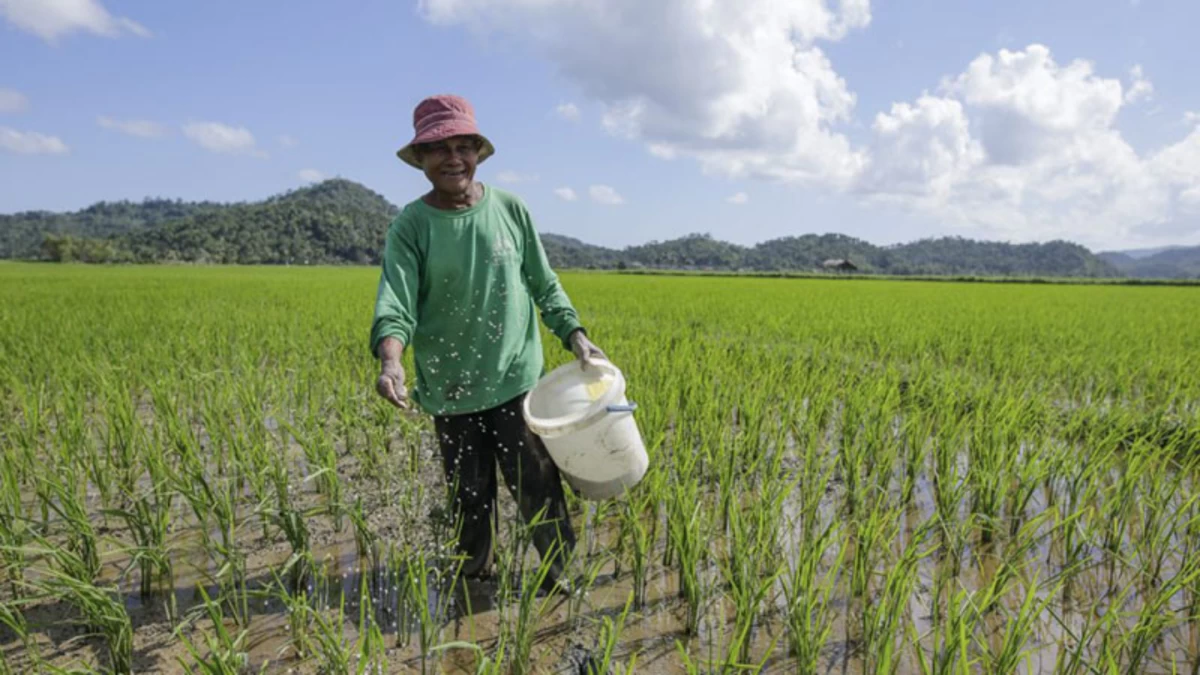
Photo by PhilRice
Photo by PhilRice
Global food prices, including the staple grain rice, are poised to climb later this year as escalating conflict in the Middle East strains international supply chains and drives up the cost of agricultural inputs, according to the Food and Agriculture Organization (FAO).
In a report published last week, the FAO warned that agricultural output faces significant headwinds in the second half of the year as farmers grapple with surging fertilizer prices, which may reduce application rates and lead to thinner harvests.
Fertilizer supply chains are heavily affected by disruptions in the Strait of Hormuz, the narrow waterway that connects the Persian Gulf to the open ocean, where up to 30 percent of fertilizer exports pass through.
The FAO estimates that disruptions in this critical route have already stalled around three to four million metric tons (MT) of fertilizer trade, triggering price hikes for nitrogen-based fertilizer. Since this type of fertilizer relies on natural gas as feedstock, the upswing in fuel prices is also influencing production costs.
Prices of nitrogen-based fertilizer are expected to more than double to $800 per MT this year from a prevailing price of around $420 per MT last year, should the conflict in the Middle East drag on, according to the Department of Agriculture (DA).
“Rising fertilizer costs and higher fuel prices increase production expenses for farmers and may lead to reduced fertilizer use in many regions. Lower input application could result in lower crop yields later in the year and tighter global grain supplies,” the FAO said.
Should harvests shrink before the end of the year, the FAO said this would lead to a surge in food prices and reduced household purchasing power, especially in low-income and import-dependent countries.
To help shield the local agriculture sector, DA Secretary Francisco Tiu Laurel Jr. said last week that he had started talks with alternative sources for the country’s fertilizer needs. Countries under consideration include China, India, Russia, and Belarus.
The Philippines has already secured more than 80 percent of its fertilizer requirements through September, but there is no certainty that these will be delivered on schedule due to surging fuel prices and supply issues.
For now, Tiu Laurel said the local food supply remains adequate, with inventories and ongoing harvests enough to support the country’s needs through June or July.
At present, the National Food Authority (NFA) holds around 400,000 MT of rice as buffer stock, equivalent to 10 days of national consumption.
Tiu Laurel said the peak harvest season and incoming imports of the household staple further strengthen supply availability. The DA is currently studying the imposition of a price cap of ₱50 per kilo on imported rice, while ramping up efforts to buy rice from farmers to offer cheaper alternatives.
Based on monitoring in Metro Manila markets, the prevailing price for imported regular milled rice is ₱43 per kilo, imported well-milled rice is ₱48 per kilo, and imported premium rice is ₱60 per kilo. Meanwhile, local regular milled rice is pegged at ₱40 per kilo, local well-milled rice at ₱45 per kilo, and local premium rice at ₱55 per kilo.
Beyond rice, Tiu Laurel said the supply of other food categories remains favorable, with key crops like corn, sugar, and onions contributing to overall buffers.
“In general, prices should be stable although there might be some slight increases due to higher freight and transport cost,” he said.
ADVERTISEMENT
.most-popular .layout-ratio{ padding-bottom: 79.13%; } @media (min-width: 768px) and (max-width: 1024px) { .widget-title { font-size: 15px !important; } }

{{ articles_filter_1561_widget.title }}

.most-popular .layout-ratio{ padding-bottom: 79.13%; } @media (min-width: 768px) and (max-width: 1024px) { .widget-title { font-size: 15px !important; } }

{{ articles_filter_1562_widget.title }}

.most-popular .layout-ratio{ padding-bottom: 79.13%; } @media (min-width: 768px) and (max-width: 1024px) { .widget-title { font-size: 15px !important; } }

{{ articles_filter_1563_widget.title }}

{{ articles_filter_1564_widget.title }}

.mb-article-details { position: relative; } .mb-article-details .article-body-preview, .mb-article-details .article-body-summary{ font-size: 17px; line-height: 30px; font-family: "Libre Caslon Text", serif; color: #000; } .mb-article-details .article-body-preview iframe , .mb-article-details .article-body-summary iframe{ width: 100%; margin: auto; } .read-more-background { background: linear-gradient(180deg, color(display-p3 1.000 1.000 1.000 / 0) 13.75%, color(display-p3 1.000 1.000 1.000 / 0.8) 30.79%, color(display-p3 1.000 1.000 1.000) 72.5%); position: absolute; height: 200px; width: 100%; bottom: 0; display: flex; justify-content: center; align-items: center; padding: 0; } .read-more-background a{ color: #000; } .read-more-btn { padding: 17px 45px; font-family: Inter; font-weight: 700; font-size: 18px; line-height: 16px; text-align: center; vertical-align: middle; border: 1px solid black; background-color: white; } .hidden { display: none; }
function initializeAllSwipers() { // Get all hidden inputs with cms_article_id document.querySelectorAll('[id^="cms_article_id_"]').forEach(function (input) { const cmsArticleId = input.value; const articleSelector = '#article-' + cmsArticleId + ' .body_images'; const swiperElement = document.querySelector(articleSelector); if (swiperElement && !swiperElement.classList.contains('swiper-initialized')) { new Swiper(articleSelector, { loop: true, pagination: false, navigation: { nextEl: '#article-' + cmsArticleId + ' .swiper-button-next', prevEl: '#article-' + cmsArticleId + ' .swiper-button-prev', }, }); } }); } setTimeout(initializeAllSwipers, 3000); const intersectionObserver = new IntersectionObserver( (entries) => { entries.forEach((entry) => { if (entry.isIntersecting) { const newUrl = entry.target.getAttribute("data-url"); if (newUrl) { history.pushState(null, null, newUrl); let article = entry.target; // Extract metadata const author = article.querySelector('.author-section').textContent.replace('By', '').trim(); const section = article.querySelector('.section-info ').textContent.replace(' ', ' '); const title = article.querySelector('.article-title h1').textContent; // Parse URL for Chartbeat path format const parsedUrl = new URL(newUrl, window.location.origin); const cleanUrl = parsedUrl.host + parsedUrl.pathname; // Update Chartbeat configuration if (typeof window._sf_async_config !== 'undefined') { window._sf_async_config.path = cleanUrl; window._sf_async_config.sections = section; window._sf_async_config.authors = author; } // Track virtual page view with Chartbeat if (typeof pSUPERFLY !== 'undefined' && typeof pSUPERFLY.virtualPage === 'function') { try { pSUPERFLY.virtualPage({ path: cleanUrl, title: title, sections: section, authors: author }); } catch (error) { console.error('ping error', error); } } // Optional: Update document title if (title && title !== document.title) { document.title = title; } } } }); }, { threshold: 0.1 } ); function showArticleBody(button) { const article = button.closest("article"); const summary = article.querySelector(".article-body-summary"); const body = article.querySelector(".article-body-preview"); const readMoreSection = article.querySelector(".read-more-background"); // Hide summary and read-more section summary.style.display = "none"; readMoreSection.style.display = "none"; // Show the full article body body.classList.remove("hidden"); } document.addEventListener("DOMContentLoaded", () => { let loadCount = 0; // Track how many times articles are loaded const offset = [1, 2, 3, 4, 5, 6, 7, 8, 9, 10]; // Offset values const currentUrl = window.location.pathname.substring(1); let isLoading = false; // Prevent multiple calls if (!currentUrl) { console.log("Current URL is invalid."); return; } const sentinel = document.getElementById("load-more-sentinel"); if (!sentinel) { console.log("Sentinel element not found."); return; } function isSentinelVisible() { const rect = sentinel.getBoundingClientRect(); return ( rect.top < window.innerHeight && rect.bottom >= 0 ); } function onScroll() { if (isLoading) return; if (isSentinelVisible()) { if (loadCount >= offset.length) { console.log("Maximum load attempts reached."); window.removeEventListener("scroll", onScroll); return; } isLoading = true; const currentOffset = offset[loadCount]; window.loadMoreItems().then(() => { let article = document.querySelector('#widget_1690 > div:nth-last-of-type(2) article'); intersectionObserver.observe(article) loadCount++; }).catch(error => { console.error("Error loading more items:", error); }).finally(() => { isLoading = false; }); } } window.addEventListener("scroll", onScroll); });

Sign up by email to receive news.