







Customs chief pledges review of port inspection delays
Published Mar 23, 2026 05:34 am


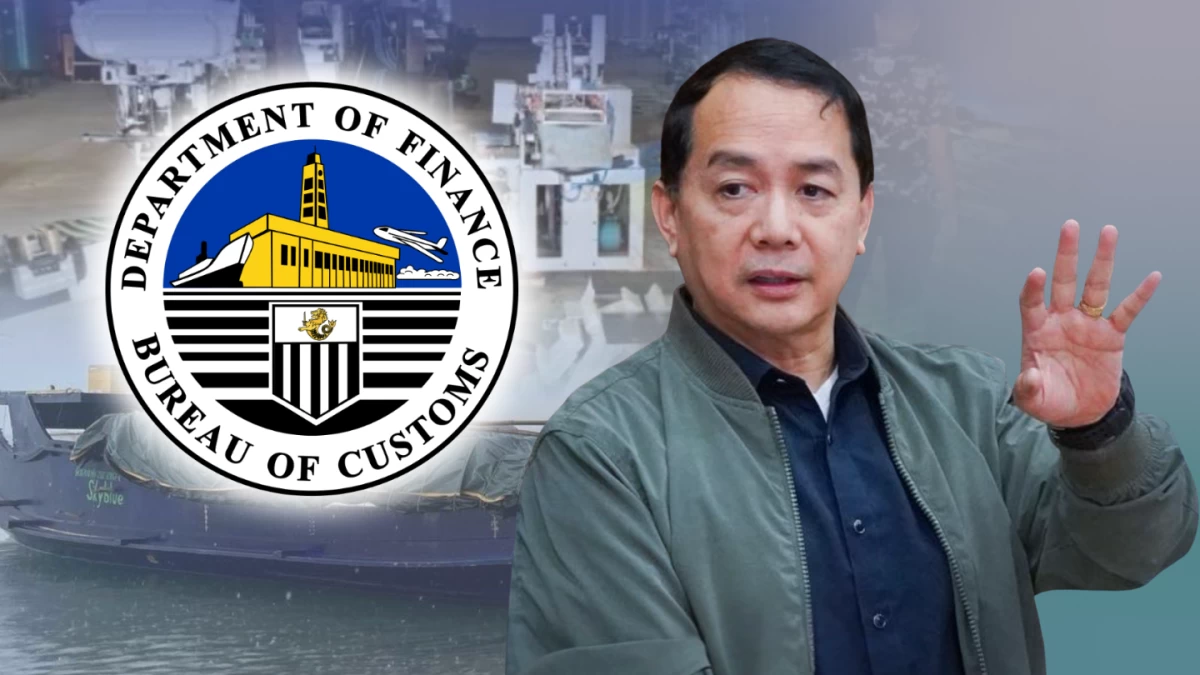
Customs Commissioner Ariel F. Nepomuceno
The Chinese Filipino Business Club Inc. (CFBC) hosted the fifth general assembly of the Customs Industry Consultative and Advisory Council on March 19, marking a renewed push for transparency and streamlined trade logistics in the Philippines.
The event, held at the Diamond Hotel in Manila, drew about 500 representatives from the Bureau of Customs (BOC), foreign chambers, and industrial associations. BOC Commissioner Ariel Nepomuceno, who led the bureau’s delegation, used the forum to signal a shift toward modernization for an agency historically hampered by bureaucratic bottlenecks.
In a private executive session preceding the assembly, CFBCI President Gerald Uy Chan and other club leaders pressed Nepomuceno on technical hurdles affecting the flow of goods. A central point of discussion was the updating of Value Reference Information, a database critical for ensuring consistency in customs valuation and reducing arbitrary assessments.
Nepomuceno acknowledged private sector grievances regarding inspection protocols that have triggered significant processing delays. He committed the bureau to a formal review of these procedures to mitigate logistics costs. The dialogue also touched on sectoral tax disparities, specifically the push for more equitable tax treatment across various animal feed categories, a move intended to stabilize input costs for the agricultural sector.
To bridge communication gaps, Chan offered the CFBCI’s assistance in translating customs advisories into Mandarin. The initiative aims to improve compliance and information dissemination within the Chinese-Filipino business community, a proposal Nepomuceno said the bureau is open to exploring.
During the formal assembly, Nepomuceno credited the CICAC framework with transforming the bureau’s institutional image since the council’s inception three years ago. He urged stakeholders to maintain a "strong rapport" to drive policy reforms, noting that the agency’s goal is to transition into a fully transparent and efficient administration.
Chan characterized the council as a vital conduit that removes layers of bureaucracy, allowing the private sector to engage authorities directly. He referenced comments made by CFBCI Honorary President Samuel Lee Uy during a 2024 assembly, noting that businesses no longer "run away" from the bureau but instead approach it as a partner.
The morning sessions also tackled structural challenges, including port congestion and the rollout of a new Customs Processing System under a public-private partnership. Industry leaders raised concerns over inter-agency friction that continues to delay cargo clearance, contributing to inflationary pressures on imported goods.
The CFBCI delegation included high-ranking officials such as Honorary Presidents Stephen Tan Sia and Samuel Lee Uy, and Executive Vice President Paul Yeung.