






 Business
Trade & Industry
Central Luzon emerges as Philippines' next real estate hotspot—Colliers
Business
Trade & Industry
Central Luzon emerges as Philippines' next real estate hotspot—Colliers
Central Luzon emerges as Philippines' next real estate hotspot—Colliers


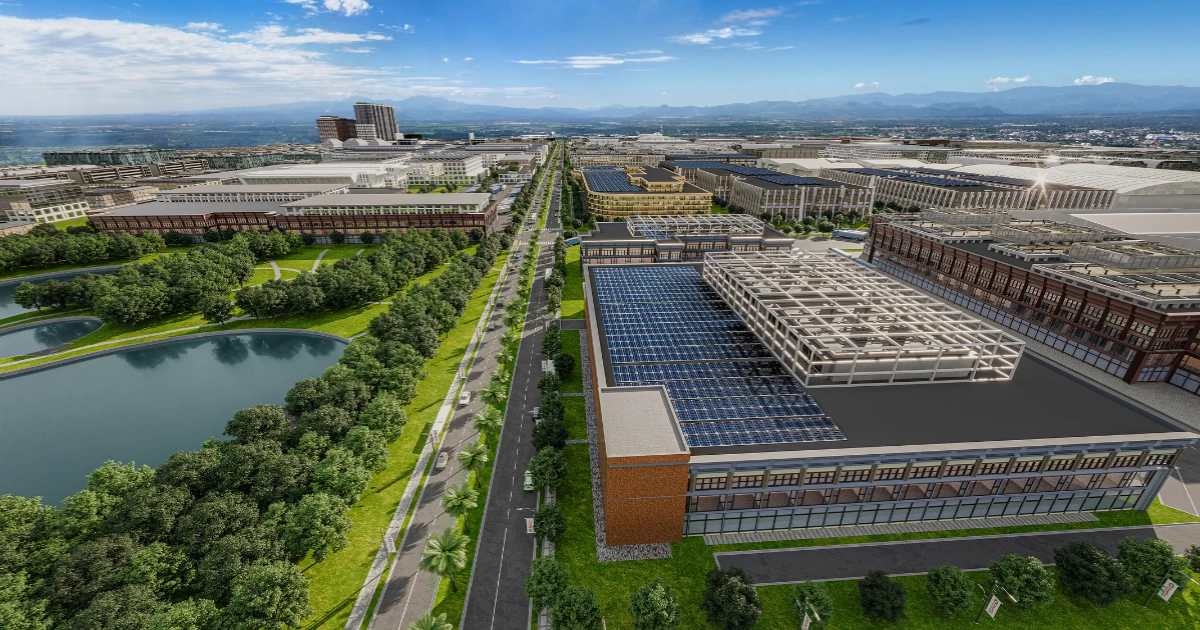
Stimulated by infrastructure upgrades, township expansion, and a record-high industrial pipeline, Central Luzon is attracting homebuyers, investors, and global locators, reshaping the north corridor of Luzon, according to Colliers Philippines.
In the office sector, Colliers said Pampanga remains the anchor of the region’s outsourcing growth, closing 2025 with 538,000 square meters (sqm) of office supply and a 17-percent vacancy rate, an improvement of 7.8 percent from the previous year. Rents remain steady between ₱550 and ₱750 per sqm as information technology and business process management (IT-BPM) firms, financial companies, English as second language (ESL) operators, and flexible workspace providers deepen their footprint, it noted. Kevin Jara, Colliers office services-tenant representation director, said, “Central Luzon’s office market is maturing, and Pampanga is becoming a genuine alternative to Metro Manila for outsourcing operations.”
Clark Freeport Zone continues to attract high-value office users, including manufacturing support, technology firms, and service providers, thanks to its international airport and growing ecosystem of business parks and mixed-use estates, Colliers said. Meanwhile, Bulacan is in the early stages of office development, but the soon-to-open New Manila International Airport (NMIA) is expected to spur the next wave of developments, it added.
The residential market is also gaining momentum, Colliers said, citing that townships such as Alviera, Capital Town, and Centrala in Pampanga are drawing homebuyers and investors connected to Clark’s employment hub. Joey Roi Bondoc, Colliers research director, said, “Township development is reshaping Central Luzon’s residential landscape, and buyers now view the region as a true extension of Metro Manila.” He noted that improved connectivity via North Luzon Expressway (NLEX) and Subic-Clark-Tarlac Expressway (SCTEX) has made commuting more viable. In Bulacan, interest is growing near the future airport, while Tarlac and Zambales see steady uptake driven by industrial estates and logistics corridors, Colliers added.
For Colliers, industrial real estate stands out as the region’s most powerful growth story, with Central Luzon poised to deliver 930 hectares (ha) of new industrial land from 2026 to 2028, far surpassing Cavite-Laguna-Batangas (CALABA) corridor’s projected 245 ha. Pampanga, particularly around Clark, leads with projects like the 64-ha Clark National Food Hub and new industrial estates in New Clark City, Colliers noted, adding that Tarlac is attracting major manufacturing investments from Ajinomoto and Coca-Cola, while Bulacan is emerging as a pharmaceutical and logistics hub.
Colliers said Clark Freeport Zone is also strengthening its position as a meetings, incentives, conferences, and exhibitions (MICE) and tourism hub, noting that the newly opened Clark International Convention Center, along with airport upgrades, has raised the region’s capacity to host large-scale conferences and events. Bondoc noted that Clark’s growing competitiveness is boosting hotel occupancy and rates across Central Luzon, while Pampanga, Zambales, and Tarlac benefit from improved connectivity for leisure and eco-tourism.
The region’s growth is attracting a wider roster of developers and investors, Colliers noted. In Pampanga, new township phases are rolling out residential enclaves, commercial centers, and office districts, while in Bulacan, mixed-use and residential projects near the future airport and along NLEX are reshaping the development map, it said.