ADVERTISEMENT

Cebu Pacific profit soars to ₱12 billion in 2025 amid travel boom

Published Mar 23, 2026 06:34 pm

Building on strong air travel demand, low-cost carrier Cebu Pacific generated more than ₱12 billion in profit last year as the arrival of new aircraft reduced costs and improved seat economics.

In a disclosure to the Philippine Stock Exchange (PSE) on Monday, March 23, Cebu Pacific’s parent firm, Cebu Air Inc., reported that its 2025 net income more than doubled to ₱12.3 billion from ₱5.4 billion in the previous year.

The Gokongwei-led airline booked a record-high ₱119.9 billion in revenue, driven largely by passenger revenues, which rose 13 percent to ₱80.8 billion.

Cebu Pacific carried an all-time high of 26.88 million passengers last year, up 9.5 percent from 24.5 million in 2024. Seat load factor—the percentage of available seats occupied by passengers—stood at 84 percent.

Driven by increased demand, ancillary revenues—which cover non-ticket earnings—grew 14 percent to ₱32 billion from ₱28 billion.

The airline’s cargo revenues rose 27 percent to ₱7.2 billion, exceeding the previous year’s ₱5.6 billion, as it registered stronger cargo demand despite trade uncertainties.

Apart from travel demand, Cebu Pacific boosted its net income through gains amounting to ₱5.99 billion from five free-of-charge engines.

This formed part of the compensation package from American aerospace manufacturer Pratt & Whitney for airlines affected by engine issues.

Mark Cezar, chief financial officer (CFO) of Cebu Pacific, said the airline was able to keep pace with the surge in demand across key segments through capacity growth and fleet modernization.

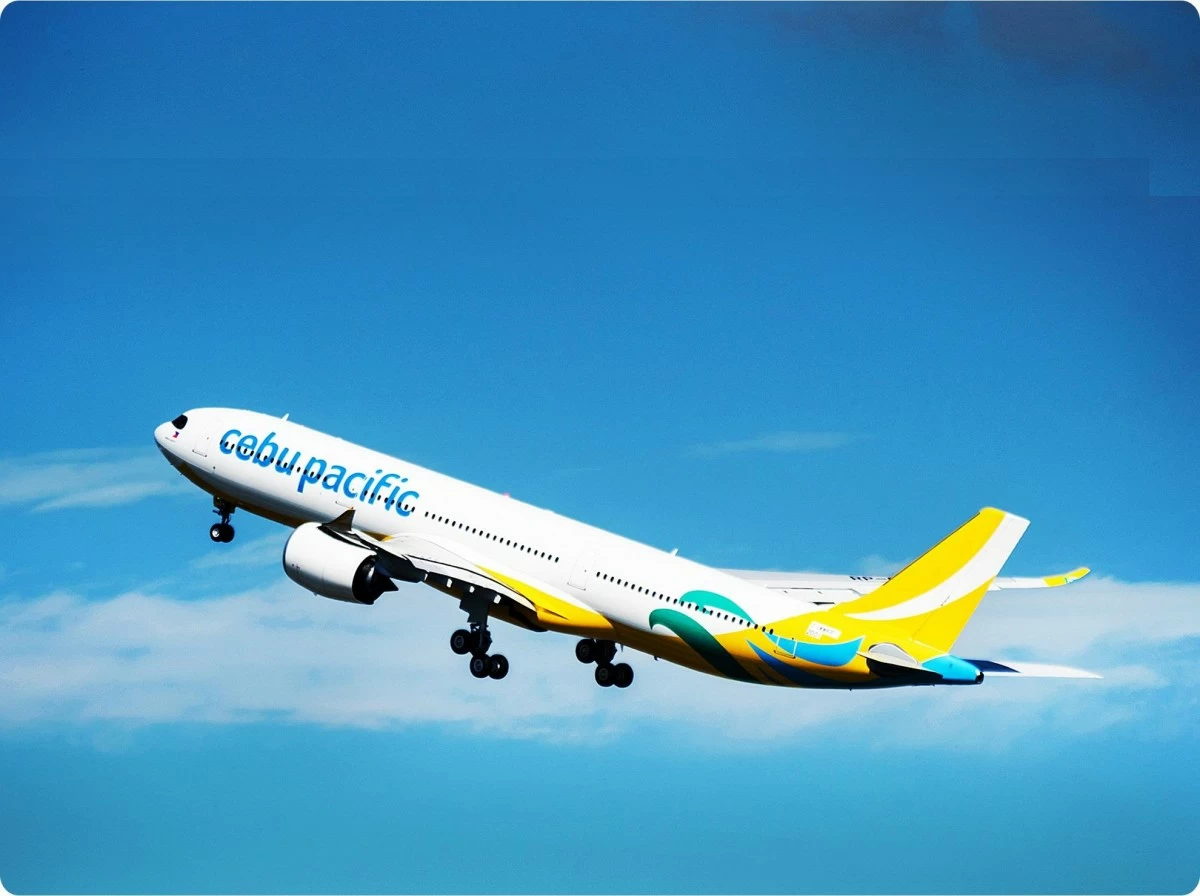
He said the carrier’s growing fleet of A330NEOs, the largest in Asia, is helping it become more fuel-efficient while delivering better seat economics.

With its fleet of 14 A330NEOs, Cebu Pacific is able to accommodate as many as 459 passengers in a single wide-body aircraft, making the cost per passenger lower compared to smaller aircraft.

“Together with our focus on efficiency, this helped mitigate the increased expenses in maintenance, airports, and fleet-related costs due to grounded aircraft,” said Cezar.

After spending ₱6.4 billion in cash outflows for investments last year, Cebu Pacific is looking to sustain its market leadership through “investments in a young fleet and high-frequency routes.”

The airline is continuing the modernization of its fleet with the arrival of seven new aircraft while retiring seven older jets, keeping its fleet size at an industry-high 100.

By the end of last year, Cebu Pacific expanded its domestic market share to 59 percent, while holding a 24-percent share in the international segment.

With over 3,200 flights, Cebu Pacific offers services to 37 domestic and 26 international destinations.

ADVERTISEMENT
.most-popular .layout-ratio{ padding-bottom: 79.13%; } @media (min-width: 768px) and (max-width: 1024px) { .widget-title { font-size: 15px !important; } }

{{ articles_filter_1561_widget.title }}

.most-popular .layout-ratio{ padding-bottom: 79.13%; } @media (min-width: 768px) and (max-width: 1024px) { .widget-title { font-size: 15px !important; } }

{{ articles_filter_1562_widget.title }}

.most-popular .layout-ratio{ padding-bottom: 79.13%; } @media (min-width: 768px) and (max-width: 1024px) { .widget-title { font-size: 15px !important; } }

{{ articles_filter_1563_widget.title }}

{{ articles_filter_1564_widget.title }}

.mb-article-details { position: relative; } .mb-article-details .article-body-preview, .mb-article-details .article-body-summary{ font-size: 17px; line-height: 30px; font-family: "Libre Caslon Text", serif; color: #000; } .mb-article-details .article-body-preview iframe , .mb-article-details .article-body-summary iframe{ width: 100%; margin: auto; } .read-more-background { background: linear-gradient(180deg, color(display-p3 1.000 1.000 1.000 / 0) 13.75%, color(display-p3 1.000 1.000 1.000 / 0.8) 30.79%, color(display-p3 1.000 1.000 1.000) 72.5%); position: absolute; height: 200px; width: 100%; bottom: 0; display: flex; justify-content: center; align-items: center; padding: 0; } .read-more-background a{ color: #000; } .read-more-btn { padding: 17px 45px; font-family: Inter; font-weight: 700; font-size: 18px; line-height: 16px; text-align: center; vertical-align: middle; border: 1px solid black; background-color: white; } .hidden { display: none; }
function initializeAllSwipers() { // Get all hidden inputs with cms_article_id document.querySelectorAll('[id^="cms_article_id_"]').forEach(function (input) { const cmsArticleId = input.value; const articleSelector = '#article-' + cmsArticleId + ' .body_images'; const swiperElement = document.querySelector(articleSelector); if (swiperElement && !swiperElement.classList.contains('swiper-initialized')) { new Swiper(articleSelector, { loop: true, pagination: false, navigation: { nextEl: '#article-' + cmsArticleId + ' .swiper-button-next', prevEl: '#article-' + cmsArticleId + ' .swiper-button-prev', }, }); } }); } setTimeout(initializeAllSwipers, 3000); const intersectionObserver = new IntersectionObserver( (entries) => { entries.forEach((entry) => { if (entry.isIntersecting) { const newUrl = entry.target.getAttribute("data-url"); if (newUrl) { history.pushState(null, null, newUrl); let article = entry.target; // Extract metadata const author = article.querySelector('.author-section').textContent.replace('By', '').trim(); const section = article.querySelector('.section-info ').textContent.replace(' ', ' '); const title = article.querySelector('.article-title h1').textContent; // Parse URL for Chartbeat path format const parsedUrl = new URL(newUrl, window.location.origin); const cleanUrl = parsedUrl.host + parsedUrl.pathname; // Update Chartbeat configuration if (typeof window._sf_async_config !== 'undefined') { window._sf_async_config.path = cleanUrl; window._sf_async_config.sections = section; window._sf_async_config.authors = author; } // Track virtual page view with Chartbeat if (typeof pSUPERFLY !== 'undefined' && typeof pSUPERFLY.virtualPage === 'function') { try { pSUPERFLY.virtualPage({ path: cleanUrl, title: title, sections: section, authors: author }); } catch (error) { console.error('ping error', error); } } // Optional: Update document title if (title && title !== document.title) { document.title = title; } } } }); }, { threshold: 0.1 } ); function showArticleBody(button) { const article = button.closest("article"); const summary = article.querySelector(".article-body-summary"); const body = article.querySelector(".article-body-preview"); const readMoreSection = article.querySelector(".read-more-background"); // Hide summary and read-more section summary.style.display = "none"; readMoreSection.style.display = "none"; // Show the full article body body.classList.remove("hidden"); } document.addEventListener("DOMContentLoaded", () => { let loadCount = 0; // Track how many times articles are loaded const offset = [1, 2, 3, 4, 5, 6, 7, 8, 9, 10]; // Offset values const currentUrl = window.location.pathname.substring(1); let isLoading = false; // Prevent multiple calls if (!currentUrl) { console.log("Current URL is invalid."); return; } const sentinel = document.getElementById("load-more-sentinel"); if (!sentinel) { console.log("Sentinel element not found."); return; } function isSentinelVisible() { const rect = sentinel.getBoundingClientRect(); return ( rect.top < window.innerHeight && rect.bottom >= 0 ); } function onScroll() { if (isLoading) return; if (isSentinelVisible()) { if (loadCount >= offset.length) { console.log("Maximum load attempts reached."); window.removeEventListener("scroll", onScroll); return; } isLoading = true; const currentOffset = offset[loadCount]; window.loadMoreItems().then(() => { let article = document.querySelector('#widget_1690 > div:nth-last-of-type(2) article'); intersectionObserver.observe(article) loadCount++; }).catch(error => { console.error("Error loading more items:", error); }).finally(() => { isLoading = false; }); } } window.addEventListener("scroll", onScroll); });

Sign up by email to receive news.