ADVERTISEMENT

Amid rising fuel costs, DepEd orders simple graduation rites nationwide

Nearly 3.7 million learners to graduate; schools barred from collecting fees as ceremonies must remain modest, meaningful, and accessible

Published Mar 23, 2026 02:24 pm
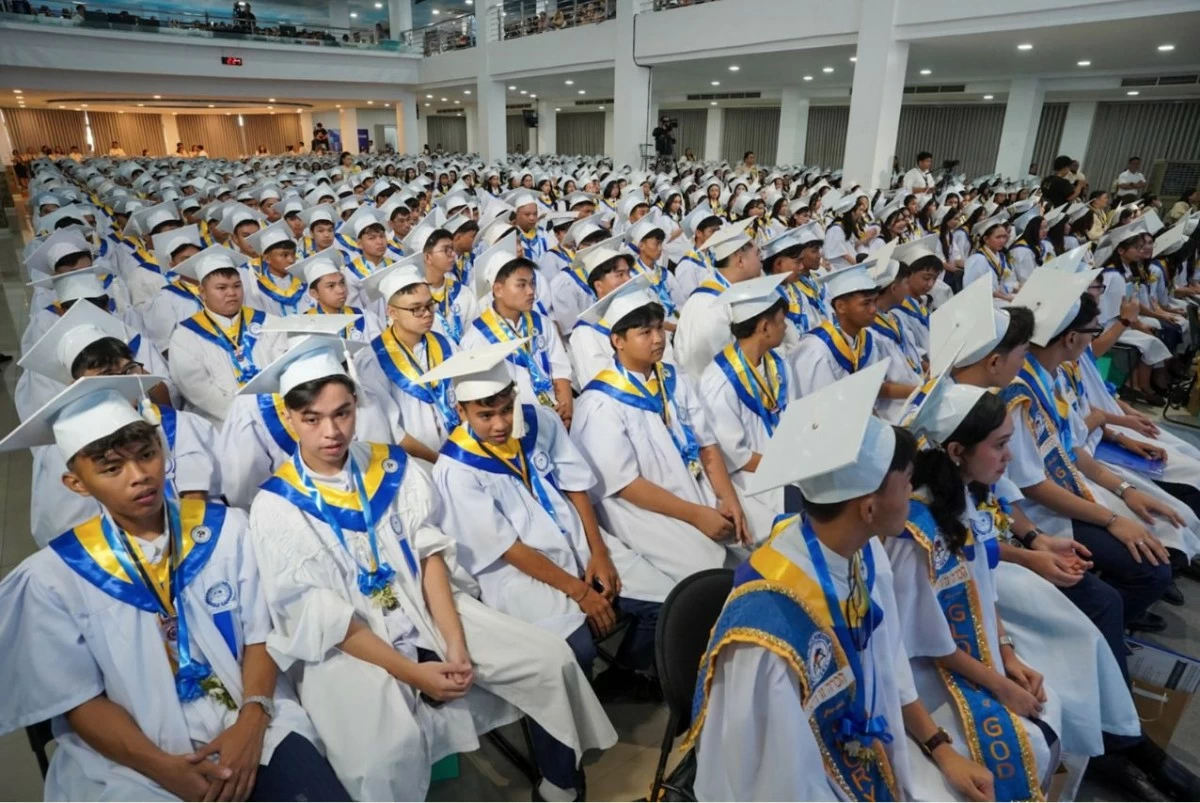
The Department of Education (DepEd) orders simple, no-fee graduation rites nationwide as nearly 3.7 million learners prepare to graduate amid rising fuel costs. (DepEd photo)
The Department of Education (DepEd) has ordered all public schools nationwide to conduct simple, low-cost graduation rites amid rising fuel costs, as nearly 3.7 million learners prepare to graduate under strict guidelines that prohibit fee collection and ensure accessible ceremonies.
The directive, outlined in DepEd Memorandum No. 015, s. 2026, mandates that end-of-school-year rites be modest in scale, free from excessive spending, and accessible to all learners regardless of financial capacity.
DepEd Secretary Sonny Angara said the move supports President Ferdinand R. Marcos Jr.’s directive to ease the burden on Filipino families facing increased transportation and commodity costs.
“We must ensure that this milestone remains a celebration of achievement rather than a financial ordeal for our parents, especially as we navigate the economic impact of rising fuel costs,” Angara said.
“Our schools must prioritize the welfare of learners by keeping these ceremonies simple, meaningful, and entirely free of unnecessary expenses,” he added.
No fees, no extravagant attire
Under the memorandum, schools are strictly prohibited from collecting any fees or contributions for graduation or moving-up ceremonies.
DepEd emphasized that students’ participation in rites must not depend on their ability to pay.
“Schools are urged to hold ceremonies in simple venues, such as school grounds or covered courts, to avoid expensive rentals,” DepEd said.
DepEd also instructed schools to avoid extravagant attire and costly arrangements, encouraging the use of simple venues—such as school grounds or covered courts—rather than rented event spaces.
Non-academic activities not required
DepEd clarified that non-academic activities, including field trips and prom nights, must not be imposed as graduation requirements, reinforcing inclusivity and reducing financial pressure on families.
For public schools, all expenses related to the ceremonies will be covered by Maintenance and Other Operating Expenses (MOOE) funds.
Theme highlights holistic education
DepEd said this year’s graduation theme, “Filipino Graduates: Prepared to Lead with Competence and Character,” underscores the agency’s focus on producing learners who are not only academically prepared but also committed to community service and nation-building.
DepEd estimates that approximately 1.9 million Grade 6 learners and 1.8 million Grade 12 students will graduate nationwide this year.
All end-of-school-year rites are scheduled for March 30 or 31, DepEd said. 
READ: 
https://mb.com.ph/2026/03/06/simple-safe-and-meaningful-deped-issues-reminders-for-2026-end-of-school-year-rites

Related Tags

DepEd graduation 2026 simple graduation rites Philippines graduation no fees policy rising fuel costs Philippines education moving-up ceremonies guidelines DepEd Secretary Sonny Angara
ADVERTISEMENT
.most-popular .layout-ratio{ padding-bottom: 79.13%; } @media (min-width: 768px) and (max-width: 1024px) { .widget-title { font-size: 15px !important; } }

{{ articles_filter_1561_widget.title }}

.most-popular .layout-ratio{ padding-bottom: 79.13%; } @media (min-width: 768px) and (max-width: 1024px) { .widget-title { font-size: 15px !important; } }

{{ articles_filter_1562_widget.title }}

.most-popular .layout-ratio{ padding-bottom: 79.13%; } @media (min-width: 768px) and (max-width: 1024px) { .widget-title { font-size: 15px !important; } }

{{ articles_filter_1563_widget.title }}

{{ articles_filter_1564_widget.title }}

.mb-article-details { position: relative; } .mb-article-details .article-body-preview, .mb-article-details .article-body-summary{ font-size: 17px; line-height: 30px; font-family: "Libre Caslon Text", serif; color: #000; } .mb-article-details .article-body-preview iframe , .mb-article-details .article-body-summary iframe{ width: 100%; margin: auto; } .read-more-background { background: linear-gradient(180deg, color(display-p3 1.000 1.000 1.000 / 0) 13.75%, color(display-p3 1.000 1.000 1.000 / 0.8) 30.79%, color(display-p3 1.000 1.000 1.000) 72.5%); position: absolute; height: 200px; width: 100%; bottom: 0; display: flex; justify-content: center; align-items: center; padding: 0; } .read-more-background a{ color: #000; } .read-more-btn { padding: 17px 45px; font-family: Inter; font-weight: 700; font-size: 18px; line-height: 16px; text-align: center; vertical-align: middle; border: 1px solid black; background-color: white; } .hidden { display: none; }
function initializeAllSwipers() { // Get all hidden inputs with cms_article_id document.querySelectorAll('[id^="cms_article_id_"]').forEach(function (input) { const cmsArticleId = input.value; const articleSelector = '#article-' + cmsArticleId + ' .body_images'; const swiperElement = document.querySelector(articleSelector); if (swiperElement && !swiperElement.classList.contains('swiper-initialized')) { new Swiper(articleSelector, { loop: true, pagination: false, navigation: { nextEl: '#article-' + cmsArticleId + ' .swiper-button-next', prevEl: '#article-' + cmsArticleId + ' .swiper-button-prev', }, }); } }); } setTimeout(initializeAllSwipers, 3000); const intersectionObserver = new IntersectionObserver( (entries) => { entries.forEach((entry) => { if (entry.isIntersecting) { const newUrl = entry.target.getAttribute("data-url"); if (newUrl) { history.pushState(null, null, newUrl); let article = entry.target; // Extract metadata const author = article.querySelector('.author-section').textContent.replace('By', '').trim(); const section = article.querySelector('.section-info ').textContent.replace(' ', ' '); const title = article.querySelector('.article-title h1').textContent; // Parse URL for Chartbeat path format const parsedUrl = new URL(newUrl, window.location.origin); const cleanUrl = parsedUrl.host + parsedUrl.pathname; // Update Chartbeat configuration if (typeof window._sf_async_config !== 'undefined') { window._sf_async_config.path = cleanUrl; window._sf_async_config.sections = section; window._sf_async_config.authors = author; } // Track virtual page view with Chartbeat if (typeof pSUPERFLY !== 'undefined' && typeof pSUPERFLY.virtualPage === 'function') { try { pSUPERFLY.virtualPage({ path: cleanUrl, title: title, sections: section, authors: author }); } catch (error) { console.error('ping error', error); } } // Optional: Update document title if (title && title !== document.title) { document.title = title; } } } }); }, { threshold: 0.1 } ); function showArticleBody(button) { const article = button.closest("article"); const summary = article.querySelector(".article-body-summary"); const body = article.querySelector(".article-body-preview"); const readMoreSection = article.querySelector(".read-more-background"); // Hide summary and read-more section summary.style.display = "none"; readMoreSection.style.display = "none"; // Show the full article body body.classList.remove("hidden"); } document.addEventListener("DOMContentLoaded", () => { let loadCount = 0; // Track how many times articles are loaded const offset = [1, 2, 3, 4, 5, 6, 7, 8, 9, 10]; // Offset values const currentUrl = window.location.pathname.substring(1); let isLoading = false; // Prevent multiple calls if (!currentUrl) { console.log("Current URL is invalid."); return; } const sentinel = document.getElementById("load-more-sentinel"); if (!sentinel) { console.log("Sentinel element not found."); return; } function isSentinelVisible() { const rect = sentinel.getBoundingClientRect(); return ( rect.top < window.innerHeight && rect.bottom >= 0 ); } function onScroll() { if (isLoading) return; if (isSentinelVisible()) { if (loadCount >= offset.length) { console.log("Maximum load attempts reached."); window.removeEventListener("scroll", onScroll); return; } isLoading = true; const currentOffset = offset[loadCount]; window.loadMoreItems().then(() => { let article = document.querySelector('#widget_1690 > div:nth-last-of-type(2) article'); intersectionObserver.observe(article) loadCount++; }).catch(error => { console.error("Error loading more items:", error); }).finally(() => { isLoading = false; }); } } window.addEventListener("scroll", onScroll); });

Sign up by email to receive news.