







A creative strategy for our creative industries
Published Mar 22, 2026 12:05 am
|
Updated Mar 21, 2026 04:07 pm


HEARD IT THROUGH THE GRIPE-VINE
ASEAN Philippines 2026 saw one symposium that was of great interest to me. Mounted by our Department of Trade and Industry (DTI), the United Kingdom Mission to ASEAN, and the British Council, it was a forum that focused on the creative industries, and taking the position that ASEAN was on track to be a world leader in the creative economy. As one of the acknowledged “global creative superpowers,” it was the United Kingdom championing networks of research and innovation, and offering lessons learned in best practices and forging development plans. Held over two days, at the Shangri-La The Fort and at the Likhang Filipino, it was a mix of illuminating keynote presentations, in-depth dialogues, and practical workshops.
This is of particular interest, as when we speak of national development and a sustainable future, the creative economy plays a major part in how the Philippines, and the ASEAN, can move forward and forge “major player status” – reaping great benefits. The creative industries are economic activities that rely on the generation of knowledge and information. They encompasses a wide range of sectors that include advertising, architecture, the arts, craft, design, fashion, film, music, performing arts, publishing, animation, R&D, software development, toys, games, TV and radio, and video games. It’s about harnessing human creativity, and transforming it into a revenue stream, an economic resource.
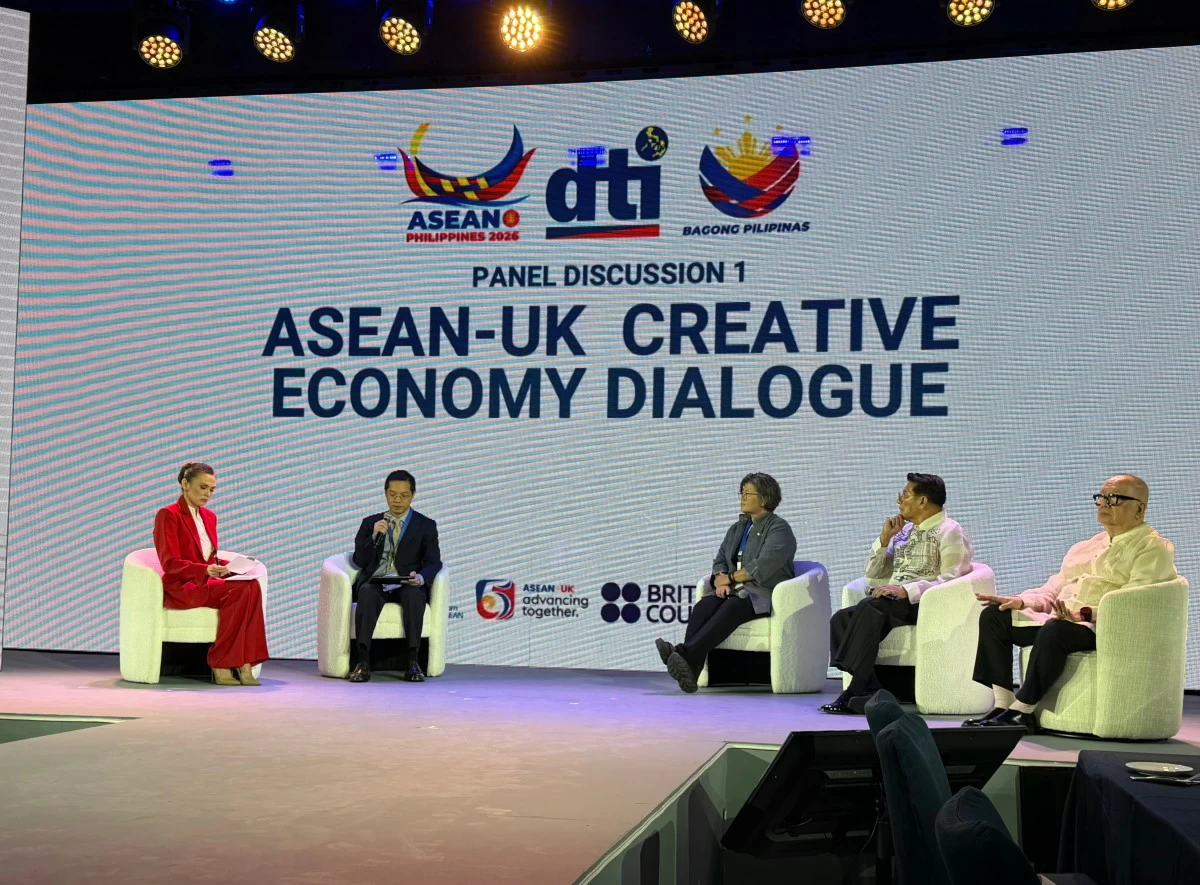
The first ASEAN- UK Creative Economy Dialogue of the day; moderated by Issa Litton, with guest speakers, Intaphan Buakeow of Thailand, Dr. Dwinita Larasati of Indonesia, Junie del Mondo and Joey Reyes from the Philippines.
One can even contrast these intelligence-based industries to the extractive industries that involve removing non-renewable resources – think of oil, gas, minerals and metals – from the Earth. These extractive industries may be high value sectors that are vital for our economic growth; but one can’t help but recognize how they’re exploiting finite resources, and face challenges that have to do with environmental damage, governance, and even corruption. These extractive industries require strict laws and regulations, if we want them to co-exist with sustainability.
Dr. Ahmad Abdul Jalil is the director for ASEAN Integration Monitoring Directorate (AIMD) of the ASEAN Secretariat, and in his presentation on the ASEAN Creative Economy Sustainability Framework, I liked how he synthesized the issues facing progress on this front. While a regional response could benefit all the ASEAN Member States (AMS), there are inherent issues he brought up and pointed out, that impede this from happening.
To generate evidence-based policymaking on Creative Economy cooperation, we need reliable, context-specific data from all the AMS. Dr. Jalil had to accept that several AMS track only the share of creative goods trade, with limited reporting on the creative economy’s contribution to Gross Domestic Product (GDP). To offset this, or correct the situation, partnerships with knowledge institutions was recommended, so that targeted statistical capacity-building could address these gaps in the data, and lead to effective sectoral policies.
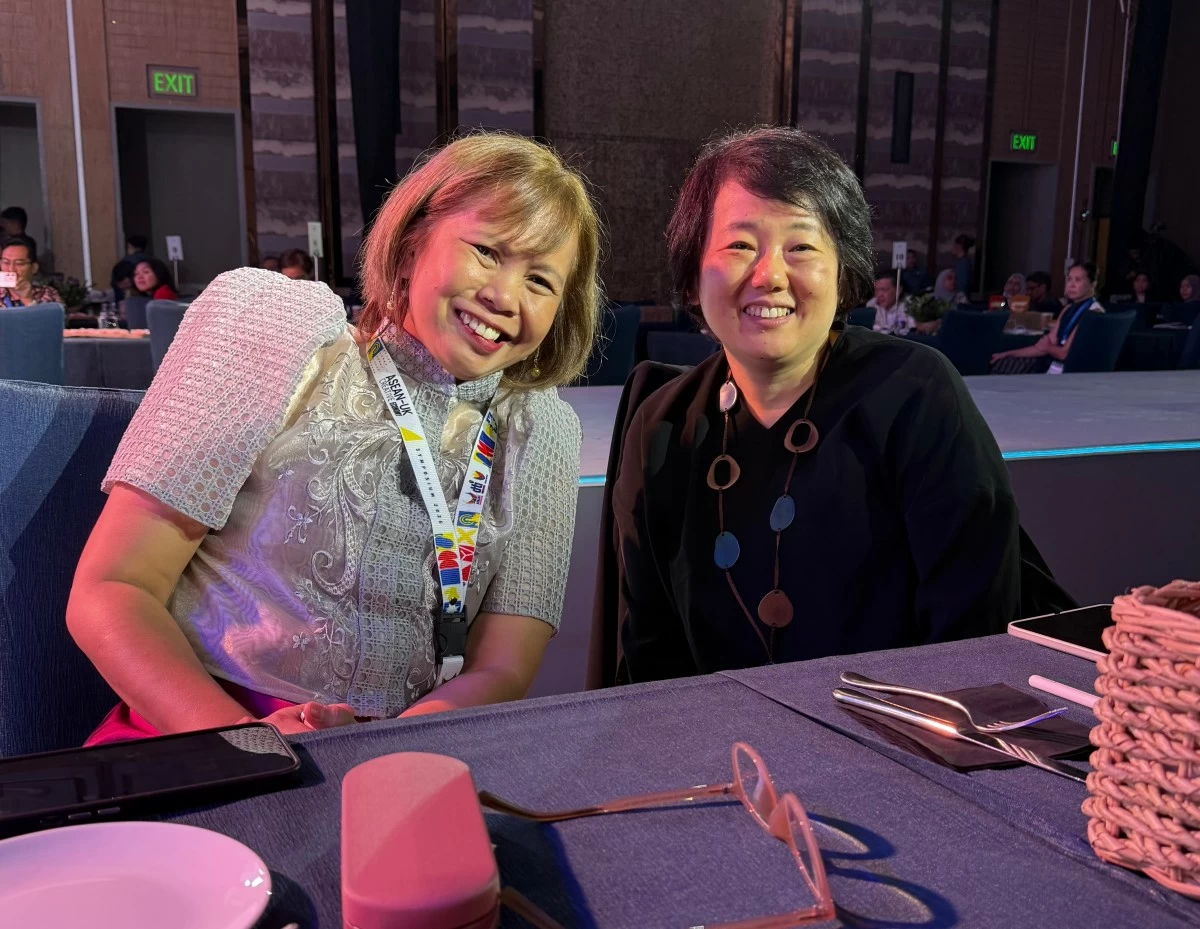
Lotus Postrado, British Council Philippines country director, and Manami Yuwasa, Regional arts director, East Asia, British Council.
A key challenge in advancing creative economy cooperation is securing financing for early-stage creators. As can be expected, financiers are more willing to invest when there is already a reliable and robust valuation of creative outputs. At that point, it’s more about scaling up and expanding, but several promising creative start-up’s don’t even reach that stage. Strengthening industry awareness of intangible assets is therefore essential to unlocking greater investment and growth in the sector.
Dr. Jamil’s third point was how we need to leverage on comprehensive partnerships to advance matchmaking and linkages on creative economy cooperation. There are still so many gaps, such as limited capacity, and even things as basic as understanding the creative economy’s definition. These gaps can be addressed via these comprehensive partnerships, where creators, governments, industry players, and researchers can all get together to strengthen the linkages, and make the desire for cooperation more than just an item on a wish list, but a reality.
Other presentations would highlight a specific country’s immersion in the creative economy, and how elevating creativity and funding the creative MSMEs form part of that member state’s response/action plan. I fully appreciated where all that was coming from; but what I wanted to hear was how ASEAN as a single entity could help move all member states further down the road of achieving a viable ASEAN ecosystem of creativity. For me, that would be the pipe dream, moving from policy and intent, to implementation and action, one that’s achieved across a regional front.
That would help foster a stronger bargaining position for us; and hopefully, be a way to make optimal use of the strengths of the different ASEAN Member States. We are playing catch up to countries such as South Korea if you’re talking creative industries, and we are all witness to how successful South Korea has become in this arena, and the kind of contribution these industries make to the nation’s GDP.