








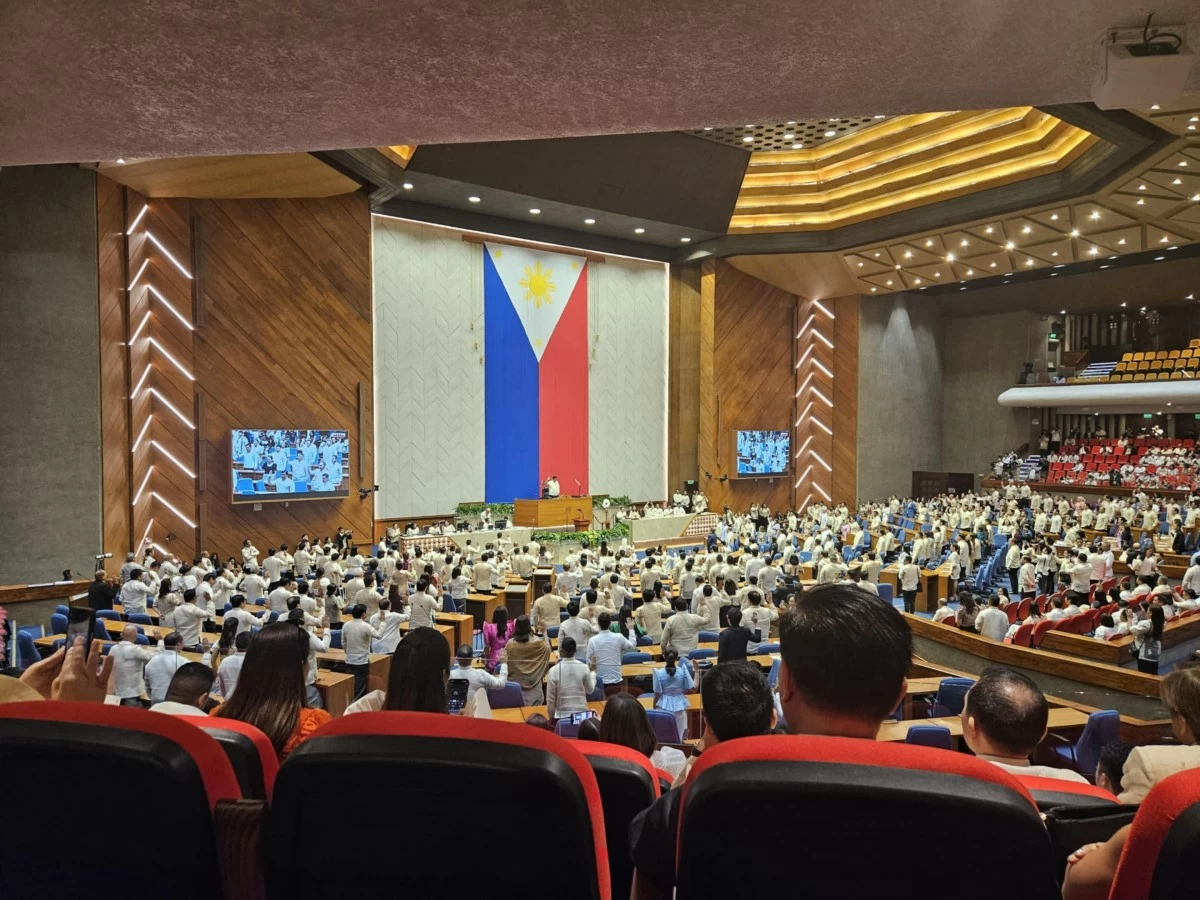
It's very easy to accuse congressmen of "doing nothing" while hapless Filipinos grapple with astronomical fuel prices. This, especially after the solons became the public’s favorite punching bag amid the flood control projects mess.
In truth, a lot of them have already filed measures designed to give motorists and Filipinos in general much-needed relief from the fuel price crisis. A prime example of this is the fuel excise tax suspension bill, which is a signature away from becoming a law.
Once enacted, the law is expected to shave P6 to P10 from pump fuel prices--something that would definitely give downtrodden consumers breathing room.
Here are other relief-seeking measures from House of Representatives members that could potentially breeze through the legislative mill, while they still matter:
1. No Reconnection Fee Act (House Bill No.8706)
Authors: Leyte 1st district Rep. Martin Romualdez; TINGOG Party-list Reps. Yedda Marie Romualdez, Andrew Julian Romualdez, and Jude Acidre.
What it's about: The measure prohibits the collection of reconnection fees for electricity, water, telecommunications, and Internet services, as rising fuel costs continue to drive up the cost of essential utilities.
Under the HB No. 8706, reconnection fees for accounts disconnected due to nonpayment will be prohibited, provided that all outstanding balances, including lawful interest or penalties, have been fully paid. Existing provisions covering fraud, illegal use, and safety-related disconnections will remain in effect.
2. Tax Relief Act (House Bill No. 8660)
Author: Quezon 2nd district Rep. David 'Jay-Jay" Suarez
What it's about: The measure temporarily suspends the imposition and implementation of any new national taxes or increases in existing national taxes scheduled for 2026.
The bill also appeals to local government units (LGUs) to impose a moratorium on new local taxes and increases in local tax rates during the same year, while stabilizing certain real property tax hikes tied to updated Schedules of Market Values under Republic Act (RA) No. 12001.
It includes safeguards to ensure continuity of funding for critical health programs supported by affected excise taxes, requiring a joint continuity plan from relevant agencies. It also mandates implementing rules, quarterly reports to Congress, and mechanisms for refunds or credits on any excess collections.
3. Fuel Crisis Relief Act (House Bill No. 8715)
Author: Navotas City lone district Rep. Toby Tiangco
What it's about: A targeted measure, HB No. 8715 seeks to provide immediate economic relief by imposing a temporary freeze on increases in residential and micro, small, and medium enterprises (MSME) commercial rental rates, allowing the deferment of housing loan payments without penalties, authorizing emergency loans from the Social Security System (SSS) and Government Service Insurance System (GSIS), and declaring a moratorium on the accrual of interest on government loans.
It mandates the Department of Trade and Industry (DTI), and Department of Energy (DOE), in coordination with relevant agencies, to keep prices of petroleum products, basic commodities and utilities including telcos and internet service providers remain reasonable by preventing unjustified increases, with authority to impose or recommend price ceilings, curb hoarding and profiteering, and implement necessary interventions such as requiring price justification, subsidies, or buffer stocking to stabilize supply and protect consumers.5
MSMEs, which account for 99.6 percent of businesses nationwide, are among those most affected by the fuel crisis.
4. Philippine Strategic Petroleum Reserve Act (House Bill No. 8528)
Author: Bagong Henerasyon (BH) Party-list Rep. Robert Nazal
What it's about: The bill proposes the establishment of government-controlled reserves composed of crude oil and refined petroleum products, the development of geographically distributed storage facilities, and the creation of a Strategic Petroleum Reserve Fund to finance the acquisition and maintenance of emergency petroleum stocks.
This government-managed emergency stockpile of crude oil and petroleum products could be tapped during severe supply shocks, geopolitical crises or major disasters affecting fuel availability.
5. Ginhawa sa Kuryente Act (House Bill No. 8191)
Authors: Quezon 2nd district Rep. David “Jay-Jay” Suarez, Zambales 1st district Rep. Jay Khonghun
What it's about: A 50 percent discount on electricity bills is given to households with at least one minimum wage earner. It is applied to a single residential service account corresponding to the household’s principal residence, subject to verification, anti-leakage safeguards and periodic revalidation to keep the benefit targeted and credible.
Alongside the minimum wage earner discount, the measure also strengthens the lifeline rate for marginalized end-users “by requiring distribution utilities to apply the lifeline benefit automatically to qualified households through secure eligibility matching and account tagging, removing the old burden where the less fortunate families often had to navigate paperwork just to get help they already qualified for".
For qualified marginalized end-users whose monthly consumption does not exceed 50 kilowatt-hours (kWh), the measure provides that the lifeline rate will include a 100 percent discount on applicable electricity charges, with the Energy Regulatory Commission (ERC) setting the detailed parameters, a provision the authors described as a practical protection for households that already live on the edge.
6. Call for a P5,000 fuel subsidy to fisherfolk (House Resolution No. 888)
Authors: Albayan Party-list Reps. Perci Cendaña, Chel Diokno, Dadah Kiram Ismula; Dinagat Islands lone district Rep. Kaka Bag-ao.
What it's about: The authors are calling on the Department of Agriculture (DA) to increase the fuel subsidy to fisherfolk to P5,000 from the current P 3,000. They say the current subsidy is grossly inadequate given the rise of fuel brought about by the Middle East conflict.
The measure also urges the DA to fully cover all registered fisherfolk. Currently, the fuel subsidy program only covers around 200,000 registered motorized boat owners.
7. Call to banks, remittance centers, and other financial service providers to temporarily waive or reduce transaction and remittance fees (House Resolution (HR) No. 905)
Author: Ilocos Norte 1st district Rep. Sandro Marcos
What it's about: Doing away with the remittance fees--even if temporary--is seen to help ease the financial burden on overseas Filipino workers (OFWs) in the Middle East and their families back home.
The measure takes into account government efforts to mitigate the impact of the fuel price crisis, including the implementation of flexible work arrangements such as compressed workweeks and work-from-home schemes, which in turn increase reliance on digital financial transactions.