







PCG distances self from China cooperation deal
Published Mar 20, 2026 10:55 am
|
Updated Mar 20, 2026 01:17 pm


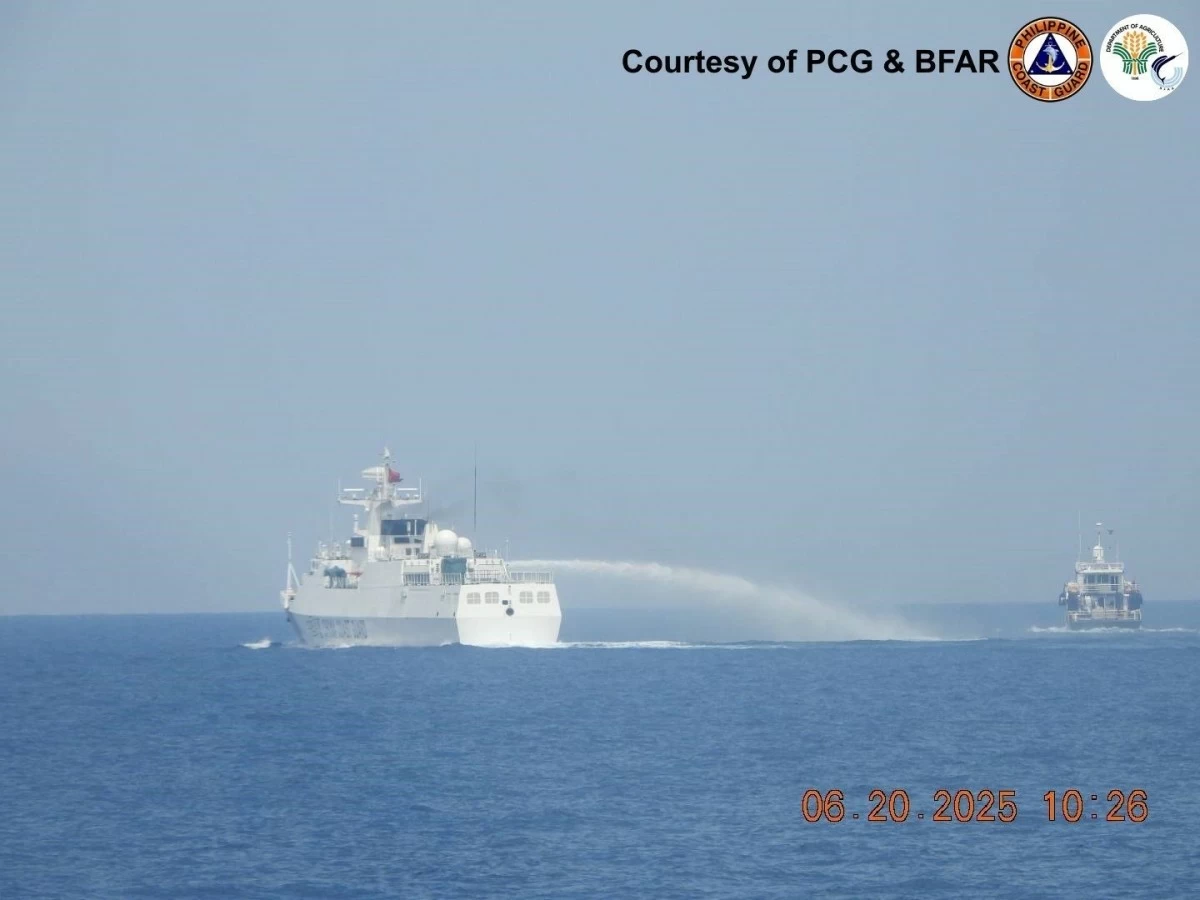
A China Coast Guard ship hits BRP Datu Matanam Taradapit (MMOV 3006) with a water cannon in Bajo de Masinloc on June 20, 2025. (Photo courtesy of PCG Spokesperson for the West Philippine Sea Jay Tarriela)
The Philippine Coast Guard (PCG) is not part of any discussions regarding a potential maritime cooperation agreement with China, including rumored plans for joint patrols in contested waters, a ranking official said.
“As far as the PCG is concerned, based on my last conversation with the Commandant [Admiral Ronnie Gil Gavan], we are not involved in crafting this coast guard cooperation with China, specifically regarding plans for joint patrols,” PCG spokesperson for West Philippine Sea (WPS) Rear Adm. Jay Tarriela said on Friday, March 20.
Tarriela issued the remarks after Chinese Ambassador to the Philippines Jing Quan reportedly said that Manila and Beijing are nearing the completion of a Coast Guard cooperation agreement, with the draft now about 95 percent finished.
He said the deal could be finalized after the next round of political discussions and is being viewed as a step that may help reduce tensions at sea.
The planned agreement would center on non-sensitive areas such as environmental protection, waste management, and search-and-rescue efforts, rather than joint patrols or enforcement operations.
This, despite years of confrontations between the PCG and China Coast Guard (CCG) in disputed parts of the South China Sea including use of water cannons, vessel collisions, and the harassment of Filipino fishermen near Scarborough Shoal or Bajo de Masinloc, as well as efforts to block resupply missions at Ayungin (Second Thomas) Shoal.
Bajo de Masinloc
Meanwhile, the Department of National Defense (DND rejected China’s characterization of Philippine maritime operations near Bajo de Masinloc as a “self-directed farce.”
The shoal is located 124 nautical miles off Masinloc, Zambales, within the country’s 200-nautical mile exclusive economic zone.
DND spokesperson Asst. Sec. Arsenio R. Andolong said the country's activities in the area are lawful and routine. He emphasized they are conducted in the exercise of sovereign rights under international law.
“The real farce is the act of calling for peaceful engagement while the fully armed and heftily funded People’s Liberation Army (Navy) is harassing our fisherfolk who are merely trying to make a living in their traditional fishing grounds,” Andolong said.
Earlier, China’s defense ministry warned it would take “effective countermeasures” against Philippine “provocations” following a recent aerial patrol by the PCG over Bajo de Masinloc, which Beijing calls Huangyan Dao.
“The so-called transparency and exposure campaign is not about uncovering the truth to the world, but a self-directed farce,” according to Senior Colonel Jiang Bin, spokesperson for China's Ministry of National Defense.
Tensions have spiked recently due to the “transparency initiative,” a PCG policy adopted by other government agencies that involves publishing Chinese activities in the WPS, including embedding journalists and releasing raw footage of Chinese maneuvers, prompting Beijing to repeatedly criticize the move.
Andolong noted it is not surprising that China is assailing the strategy as it is “abhorred by those who twist the truth and manipulate narratives to legitimize their unlawful acts and baseless claims.”
“The PRC’s [People’s Republic of China’s] illegal, coercive, aggressive, and deceptive activities in the West Philippine Sea are accurately documented and communicated to the public,” Andolong said.
“The PRC is to blame for the world’s growing awareness of the cognitive illusion that it is trying to create in order to cover up the reputational damage it is inflicting upon itself,” he added.