ADVERTISEMENT

Middle East conflict threatens global trade recovery—WTO

Published Mar 20, 2026 12:29 pm  |  Updated Mar 20, 2026 02:23 pm
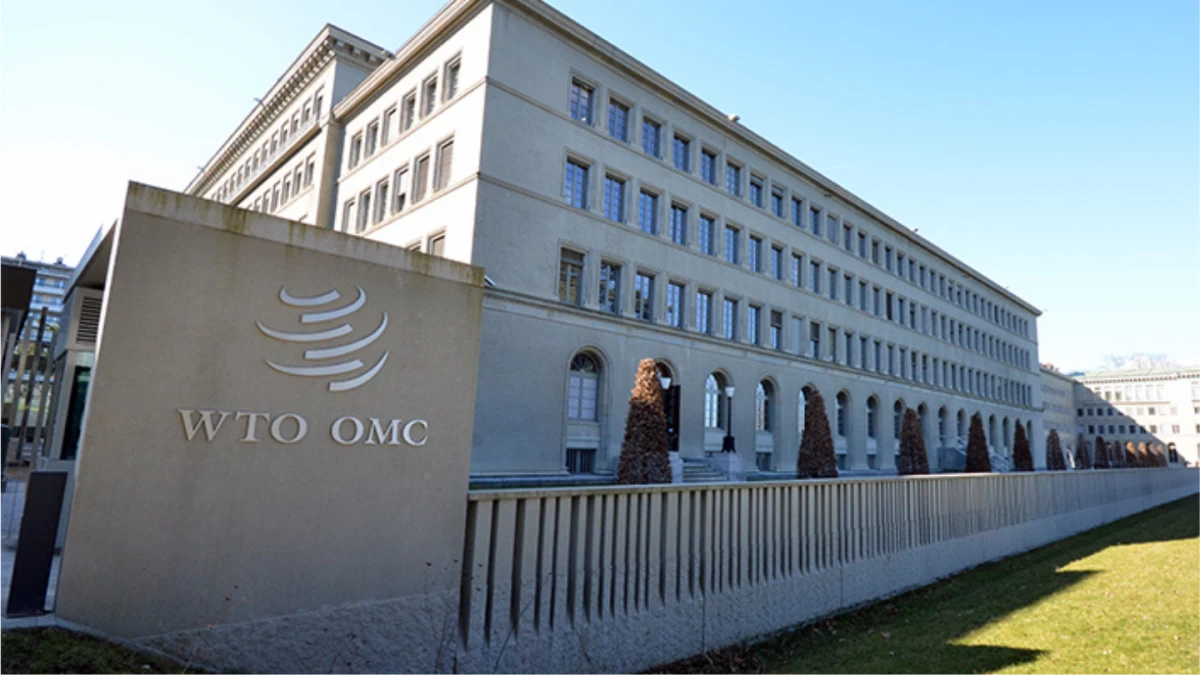
Global goods trade growth will likely plummet to 1.4 percent this year from 4.6% in 2025 as escalating conflict in the Middle East drives up energy costs and threatens to derail the post-pandemic recovery, the World Trade Organization (WTO) said.
The new growth rate for the year is slower than the WTO’s initial estimate of 1.9 percent, which was made before the start of the conflict, as trade was expected to normalize after a surge last year, partly due to frontloading to avoid the United States’ (US) imposition of tariffs.
The WTO said the revised slower growth for the year considers a scenario where both crude oil and liquefied natural gas prices remain elevated to such a point that they would cut global gross domestic product (GDP) growth to 2.5 percent.
It previously estimated that this year’s trade growth would be supported by global GDP growth of 2.8 percent, down slightly from the previous year’s 2.9 percent.
“However, higher energy prices may now dampen GDP growth across a wide range of net oil-importing economies, which in turn will reduce import demand and exports worldwide,” the report read.
Apart from its impact on global oil supply, obstacles to passage through the Strait of Hormuz by Iran have also raised the cost of nitrogen-based fertilizers, placing global food security at major risk.
For the Philippines, the government has been left with no choice but to negotiate with potential sourcing partners like China and Russia to secure local supply as fuel costs threaten shipments.
Without an adequate supply of this planting input, agricultural output could be significantly reduced at a time when the government is pushing for a stronger pivot toward the exportation of high-value commodities.
“Sustained increases in energy prices could increase risks for global trade, with potential spillovers for food security and cost pressures on consumers and businesses,” said WTO Director-General Ngozi Okonjo-Iweala.
She said WTO members can help cushion the economic burden on the public by “maintaining predictable trade policies and strengthening supply chain resilience.”
As chair of this year’s Association of Southeast Asian Nations (ASEAN), the Philippines earlier called on members of the regional bloc to uphold open trade, as non-tariff barriers could undermine regional integration.
Economic ministers have since issued a joint statement agreeing to maintain seamless trade among ASEAN members.
In the broader Asian context, the WTO said the continent is expected to register the fastest merchandise trade growth this year at 3.3 percent. Asia, however, also recorded the largest reduction in growth, from last year’s 9.5 percent expansion.
Under a scenario where the Middle East conflict and its economic impact are short-lived, the WTO said global trade growth could reach as high as 2.4 percent this year, still lower than the 2025 performance.
The WTO noted that frontloading, which enhanced trade last year, will likely not happen again this year since US tariffs are already in place.
“Global trade growth under the baseline scenario might therefore not be as rapid, but it is expected to continue to benefit from the AI (artificial intelligence)-investment drive and the expansionary monetary and fiscal policies,” the report said.
Should spending on AI infrastructure ramp up while fuel prices remain elevated, the WTO said trade growth could reach 1.9 percent, its previous forecast.
Under this scenario, global trade growth for 2027 is pegged at 2.6 percent.
Meanwhile, if the Middle East war drags on, growth next year could increase slightly to 2.8 percent.
ADVERTISEMENT
.most-popular .layout-ratio{ padding-bottom: 79.13%; } @media (min-width: 768px) and (max-width: 1024px) { .widget-title { font-size: 15px !important; } }

{{ articles_filter_1561_widget.title }}

.most-popular .layout-ratio{ padding-bottom: 79.13%; } @media (min-width: 768px) and (max-width: 1024px) { .widget-title { font-size: 15px !important; } }

{{ articles_filter_1562_widget.title }}

.most-popular .layout-ratio{ padding-bottom: 79.13%; } @media (min-width: 768px) and (max-width: 1024px) { .widget-title { font-size: 15px !important; } }

{{ articles_filter_1563_widget.title }}

{{ articles_filter_1564_widget.title }}

.mb-article-details { position: relative; } .mb-article-details .article-body-preview, .mb-article-details .article-body-summary{ font-size: 17px; line-height: 30px; font-family: "Libre Caslon Text", serif; color: #000; } .mb-article-details .article-body-preview iframe , .mb-article-details .article-body-summary iframe{ width: 100%; margin: auto; } .read-more-background { background: linear-gradient(180deg, color(display-p3 1.000 1.000 1.000 / 0) 13.75%, color(display-p3 1.000 1.000 1.000 / 0.8) 30.79%, color(display-p3 1.000 1.000 1.000) 72.5%); position: absolute; height: 200px; width: 100%; bottom: 0; display: flex; justify-content: center; align-items: center; padding: 0; } .read-more-background a{ color: #000; } .read-more-btn { padding: 17px 45px; font-family: Inter; font-weight: 700; font-size: 18px; line-height: 16px; text-align: center; vertical-align: middle; border: 1px solid black; background-color: white; } .hidden { display: none; }
function initializeAllSwipers() { // Get all hidden inputs with cms_article_id document.querySelectorAll('[id^="cms_article_id_"]').forEach(function (input) { const cmsArticleId = input.value; const articleSelector = '#article-' + cmsArticleId + ' .body_images'; const swiperElement = document.querySelector(articleSelector); if (swiperElement && !swiperElement.classList.contains('swiper-initialized')) { new Swiper(articleSelector, { loop: true, pagination: false, navigation: { nextEl: '#article-' + cmsArticleId + ' .swiper-button-next', prevEl: '#article-' + cmsArticleId + ' .swiper-button-prev', }, }); } }); } setTimeout(initializeAllSwipers, 3000); const intersectionObserver = new IntersectionObserver( (entries) => { entries.forEach((entry) => { if (entry.isIntersecting) { const newUrl = entry.target.getAttribute("data-url"); if (newUrl) { history.pushState(null, null, newUrl); let article = entry.target; // Extract metadata const author = article.querySelector('.author-section').textContent.replace('By', '').trim(); const section = article.querySelector('.section-info ').textContent.replace(' ', ' '); const title = article.querySelector('.article-title h1').textContent; // Parse URL for Chartbeat path format const parsedUrl = new URL(newUrl, window.location.origin); const cleanUrl = parsedUrl.host + parsedUrl.pathname; // Update Chartbeat configuration if (typeof window._sf_async_config !== 'undefined') { window._sf_async_config.path = cleanUrl; window._sf_async_config.sections = section; window._sf_async_config.authors = author; } // Track virtual page view with Chartbeat if (typeof pSUPERFLY !== 'undefined' && typeof pSUPERFLY.virtualPage === 'function') { try { pSUPERFLY.virtualPage({ path: cleanUrl, title: title, sections: section, authors: author }); } catch (error) { console.error('ping error', error); } } // Optional: Update document title if (title && title !== document.title) { document.title = title; } } } }); }, { threshold: 0.1 } ); function showArticleBody(button) { const article = button.closest("article"); const summary = article.querySelector(".article-body-summary"); const body = article.querySelector(".article-body-preview"); const readMoreSection = article.querySelector(".read-more-background"); // Hide summary and read-more section summary.style.display = "none"; readMoreSection.style.display = "none"; // Show the full article body body.classList.remove("hidden"); } document.addEventListener("DOMContentLoaded", () => { let loadCount = 0; // Track how many times articles are loaded const offset = [1, 2, 3, 4, 5, 6, 7, 8, 9, 10]; // Offset values const currentUrl = window.location.pathname.substring(1); let isLoading = false; // Prevent multiple calls if (!currentUrl) { console.log("Current URL is invalid."); return; } const sentinel = document.getElementById("load-more-sentinel"); if (!sentinel) { console.log("Sentinel element not found."); return; } function isSentinelVisible() { const rect = sentinel.getBoundingClientRect(); return ( rect.top < window.innerHeight && rect.bottom >= 0 ); } function onScroll() { if (isLoading) return; if (isSentinelVisible()) { if (loadCount >= offset.length) { console.log("Maximum load attempts reached."); window.removeEventListener("scroll", onScroll); return; } isLoading = true; const currentOffset = offset[loadCount]; window.loadMoreItems().then(() => { let article = document.querySelector('#widget_1690 > div:nth-last-of-type(2) article'); intersectionObserver.observe(article) loadCount++; }).catch(error => { console.error("Error loading more items:", error); }).finally(() => { isLoading = false; }); } } window.addEventListener("scroll", onScroll); });

Sign up by email to receive news.