






Manila Bulletin
 Lifestyle
Arts and Culture
Galleria Duemila celebrates golden anniversary with 'Avanti Sempre Avanti'
Lifestyle
Arts and Culture
Galleria Duemila celebrates golden anniversary with 'Avanti Sempre Avanti'
Lifestyle
Arts and Culture
Galleria Duemila celebrates golden anniversary with 'Avanti Sempre Avanti'
Galleria Duemila celebrates golden anniversary with 'Avanti Sempre Avanti'
How a rebellious teen's dreams came true
Published Mar 20, 2026 10:47 am


At A Glance
- One exhibit after another, the gallery earned the respect and admiration of both artists and collectors.
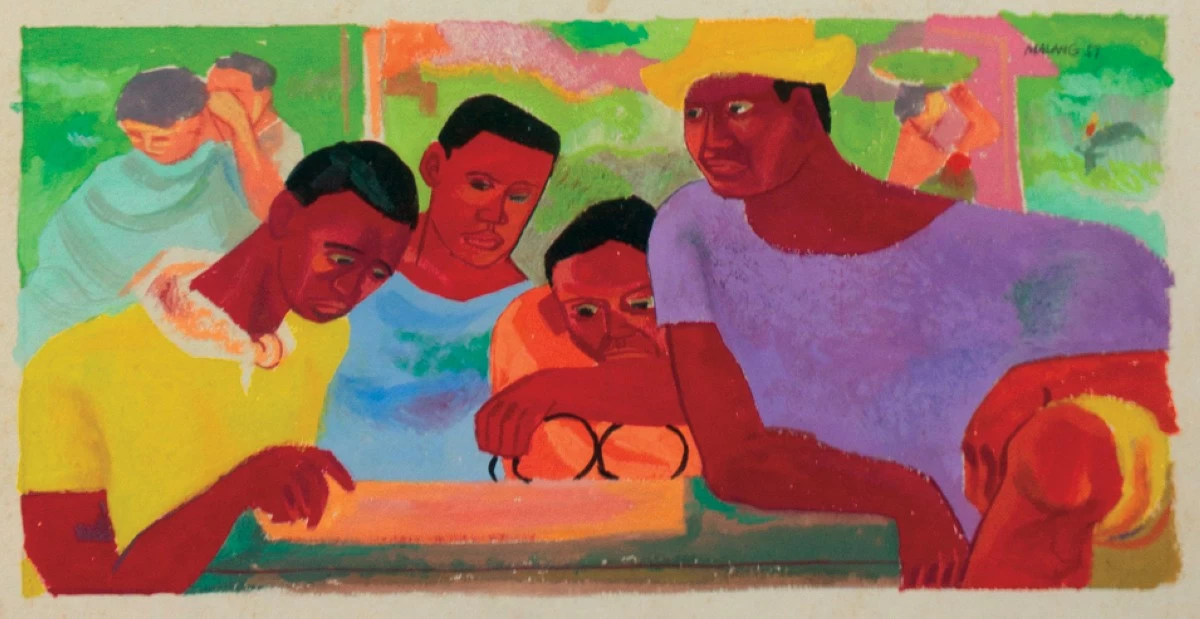
'BARBERSHOP WITH CHESS PLAYERS' Mauro Malang Santos, 1957
By Dexter R. Matilla
As she walked out onto the garden of the Galleria Duemila compound on a beautiful Sunday afternoon, Silvana Ancellotti-Diaz did so with a noticeable limp. A misstep, she said, from a couple of days ago was the cause.
"Right now it's very painful, but as in everything I do, I have to condition my mind that it must be done," Silvana says.
That right there provided this writer an insight as to how the gallerist has been able to make Galleria Duemila a steady and influential player that continues to shape the landscape of Philippine art.
Born in March 1948 in Mantova, Italy, Silvana describes herself as growing up very stubborn and rebellious, traits she says she likely acquired from her parents, who had lived through World War II.
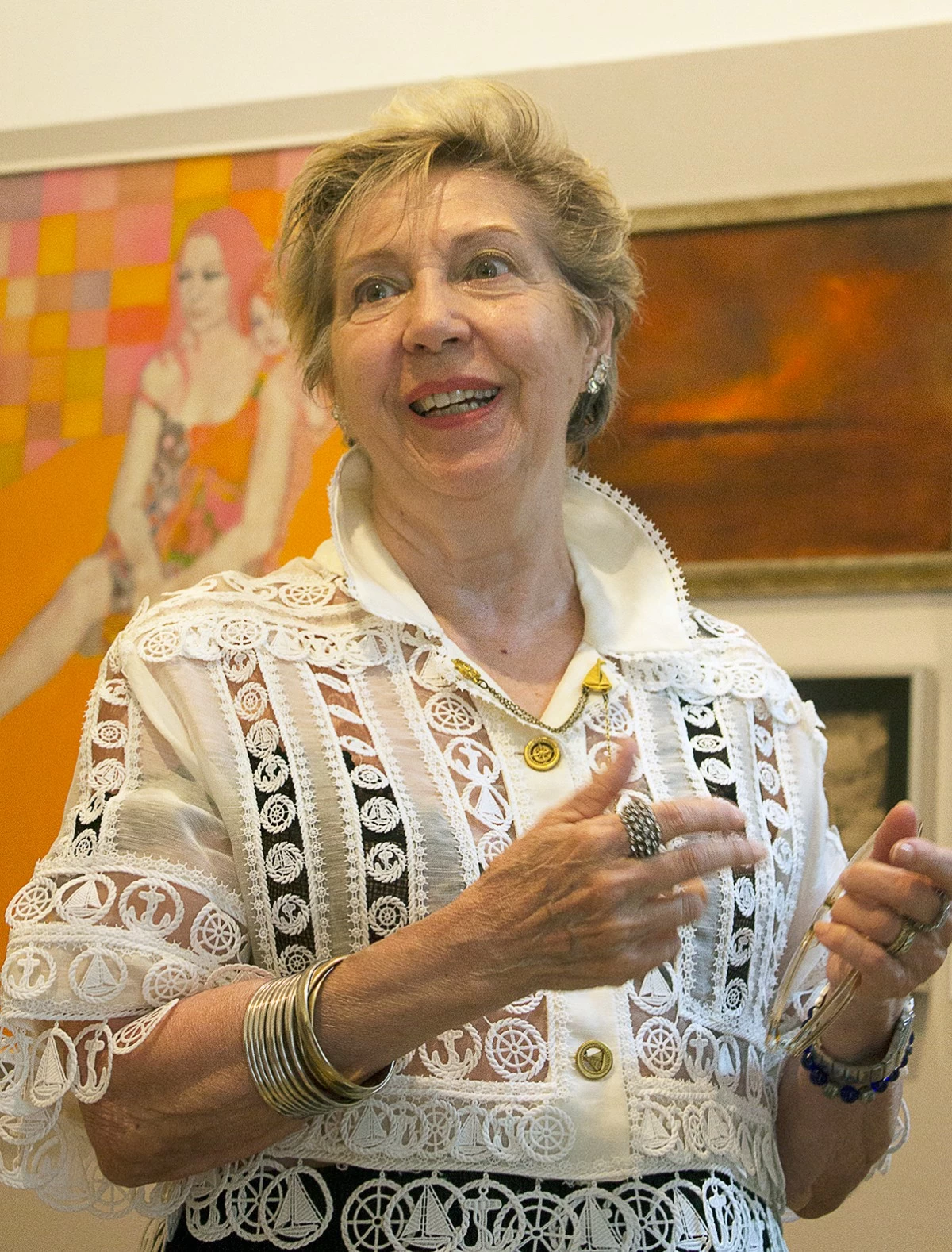
Silvana Ancellotti-Diaz
"During the war, many women suffered trauma... I think what my mother lived through went to me somehow," she says. "The men and women of the time were very courageous. And they had to build up after that."
Indeed, that survival instinct, that level of resilience, proved essential as Silvana navigated a totally new environment where she barely knew anyone and definitely didn't speak the local language (although she speaks French and Spanish).
It was here that she, having worked as a flight stewardess for Alitalia, met husband Ramon, whose sisters include Miss Universe Gloria Diaz and New York-based artist Isabel Diaz.
Ramon, an artist as well, suggested that Isabel's works be exhibited in Manila. Silvana took on the challenge of making it happen, coming to an agreement with the Miladay Art Center at what was then known as Quad in Makati. Despite not having any experience putting together an art exhibit, Silvana, through sheer will and dedication, managed to pull off a successful show, with all of the artists' paintings sold.
Silvana would end up working at Miladay Gallery, learning the ropes from its curator, the late Lino Severino. But the gallery would end up closing, and so Silvana decided to open her own with the help of her father-in-law's ₱20,000 investment.

'BIRTH (GAIA'S WOMB)' Impy Pilapil, 2006
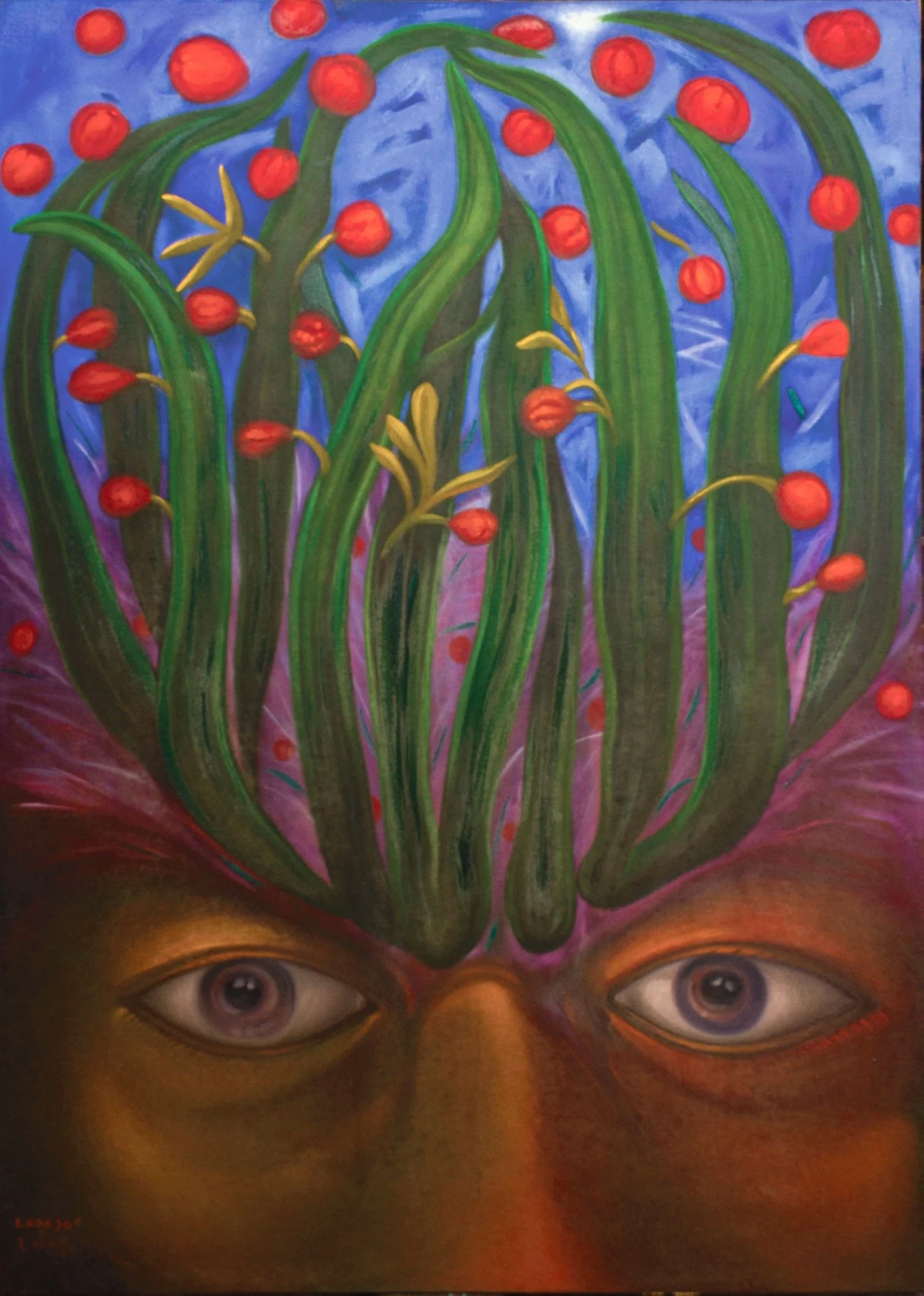
'MAY RITUAL' Raul Lebajo, 2003
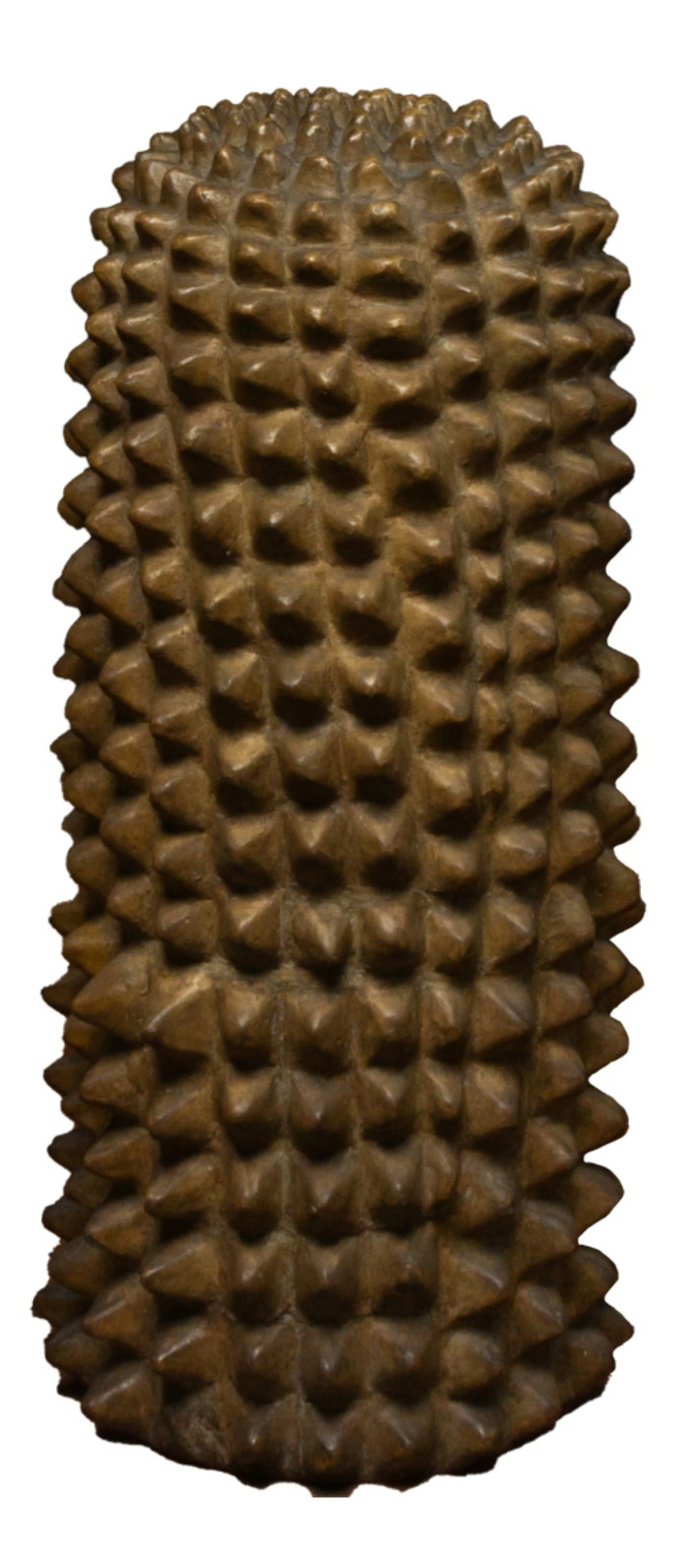
'CACTUS' Julie Lluch, 1992
"'This will be the worst investment I make,’ my father-in-law said to me," Silvana shares.
Since opening on Dec. 5, 1975, Galleria Duemila has consistently put on well-curated shows. Silvana made sure that, just as she would see it being done in Europe, Galleria Duemila's exhibits would be handled professionally, even if it meant her doing the most laborious task of transporting the paintings and sculptures rain-or-shine. One exhibit after another, the gallery earned the respect and admiration of both artists and collectors.
"To tell you the truth, the days just passed by," Silvana says. Suddenly we were 10 years, 20, 30. Other galleries ahead of us, it's very hard to find professionals to work with. You need to have courage and perseverance. Today you go down, tomorrow is another day. Avanti, sempre, avanti. Time changes, we have gone through a revolution, changing administrations, it was a roller coaster. Historically, I found it very interesting. Financially, no, it has created a lot of challenges. Thank God, with my husband, I was able to overcome anything. Through my luck. Also, because I love what I do, when I sell something, I am emotionally committed. I have to be. It's my character."
Survivors
Silvana's stubbornness and resilience would once again come into play when, in 2018, she was diagnosed with colon cancer and had to undergo surgery and chemotherapy. In the same year, Ramon's cancer returned after being cleared of it for 12 years.
It may have been a challenging two years for them, but Silvana is thankful to God and the support of their children, Illac, Marco, and Romina, who took a break from her work in Florence, Italy, to care for them.
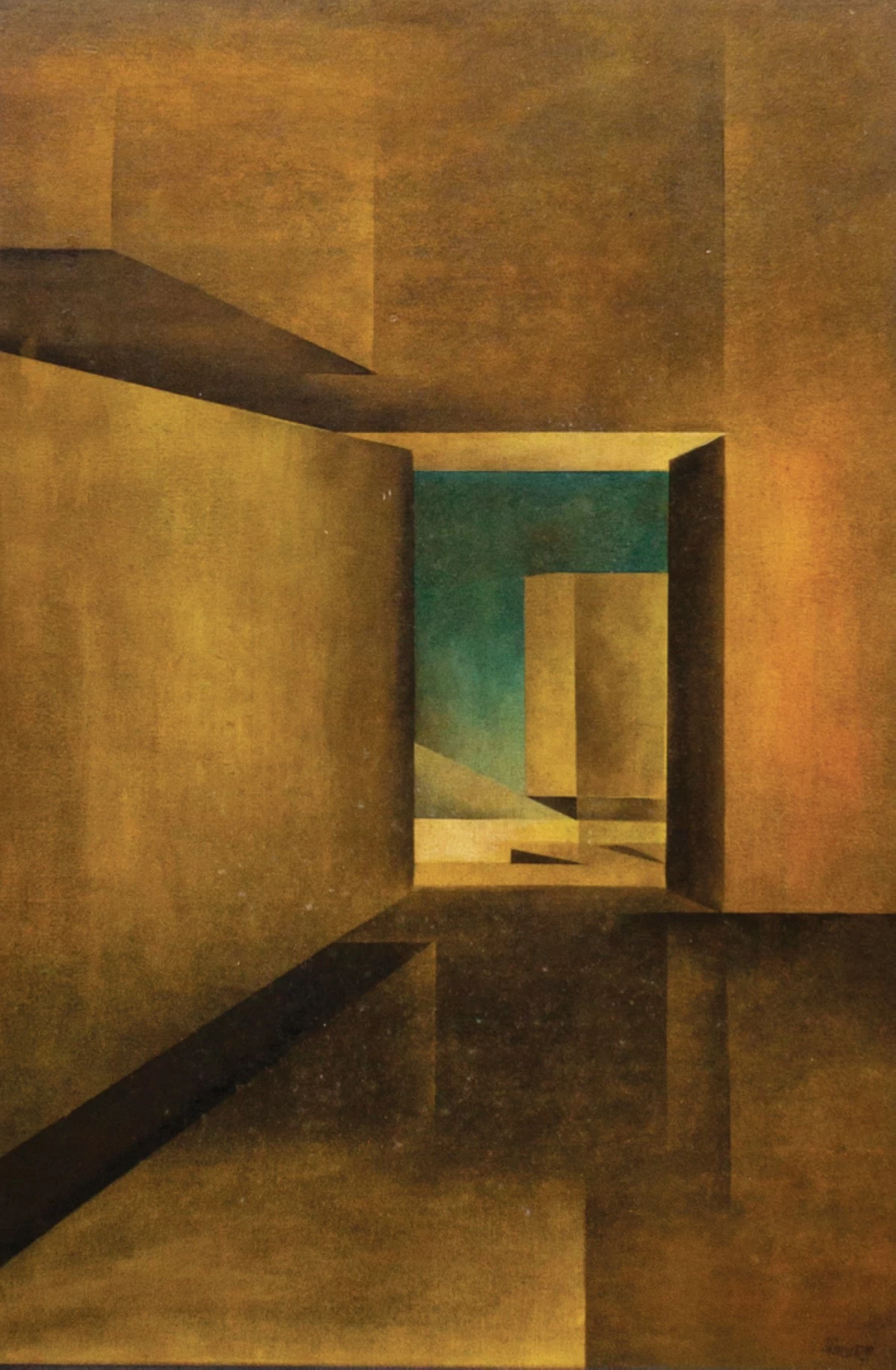
'SEARCH' Tiny Nuyda, 1971
When the Covid-19 pandemic hit, Galleria Duemila once again adapted and survived. This year, it celebrates its golden anniversary by honoring 37 highly acclaimed artists who have contributed to its success. The exhibit “Avanti Sempre Avanti” features carefully selected works from Pacita Abad, Leopoldo Aguinaldo II, Ray Albano, Augusto Albor, Federico Aguilar Alcuaz, Nunelucio Alvarado, Agnes Arellano, May Baddour, Santiago Bose, Benedicto Cabrera, Eduardo Castrillo, Roberto Chabet, Charlie Co, Ramon Manuel De Leon, Duddley Diaz, Isabel Diaz, Lamberto Hechanova, Jose Joya, Lao Lianben, Raul Lebajo, Cesar Legaspi, Julie Lluch, Arturo Luz, Jerry Elizalde Navarro, Justin Nuyda, Hernando R. Ocampo, Manuel Ocampo, Romulo Olazo, Onib Olmedo, Imelda Pilapil, Juvenal Sanso, Mauro Malang Santos, Solomon Saprid, Nestor Vinluan, Betsy Westendorp, Luis Junyee Yee Jr., and Phyllis Zaballero.
"Very professional," said Nestor Vinluan, a former dean at the UP Diliman College of Fine Arts. "Silvana is a very good supporter of the arts, kind-hearted, and encouraging. Surviving the arts is not easy, and Duemila also allows students to have exhibits in the gallery."
Phyllis Zaballero met Silvana during the former's final year as a Fine Arts (her second degree after Economics) student in UP Diliman in the late '70s. The artist, who was in a group with Roberto Chabet, had just had her first solo show at the Cultural Center of the Philippines.
"Silvana was very interested in everything," Phyllis says. "And she gave me a show after graduating. That's how dedicated she was to helping young artists."
Similarly, Julie Lluch shares that Galleria Duemila has strongly supported her art and helped pave a career path for her through the years.
"In 2008, in partnership with the Cultural Center of the Philippines and the NCCA, Duemila put up a retrospective exhibition of my terra cotta sculptures for which I am deeply grateful," Julie says. "I've learned a great deal from the expertise of Silvana, the ultimate gallerist whose dedication and unremitting professionalism and unerring artistic sense have made Galleria Duemila what it is today."
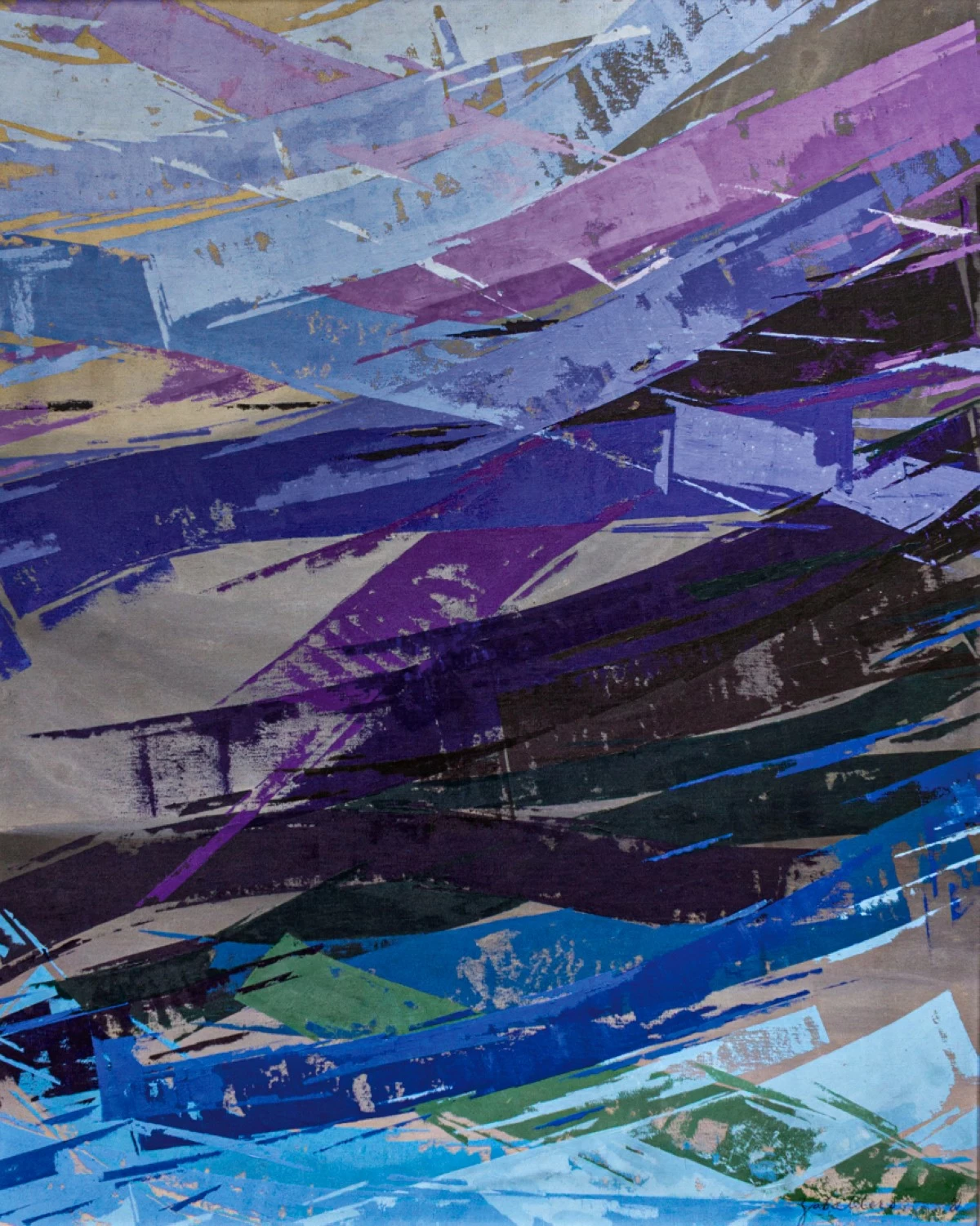
'SEA HORIZON I' Phyllis Zaballero, 1980
Having accomplished so much already, what else does Silvana hope to achieve?
"The Philippines is big, you really need to have archiving," she says. "I'm ready to give all my documents to be digitized for the museums. Archiving the history of this country will be important. Save the monuments, buildings, the indigenous peoples, the tradition, the plants, they have to be recorded because it's all pure. You have to capture this."
"I love it here, in fact, I was thinking when it's my time to be buried in Italy, because we have a church, the Ancellotti church, I will speak with my brother and give up my right because only an Ancellotti can be buried there," Silvana reveals. "At the end of the day, it's here that I spent 55 years."
Perhaps more than her role in the local art scene, the child who grew up in a post-World War II era and fell in love in and with the Philippines will be known for her sincerity and the strength of her spirit.
And while the world today seems to be on the brink of yet another war, it is best in these uncertain and often confusing times to learn from the past for there is power in remembrance.
One only needs to be reminded of the stories of brave, rebellious, passionate individuals, like Silvana, who followed their hearts, never gave up, and took on adversity head-on to understand and accept that humanity—and the arts for that matter—will always survive the hardest of times. Life moves forward, life goes on.
Email the author at [email protected]