ADVERTISEMENT

Fare hike suspension: Relief or risk?

Published Mar 20, 2026 12:05 am  |  Updated Mar 19, 2026 06:20 pm
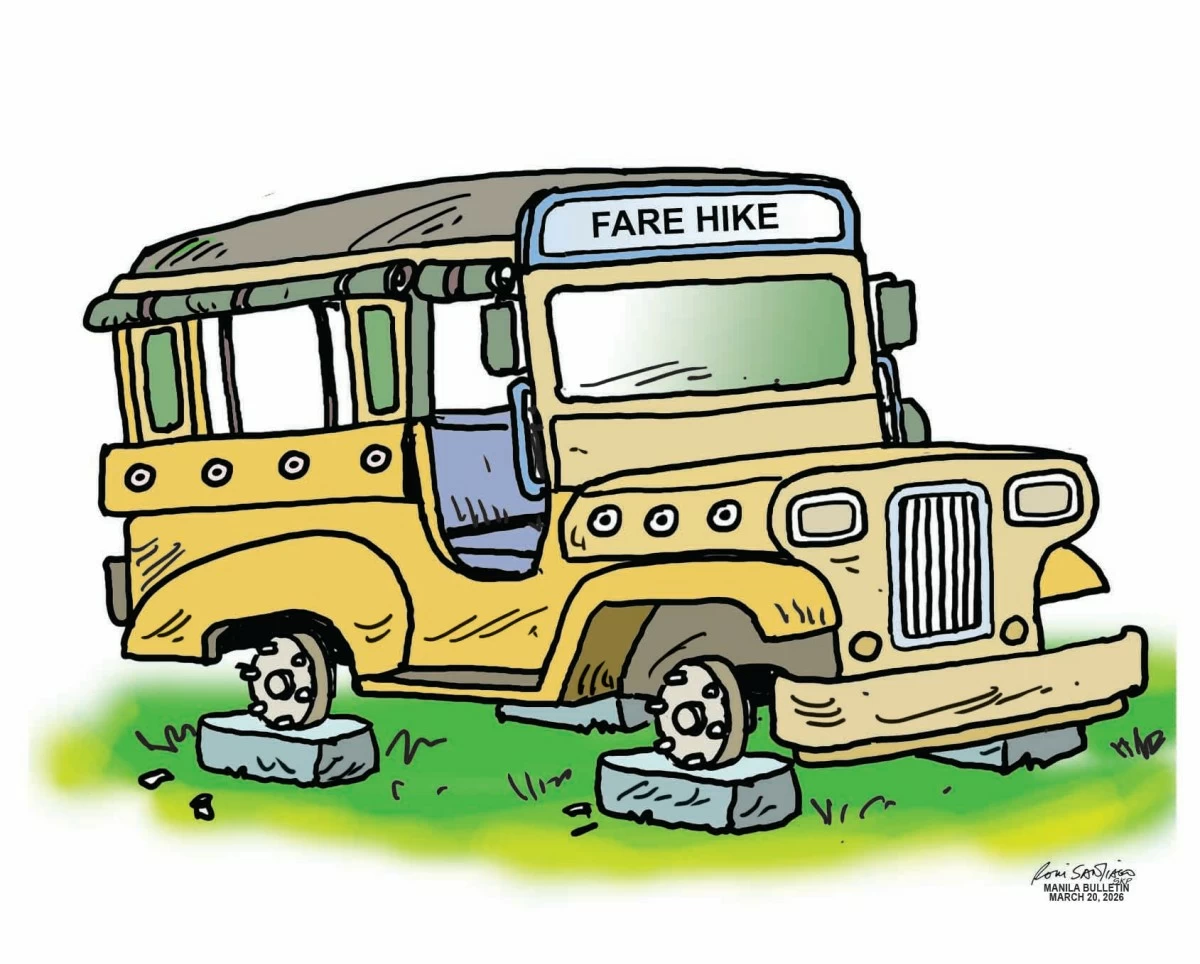
President Marcos’ decision to suspend the fare hikes in public utility vehicles (PUV) sounds good. It offers immediate relief to millions of commuters already strained by rising fuel and food costs brought about by the Middle East conflict. It is a politically and socially appealing move, especially in a time of global uncertainty.
Yet beneath this well-intentioned directive lies a deeper, more fragile reality. Public utility vehicle (PUV) operators, long operating on razor-thin margins, may find themselves pushed to the brink with this decision. When that happens, the very commuters the policy seeks to protect could end up stranded.
Why? Public transport is not a charity; it is a livelihood. Operators and drivers absorb the same oil shocks and inflationary pressures as everyone else—often more acutely. Fuel, maintenance, boundary fees, and financing costs do not pause simply because fare increases are frozen. If revenues fail to keep pace with these costs, operators may reduce trips, shorten routes, or at worst halt operations altogether. The result would have dire consequences. There would be fewer vehicles on the road, longer waiting times, and ultimately, a breakdown in mobility. A fare hike suspension that leads to transport scarcity defeats its purpose.
The challenge, then, is not whether to support commuters or operators, but how to sustain both. A balanced approach requires targeted, time-bound interventions that address immediate pain points while preserving the long-term viability of public transport.
First, the government must step in with direct, transparent subsidies for PUV operators and drivers. Fuel subsidies, calibrated to current oil prices and distributed efficiently, can cushion operational costs without passing the burden onto commuters. These subsidies must be conditional—tied to service continuity and compliance with transport regulations—to ensure public benefit.
Second, regulators should consider a flexible fare mechanism rather than a blunt freeze-or-hike approach. A calibrated system—perhaps a partial fare adjustment combined with government support—can distribute the burden more equitably. For instance, a minimal provisional increase, paired with subsidies, may prevent operator losses while keeping fares manageable.
Third, structural reforms in the transport sector must not be sidelined. The ongoing modernization of PUVs, route rationalization, and consolidation of operators into cooperatives should be accelerated—but with genuine financial and technical assistance. Modern, fuel-efficient vehicles reduce long-term costs and vulnerability to oil price shocks. However, forcing modernization without adequate support risks deepening operator distress.
Equally important is clear, consistent communication. Policy uncertainty breeds anxiety among both commuters and operators. The government must articulate a coherent roadmap: how long the suspension will last, what support mechanisms are in place, and what triggers future fare adjustments. Predictability fosters cooperation.
For their part, PUV operators must also act with restraint and responsibility. While the pressure to maintain income is real, resorting to sudden strikes or service disruptions would only exacerbate public hardship and erode trust. Dialogue—not disruption—should be their primary tool. Organized representation, data-backed appeals, and participation in policy discussions can yield more sustainable outcomes than street-level confrontations.
Operators may also need to rethink short-term profit expectations in favor of long-term stability. Efficiency measures—such as optimizing routes, reducing empty runs, and embracing cooperative models—can help mitigate losses. The crisis, while painful, presents an opportunity to transition toward a more resilient transport system.
In the end, mobility is a shared public good. Commuters and operators are not adversaries but interdependent actors in a fragile ecosystem. Policies that ignore this interdependence risk collapse on both sides. The goal must not be to freeze fares indefinitely or to grant unchecked increases, but to craft a responsive system that adapts to economic realities without abandoning social equity.
A balanced path is neither easy nor immediate. But without it, the roads ahead may lead not to relief, but to gridlock—economic, social, and literal.
ADVERTISEMENT
.most-popular .layout-ratio{ padding-bottom: 79.13%; } @media (min-width: 768px) and (max-width: 1024px) { .widget-title { font-size: 15px !important; } }

{{ articles_filter_1561_widget.title }}

.most-popular .layout-ratio{ padding-bottom: 79.13%; } @media (min-width: 768px) and (max-width: 1024px) { .widget-title { font-size: 15px !important; } }

{{ articles_filter_1562_widget.title }}

.most-popular .layout-ratio{ padding-bottom: 79.13%; } @media (min-width: 768px) and (max-width: 1024px) { .widget-title { font-size: 15px !important; } }

{{ articles_filter_1563_widget.title }}

{{ articles_filter_1564_widget.title }}

.mb-article-details { position: relative; } .mb-article-details .article-body-preview, .mb-article-details .article-body-summary{ font-size: 17px; line-height: 30px; font-family: "Libre Caslon Text", serif; color: #000; } .mb-article-details .article-body-preview iframe , .mb-article-details .article-body-summary iframe{ width: 100%; margin: auto; } .read-more-background { background: linear-gradient(180deg, color(display-p3 1.000 1.000 1.000 / 0) 13.75%, color(display-p3 1.000 1.000 1.000 / 0.8) 30.79%, color(display-p3 1.000 1.000 1.000) 72.5%); position: absolute; height: 200px; width: 100%; bottom: 0; display: flex; justify-content: center; align-items: center; padding: 0; } .read-more-background a{ color: #000; } .read-more-btn { padding: 17px 45px; font-family: Inter; font-weight: 700; font-size: 18px; line-height: 16px; text-align: center; vertical-align: middle; border: 1px solid black; background-color: white; } .hidden { display: none; }
function initializeAllSwipers() { // Get all hidden inputs with cms_article_id document.querySelectorAll('[id^="cms_article_id_"]').forEach(function (input) { const cmsArticleId = input.value; const articleSelector = '#article-' + cmsArticleId + ' .body_images'; const swiperElement = document.querySelector(articleSelector); if (swiperElement && !swiperElement.classList.contains('swiper-initialized')) { new Swiper(articleSelector, { loop: true, pagination: false, navigation: { nextEl: '#article-' + cmsArticleId + ' .swiper-button-next', prevEl: '#article-' + cmsArticleId + ' .swiper-button-prev', }, }); } }); } setTimeout(initializeAllSwipers, 3000); const intersectionObserver = new IntersectionObserver( (entries) => { entries.forEach((entry) => { if (entry.isIntersecting) { const newUrl = entry.target.getAttribute("data-url"); if (newUrl) { history.pushState(null, null, newUrl); let article = entry.target; // Extract metadata const author = article.querySelector('.author-section').textContent.replace('By', '').trim(); const section = article.querySelector('.section-info ').textContent.replace(' ', ' '); const title = article.querySelector('.article-title h1').textContent; // Parse URL for Chartbeat path format const parsedUrl = new URL(newUrl, window.location.origin); const cleanUrl = parsedUrl.host + parsedUrl.pathname; // Update Chartbeat configuration if (typeof window._sf_async_config !== 'undefined') { window._sf_async_config.path = cleanUrl; window._sf_async_config.sections = section; window._sf_async_config.authors = author; } // Track virtual page view with Chartbeat if (typeof pSUPERFLY !== 'undefined' && typeof pSUPERFLY.virtualPage === 'function') { try { pSUPERFLY.virtualPage({ path: cleanUrl, title: title, sections: section, authors: author }); } catch (error) { console.error('ping error', error); } } // Optional: Update document title if (title && title !== document.title) { document.title = title; } } } }); }, { threshold: 0.1 } ); function showArticleBody(button) { const article = button.closest("article"); const summary = article.querySelector(".article-body-summary"); const body = article.querySelector(".article-body-preview"); const readMoreSection = article.querySelector(".read-more-background"); // Hide summary and read-more section summary.style.display = "none"; readMoreSection.style.display = "none"; // Show the full article body body.classList.remove("hidden"); } document.addEventListener("DOMContentLoaded", () => { let loadCount = 0; // Track how many times articles are loaded const offset = [1, 2, 3, 4, 5, 6, 7, 8, 9, 10]; // Offset values const currentUrl = window.location.pathname.substring(1); let isLoading = false; // Prevent multiple calls if (!currentUrl) { console.log("Current URL is invalid."); return; } const sentinel = document.getElementById("load-more-sentinel"); if (!sentinel) { console.log("Sentinel element not found."); return; } function isSentinelVisible() { const rect = sentinel.getBoundingClientRect(); return ( rect.top < window.innerHeight && rect.bottom >= 0 ); } function onScroll() { if (isLoading) return; if (isSentinelVisible()) { if (loadCount >= offset.length) { console.log("Maximum load attempts reached."); window.removeEventListener("scroll", onScroll); return; } isLoading = true; const currentOffset = offset[loadCount]; window.loadMoreItems().then(() => { let article = document.querySelector('#widget_1690 > div:nth-last-of-type(2) article'); intersectionObserver.observe(article) loadCount++; }).catch(error => { console.error("Error loading more items:", error); }).finally(() => { isLoading = false; }); } } window.addEventListener("scroll", onScroll); });

Sign up by email to receive news.