







Stocks fall as peso breaches ₱60 per dollar record
Published Mar 19, 2026 06:11 pm


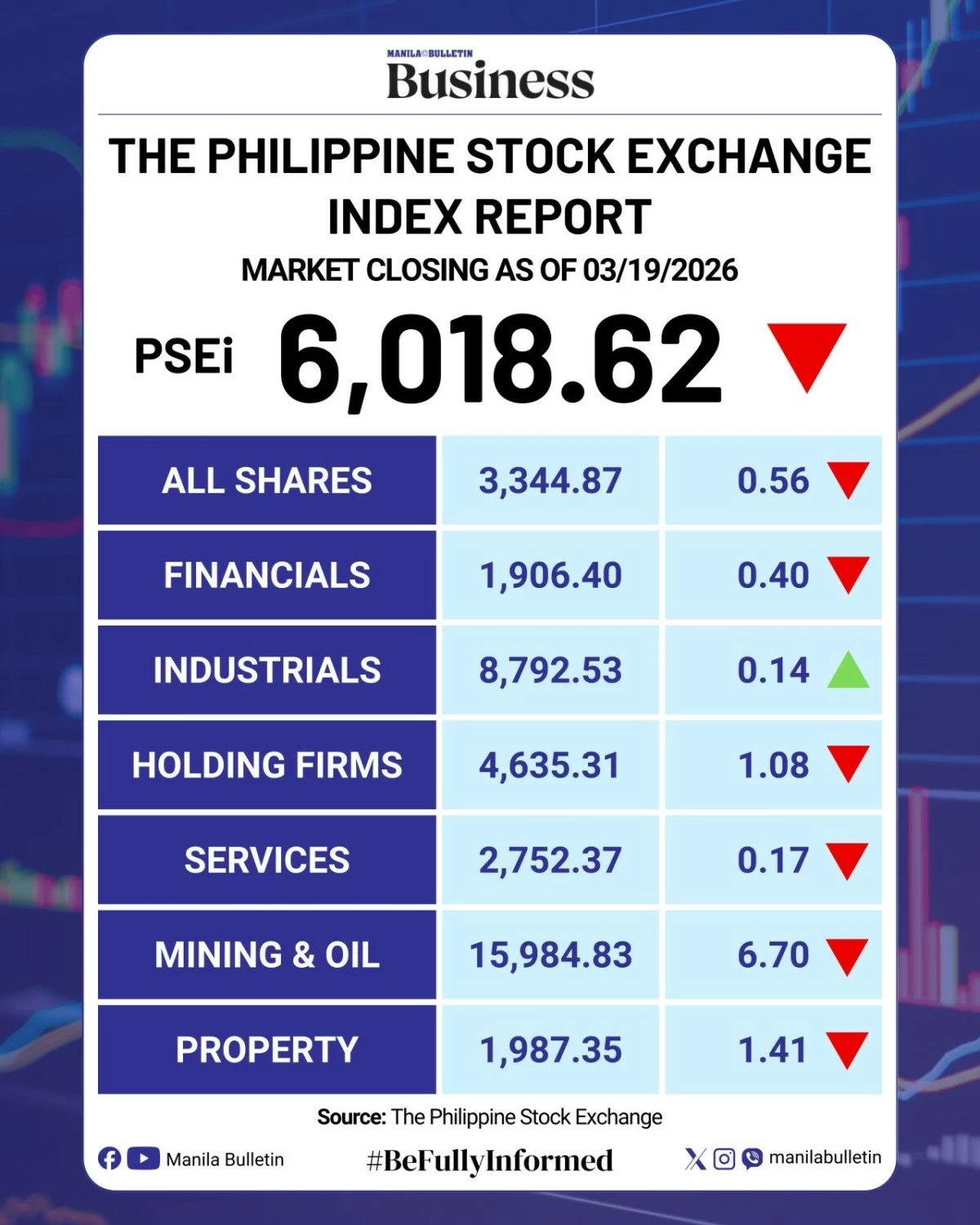
Local stocks retreated as the peso plummeted to a record low, breaching the psychologically significant 60-per-dollar level, while investors trimmed positions ahead of a long weekend amid escalating geopolitical tensions.
The Philippine Stock Exchange index (PSEi) slipped 36.84 points, or 0.6 percent, to 6,018.62 on Thursday, March 19. Mining companies led the declines across the exchange's sub-sectors, while industrial shares were the lone gainers. Selling pressure was pronounced throughout the session, though a late-day modest recovery helped the index close off its worst levels.
Market activity intensified as volume reached 1.88 billion shares valued at ₱9.96 billion. Market breadth was firmly negative, with 133 decliners easily outpacing 61 gainers, while 55 stocks remained unchanged.
The primary catalyst for the selloff was the sudden weakness in the local currency. The peso hit a new intraday low of ₱60.40 against the greenback, a move triggered by the United States (US) Federal Reserve’s decision to maintain elevated interest rates, which continues to bolster the dollar against emerging market counterparts.
“The Philippine market ended in the red following strong selling pressure early in the session, driven by the peso’s drop to a record low against the US dollar after the Fed kept interest rates unchanged,” said Luis Limlingan, managing director at Regina Capital Development Corp.
Limlingan noted that the local bourse also faced headwinds from the Middle East, where persistent volatility is keeping global oil prices on edge and souring the appetite for riskier assets.
The breach of the 60-level is expected to have broader implications for the Philippine economy, which is a net importer of fuel and essential commodities.
Michael Ricafort, chief economist at Rizal Commercial Banking Corp., noted that the unprecedented exchange rate could exert upward pressure on domestic prices. A weaker peso effectively raises importation costs, potentially complicating the central bank’s efforts to keep inflation within its target range.
Investors also opted for liquidity as they headed into a long weekend, wary of potential news breaks regarding geopolitical conflicts that could destabilize global markets before trading resumes. Despite the fundamental concerns, analysts noted that the index’s ability to hold above the 6,000 mark suggests some underlying support remains at these valuations.