






Manila Bulletin
 Business
Trade & Industry
Philippine manufacturers cut costs as peso breaches 60 per dollar
Business
Trade & Industry
Philippine manufacturers cut costs as peso breaches 60 per dollar
Business
Trade & Industry
Philippine manufacturers cut costs as peso breaches 60 per dollar
Philippine manufacturers cut costs as peso breaches 60 per dollar
Published Mar 19, 2026 03:46 pm


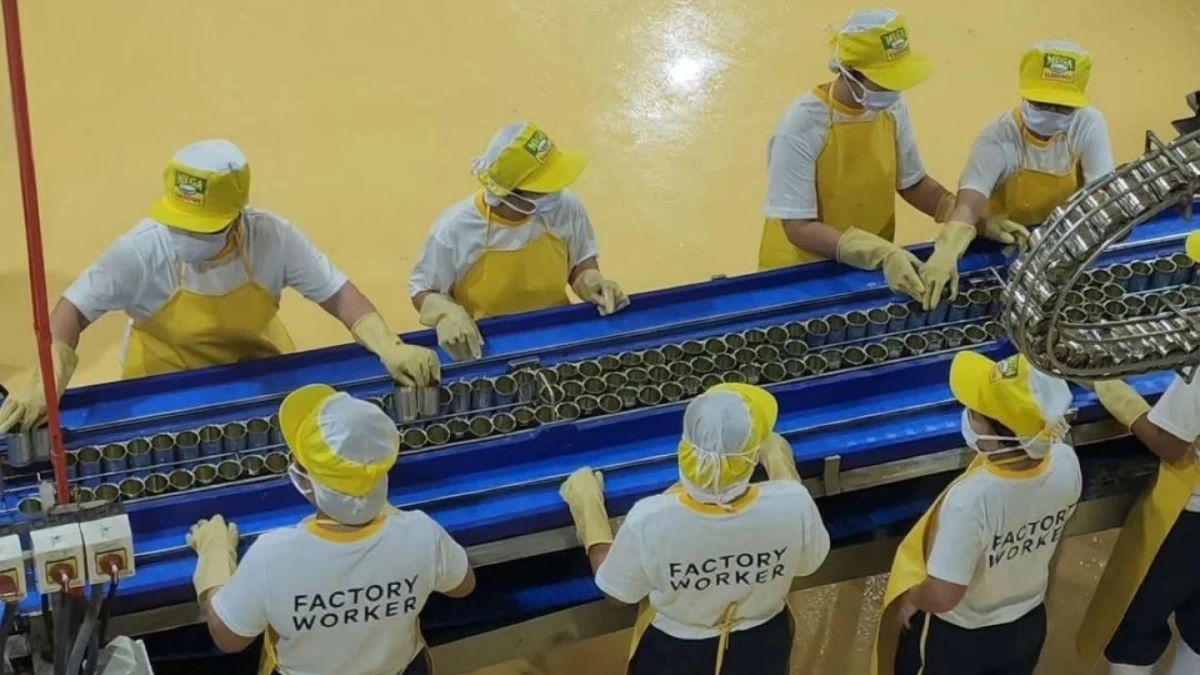
Domestic manufacturers are intensifying cost-cutting measures as the escalating conflict in the Middle East threatens to drive up fuel prices and further weaken the peso, potentially raising consumer prices and jeopardizing employment.
Federation of Philippine Industries (FPI) chairperson Elizabeth Lee said manufacturing companies are working to make their operations more efficient, especially with uncertainty over how long the conflict might continue.
“Right now, I think it's already part of the business strategy to really tighten your belts because this was not expected,” Lee told reporters on the sidelines of an FPI forum.
Since the war broke out in late February, fuel prices have surged to unprecedented levels due to supply disruptions in the Middle East, where the Philippines sources most of its oil needs.
Beyond its potential to trigger higher inflation, increases in fuel prices are putting pressure on the peso, which slid past the 60-per-dollar mark early Thursday, March 19.
For manufacturers, a weaker peso would increase the cost of critical inputs for their products, particularly those imported from abroad, which are paid for in United States (US) dollars.
Lee said members of FPI, the umbrella group of local manufacturers and producers, are currently “not worried” about these risks since they have been expecting the depreciation as a result of the Middle East conflict.
“I'm sure that our BSP (Bangko Sentral ng Pilipinas) is doing what needs to be done in order to help mitigate that,” she said.
To help cushion the impact, Lee said manufacturing firms are focusing on conservation measures such as carpooling and reducing business-related travel.
She said some companies are considering reducing workdays from six to four or five days, a move echoed by the Management Association of the Philippines (MAP) president Donald Lim.
Lim said businesses are evaluating whether to implement a limited work schedule, such as a three-day onsite workweek with two days under a remote setup.
“We might consider that but of course, nothing yet carved in stone because everyone is still exploring,” he said on the sidelines of a MAP forum. “It's going to be how the company manages the lifestyle of the employees since it's more expensive to go to the office.”
Despite efforts to reduce operating costs, Lee stressed that manufacturing firms are not considering layoffs for now.
As companies remain in a wait-and-see mode, Lim said potential job losses are not yet on the radar of many local businesses.
“It's really about resilience because the market is very challenging right now,” he said.
While the impact of the Middle East conflict continues to escalate, Lee said the government could support the manufacturing sector by expediting infrastructure spending, which slowed down last year due to the flood control scandal.
“Infrastructure expenditure still needs to be done. So that can help the steel industry, that can help the cement industry, and that creates jobs also for a lot of Filipinos,” she said.
Lee said companies' expansion plans could be affected if the conflict persists, although she stopped short of indicating potential closures, noting that manufacturing firms are built for the long term.
While there are no cancellations in product orders, she said there could be some hesitation moving forward, as prices could rise amid higher logistics costs.
With a conflict that currently has no end in sight, she said this should encourage the government to focus on making the country more secure in its energy resources, especially since it relies heavily on oil imports.
“We need to actually use this opportunity to transform ourselves because now we are shown the vulnerabilities of our country,” said Lee.