






Manila Bulletin
 Business
Trade & Industry
MRT-3, LRT-2 to implement 50% fare discount starting March 23
Business
Trade & Industry
MRT-3, LRT-2 to implement 50% fare discount starting March 23
Business
Trade & Industry
MRT-3, LRT-2 to implement 50% fare discount starting March 23
MRT-3, LRT-2 to implement 50% fare discount starting March 23
Published Mar 19, 2026 12:46 pm
|
Updated Mar 19, 2026 02:12 pm


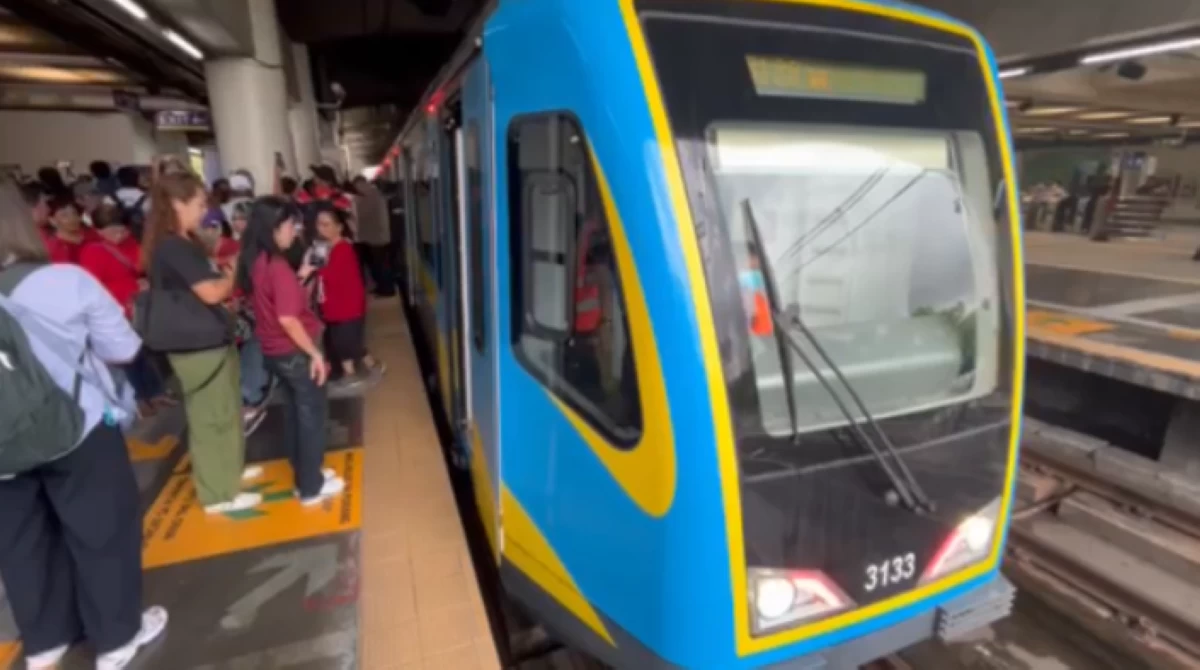
One of the unused Dalian trains finally hit the MRT-3 tracks on July 16, 2025. (Santi San Juan)
Commuters riding the Metro Rail Transit Line 3 (MRT-3) and Light Rail Transit Line 2 (LRT-2) will benefit from a 50 percent discount on fares beginning next week as the government moves to ease the impact of rising fuel prices.
In a statement, the Department of Transportation (DOTr) said it will grant the discount on the two major railways starting Monday, March 23, and that it will remain in effect until further notice.
This means that the minimum fare for MRT-3, the busiest transit line in Metro Manila, will be ₱6, while an end-to-end trip from North Avenue station in Quezon City to Taft Avenue station in Pasay will cost ₱14.
For LRT-2, the minimum fare is ₱8, while the end-to-end fare from Recto Station in Manila to Antipolo Station in Rizal is ₱18.
The DOTr said the 50 percent discount will automatically apply to those with regular beep cards. For those without these stored-value cards, passengers may purchase single-journey tickets at the lower price.
The 50 percent discount for white beep cards used by senior citizens, persons with disabilities (PWDs), and students will remain in effect.
The DOTr said it is currently in talks with Light Rail Manila Corp. (LRMC), the private operator of LRT-1, to implement similar discounted fares on its railway.
“The government is doing everything to ease the burden of Filipinos amid the conflict in the Middle East,” said Acting Transportation Secretary Giovanni Lopez, noting that the DOTr’s priority is to ensure continuous travel and more affordable fares.
Through the discounted fares, Lopez said commuters can save significantly by avoiding vehicles that consume fuel, whose prices have risen sharply in recent weeks due to supply disruptions in the Middle East.
The announcement of the fare discount follows President Ferdinand “Bongbong” Marcos Jr.'s directive to ease the burden of daily commuting, including the suspension of scheduled fare hikes for public utility vehicles (PUVs).
Following Marcos’ order, Lopez said the DOTr is now expediting the release of fuel subsidies for qualified drivers and operators as additional assistance.
He said talks are also underway with private operators of the country’s expressways regarding the provision of toll discounts.
“The DOTr and all its attached agencies continue to take action to ensure that all possible aid and support are promptly provided to commuters, drivers, and transport operators,” Lopez said.