






Manila Bulletin
 Lifestyle
Fashion and Beauty
Fino Leatherware x Royal Pineda: A new language of Filipino luxury
Lifestyle
Fashion and Beauty
Fino Leatherware x Royal Pineda: A new language of Filipino luxury
Lifestyle
Fashion and Beauty
Fino Leatherware x Royal Pineda: A new language of Filipino luxury
Fino Leatherware x Royal Pineda: A new language of Filipino luxury
By Rey Ilagan
Published Mar 19, 2026 02:32 pm


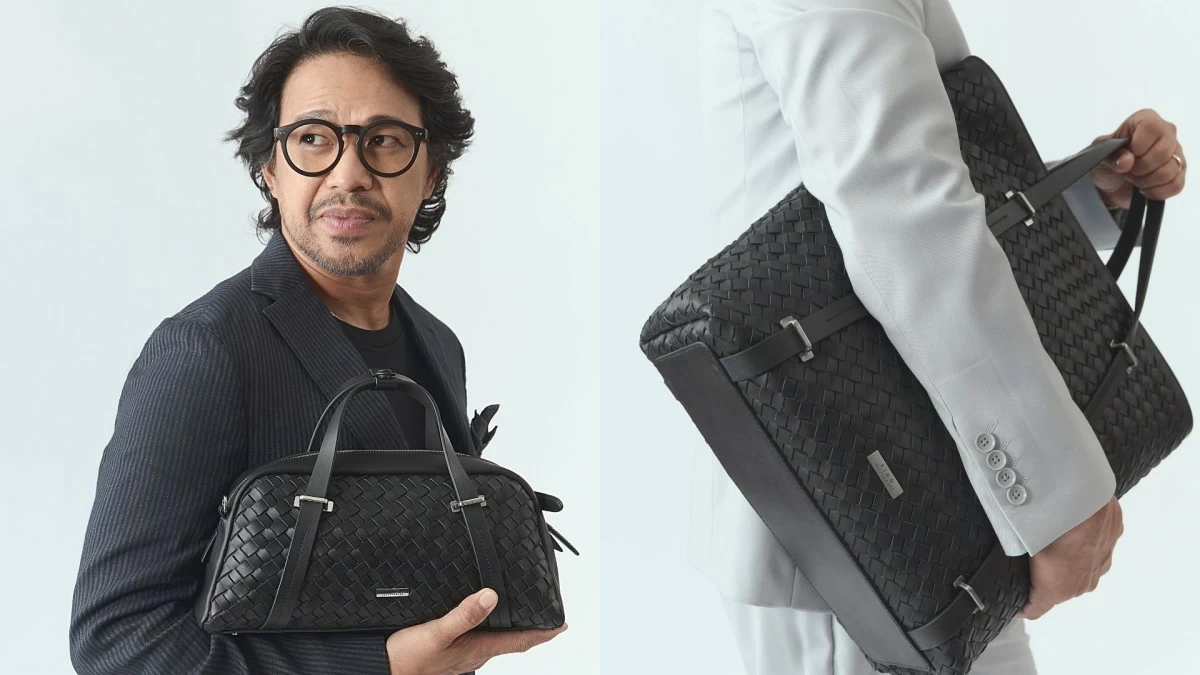
Royal Pineda with the Atlas Crossbody in black (left) and Atlas Tote (in black)
There are days when the words simply don’t come. As a writer, I’ve learned not to resist it. Instead, I step out—into a gallery or art park, onto a plane, or even into the quiet pace of a cafe—and wait for that moment when something clicks.
Creativity, after all, is not constant. It arrives, unexpectedly, like a spark.
It is a rhythm that Dr. Rommel Bautista, founder of Fino Leatherware, understands intimately. “Design is a moment,” he tells me during the launch event of "Atlas," Fino’s collaboration with Ar. Royal Pineda, at Power Plant Mall in Makati on March 3, 2026. “There’s such a thing as a creative block. You just stop. And then something comes, and suddenly your mind switches on.”
After more than three decades in the business, even a master craftsman encounters pause. But sometimes, all it takes is a chance encounter to begin again.

Dr. Rommel Bautista and Ar. Royal Pineda
A meeting of minds
It began in an airport. A friend sent Rommel a photo taken in Frankfurt, Germany. There, standing curbside, was Royal, carrying a Fino Overnighter.
For Rommel, the image lingered. Here was a globally celebrated architect, known for shaping what we now recognize as modern Filipino architecture, choosing a local brand over the usual markers of luxury.
“For someone his caliber, it was striking and refreshing to me that Royal would choose a locally-made bag,” Rommel recalls. “Someone well-traveled, who can afford anything, and yet chooses to patronize us—that means something.”
Royal, for his part, had long admired the brand. “I’ve always been impressed with the premium leatherwork and attention to detail,” he shares. Perhaps unsurprisingly, that meticulousness stems from Rommel’s other profession as an eye surgeon.
Their first meeting in May 2025 was meant to be brief. It lasted, however, over three hours. “It was pregnant with ideas,” Rommel says. “Our sensibilities just jived.”
What stood out was what wasn’t discussed. There was no talk of scale, nor of monetary exchange. Instead, the collaboration was grounded in something far rarer: a shared respect for process, purpose, and the Filipino identity.
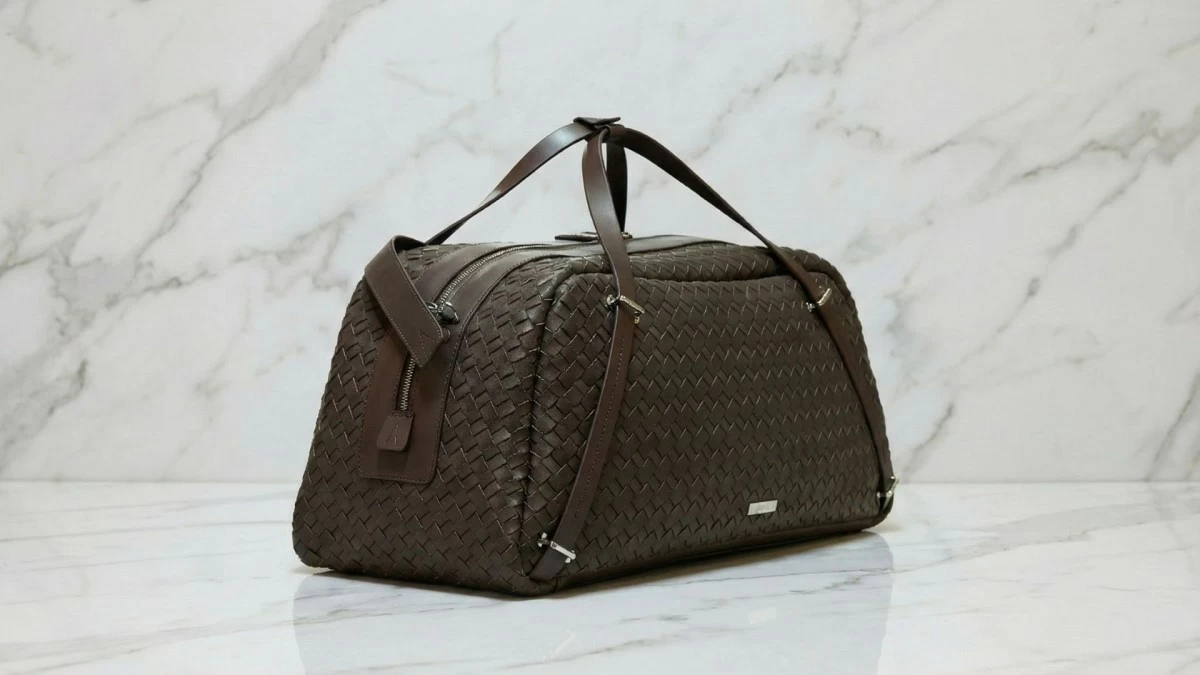
Atlas Overnighter (in brown)
Designing the modern Filipino
While Rommel initially imagined working with waxed cotton, Royal had a different direction, with one rooted in lived experience.
“I always design things that are relatable to me, something that I can use everyday. In that sense, I think of myself as the end-user at the start of any design process,” Royal explains. “As an architect, I wanted something that I can use everyday–from the site to the office, the city to the airport and other destinations.”
The result is the Royal Atlas, conceived as the consummate architect’s bag: functional, mobile, and deeply intentional. But beyond utility, it carries a narrative.
Drawing inspiration from the pasiking, the traditional Cordillera carrier woven from rattan, nito, and bamboo, the Atlas reinterprets heritage through a contemporary lens. For Royal, the connection is personal; he recalls carrying a pasiking during his school years, long before design became his language.
“We named it the Royal Atlas because of how it relates to maps and travel, he says. “The bag was meant to be a traveling companion that carries the identity of the Filipino. It is always moving, but deeply rooted in identity.”
Rommel echoes this sentiment. There is a nostalgia to the piece, he notes a quiet nod to a time before GPS, when travel was guided by instinct and memory. Yet it is unmistakably modern, crafted for today’s Filipino who navigates both global and local worlds.
Art of the weave
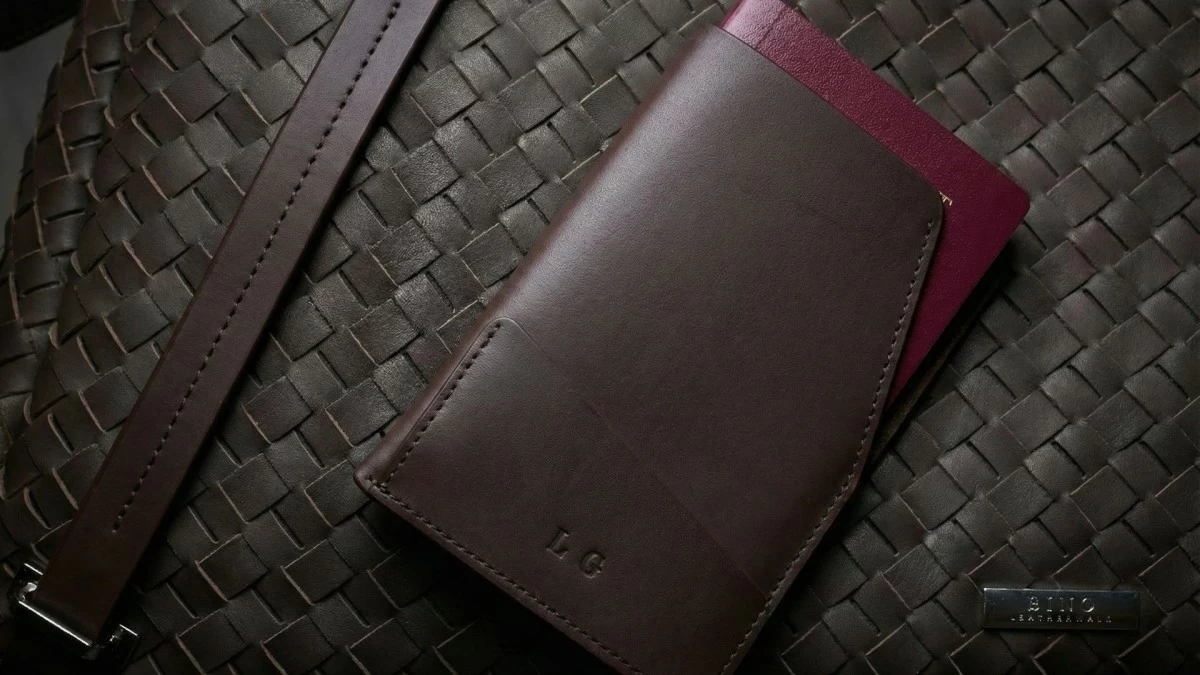
At the heart of the Atlas collection is its most distinctive feature: the Royal Weave.
Rather than replicate familiar leather weaving patterns, Royal looked further back, toward pre-colonial Filipino craftsmanship. The result is a technique that feels both ancient and entirely new.
Each bag is a study in patience. The leather, sourced from the finest materials abroad, is worked on by skilled Filipino artisans using precision machinery from Germany. Yet, the process remains deeply human.
Punching the leather alone takes days. A single misstep renders an entire panel unusable. The material required is nearly double that of a typical bag, as the woven exterior essentially creates two layers.
It is not about perfection, Rommel emphasizes, but about honoring the material and allowing the leather to breathe, to crease, to soften with time. Each piece, numbered and distinct, becomes a quiet testament to the hands that made it.
“A trained eye will fully appreciate and understand the level of workmanship that goes into each bag,” he says.
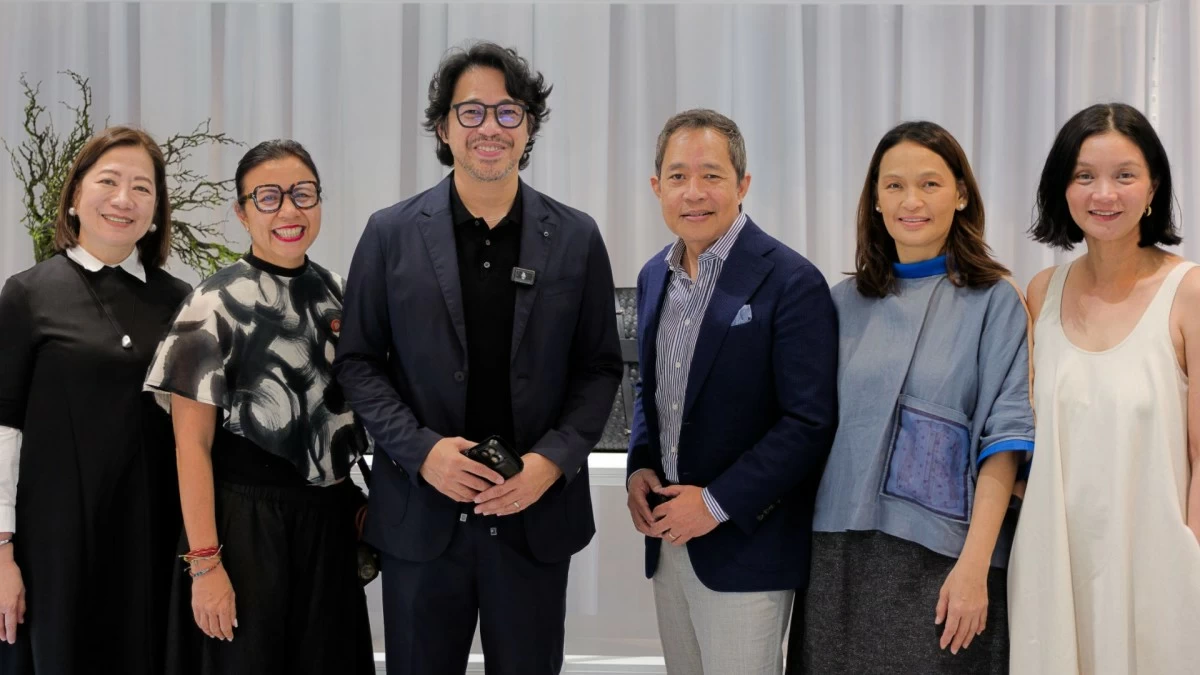
Ar. Onet Coronel, Rhea Matute, Ar. Royal Pineda, Dr. Rommel Bautista, Rose Ann Bautista, and Pauline Suaco-Juan at the launch event held at Power Plant Mall, on March 3, 2026
A collection with intent
The Atlas collection extends beyond a single silhouette. Alongside the Atlas Overnighter are the Atlas Clutch, Atlas Crossbody, and Atlas Tote with each carrying the same design language of structure, movement, and meaning.
Every detail is deliberate. The tapered sides mirror the collection’s logo, while the straps form an A-shaped nautical divider. Even the weave is framed to follow the bag’s architecture.
“It’s not just about aesthetics,” Royal reflects. “It's structure, dimension, depth all woven together. Every detail is formed by intention.”
In many ways, the Atlas is more than a bag. It is a conversation, between craft and culture, between past and present, between two creatives who found common ground in what it means to be Filipino today.
And perhaps that is where its true luxury lies, not in the material alone, but in the meaning it carries.