ADVERTISEMENT

DepEd fast-tracks prefab classrooms to ease overcrowding, classroom shortage

Published Mar 19, 2026 02:14 pm
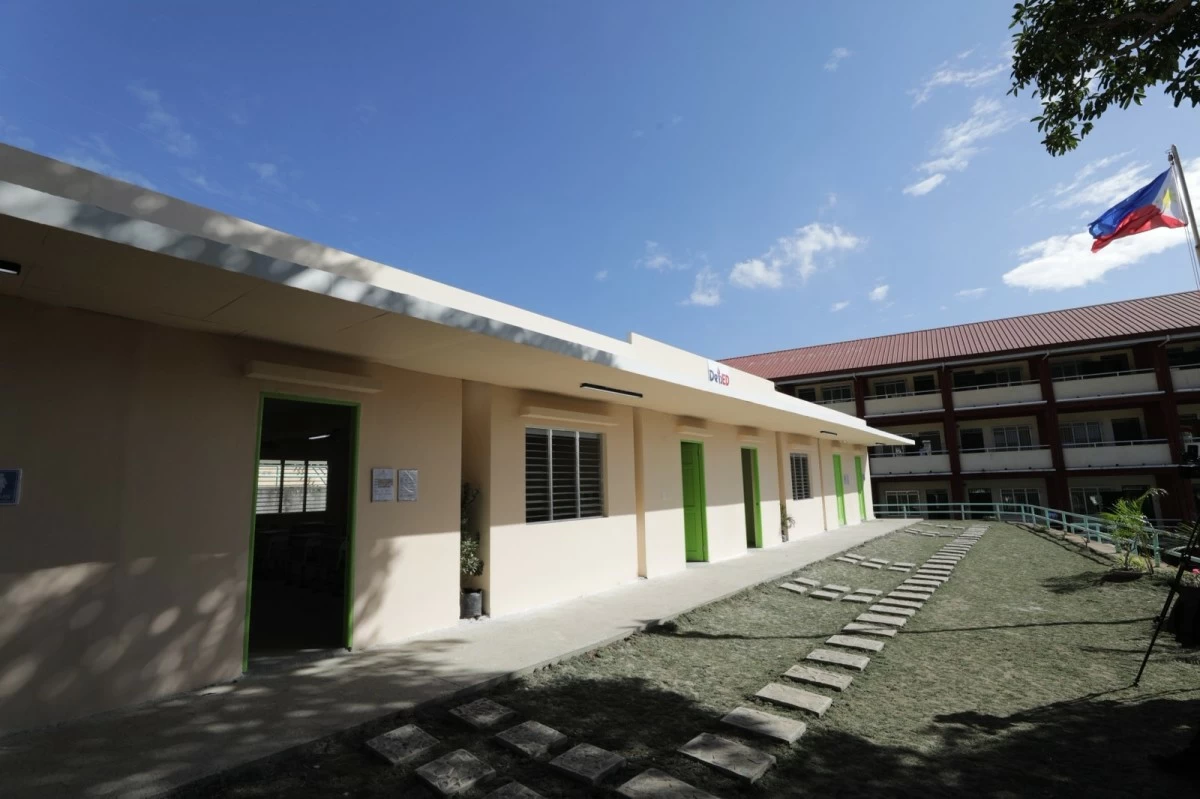
Newly installed prefabricated classrooms in Mariveles, Bataan showcase DepEd’s fast-build solution to reduce overcrowding and expand learning spaces. (DepEd photo)
The Department of Education (DepEd) on Thursday, March 19, said it is accelerating the rollout of prefabricated classrooms as a fast and practical solution to ease congestion and address the country’s persistent classroom shortage.
At Mariveles National High School–Alasasin Annex in Bataan, President Ferdinand Marcos Jr. and DepEd Secretary Sonny Angara led the inspection of newly installed modular classrooms, which were completed in less than two weeks, underscoring the agency’s shift toward rapid construction strategies to immediately deliver learning spaces where they are most needed.

President Ferdinand R. Marcos Jr. and DepEd Education Secretary Sonny Angara lead the inspection of new prefabricated classrooms at Mariveles National High School-Alasasin Annex in Bataan to fast-track the delivery of vital learning spaces. (DepEd photo)
In a statement, DepEd said the modular units—made possible through a donation from First Lady Louise Araneta-Marcos and the Next Gen Foundation—demonstrate how prefabricated structures can significantly shorten construction timelines compared with conventional school buildings.
Angara explained that the prefabricated classrooms are designed to provide immediate relief to overcrowded schools while the government continues to implement long-term infrastructure projects.
“Ang mahalaga, mas mabilis nating nabibigyan ng maayos na silid-aralan ang ating mga mag-aaral (What’s important is that we can provide proper classrooms to our students more quickly),” Angara said.
“Habang tinutugunan natin ang long-term classroom needs, may agarang solusyon para hindi na kailangang magsiksikan ang mga bata (While we are addressing long-term classroom needs, there is an immediate solution so that children no longer have to be cramped together),” he added.
Fast-build solution to overcrowded classrooms
DepEd said the adoption of modular classrooms comes as many public schools across the Philippines continue to grapple with high enrollment and limited infrastructure.
At the Alasasin Annex, the school currently serves 1,031 learners and is projected to face a shortage of at least five classrooms due to the expected influx of Grade 12 students next school year.
By installing prefabricated units, DepEd aims to immediately expand available learning spaces, reduce class sizes, and improve overall learning conditions.
Teachers and students are expected to benefit from more organized class schedules and less congested classrooms—key factors that contribute to better learning outcomes.
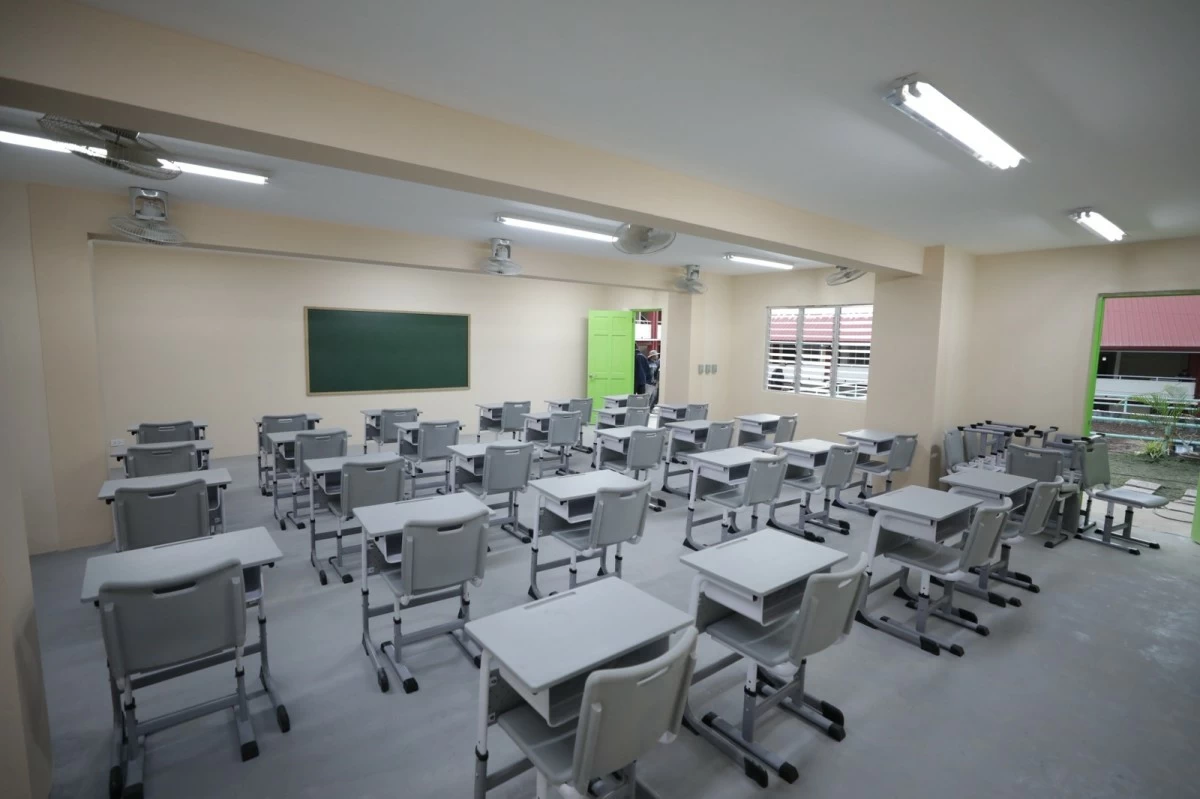
DepEd installs prefabricated classrooms in Bataan to quickly expand learning spaces and ease school congestion. (DepEd photo)
Rapid deployment highlights efficiency
DepEd highlighted the speed and efficiency of prefab construction as a major advantage over traditional building methods.
The site for the modular classrooms was identified and inspected on March 5, followed by joint validation with DepEd Central Office engineers the next day. Site clearing began on March 9, and classroom furniture was delivered by March 11—even before construction was completed.
In less than two weeks, the classrooms were ready for use, DepEd said.
This compressed timeline demonstrates how prefabricated classrooms can be rapidly deployed to areas facing urgent classroom shortages.
Bridging immediate gaps while building long-term solutions
While modular classrooms provide a quick fix, DepEd emphasized that these are part of a broader strategy to address infrastructure gaps in the education sector.
The Alasasin Annex is included in DepEd’s 2026–2030 school building master plan, which proposes the construction of a four-storey building with 12 classrooms to meet long-term demand.
By combining fast-build solutions with sustained infrastructure investments, DepEd aims to close the classroom gap while ensuring that future school facilities are more resilient and better equipped.
Supporting learning environments beyond classrooms
Alongside the rollout of prefab classrooms, DepEd also continues to support learner welfare through complementary programs such as the YAKAP at Kalinga Caravan, which delivers essential health services in schools.
DepEd stressed that improving both physical learning spaces and student well-being is critical to strengthening education outcomes nationwide. 

Related Tags

DepEd classroom shortage prefabricated classrooms Philippines modular classrooms DepEd school congestion Philippines classroom gap Philippines DepEd Secretary Sonny Angara classroom Philippines
ADVERTISEMENT
.most-popular .layout-ratio{ padding-bottom: 79.13%; } @media (min-width: 768px) and (max-width: 1024px) { .widget-title { font-size: 15px !important; } }

{{ articles_filter_1561_widget.title }}

.most-popular .layout-ratio{ padding-bottom: 79.13%; } @media (min-width: 768px) and (max-width: 1024px) { .widget-title { font-size: 15px !important; } }

{{ articles_filter_1562_widget.title }}

.most-popular .layout-ratio{ padding-bottom: 79.13%; } @media (min-width: 768px) and (max-width: 1024px) { .widget-title { font-size: 15px !important; } }

{{ articles_filter_1563_widget.title }}

{{ articles_filter_1564_widget.title }}

.mb-article-details { position: relative; } .mb-article-details .article-body-preview, .mb-article-details .article-body-summary{ font-size: 17px; line-height: 30px; font-family: "Libre Caslon Text", serif; color: #000; } .mb-article-details .article-body-preview iframe , .mb-article-details .article-body-summary iframe{ width: 100%; margin: auto; } .read-more-background { background: linear-gradient(180deg, color(display-p3 1.000 1.000 1.000 / 0) 13.75%, color(display-p3 1.000 1.000 1.000 / 0.8) 30.79%, color(display-p3 1.000 1.000 1.000) 72.5%); position: absolute; height: 200px; width: 100%; bottom: 0; display: flex; justify-content: center; align-items: center; padding: 0; } .read-more-background a{ color: #000; } .read-more-btn { padding: 17px 45px; font-family: Inter; font-weight: 700; font-size: 18px; line-height: 16px; text-align: center; vertical-align: middle; border: 1px solid black; background-color: white; } .hidden { display: none; }
function initializeAllSwipers() { // Get all hidden inputs with cms_article_id document.querySelectorAll('[id^="cms_article_id_"]').forEach(function (input) { const cmsArticleId = input.value; const articleSelector = '#article-' + cmsArticleId + ' .body_images'; const swiperElement = document.querySelector(articleSelector); if (swiperElement && !swiperElement.classList.contains('swiper-initialized')) { new Swiper(articleSelector, { loop: true, pagination: false, navigation: { nextEl: '#article-' + cmsArticleId + ' .swiper-button-next', prevEl: '#article-' + cmsArticleId + ' .swiper-button-prev', }, }); } }); } setTimeout(initializeAllSwipers, 3000); const intersectionObserver = new IntersectionObserver( (entries) => { entries.forEach((entry) => { if (entry.isIntersecting) { const newUrl = entry.target.getAttribute("data-url"); if (newUrl) { history.pushState(null, null, newUrl); let article = entry.target; // Extract metadata const author = article.querySelector('.author-section').textContent.replace('By', '').trim(); const section = article.querySelector('.section-info ').textContent.replace(' ', ' '); const title = article.querySelector('.article-title h1').textContent; // Parse URL for Chartbeat path format const parsedUrl = new URL(newUrl, window.location.origin); const cleanUrl = parsedUrl.host + parsedUrl.pathname; // Update Chartbeat configuration if (typeof window._sf_async_config !== 'undefined') { window._sf_async_config.path = cleanUrl; window._sf_async_config.sections = section; window._sf_async_config.authors = author; } // Track virtual page view with Chartbeat if (typeof pSUPERFLY !== 'undefined' && typeof pSUPERFLY.virtualPage === 'function') { try { pSUPERFLY.virtualPage({ path: cleanUrl, title: title, sections: section, authors: author }); } catch (error) { console.error('ping error', error); } } // Optional: Update document title if (title && title !== document.title) { document.title = title; } } } }); }, { threshold: 0.1 } ); function showArticleBody(button) { const article = button.closest("article"); const summary = article.querySelector(".article-body-summary"); const body = article.querySelector(".article-body-preview"); const readMoreSection = article.querySelector(".read-more-background"); // Hide summary and read-more section summary.style.display = "none"; readMoreSection.style.display = "none"; // Show the full article body body.classList.remove("hidden"); } document.addEventListener("DOMContentLoaded", () => { let loadCount = 0; // Track how many times articles are loaded const offset = [1, 2, 3, 4, 5, 6, 7, 8, 9, 10]; // Offset values const currentUrl = window.location.pathname.substring(1); let isLoading = false; // Prevent multiple calls if (!currentUrl) { console.log("Current URL is invalid."); return; } const sentinel = document.getElementById("load-more-sentinel"); if (!sentinel) { console.log("Sentinel element not found."); return; } function isSentinelVisible() { const rect = sentinel.getBoundingClientRect(); return ( rect.top < window.innerHeight && rect.bottom >= 0 ); } function onScroll() { if (isLoading) return; if (isSentinelVisible()) { if (loadCount >= offset.length) { console.log("Maximum load attempts reached."); window.removeEventListener("scroll", onScroll); return; } isLoading = true; const currentOffset = offset[loadCount]; window.loadMoreItems().then(() => { let article = document.querySelector('#widget_1690 > div:nth-last-of-type(2) article'); intersectionObserver.observe(article) loadCount++; }).catch(error => { console.error("Error loading more items:", error); }).finally(() => { isLoading = false; }); } } window.addEventListener("scroll", onScroll); });

Sign up by email to receive news.