






Manila Bulletin
 Philippines
National
DENR: P200B needed to address PH water scarcity; 40 M Pinoys still rely on unsafe sources
Philippines
National
DENR: P200B needed to address PH water scarcity; 40 M Pinoys still rely on unsafe sources
Philippines
National
DENR: P200B needed to address PH water scarcity; 40 M Pinoys still rely on unsafe sources
DENR: P200B needed to address PH water scarcity; 40 M Pinoys still rely on unsafe sources
By Jel Santos
Published Mar 19, 2026 04:22 pm


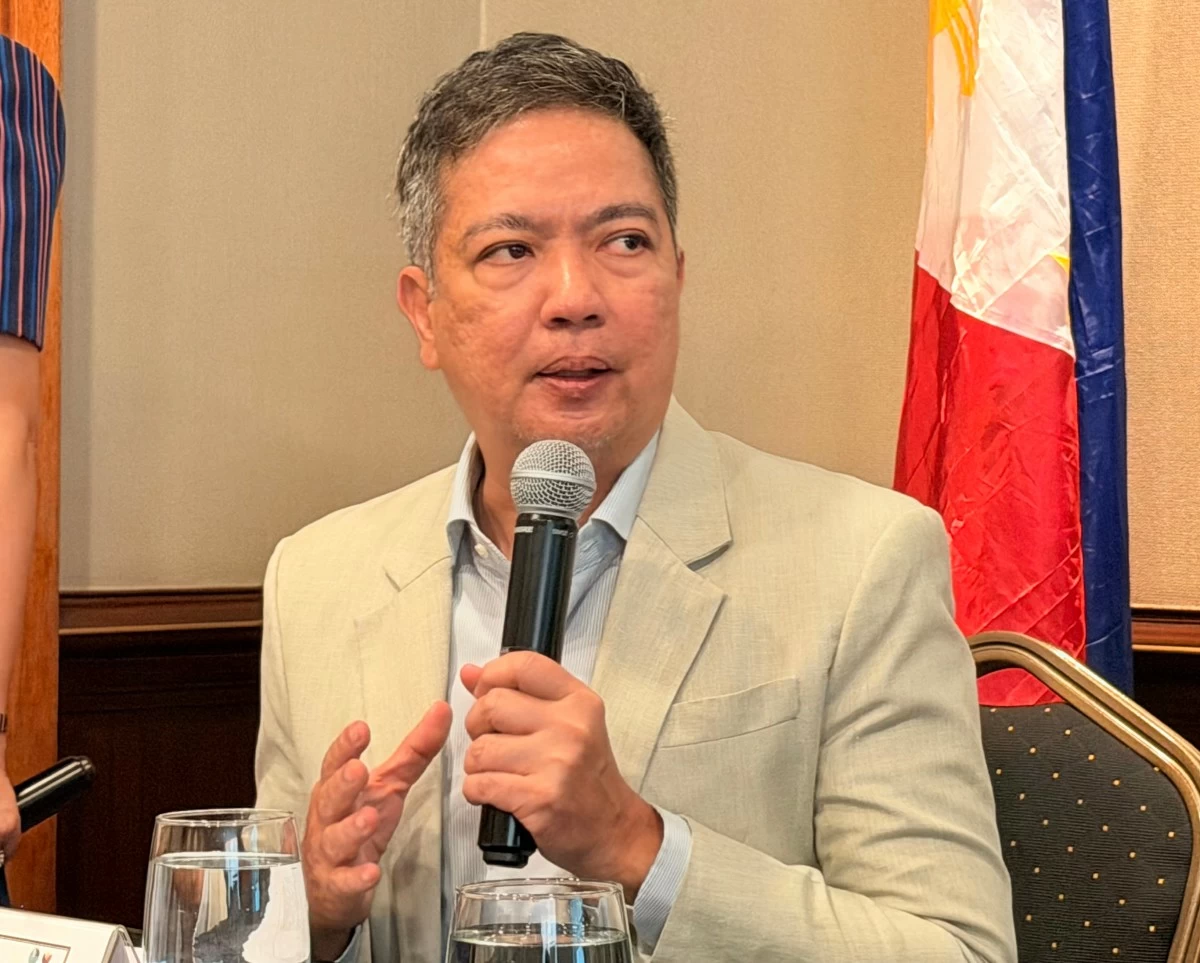
DENR Undersecretary Carlos Primo David (JEL SANTOS/MB PHOTO)
The Department of Environment and Natural Resources (DENR) needs P200 billion to address water scarcity in the Philippines, as around 40 million Filipinos still rely on water sources that may be unsafe or compromised.
“They’ve had an estimate of P200 billion to address the water scarcity issues of the country. Malayong-malayo ‘yung P200 billion sa P485 million (P200 billion is far from P485 million), but what we’re trying to do is that we’re targeting most isolated—the poorest, and those communities with least access to water, they’re the ones most beleaguered,” DENR Undersecretary for Integrated Environmental Science Carlos Primo David said when asked how much funding is needed to address the country’s water crisis.
The DENR’s water supply projects have a total budget of P485 million for 2024 to 2026, covering 405 sites nationwide.
According to David, around 40 million Filipinos depend on water sources that may be affected by climate change and pollution.
“Our estimate is 40 million out of the 115 million population of the Philippines. So malaking percentage ‘to. It doesn’t mean they do not have access per se, but the supply or source of the water where they are taking their water from… can be compromised—climate change, because of pollution, and so on,” David said.
He stressed the need to build resilient systems to ensure continuous access to safe water.
“We wanted them to build them a resilient system wherein they have continuous access to water,” he added.
David acknowledged that limited government funds remain a major constraint in addressing the problem.
“I won’t lie to you, it’s funding. The fiscal space of the government in the past few years is narrow—ang liit lang talaga nung pwede mong hingin from DBM (the amount you can really request from the DBM is very small),” he said.
“So I constantly go around and present a lot of these types of projects to DepDev, to DBM for them to realize sulit itong project namin na ito, ah,” he added.
He noted that investments in water systems are relatively small compared to their long-term benefits.
“Essentially, what we are doing is investing P1,000 per person, and that P1,000 goes a long way and almost forever; we will have access to water,” David said.
“And I think, P1,000 is not a lot, and so what I constantly say is that ‘investment in water is not that big,’ but it goes a long way,” he added.
He stressed the urgency of ensuring access to water as a fundamental right.
“And water, being a basic utility, is something that goes beyond convenience. If you don’t have access to water, that’s something almost criminal if we are not able to provide water to our countrymen,” said David.
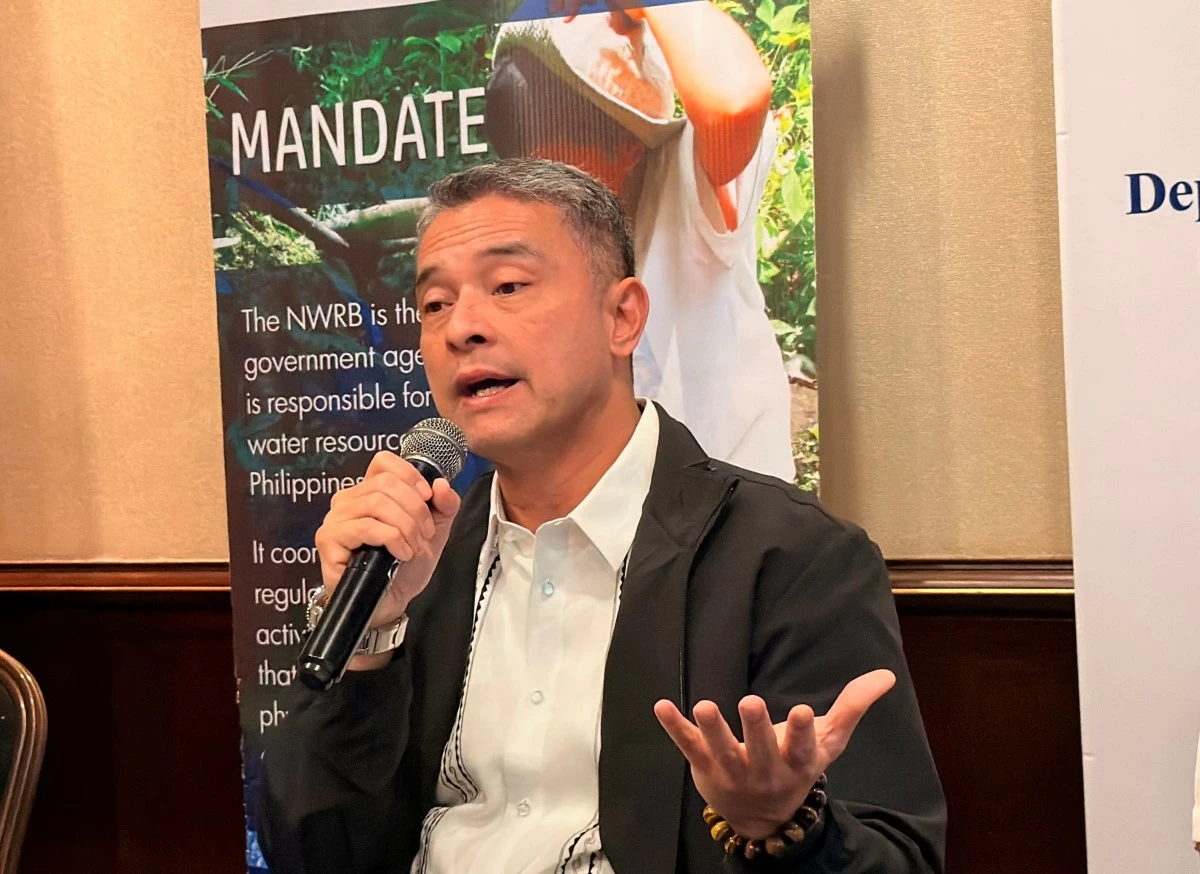
DENR Secretary Juan Miguel Cuna (JEL SANTOS/MB PHOTO)
Cutting red tape in water regulation
To accelerate implementation, DENR Secretary Juan Miguel Cuna has ordered an aggressive push to streamline regulatory processes and “cut the red tape” across the agency.
The environment department has empowered its regional offices to act as “permitting accelerators” and is setting up one-stop kiosks to allow communities to track applications and access technical data.
Speaking at the 2026 World Water Day event, Cuna described the country’s water situation as a systemic issue.
“Look at your kitchen tap: does it have the steady pressure of a reliable machine, or is it showing the signs of a failing system?” Cuna said.
He warned that the country is facing “water bankruptcy” - - -a structural imbalance where consumption outpaces natural replenishment.
To address this, the agency said DENR’s Water Resources Management Office is implementing the final phase of a P485-million roadmap targeting water-stressed areas.
The DENR said the 2026 plan includes the installation of desalination and freshwater filtration systems in 59 barangays, expansion of water district services to unserved communities, and deployment of water refilling equipment to provide cheaper drinking water.
As such, the agency said it is set to complete infiltration gallery projects and integrate micro-hydropower components in select upland areas, while conducting georesistivity surveys and rolling out a national water monitoring system.
“Investment in water infrastructure, a basic utility, is not only cost-effective but sustainable in the long term,” Cuna stressed.