ADVERTISEMENT

Daily Bread: Free sandwiches served to PGH patients every day

Published Mar 19, 2026 08:56 am  |  Updated Mar 19, 2026 01:55 pm
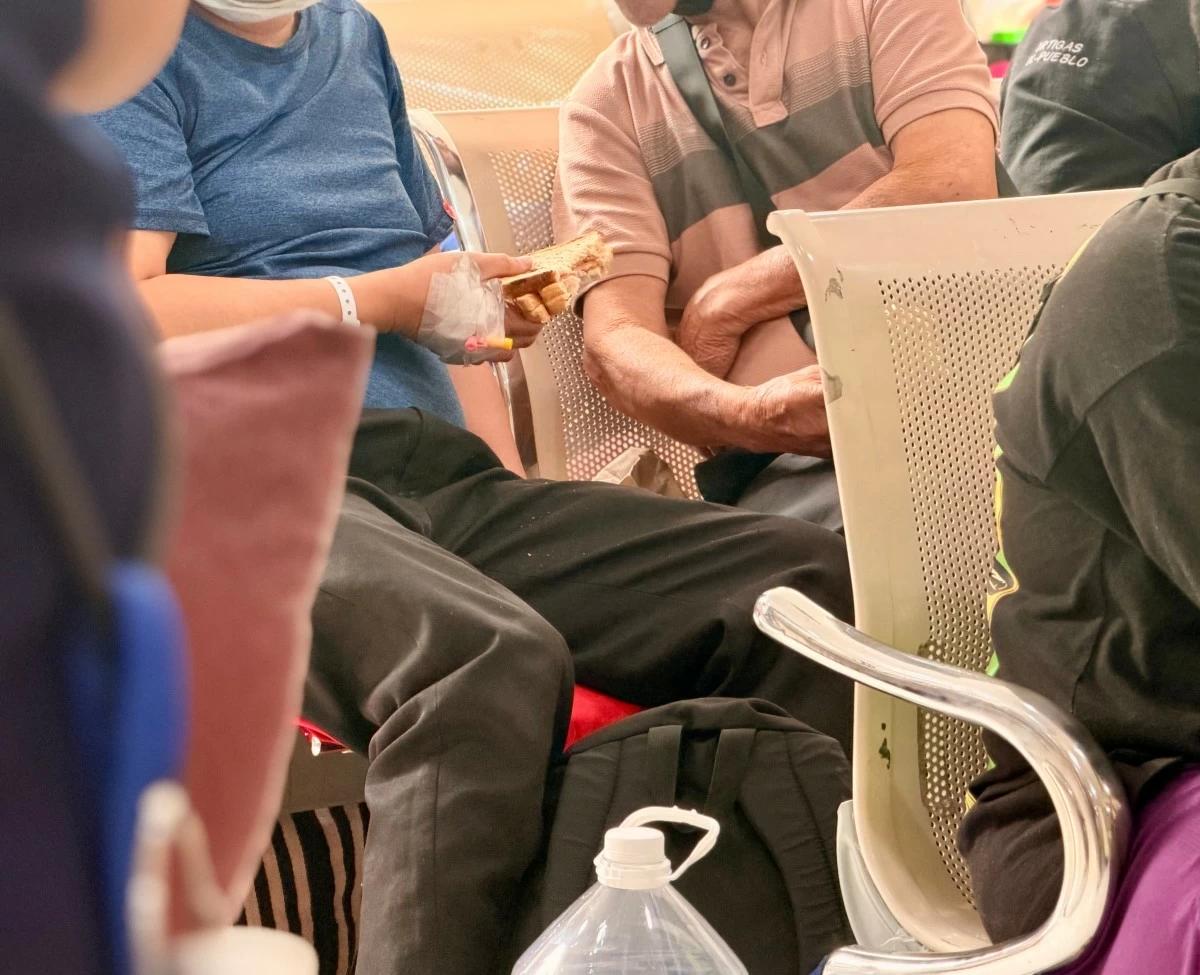
Patients and their watchers share sandwiches provided by the PGH Catholic Chaplaincy as they wait for treatment. (Photos taken by Diann Calucin)

In the crowded halls of the Philippine General Hospital, some 200 to 300 homemade sandwiches are served daily by priests and retired medical professionals to emergency room patients and their watchers, many of them hungry, exhausted, and waiting days for care without proper meals.

What started as a small effort in 2016 has grown into a sustained daily mission providing food and basic support to patients who arrive with little or no money.
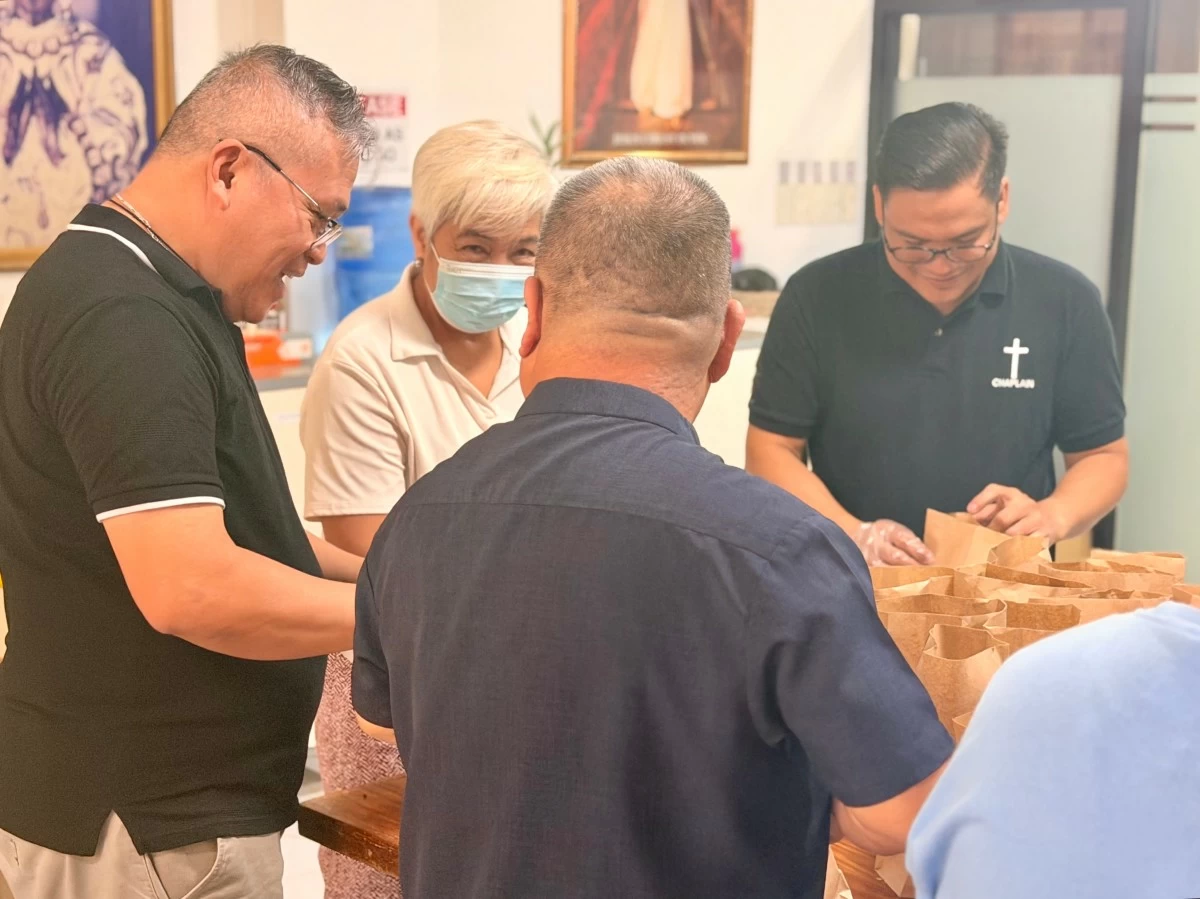
Bread and fillings are assembled by chaplaincy volunteers as part of the hospital’s daily feeding program.

The chaplaincy used to serve food only during feast days. But Fr. Marlito “Lito” Ocon, head chaplain of the PGH Catholic Chaplaincy, saw the need to feed patients every day.

For Fr. Ocon, the need was clear from the beginning.

“Nakita ko 'yong need na kailangan ng (I saw the need for) daily food for them,” he said.

“Some arrived late in the evening, ang iba walang pambili; kung may dala man, tinitipid nila para umabot sa susunod na araw (others had nothing to buy, and if they brought anything, they rationed it to last until the next day).”

The initiative began with surplus bread donated by major brands such as BreadTalk and Gardenia, items that could no longer be sold the next day but were still safe to consume.
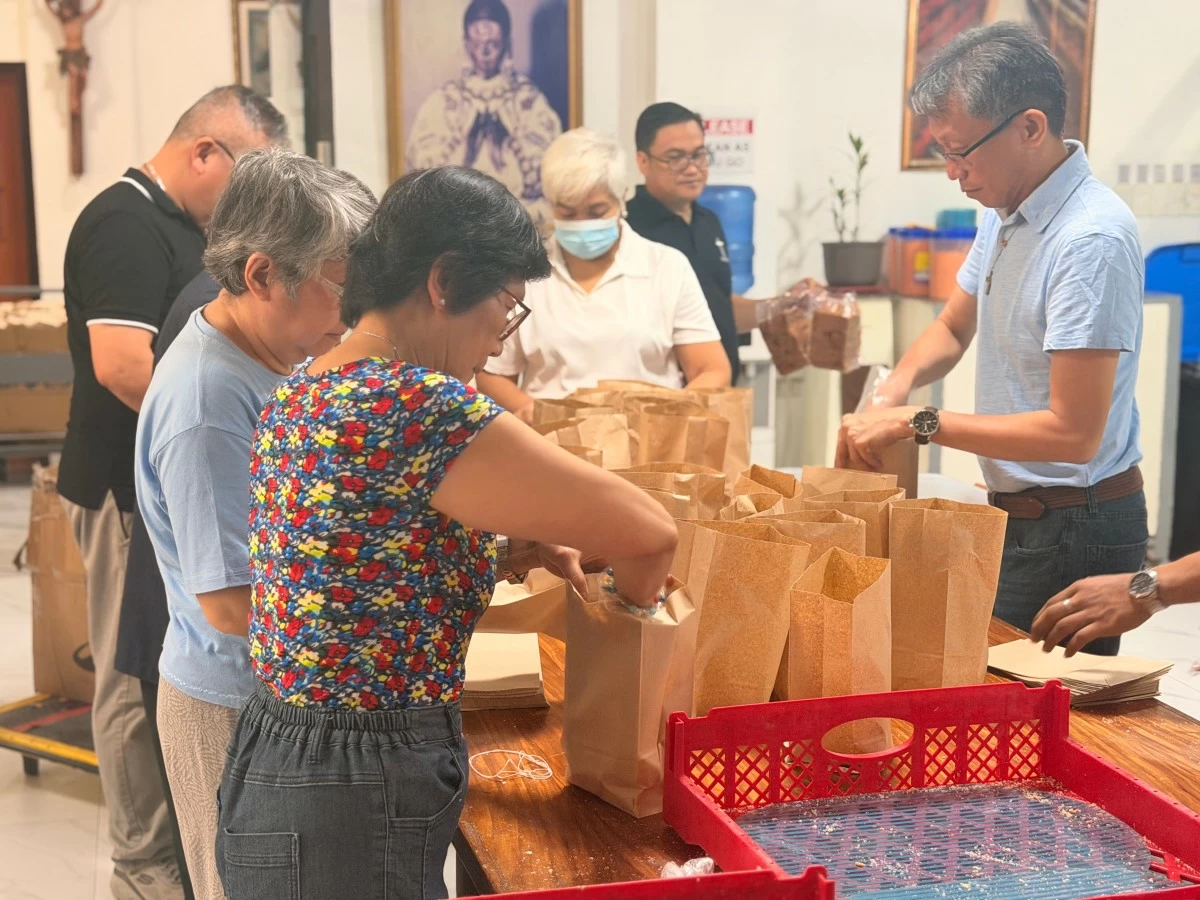
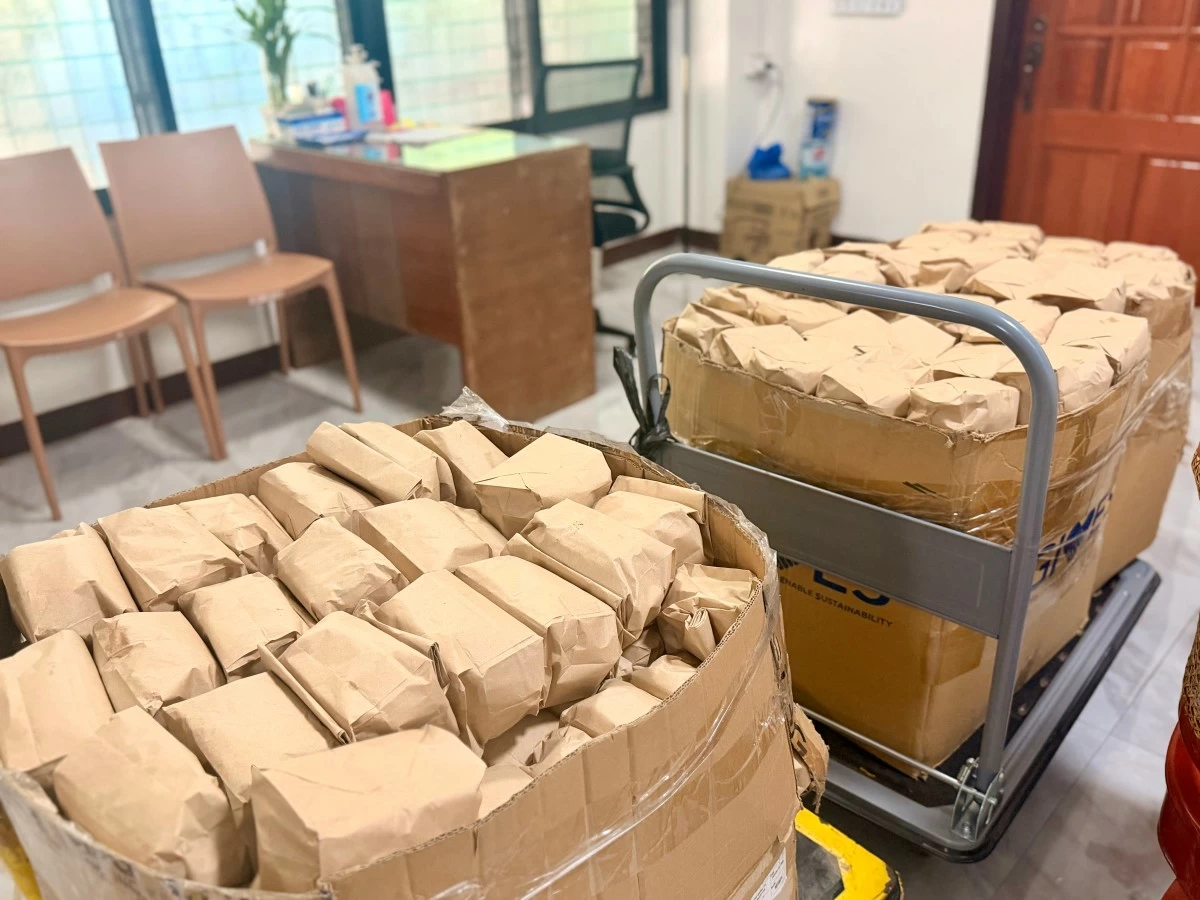
Volunteers pack hundreds of sandwiches for distribution across PGH wards.
It initially ran only a few days a week (MWF) before gradually becoming a daily operation as demand grew.

Despite restrictions and risks, the feeding program continued every single day throughout the pandemic.

The program runs purely on donations and what Fr. Ocon calls “Divine Providence.”

He said he has never written a formal fundraising letter; support simply comes.

Priority is given to those in the emergency room, where demand remains highest.
Many of these patients are not yet admitted and are therefore not covered by hospital food rations.
Hundreds of sandwiches are prepared each morning following Mass, packing food for distribution across PGH wards.

Fr. Ocon added that they personally developed the sandwich fillings to ensure they are tasty, sustainable, and filling.

Operations begin early each day after morning Mass, as priests and volunteers prepare food and supplies for distribution.

Each patient is allotted two sandwiches, often consumed at different times due to irregular eating patterns.
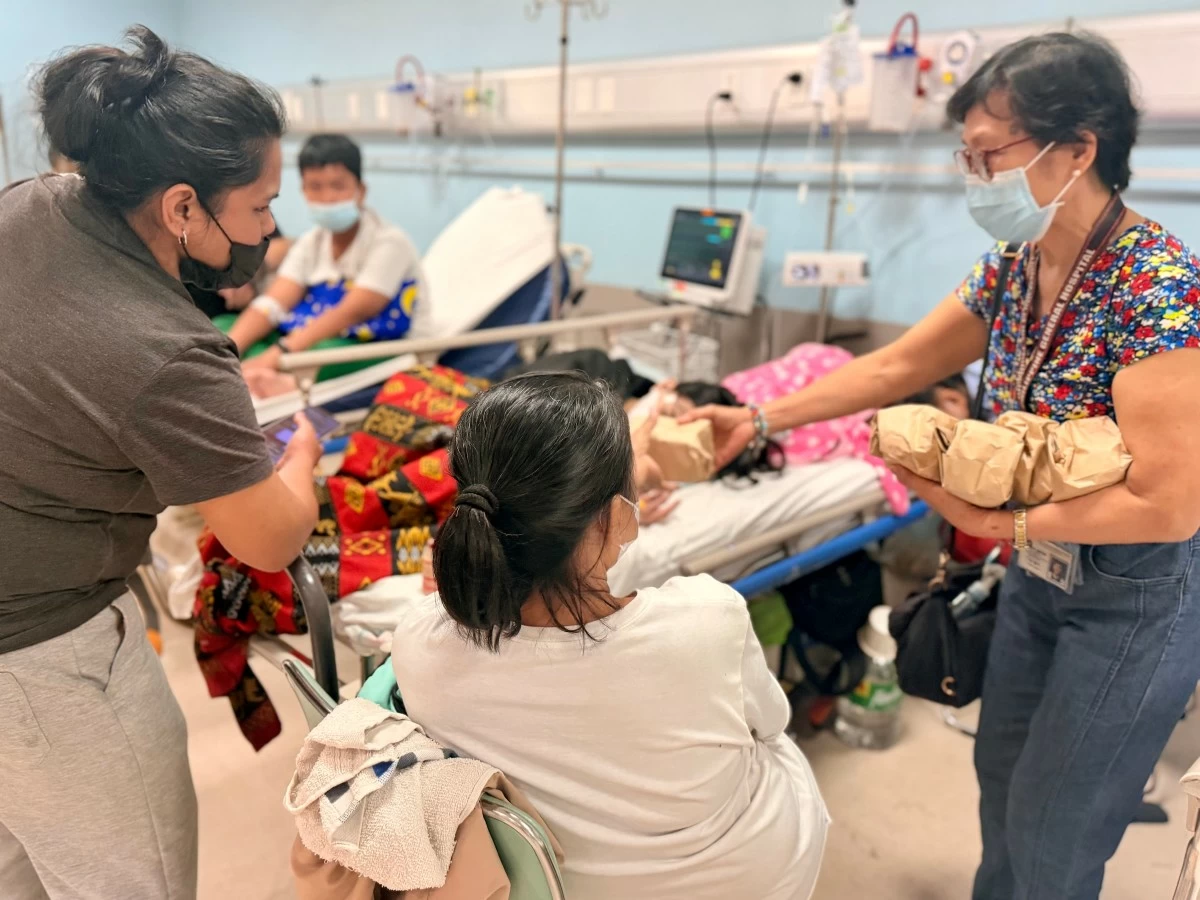
Evelyn Gaffud, a retired head nurse at PGH, said that many patients are too critical to eat, so the sandwiches are often consumed by their caregivers or family members.

In some cases, patients have no companions, making access to food even more difficult, she added

Fr. Ocon recalled one patient who cried after being given bread, saying he had not eaten the entire day.

He emphasized: “If you cannot feed 100, feed one.”

The program began without certainty of sustainability, yet for patients, the assistance provides immediate relief.

A 50-year-old woman from Bicol, who had been waiting at the outpatient department for three days for tests, said the sandwiches helped her endure long hours without food.

“Maraming salamat po, pantawid-gutom po kasi mahaba po lagi ang pila dito (Thank you very much, it helps ease our hunger because the lines here are always long),” she said.
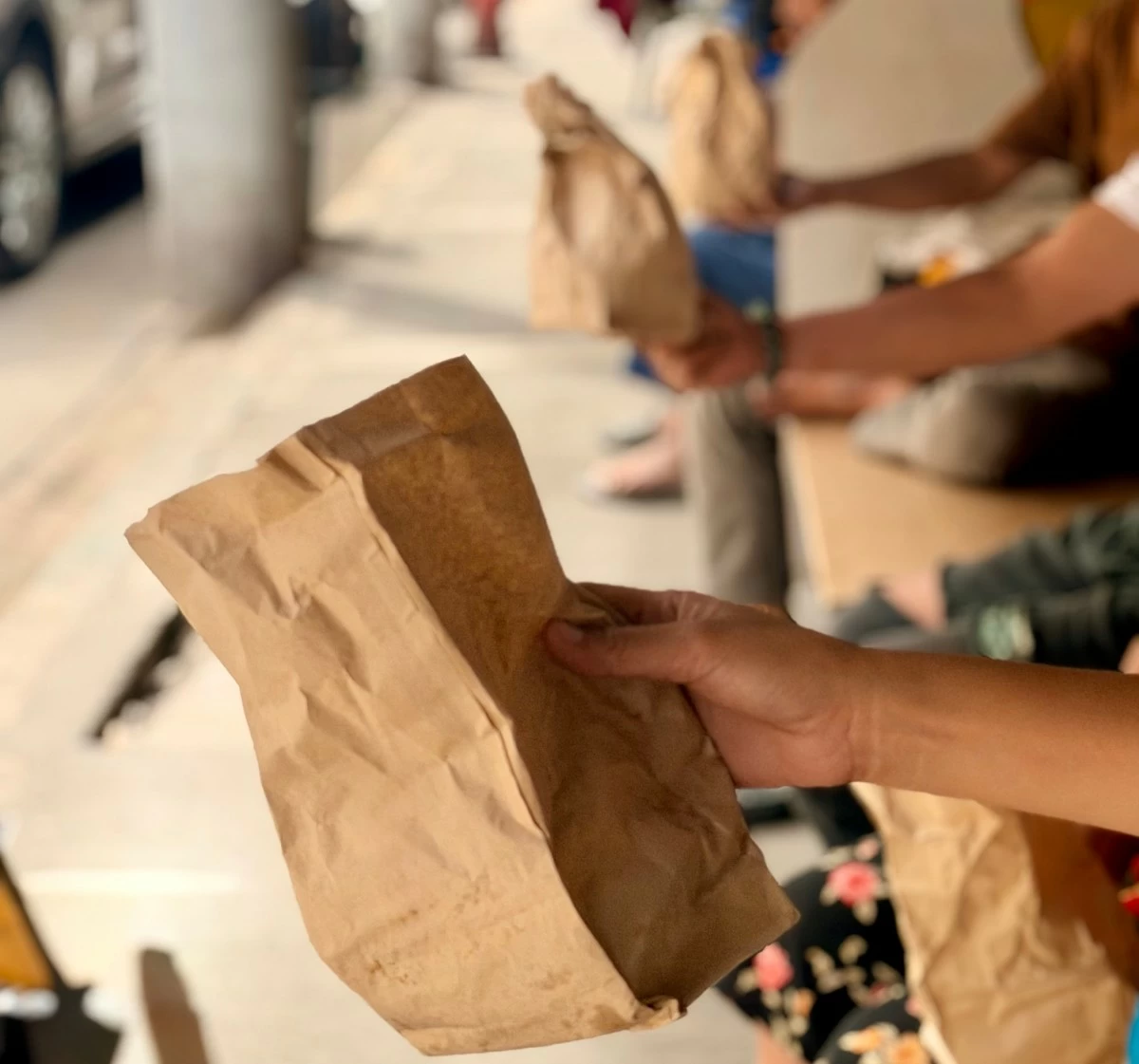
Patients at the outpatient department (OPD) show the bread they received from the PGH chaplaincy feeding program.

Beyond sandwiches, the chaplaincy provides other forms of support to address patients’ daily needs.

These include diapers for both adults and children, three kilos of rice, and grocery packs containing basic items such as noodles, canned goods, and coffee.

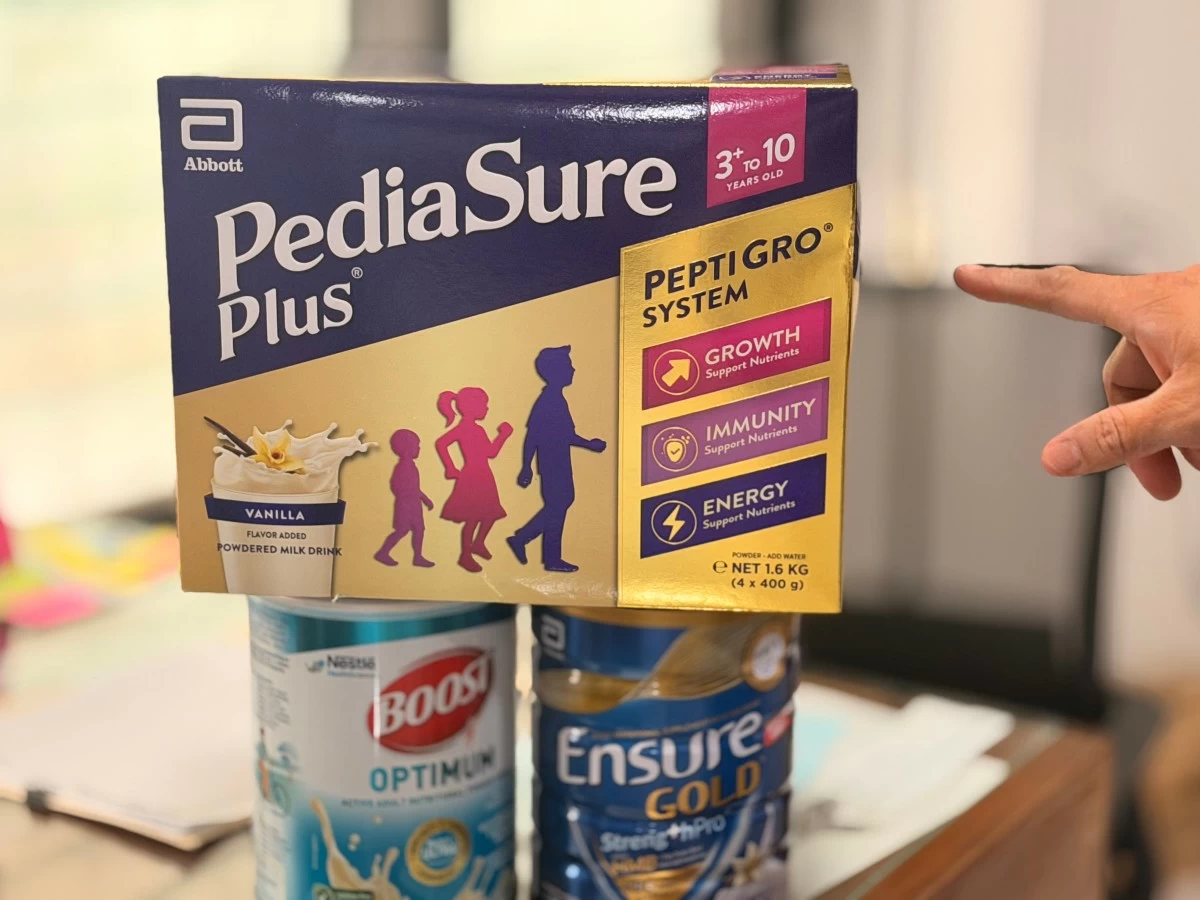
Expensive formula milk is also provided to cancer patients, the elderly, and those who cannot eat properly.

The program has since expanded to 16 charity wards, each with 20 to 50 beds, on a rotating basis.
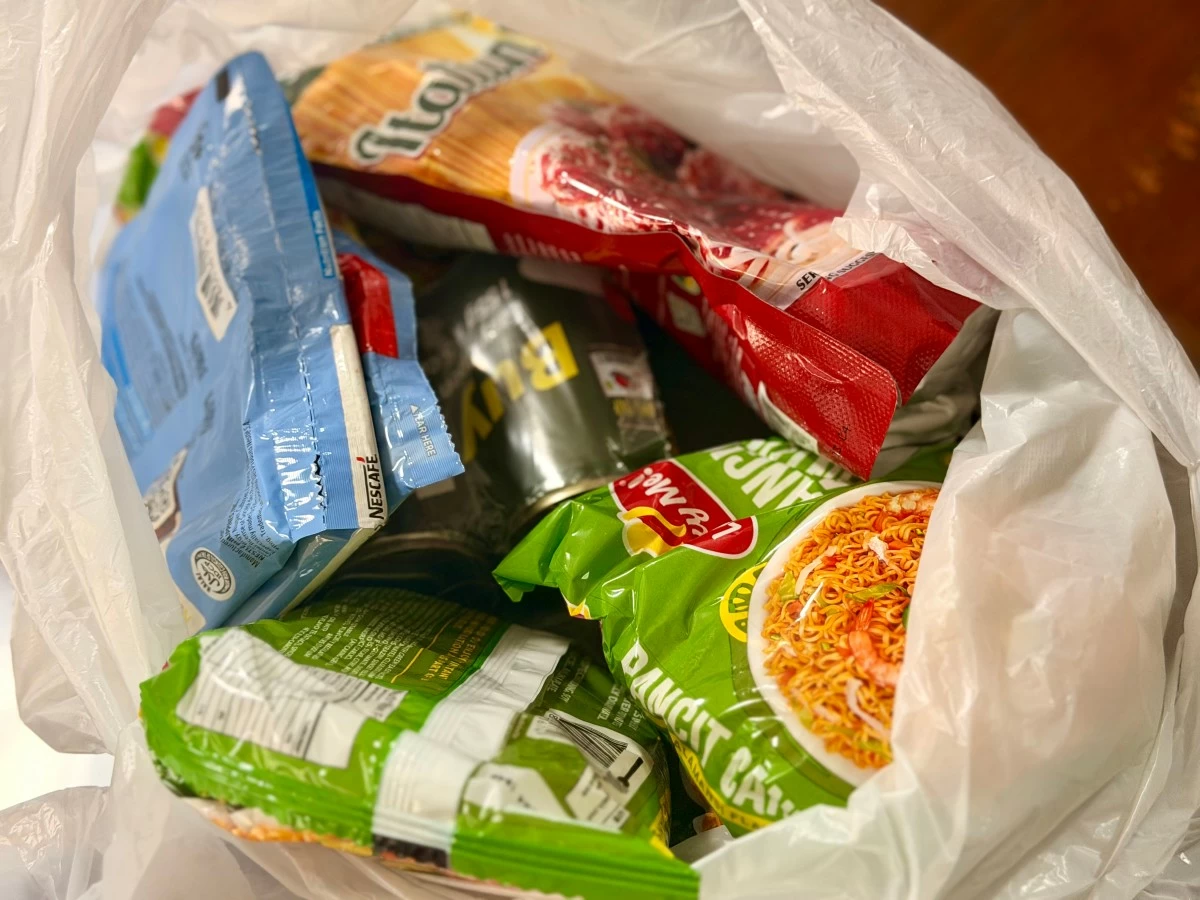
Grocery packs containing rice, noodles, canned goods, and coffee are given to patients in charity wards on a rotating basis.
Patients in these wards receive grocery packs every two to three weeks.

Even with “zero billing,” many medical needs, such as diagnostics, medicines, or supplies not available in the hospital, remain uncovered.
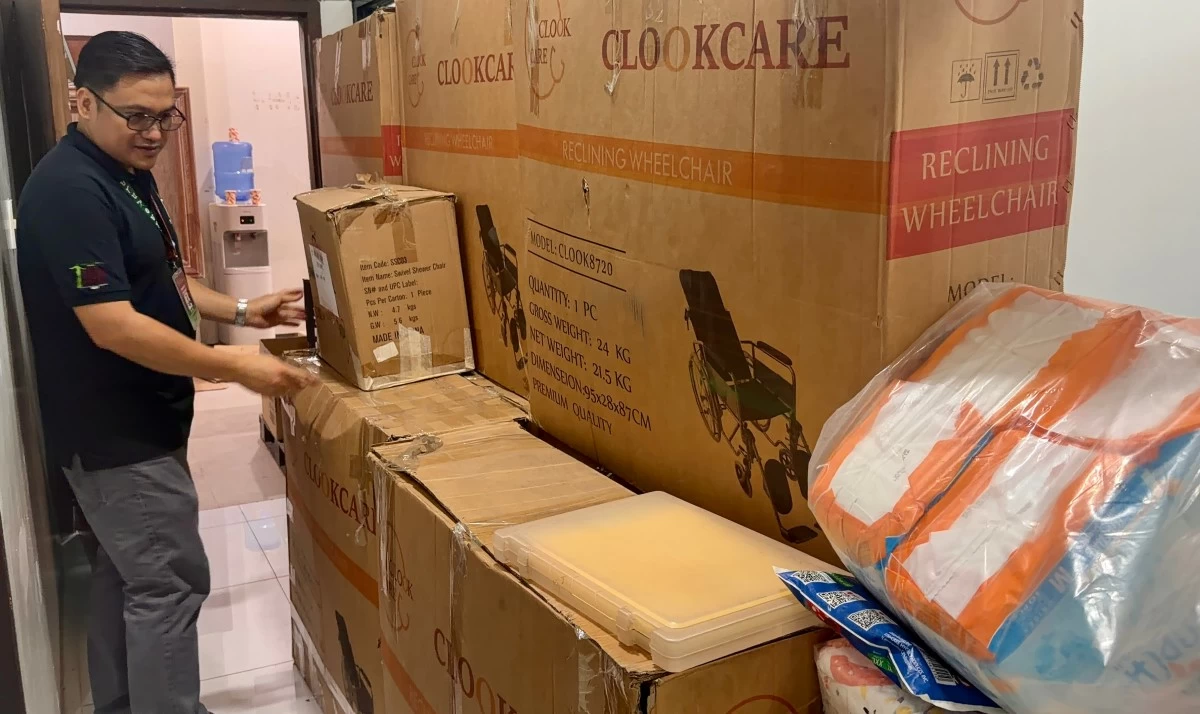
The chaplaincy helps patients purchase these through pharmacy gift checks, while wheelchairs, including reclining units, are distributed to those referred by hospital social workers.
Wheelchairs, including reclining units, are provided to patients referred by hospital social workers through the chaplaincy program.

“The process goes through the Medical Social Service,” Fr. Al San Buenaventura, SJ, said.
“May stub (Patients receive stubs) from MSS, and for those in need of wheelchairs, medicine, and milk supplements, we provide them right away.”
Formula milk is provided to cancer patients, the elderly, and those unable to eat, as part of the chaplaincy’s support program.

Retired health workers help sustain the effort, many of whom spent decades at PGH before returning as volunteers.
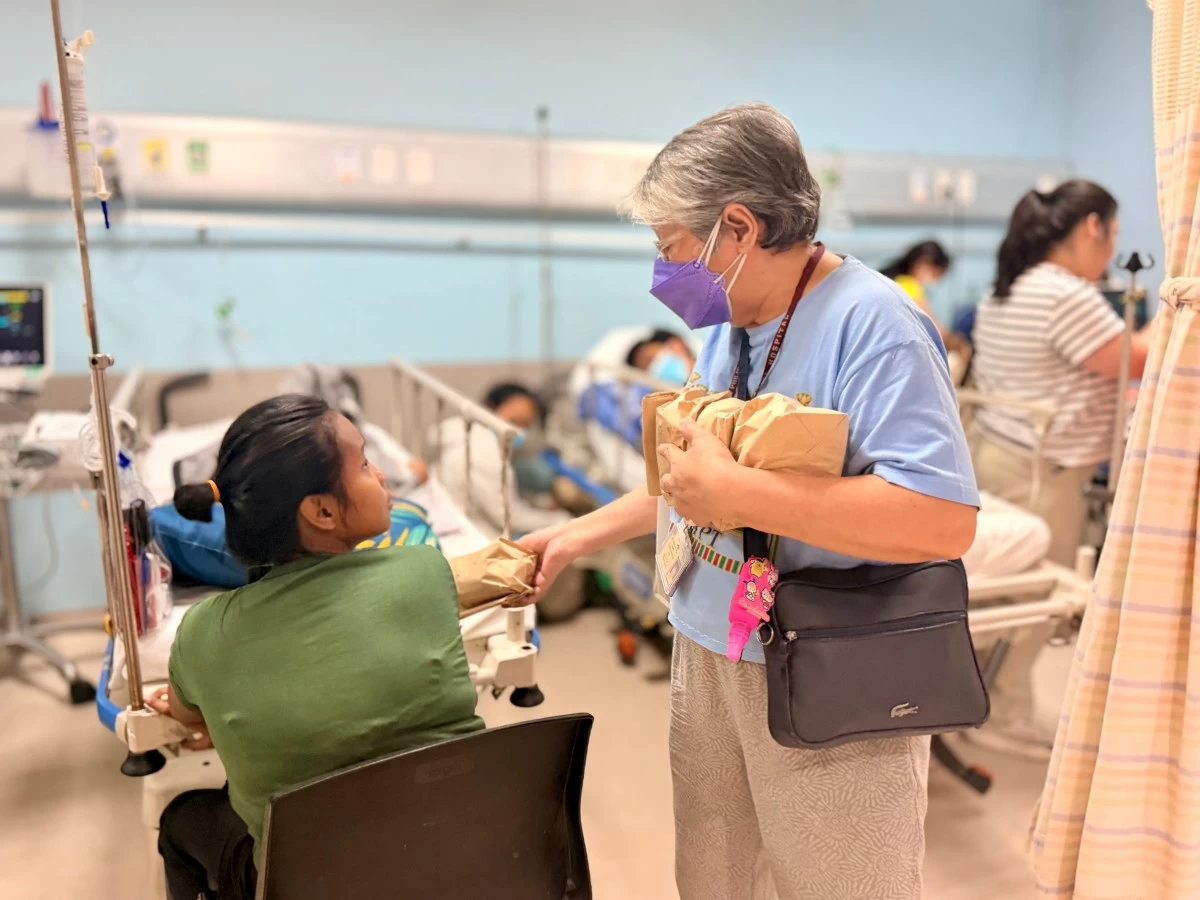
“Pag paubos na ang supply, minsan nagugulat kami, may kakatok, may magdo-donate, tapos magpa-pack kami ulit (When supplies run low, we are sometimes surprised, someone knocks to donate, and we pack again),” said Dr. Connie, a retired PGH physician.
Dr. Connie hands out sandwiches to emergency room patients and watchers.

Nearly a decade since it began, the initiative continues to fill a critical gap inside one of the country’s busiest public hospitals, where for many patients, a piece of bread is often the first thing they receive, and the last thing they expect.

Related Tags

metronews PGH manila patients
ADVERTISEMENT
.most-popular .layout-ratio{ padding-bottom: 79.13%; } @media (min-width: 768px) and (max-width: 1024px) { .widget-title { font-size: 15px !important; } }

{{ articles_filter_1561_widget.title }}

.most-popular .layout-ratio{ padding-bottom: 79.13%; } @media (min-width: 768px) and (max-width: 1024px) { .widget-title { font-size: 15px !important; } }

{{ articles_filter_1562_widget.title }}

.most-popular .layout-ratio{ padding-bottom: 79.13%; } @media (min-width: 768px) and (max-width: 1024px) { .widget-title { font-size: 15px !important; } }

{{ articles_filter_1563_widget.title }}

{{ articles_filter_1564_widget.title }}

.mb-article-details { position: relative; } .mb-article-details .article-body-preview, .mb-article-details .article-body-summary{ font-size: 17px; line-height: 30px; font-family: "Libre Caslon Text", serif; color: #000; } .mb-article-details .article-body-preview iframe , .mb-article-details .article-body-summary iframe{ width: 100%; margin: auto; } .read-more-background { background: linear-gradient(180deg, color(display-p3 1.000 1.000 1.000 / 0) 13.75%, color(display-p3 1.000 1.000 1.000 / 0.8) 30.79%, color(display-p3 1.000 1.000 1.000) 72.5%); position: absolute; height: 200px; width: 100%; bottom: 0; display: flex; justify-content: center; align-items: center; padding: 0; } .read-more-background a{ color: #000; } .read-more-btn { padding: 17px 45px; font-family: Inter; font-weight: 700; font-size: 18px; line-height: 16px; text-align: center; vertical-align: middle; border: 1px solid black; background-color: white; } .hidden { display: none; }
function initializeAllSwipers() { // Get all hidden inputs with cms_article_id document.querySelectorAll('[id^="cms_article_id_"]').forEach(function (input) { const cmsArticleId = input.value; const articleSelector = '#article-' + cmsArticleId + ' .body_images'; const swiperElement = document.querySelector(articleSelector); if (swiperElement && !swiperElement.classList.contains('swiper-initialized')) { new Swiper(articleSelector, { loop: true, pagination: false, navigation: { nextEl: '#article-' + cmsArticleId + ' .swiper-button-next', prevEl: '#article-' + cmsArticleId + ' .swiper-button-prev', }, }); } }); } setTimeout(initializeAllSwipers, 3000); const intersectionObserver = new IntersectionObserver( (entries) => { entries.forEach((entry) => { if (entry.isIntersecting) { const newUrl = entry.target.getAttribute("data-url"); if (newUrl) { history.pushState(null, null, newUrl); let article = entry.target; // Extract metadata const author = article.querySelector('.author-section').textContent.replace('By', '').trim(); const section = article.querySelector('.section-info ').textContent.replace(' ', ' '); const title = article.querySelector('.article-title h1').textContent; // Parse URL for Chartbeat path format const parsedUrl = new URL(newUrl, window.location.origin); const cleanUrl = parsedUrl.host + parsedUrl.pathname; // Update Chartbeat configuration if (typeof window._sf_async_config !== 'undefined') { window._sf_async_config.path = cleanUrl; window._sf_async_config.sections = section; window._sf_async_config.authors = author; } // Track virtual page view with Chartbeat if (typeof pSUPERFLY !== 'undefined' && typeof pSUPERFLY.virtualPage === 'function') { try { pSUPERFLY.virtualPage({ path: cleanUrl, title: title, sections: section, authors: author }); } catch (error) { console.error('ping error', error); } } // Optional: Update document title if (title && title !== document.title) { document.title = title; } } } }); }, { threshold: 0.1 } ); function showArticleBody(button) { const article = button.closest("article"); const summary = article.querySelector(".article-body-summary"); const body = article.querySelector(".article-body-preview"); const readMoreSection = article.querySelector(".read-more-background"); // Hide summary and read-more section summary.style.display = "none"; readMoreSection.style.display = "none"; // Show the full article body body.classList.remove("hidden"); } document.addEventListener("DOMContentLoaded", () => { let loadCount = 0; // Track how many times articles are loaded const offset = [1, 2, 3, 4, 5, 6, 7, 8, 9, 10]; // Offset values const currentUrl = window.location.pathname.substring(1); let isLoading = false; // Prevent multiple calls if (!currentUrl) { console.log("Current URL is invalid."); return; } const sentinel = document.getElementById("load-more-sentinel"); if (!sentinel) { console.log("Sentinel element not found."); return; } function isSentinelVisible() { const rect = sentinel.getBoundingClientRect(); return ( rect.top < window.innerHeight && rect.bottom >= 0 ); } function onScroll() { if (isLoading) return; if (isSentinelVisible()) { if (loadCount >= offset.length) { console.log("Maximum load attempts reached."); window.removeEventListener("scroll", onScroll); return; } isLoading = true; const currentOffset = offset[loadCount]; window.loadMoreItems().then(() => { let article = document.querySelector('#widget_1690 > div:nth-last-of-type(2) article'); intersectionObserver.observe(article) loadCount++; }).catch(error => { console.error("Error loading more items:", error); }).finally(() => { isLoading = false; }); } } window.addEventListener("scroll", onScroll); });

Sign up by email to receive news.