ADVERTISEMENT

Abolishing travel tax unshackles mobility

Published Mar 19, 2026 12:01 am  |  Updated Mar 18, 2026 04:23 pm
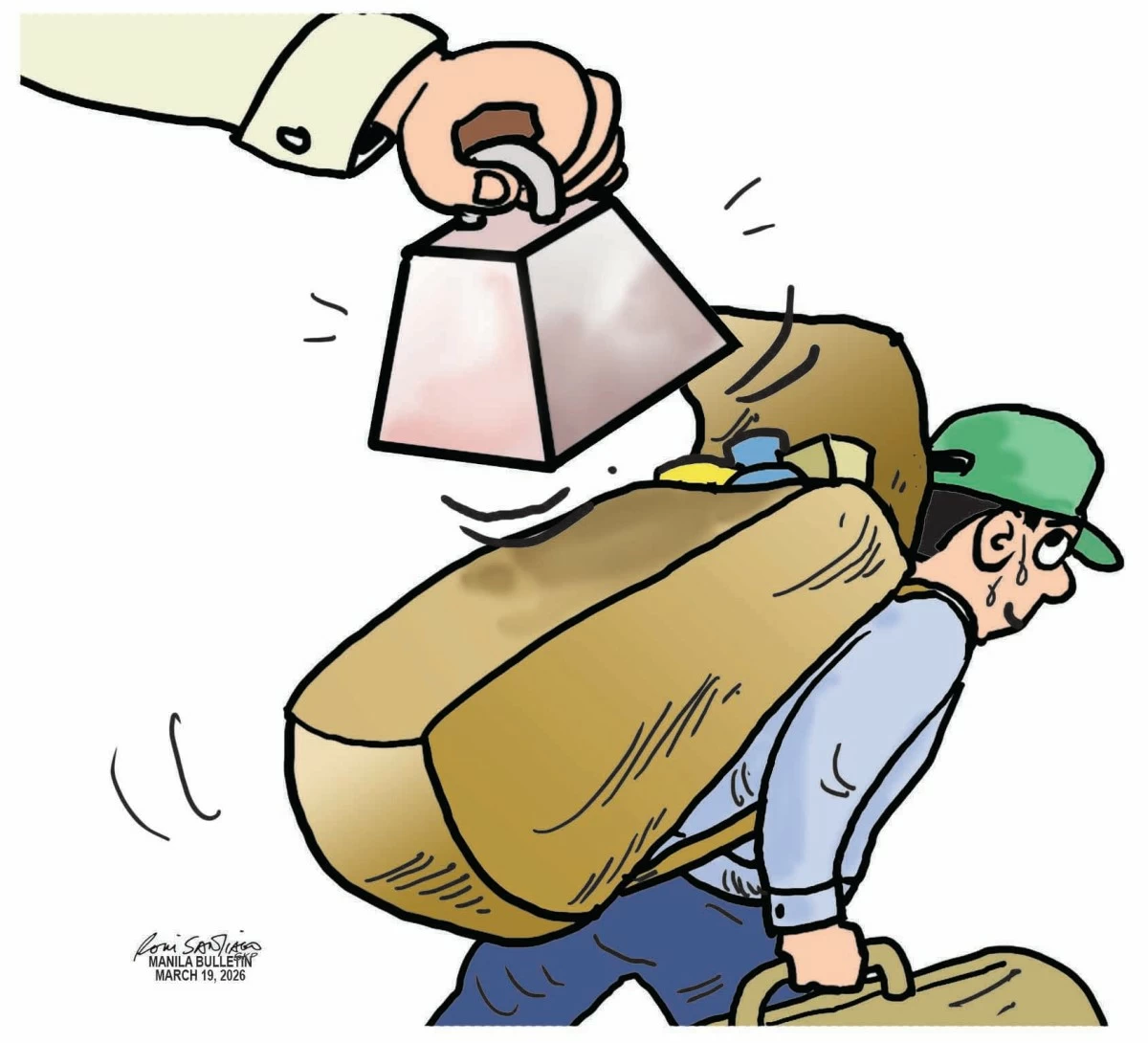
The proposed abolition of the travel tax is a step in the right direction to keep public policy attuned with the constitutional provision mandating that the right to travel shall not be impaired, “except in the interest of national security, public safety, or public health, as may be provided by law”.
This proposal, once enacted, is necessary in light of contemporary social and economic realities. A measure once justified as a levy on luxury has, over time, evolved into an undue burden, especially on ordinary citizens. By eliminating an outdated and regressive burden, the State acknowledges that mobility is no longer a luxury but a necessity—one that underpins economic participation, social connection, and personal advancement.
Today, mobility is integral to the lives of millions of Filipinos. Overseas employment, international education, cross-border enterprise, and even familial obligations necessitate travel beyond national boundaries. In this context, the continued imposition of a travel tax no longer reflects economic fairness; rather, it imposes an additional cost on individuals whose journeys are often driven by necessity rather than leisure.
The advantages of abolishing the tax are immediate and far-reaching. Foremost is the reduction in travel costs. For many Filipinos, especially those in the middle-income bracket, the cumulative expenses associated with international travel can be prohibitive. Eliminating the travel tax alleviates a portion of this financial strain, making mobility more attainable and less exclusive. In doing so, it democratizes access to opportunities that lie beyond the country’s borders.
Moreover, the measure enhances the Philippines’ competitiveness within the regional and global travel landscape. Lower barriers to outbound travel can stimulate passenger volume, benefiting airlines, tourism-related enterprises, and ancillary industries. Increased movement of people fosters economic activity, encourages investment, and strengthens the country’s integration into the global economy. In a region characterized by dynamic competition, policy adjustments that facilitate mobility are both timely and strategic. In fact, we are the only country in Southeast Asia that still imposes a travel tax on its citizens.
Equally significant is the question of equity. A uniform tax imposed on all travelers, regardless of purpose or capacity to pay, fails to align with the fundamental principles of a just taxation system. It disproportionately affects those who travel out of necessity—workers, students, and small entrepreneurs—while offering no meaningful differentiation based on circumstance. Its removal thus restores a measure of fairness, recognizing that mobility should not be encumbered by indiscriminate fiscal impositions.
Beyond economic considerations, the broader societal benefits are compelling. Greater ease of travel strengthens familial bonds, particularly for overseas Filipino workers whose ability to return home is often constrained by cost. It facilitates the exchange of knowledge and skills, enabling professionals and students to engage more fully with global networks. It also empowers small and medium enterprises to explore international markets, thereby contributing to national development.
Nevertheless, the success of this reform will depend on prudent implementation. The government must address the revenue implications of the tax’s abolition through equitable and sustainable alternatives, ensuring that essential public services remain adequately funded. At the same time, regulatory oversight must be exercised to prevent the emergence of substitute charges that could undermine the intended relief provided by this measure for travelers.
The measure is both timely and justified. It sends a strong message that the government is committed to a more inclusive and responsive policy framework—one that recognizes the realities of modern Filipino life and upholds the dignity of movement as an essential component of national progress.
ADVERTISEMENT
.most-popular .layout-ratio{ padding-bottom: 79.13%; } @media (min-width: 768px) and (max-width: 1024px) { .widget-title { font-size: 15px !important; } }

{{ articles_filter_1561_widget.title }}

.most-popular .layout-ratio{ padding-bottom: 79.13%; } @media (min-width: 768px) and (max-width: 1024px) { .widget-title { font-size: 15px !important; } }

{{ articles_filter_1562_widget.title }}

.most-popular .layout-ratio{ padding-bottom: 79.13%; } @media (min-width: 768px) and (max-width: 1024px) { .widget-title { font-size: 15px !important; } }

{{ articles_filter_1563_widget.title }}

{{ articles_filter_1564_widget.title }}

.mb-article-details { position: relative; } .mb-article-details .article-body-preview, .mb-article-details .article-body-summary{ font-size: 17px; line-height: 30px; font-family: "Libre Caslon Text", serif; color: #000; } .mb-article-details .article-body-preview iframe , .mb-article-details .article-body-summary iframe{ width: 100%; margin: auto; } .read-more-background { background: linear-gradient(180deg, color(display-p3 1.000 1.000 1.000 / 0) 13.75%, color(display-p3 1.000 1.000 1.000 / 0.8) 30.79%, color(display-p3 1.000 1.000 1.000) 72.5%); position: absolute; height: 200px; width: 100%; bottom: 0; display: flex; justify-content: center; align-items: center; padding: 0; } .read-more-background a{ color: #000; } .read-more-btn { padding: 17px 45px; font-family: Inter; font-weight: 700; font-size: 18px; line-height: 16px; text-align: center; vertical-align: middle; border: 1px solid black; background-color: white; } .hidden { display: none; }
function initializeAllSwipers() { // Get all hidden inputs with cms_article_id document.querySelectorAll('[id^="cms_article_id_"]').forEach(function (input) { const cmsArticleId = input.value; const articleSelector = '#article-' + cmsArticleId + ' .body_images'; const swiperElement = document.querySelector(articleSelector); if (swiperElement && !swiperElement.classList.contains('swiper-initialized')) { new Swiper(articleSelector, { loop: true, pagination: false, navigation: { nextEl: '#article-' + cmsArticleId + ' .swiper-button-next', prevEl: '#article-' + cmsArticleId + ' .swiper-button-prev', }, }); } }); } setTimeout(initializeAllSwipers, 3000); const intersectionObserver = new IntersectionObserver( (entries) => { entries.forEach((entry) => { if (entry.isIntersecting) { const newUrl = entry.target.getAttribute("data-url"); if (newUrl) { history.pushState(null, null, newUrl); let article = entry.target; // Extract metadata const author = article.querySelector('.author-section').textContent.replace('By', '').trim(); const section = article.querySelector('.section-info ').textContent.replace(' ', ' '); const title = article.querySelector('.article-title h1').textContent; // Parse URL for Chartbeat path format const parsedUrl = new URL(newUrl, window.location.origin); const cleanUrl = parsedUrl.host + parsedUrl.pathname; // Update Chartbeat configuration if (typeof window._sf_async_config !== 'undefined') { window._sf_async_config.path = cleanUrl; window._sf_async_config.sections = section; window._sf_async_config.authors = author; } // Track virtual page view with Chartbeat if (typeof pSUPERFLY !== 'undefined' && typeof pSUPERFLY.virtualPage === 'function') { try { pSUPERFLY.virtualPage({ path: cleanUrl, title: title, sections: section, authors: author }); } catch (error) { console.error('ping error', error); } } // Optional: Update document title if (title && title !== document.title) { document.title = title; } } } }); }, { threshold: 0.1 } ); function showArticleBody(button) { const article = button.closest("article"); const summary = article.querySelector(".article-body-summary"); const body = article.querySelector(".article-body-preview"); const readMoreSection = article.querySelector(".read-more-background"); // Hide summary and read-more section summary.style.display = "none"; readMoreSection.style.display = "none"; // Show the full article body body.classList.remove("hidden"); } document.addEventListener("DOMContentLoaded", () => { let loadCount = 0; // Track how many times articles are loaded const offset = [1, 2, 3, 4, 5, 6, 7, 8, 9, 10]; // Offset values const currentUrl = window.location.pathname.substring(1); let isLoading = false; // Prevent multiple calls if (!currentUrl) { console.log("Current URL is invalid."); return; } const sentinel = document.getElementById("load-more-sentinel"); if (!sentinel) { console.log("Sentinel element not found."); return; } function isSentinelVisible() { const rect = sentinel.getBoundingClientRect(); return ( rect.top < window.innerHeight && rect.bottom >= 0 ); } function onScroll() { if (isLoading) return; if (isSentinelVisible()) { if (loadCount >= offset.length) { console.log("Maximum load attempts reached."); window.removeEventListener("scroll", onScroll); return; } isLoading = true; const currentOffset = offset[loadCount]; window.loadMoreItems().then(() => { let article = document.querySelector('#widget_1690 > div:nth-last-of-type(2) article'); intersectionObserver.observe(article) loadCount++; }).catch(error => { console.error("Error loading more items:", error); }).finally(() => { isLoading = false; }); } } window.addEventListener("scroll", onScroll); });

Sign up by email to receive news.