







Where have all our mangroves gone?
Published Mar 18, 2026 09:35 am


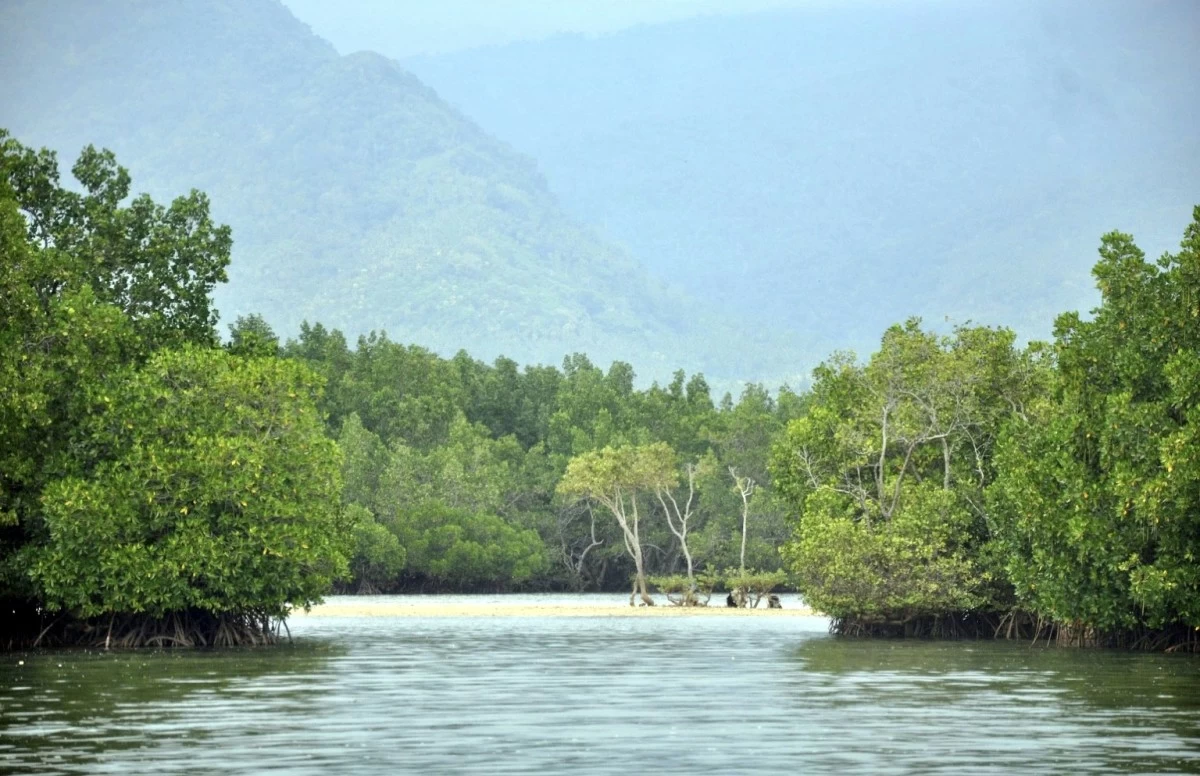
Mangroves serve as a sanctuary for fish and other marine life.
Deforestation does not happen only in the uplands but also in the lowlands. Mangroves, specialized trees and shrubs that thrive in coastal intertidal zones, have seen a significant reduction over the last century.
In 1920, the country had approximately 450,000 hectares of mangrove forests. This dwindled to 317,500 hectares by 1990 and further declined to 311,400 hectares, according to the latest data.
“Those remaining mangroves are no longer enough to protect against typhoons. We really need to come up with a strategic restoration program,” said Dr. Severino Salmo III, associate professor at the University of the Philippines Diliman Institute of Biology.
The Philippines experiences an average of 18 to 20 typhoons annually. “Between 2005 and 2015, 56 percent of property damage in the Philippines was due to typhoons and storms, and another 29 percent due to floods,” wrote World Bank researchers Michael Beck and Glenn-Marie Lange.
Dr. Elmer Mercado, a former official of the Department of Environment and Natural Resources (DENR), agrees with Dr. Salmo’s observation.
“Given the threats posed by climate change in the Philippines, particularly storm surges, tsunamis, and severe typhoons, mangroves represent the most suitable and cost-effective adaptation strategy for protecting our coastal communities,” he said.
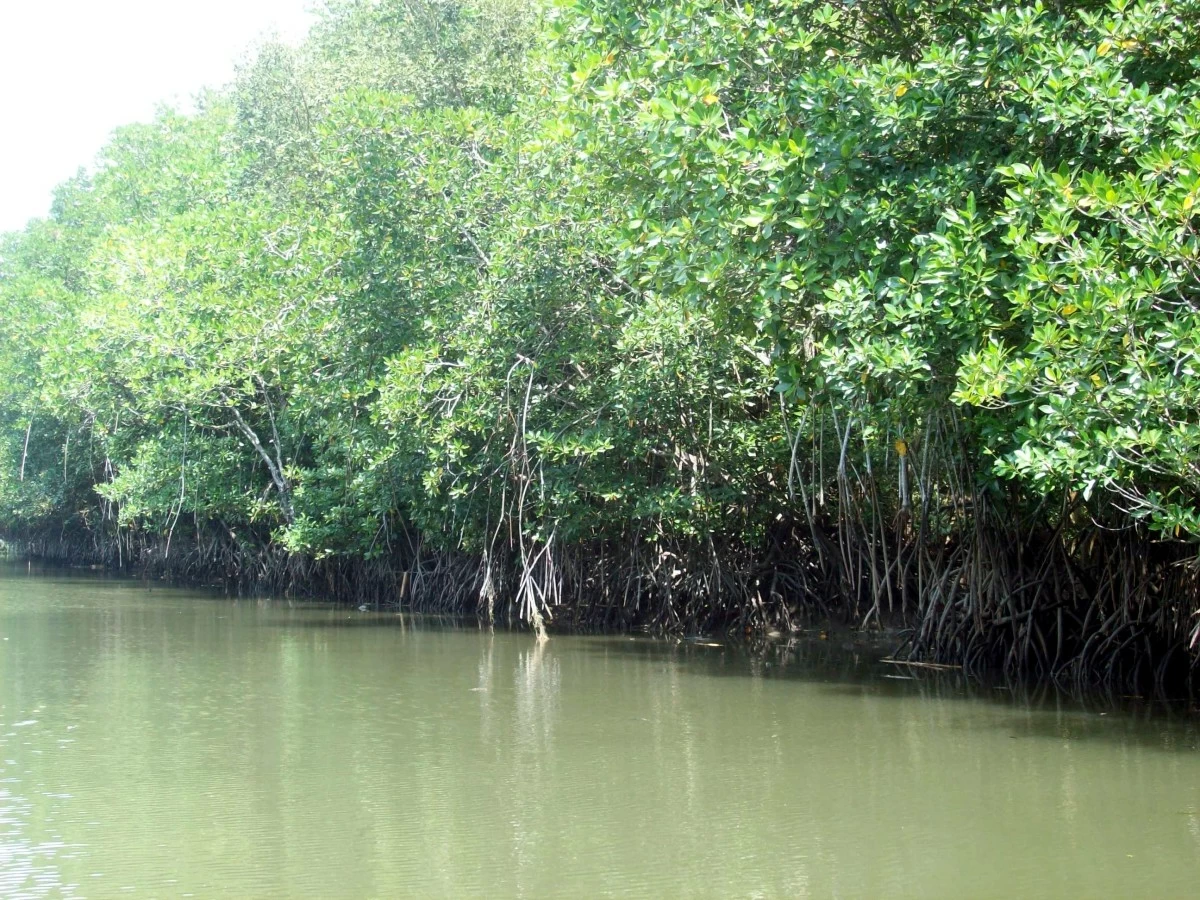
Mangroves help protect coastal communities from typhoons due to their root systems.
Frequently undervalued, mangroves are essential for shielding communities and properties from the devastation caused by typhoons. This importance was emphasized by Dr. Moises Neil V. Seriño, then an assistant professor in the Department of Economics at Visayas State University, after conducting a study with his colleagues on the effects of Super Typhoon Yolanda (international name: Haiyan) in 2013.
“Our study shows that mangrove vegetation reduced the number of deaths and damaged houses during the Yolanda incident,” Dr. Seriño said. “The property- and life-saving effects of mangroves are robust. Mangroves can protect our lives, livelihoods, and properties from the damaging effects of typhoons.”
Dr. Salmo III believes that mangroves can protect coastal communities from typhoons.
“But it is not as straightforward as that,” he pointed out. “The types of mangroves, their length and extent, and their structural complexity matter more than their simple presence.”
To put it simply, Dr. Salmo explained: “If you restore a mangrove today, and a typhoon comes tomorrow, do not expect it to protect the coast compared to more mature mangroves. Alternatively, even if you have 30-year-old mangroves, but they are too sparse and not diverse, the protection will be practically none.”
Some climatologists have speculated that, as a consequence of climate change, typhoons are likely to become more intense and destructive. Given that the Philippines comprises more than 7,000 islands, it is essential to focus on the often-overlooked mangrove forests. Restoring mangrove ecosystems and expanding mangrove planting in coastal regions is therefore imperative.
The World Economic Forum (WEF) has emphasized the importance of protecting mangrove forests. “The sturdy root systems of mangrove trees help form a natural barrier against violent storm surges and floods,” it noted.
Aside from protecting coastal communities from typhoons, mangroves are also considered carbon sinks. “Coastal forests help the fight against global warming by removing carbon dioxide from the atmosphere, most of which is stored within the plant,” the WEF said. “When mangrove tree roots, branches, and leaves die, they are usually covered by soil that is then submerged under tidal water, slowing the breakdown of materials and boosting carbon storage.”
According to several studies, coastal mangroves perform better than most other forests in their ability to store carbon. An analysis of 25 mangrove forests in the Indo-Pacific region revealed that they contain up to four times as much carbon per hectare as other tropical rainforests.
Like forests, mangroves also provide livelihoods. Mangrove trees are a reliable source of wood for construction and fuel, prized for their resistance to rotting and insects. However, in some areas, the wood has been harvested commercially for pulp, wood chips, and charcoal, raising concerns about sustainability.
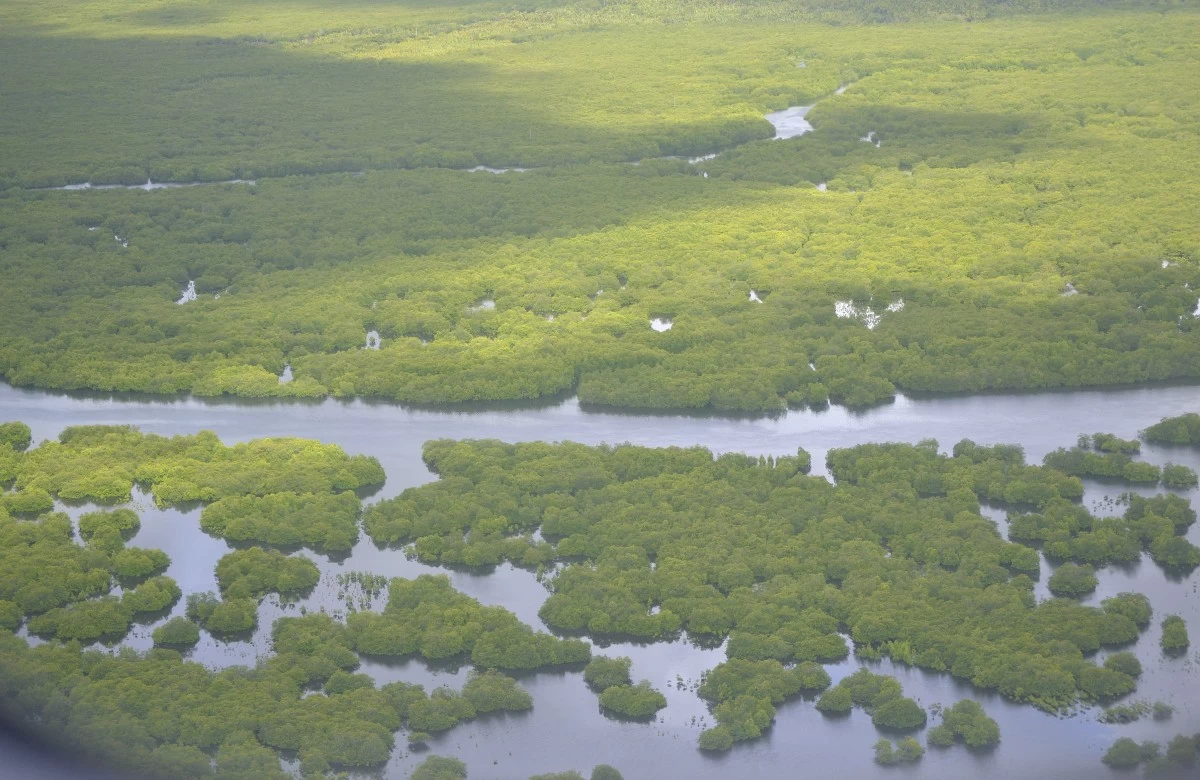
Some of the remaining intact mangrove forests can be found in Del Carmen, Siargao.
More importantly, mangrove forests provide local fishermen with a rich supply of fish, crabs, and shellfish for income. Dr. Rafael D. Guerrero III, an academician of the National Academy of Science and Technology, describes mangroves as “fish factories.” More than 3,000 fish species are found in mangrove ecosystems.
“They serve as nursery grounds for fishes by providing their fry with food such as zooplankton,” Dr. Guerrero said. “They also serve as breeding or spawning grounds for fishes, shrimps, and mollusks.”
The muddy waters around mangroves are rich in nutrients from decaying leaves and organic matter produced by the mangroves themselves, as well as sediments trapped around the roots.
Fish, like rice, is a staple food of Filipinos. That is why experts are urging people to protect these mangrove forests.
“Local leaders must act to preserve mangrove forests and the ecosystem services that benefit all Filipinos,” said a policy brief produced by the Washington, D.C.-based Population Reference Bureau (PRB) under the Research Technical Assistance Center.
Across the country, mangroves are cut indiscriminately for various reasons. A global Landsat imaging analysis conducted from 1990 to 2010 estimated the country’s mangrove coverage at 256,185 hectares in 2000. The study, published in the Journal of Coastal Research, found that 66 out of 82 provinces have substantial mangrove areas.
Palawan, the country’s “last frontier”, topped the list with 22.2 percent of the total national mangrove area. Many others on the list are in Mindanao, including Sulu (8 percent); Zamboanga del Norte and del Sur (9.8 percent); Surigao del Norte and del Sur (6.8 percent); Tawi-Tawi (4.4 percent); and Basilan (2.97 percent).
Also on the list were Eastern and Western Samar (6.1 percent), Quezon (5.5 percent), and Bohol (3.69 percent). About 49,000 hectares, or 19 percent of the total national area, are under the protection of the International Union for the Conservation of Nature for long-term conservation purposes. The protected mangroves are located in Palawan, Siargao, Malampaya Sound, Biri Larosa, El Nido, Tanon Strait, Northern Sierra Madre, Dumanquilas Bay, Sibuyan Islands, and Calauit Island.
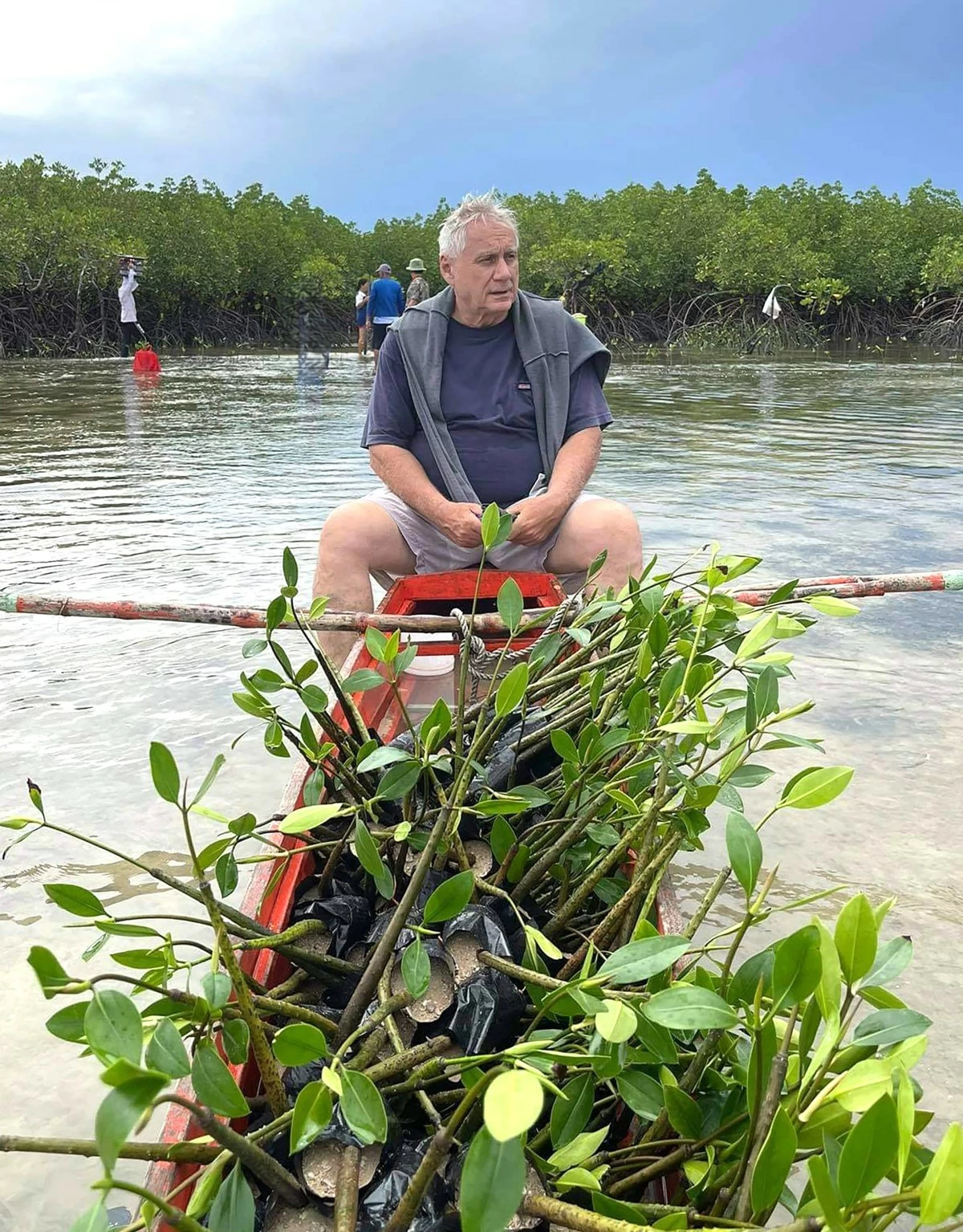
Ulrich Kronberg, a German national, is leading mangrove reforestation efforts in the coastal areas of Mati and Baganga.
Ulrich Kronberg, a German national and president of the Davao-based Mama Earth Foundation, is working to reforest coastal communities in the Davao region.
Mati and Baganga, where Mama Earth is conducting extensive mangrove reforestation efforts, are located in Davao Oriental. In these municipalities, strong typhoon winds have uprooted numerous mature mangroves.
According to Kronberg, Baganga is home to more than 800 hectares of mangroves, a significant figure considering that the total area of the province is 94,500 hectares. At least one-third of the mangrove population requires urgent reforestation, while other sections require only partial planting of saplings to allow natural regeneration.
“Plastic and driftwood are the adversaries of our plantings,” Kronberg lamented. “Plastic bags or debris, along with remnants of fishing nets that cling to the seedlings, can dislodge unrooted seedlings from the sediment during strong currents, creating a significant challenge, particularly in sandy soils.”
The Philippines is home to 39 species of true mangroves belonging to 13 families. Conservation assessments indicate that some species are endangered. However, inconsistencies between local and international evaluations highlight variations in distribution and population trends.