







PSE still aims for ₱170 billion despite global troubles
Published Mar 18, 2026 04:45 pm


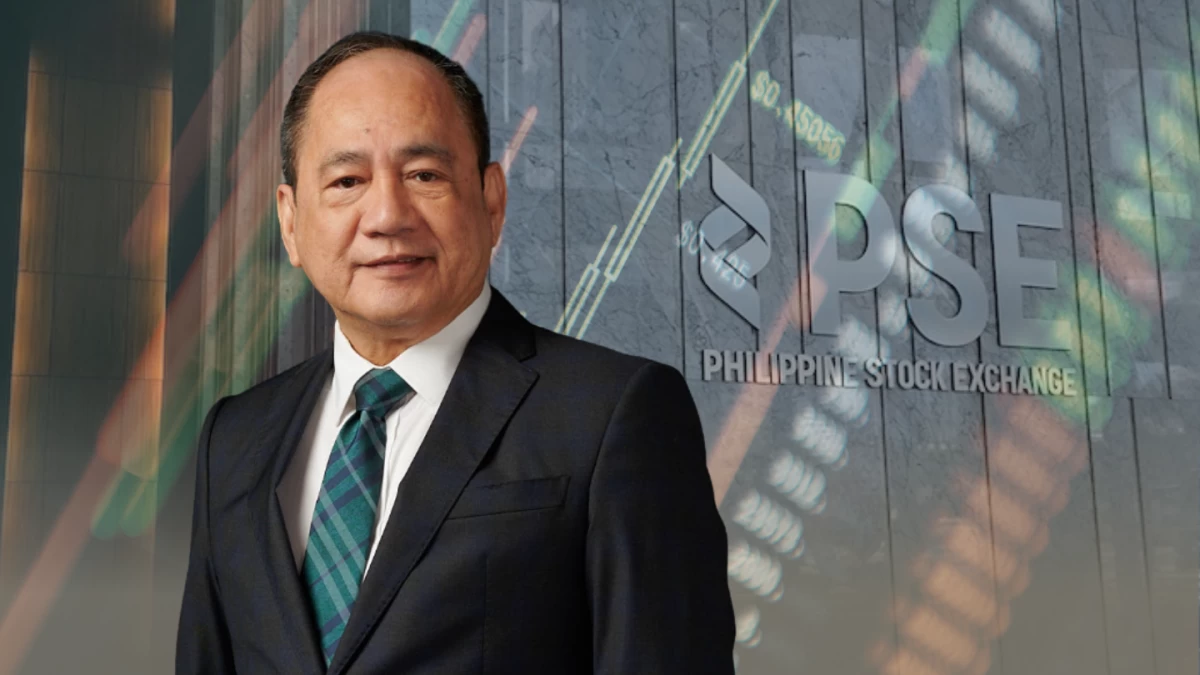
Ramon S. Monzon, PSE president and chief executive officer
The Philippine Stock Exchange (PSE) is standing by its ₱170 billion capital-raising target for the year, betting that a de-escalation of Middle East hostilities will allow the recovery in investor sentiment after a volatile start to the year.
The local bourse entered the year on a strong footing, with the benchmark PSE index gaining 9.2 percent in the first two months. By Feb. 27, the index was within 90 points, or 1.6 percent, of entering a technical bull market. This rally was driven by the significant shift in investor flows, as the market moved from ₱51.2 billion in net foreign selling during 2025 to ₱26.2 billion in net foreign buying in early 2026.
However, the regional conflict that escalated in late February has stalled that momentum.
During a forum, Ramon S. Monzon, PSE president and chief executive officer said that while the outlook remains contingent on geopolitical developments, the exchange is maintaining its full-year guidance in anticipation of normalization in the coming months.
He noted that capital-raising activities are likely to remain on hold until the market stabilizes.
“I hope this conflict will stop in the next two months or something. We’re still okay,” Monzon said.
The exchange expects the year’s activity to be driven by at least three initial public offerings. Officials are particularly optimistic about real estate investment trusts after the Securities and Exchange Commission expanded the real estate investment Trust (REIT) Law to include infrastructure and other income-generating assets.
Monzon, meanwhile, flagged the potential for “mega” REIT listings, including Vitro Data Center, a subsidiary of telecommunications giant PLDT Inc., alongside several follow-on offerings.
The ₱170 billion target excludes PNB Holdings Corp., which is slated for a listing by way of introduction. Such listings do not involve an immediate public sale of shares or the raising of new capital.
To broaden the market’s depth, the PSE is also laying the groundwork for a Nasdaq-style technology board. The exchange is currently in talks with major domestic and multinational brokers to act as market makers for the new platform.
These entities would be required to provide continuous liquidity by quoting bid and ask prices, a crucial mechanism for technology firms that may lack a long-term track record of profitability.
Potential candidates for the tech board include fintech leaders GCash and Maya, as well as ride-hailing platforms Angkas and Move It. The proposed rules would relax traditional profitability requirements, allowing younger, high-growth companies to access public capital locally rather than seeking offshore listings.
Meanwhile, Monzon cautioned local firms against pursuing dual listings in the United States (US), citing the risk of becoming “orphans”—stocks that suffer from low liquidity and a lack of analyst coverage due to their relatively small size compared to Wall Street giants.
While Maya Philippines is reportedly considering a US debut, Monzon noted that GCash had previously evaluated a similar move before deciding to focus on a domestic listing.
He suggested that pressure from private equity investors seeking an exit often drives interest in foreign bourses, though such moves rarely result in long-term index inclusion or sustained investor interest abroad.