






Manila Bulletin
 Business
Trade & Industry
Rising costs dent Philippine car market, but EVs see record growth
Business
Trade & Industry
Rising costs dent Philippine car market, but EVs see record growth
Business
Trade & Industry
Rising costs dent Philippine car market, but EVs see record growth
Rising costs dent Philippine car market, but EVs see record growth
Published Mar 18, 2026 01:58 pm


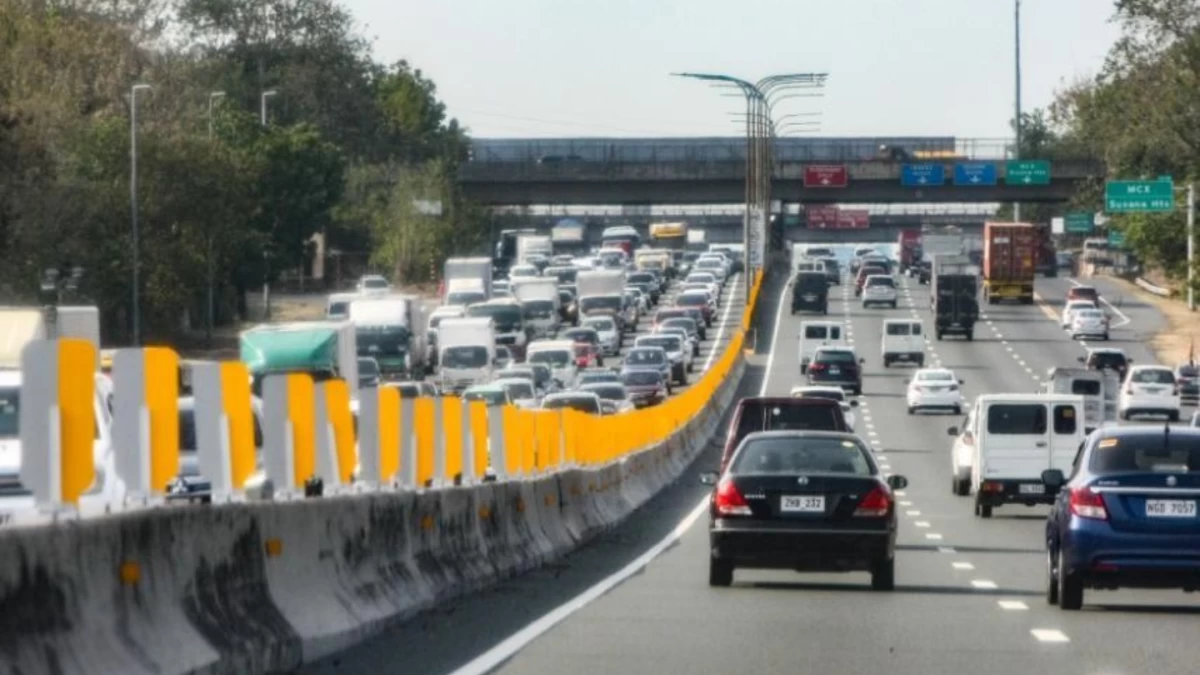
The Philippine automotive industry is facing a dual challenge of cooling demand and rising energy costs as escalating Middle East tensions threaten to derail the sector’s ambitious annual growth targets.
While manufacturers maintain a record 500,000-unit sales goal for 2026, a 66 percent surge in electric vehicle (EV) deliveries during the first two months underscored rapid pivot toward fuel-independent transport amid rising pump prices.
Based on the joint sales report released by the Chamber of Automotive Manufacturers of the Philippines Inc. (CAMPI) and the Truck Manufacturers Association (TMA), total vehicle sales fell nine percent in the first two months of the year.
At end-February, total deliveries were 69,538 units, down from 76,768 units in the same period a year ago.
Commercial vehicles, which account for nearly 81 percent of total sales, decreased by 7.5 percent to 56,312 units from 60,885 units last year.
Passenger cars declined by a steeper 16.7 percent, with sales reaching 13,226 units, or 19 percent of the total, compared to 15,883 units in the prior year.
Taking into account February alone, car sales reached 35,842 units, down 8.5 percent from the 39,164 recorded in the same month last year. However, on a month-on-month basis, vehicle sales improved by 6.4 percent from 33,696 units in January.
Jose Maria Atienza, CAMPI president, attributed last month's improvement in vehicle sales to car brands' ability to meet rising consumer demand.
Atienza said this provides the industry with a more stable outlook, especially as CAMPI targets a record 500,000 sales this year, up from 463,646 units in 2025.
However, this target could be under threat, as he noted that the “Middle East conflict is affecting how Filipino motorists choose and use their cars.”
Sought for comment, Rizal Commercial Banking Corp. (RCBC) chief economist Michael Ricafort said he expects slower growth in sales in the coming months if fuel prices remain elevated, especially amid an unpredictable conflict with no end in sight.
He said the current situation should encourage more consumers to consider buying electric vehicles (EVs) because electricity rates are rising more slowly than fuel prices.
Based on CAMPI-TMA data, EV sales surged by 66 percent to 5,701 units in the first two months, compared to 3,416 units in the same period last year. The EV segment now accounts for 8.20 percent of the industry, up from 7.75 percent last month.
Broken down, hybrid EVs topped the market with 4,551 units sold, or 79 percent of the segment, followed by battery EVs with 594 units and plug-in hybrid EVs with 556 units.
To meet projected increased demand, Atienza said CAMPI members are expanding and diversifying their product lineups with energy-efficient and electrified options across different price ranges.
“This aligns with the ongoing trend highlighting growing customer preference for electrified vehicles month on month,” he said.
Last month, Toyota Motor Philippines Corp. maintained its industry leadership with 34,300 units sold, or 49.33 percent of total.
This was followed by Mitsubishi Motors Philippines Corp. with a 20.65-percent market share, Suzuki Philippines Inc. with 4.68 percent, Nissan Philippines Inc. with 4.52 percent, and Ford Motor Company Philippines Inc. with 3.7 percent.