ADVERTISEMENT

Philippines among Asia's most energy-vulnerable economies—IIF

Published Mar 18, 2026 06:20 pm
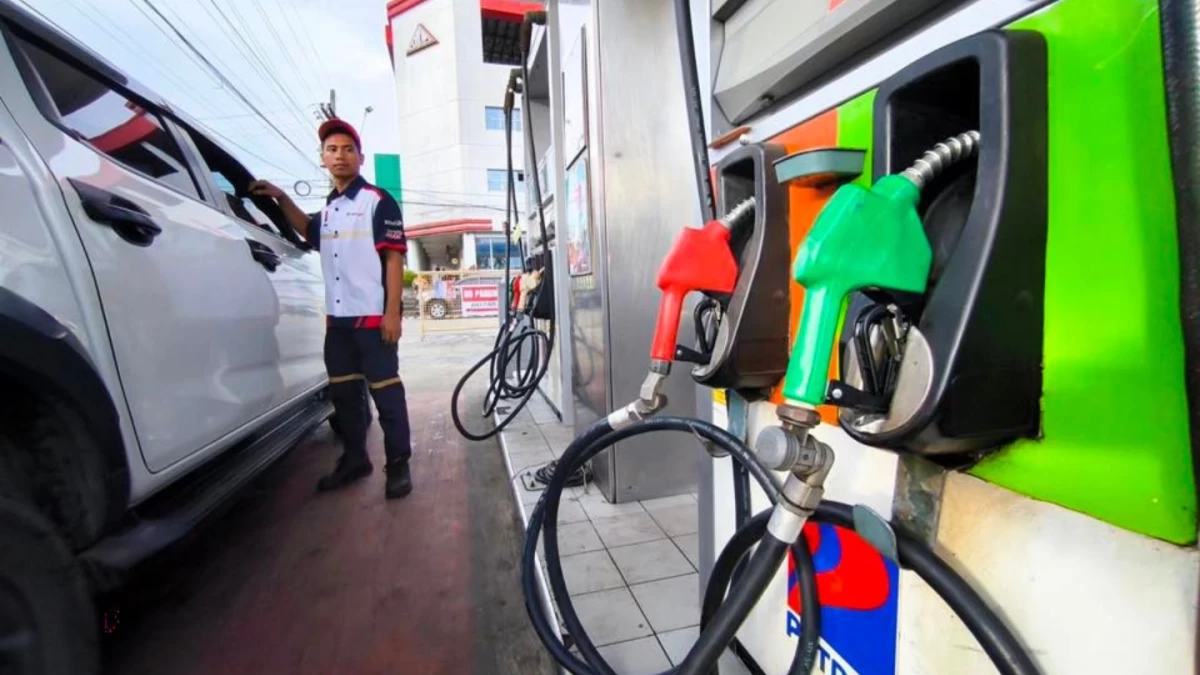
A gas station attendant refuels a vehicle in Iloilo City on Monday, March 9. While this fuel was purchased at lower rates weeks ago, retailers have raised prices to reflect “replacement costs”—the higher price they must pay to restock inventory amid global supply fears. (Photo by Tara Yap I MB)

The global oil price shock is seen creeping deeper into the pockets of Filipinos, as the Philippines is among the Asian economies deemed most vulnerable to the economic impact of the war in the Middle East, according to Washington-based Institute of International Finance (IIF).

A March 17 IIF report assessed Asia’s vulnerability to the Middle East energy shock, noting that “Thailand, India, and the Philippines appear most vulnerable to rising food and energy costs due to their high weights in CPI [the consumer price index].”

IIF noted that in these three countries, food accounts for more than 30 percent of household spending, leaving them especially vulnerable to rising fertilizer costs.

National Statistician Claire Dennis S. Mapa earlier told Manila Bulletin that over 36 percent of the CPI basket is directly or indirectly vulnerable to rising oil prices. Energy items such as transport fuels, electricity, liquefied petroleum gas (LPG), and kerosene—accounting for 8.23 percent of the CPI—are most directly affected, while agricultural products, meals outside the home, and road passenger transport, which together make up about 28 percent of the CPI, may face secondary impacts from higher transport and raw material costs.

This strain would be intensified by weaker exchange rates, which would raise the local-currency prices of energy and imported food, IIF said. The Philippine peso plunged to a new record low of ₱59.87 against the United States (US) dollar last Monday, March 16, as oil risks intensified.

The Philippines imports most of its fuel requirements, and supply constraints are aggravating already skyrocketing domestic prices.

Based on IIF data, the Philippines’ net energy imports were equivalent to over four percent of gross domestic product (GDP) in 2025, exceeded only by Thailand, South Korea, and Singapore in the region. The bulk of the country’s energy imports are oil, at over three percent of GDP, followed by coal and gas.

Philippine energy imports from the Gulf Cooperation Council (GCC) region—mostly oil, with some gas—are equivalent to less than one percent of GDP.

The Philippines, India, and Thailand, according to IIF, also have “meaningful exposure to prolonged disruption in Gulf energy flows with limited fiscal space to absorb the shock.”

The Philippines is trying to narrow its yawning fiscal deficit, which widened at the height of the pandemic to respond to the socioeconomic crises inflicted by Covid-19. However, the national government (NG) closed 2025 with a ₱1.58-trillion budget deficit, wider than 2024 and above the program, driven by a revenue shortfall, though the deficit-to-GDP ratio slightly improved to 5.6 percent.

The country is also piling up debt to plug its budget gap. The Philippines’ general government (GG) debt-to-GDP ratio rose further to 58.8 percent at end-2025 from 57.8 percent a quarter ago and 56.6 percent a year ago, according to the IIF’s latest Global Debt Monitor.

The Marcos Jr. administration targets reducing GG debt—the metric monitored by credit rating agencies—to 54.7 percent of GDP by 2028.

While other countries like Singapore and South Korea were flagged by IIF for their large exposure to energy imports from the GCC, the global financial industry association concluded that “Thailand, India, and the Philippines are most exposed to the ongoing energy shock” among Asian economies due to “heavy reliance on imported energy with limited macroeconomic buffers.”

“By contrast, economies such as South Korea, Taiwan (China), and Singapore benefit from stronger fiscal and external buffers,” it added.

Meanwhile, IIF said Indonesia and Malaysia are somewhat protected by their status as exporters of natural gas and coal, respectively, which could help offset some of the terms-of-trade losses affecting other countries in the region.

IIF warned that “a prolonged squeeze on energy supply that leads to widespread shortages of energy products would be significantly more damaging than higher prices alone.”

According to IIF, the main uncertainty affecting the outlook is how long disruptions to Gulf energy infrastructure and shipping routes will last.

It explained that if the Strait of Hormuz remains restricted for an extended period, competition for oil and liquefied natural gas (LNG) shipments between Europe and Asia is likely to intensify again, driving energy prices higher and putting additional strain on fiscal balances and inflation across much of emerging Asia.

ADVERTISEMENT
.most-popular .layout-ratio{ padding-bottom: 79.13%; } @media (min-width: 768px) and (max-width: 1024px) { .widget-title { font-size: 15px !important; } }

{{ articles_filter_1561_widget.title }}

.most-popular .layout-ratio{ padding-bottom: 79.13%; } @media (min-width: 768px) and (max-width: 1024px) { .widget-title { font-size: 15px !important; } }

{{ articles_filter_1562_widget.title }}

.most-popular .layout-ratio{ padding-bottom: 79.13%; } @media (min-width: 768px) and (max-width: 1024px) { .widget-title { font-size: 15px !important; } }

{{ articles_filter_1563_widget.title }}

{{ articles_filter_1564_widget.title }}

.mb-article-details { position: relative; } .mb-article-details .article-body-preview, .mb-article-details .article-body-summary{ font-size: 17px; line-height: 30px; font-family: "Libre Caslon Text", serif; color: #000; } .mb-article-details .article-body-preview iframe , .mb-article-details .article-body-summary iframe{ width: 100%; margin: auto; } .read-more-background { background: linear-gradient(180deg, color(display-p3 1.000 1.000 1.000 / 0) 13.75%, color(display-p3 1.000 1.000 1.000 / 0.8) 30.79%, color(display-p3 1.000 1.000 1.000) 72.5%); position: absolute; height: 200px; width: 100%; bottom: 0; display: flex; justify-content: center; align-items: center; padding: 0; } .read-more-background a{ color: #000; } .read-more-btn { padding: 17px 45px; font-family: Inter; font-weight: 700; font-size: 18px; line-height: 16px; text-align: center; vertical-align: middle; border: 1px solid black; background-color: white; } .hidden { display: none; }
function initializeAllSwipers() { // Get all hidden inputs with cms_article_id document.querySelectorAll('[id^="cms_article_id_"]').forEach(function (input) { const cmsArticleId = input.value; const articleSelector = '#article-' + cmsArticleId + ' .body_images'; const swiperElement = document.querySelector(articleSelector); if (swiperElement && !swiperElement.classList.contains('swiper-initialized')) { new Swiper(articleSelector, { loop: true, pagination: false, navigation: { nextEl: '#article-' + cmsArticleId + ' .swiper-button-next', prevEl: '#article-' + cmsArticleId + ' .swiper-button-prev', }, }); } }); } setTimeout(initializeAllSwipers, 3000); const intersectionObserver = new IntersectionObserver( (entries) => { entries.forEach((entry) => { if (entry.isIntersecting) { const newUrl = entry.target.getAttribute("data-url"); if (newUrl) { history.pushState(null, null, newUrl); let article = entry.target; // Extract metadata const author = article.querySelector('.author-section').textContent.replace('By', '').trim(); const section = article.querySelector('.section-info ').textContent.replace(' ', ' '); const title = article.querySelector('.article-title h1').textContent; // Parse URL for Chartbeat path format const parsedUrl = new URL(newUrl, window.location.origin); const cleanUrl = parsedUrl.host + parsedUrl.pathname; // Update Chartbeat configuration if (typeof window._sf_async_config !== 'undefined') { window._sf_async_config.path = cleanUrl; window._sf_async_config.sections = section; window._sf_async_config.authors = author; } // Track virtual page view with Chartbeat if (typeof pSUPERFLY !== 'undefined' && typeof pSUPERFLY.virtualPage === 'function') { try { pSUPERFLY.virtualPage({ path: cleanUrl, title: title, sections: section, authors: author }); } catch (error) { console.error('ping error', error); } } // Optional: Update document title if (title && title !== document.title) { document.title = title; } } } }); }, { threshold: 0.1 } ); function showArticleBody(button) { const article = button.closest("article"); const summary = article.querySelector(".article-body-summary"); const body = article.querySelector(".article-body-preview"); const readMoreSection = article.querySelector(".read-more-background"); // Hide summary and read-more section summary.style.display = "none"; readMoreSection.style.display = "none"; // Show the full article body body.classList.remove("hidden"); } document.addEventListener("DOMContentLoaded", () => { let loadCount = 0; // Track how many times articles are loaded const offset = [1, 2, 3, 4, 5, 6, 7, 8, 9, 10]; // Offset values const currentUrl = window.location.pathname.substring(1); let isLoading = false; // Prevent multiple calls if (!currentUrl) { console.log("Current URL is invalid."); return; } const sentinel = document.getElementById("load-more-sentinel"); if (!sentinel) { console.log("Sentinel element not found."); return; } function isSentinelVisible() { const rect = sentinel.getBoundingClientRect(); return ( rect.top < window.innerHeight && rect.bottom >= 0 ); } function onScroll() { if (isLoading) return; if (isSentinelVisible()) { if (loadCount >= offset.length) { console.log("Maximum load attempts reached."); window.removeEventListener("scroll", onScroll); return; } isLoading = true; const currentOffset = offset[loadCount]; window.loadMoreItems().then(() => { let article = document.querySelector('#widget_1690 > div:nth-last-of-type(2) article'); intersectionObserver.observe(article) loadCount++; }).catch(error => { console.error("Error loading more items:", error); }).finally(() => { isLoading = false; }); } } window.addEventListener("scroll", onScroll); });

Sign up by email to receive news.