







Fuel price surge shows signs of easing after record spikes
Published Mar 18, 2026 03:06 pm


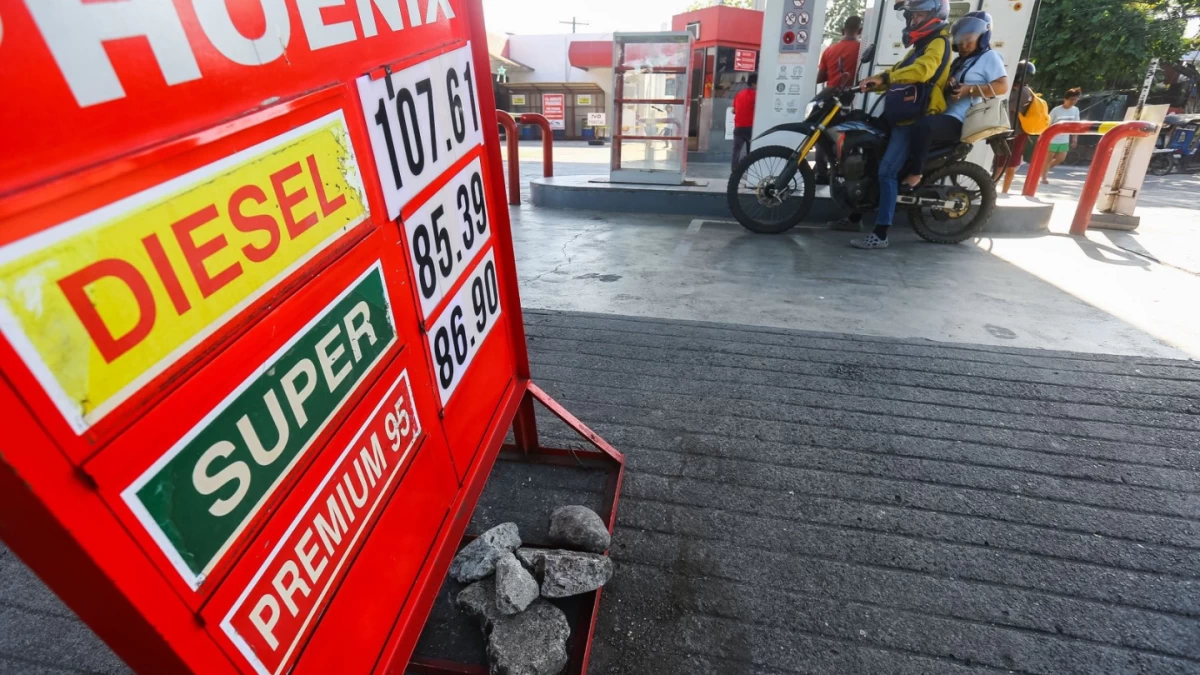
Fuel prices at a gas station in Davao City show a significant jump on Tuesday, March 17. Local motorists are feeling the pinch as oil companies implement a "big-time" price hike across the board. (Photo by Keith Bacongco I MB)
Fuel prices are poised for another round of increases next week, though early market indicators suggest the pace of the spikes may finally be losing some momentum after a period of historic volatility.
Based on the first two days of trading for the Mean of Platts Singapore, the regional benchmark, diesel prices are projected to rise by approximately ₱10.20 per liter. Gasoline is also tracking toward an increase of roughly ₱5.70 per liter.
Final estimates are expected by Friday, with oil companies typically implementing official price movements on Monday, March 23.
While these estimates suggest slower price hikes, Iran has recently expanded its attacks to include oil and gas facilities, beyond earlier strikes on refineries, terminals, and storage sites, which have already slowed crude production in the Middle East.
“With current or base are already high, further increases will just be minimal compared to the previous two weeks,” an industry expert told Manila Bulletin on Wednesday, March 18.
“With no signs of de-escalation, supply will become tight, and prices are likely to still go up. The potential increase, however, may no longer [be] as hefty as in the past two weeks.”
Supply disruptions have also been aggravated by the impassable Strait of Hormuz, a critical chokepoint in the region, which remains barricaded amid the escalating conflict.
This week, diesel prices jumped by ₱20.4 to ₱23.9 per liter, gasoline by ₱12.9 to ₱16 per liter, and kerosene by ₱6.9 to ₱8.9 per liter.
The Department of Energy (DOE) is currently assessing supply measures as its inventory has fallen below the 40-day mark. As per regulation, the country must have at least 15 days' worth of reserve in the country to avoid a severe strain on the domestic oil market.
While the current supply of oil is still considered secure, Energy Secretary Sharon Garin urged oil players and consumers to avoid profiteering and hoarding to minimize the risk of thinning the current supply.
The DOE is in active discussions with other nations to procure additional and alternative sources before it depletes by the end of April.
According to the agency, the government is in talks with other countries that have yet to restrict their exports, including Russia and the United States (US). However, Garin earlier expressed concern that, aside from pricing considerations, the distance of these countries from the Philippines could lead to longer delivery times, potentially slowing efforts to replenish the country’s oil stock.