






Manila Bulletin
 Spotlight Features
From streets to canvas: Malabon painters capture the city before it changes
Spotlight Features
From streets to canvas: Malabon painters capture the city before it changes
Spotlight Features
From streets to canvas: Malabon painters capture the city before it changes
From streets to canvas: Malabon painters capture the city before it changes
Published Mar 18, 2026 05:05 pm


By JAYFERSON COMITAN
For local artists in Malabon, painting is both a passion and a mission—to preserve the city’s heritage and everyday scenes amid rapid urbanization so future generations can still look back on what the city once was.
Through the “Plein Air Caravan” exhibit organized by Rojo Galerie, in partnership with the Malabon City Tourism and Cultural Affairs Office, artists captured the city using “plein air” painting, a technique where painters work outdoors to portray what they see in real time.
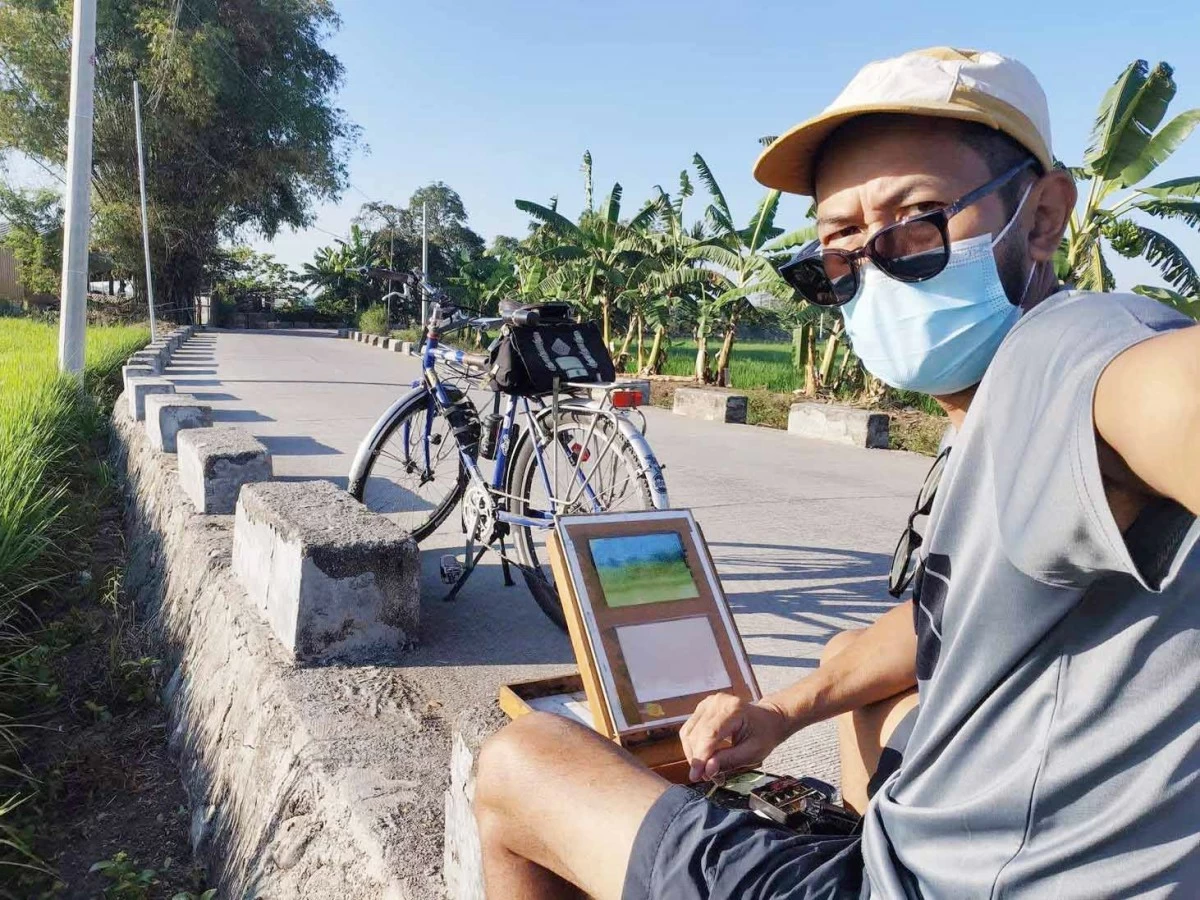
PAINT A PICTURE — Artist Erwin Mallari at work.
For Rey Castillo, managing director of Rojo Galerie, the project was a personal mission.
“Since then, I envision if our team and the visual artists of Malabon can preserve some parts of our city through painting, so that future generations can still see the old scenery of our beloved city,” Castillo told the Manila Bulletin.
The exhibition showcased scenes from San Bartolome Church, Immaculate Conception Church, Concepcion Market, and along Gen. Luna Street. The finished artworks were first displayed at Malabon City Hall from February 24 to 28, before being exhibited at Robins Design Center in Pasig City from March 2 to 10.
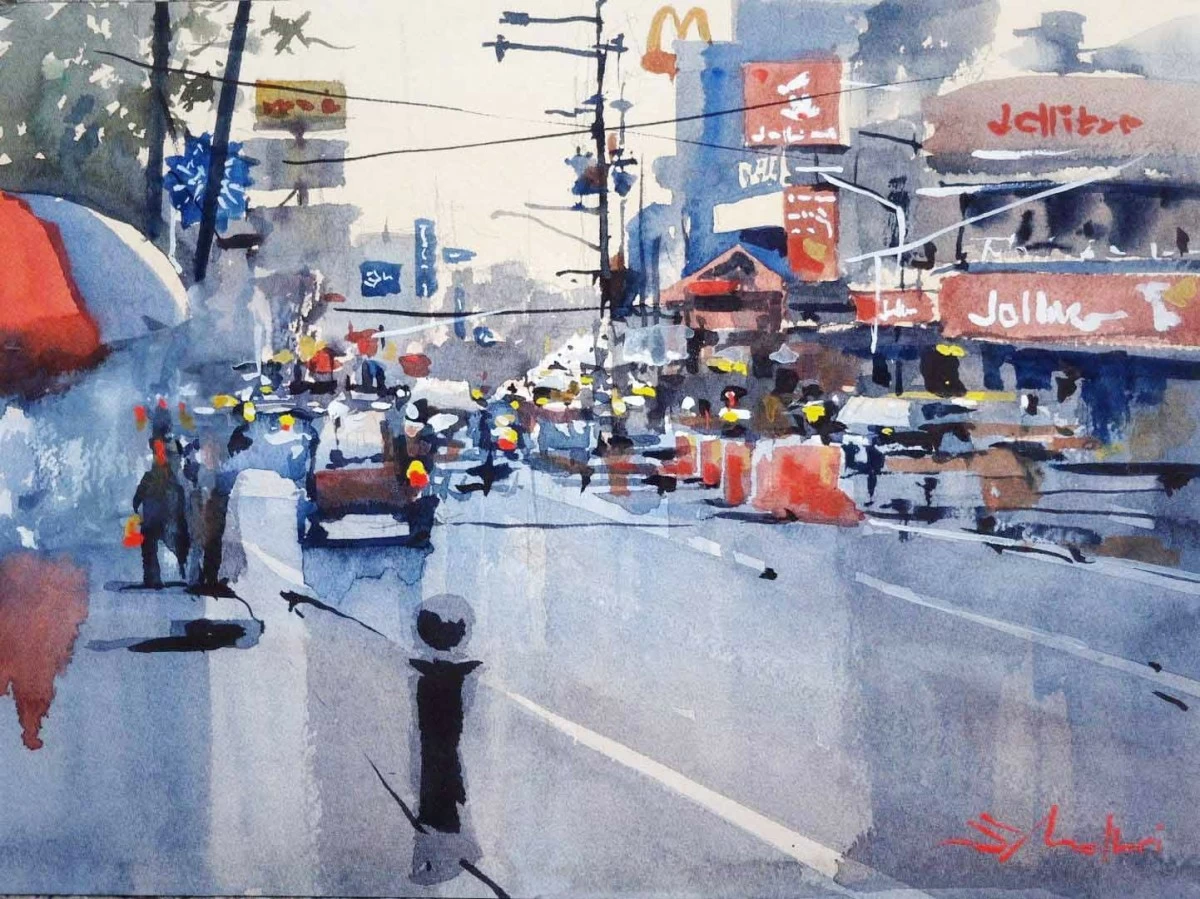
FROZEN IN TIME — One of Erwin Mallari's paintings.
Castillo said the project is as much about supporting local talent and giving local artists a chance to claim their space in the city’s cultural scene.
“I wanted to highlight the process of doing on the spot—no blueprints, walang kopyahan (no copying)—just a pure visual, angle, and perspective of the artist, which only shows the level of skills of the artists who joined the Plein Air Caravan,” he added.
The exhibition featured works by local artists: Erwin Mallari, Dominic Escobar, Happy Navarro, Gerardo Jimenez, Tonton Ador, Ronilo Abayan, Angel Precious, Eric Mercado, and Rainier Duhaylungsod.
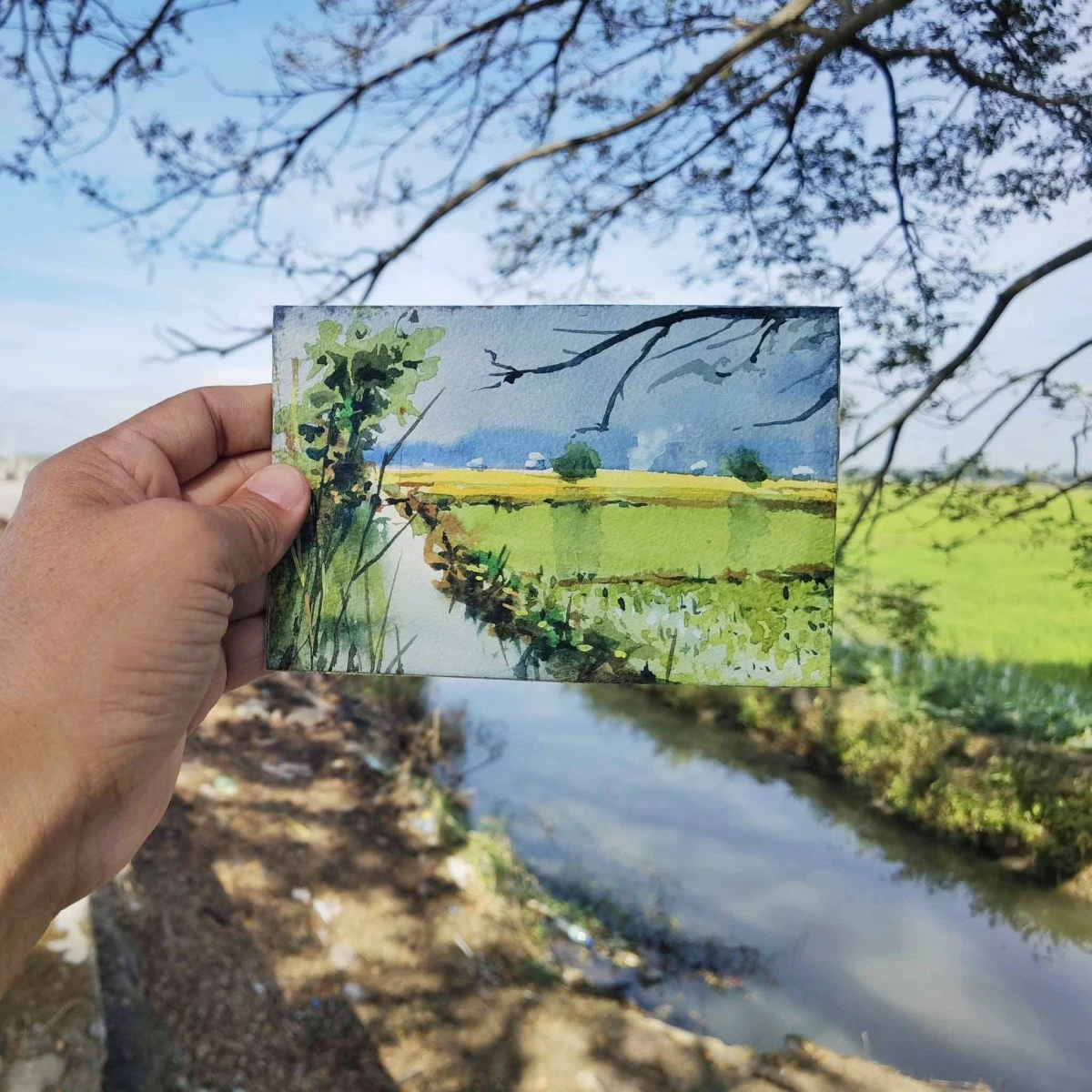
Erwin Mallari, a 46-year-old visual artist and a Malabon native, joined the plein air caravan to share the story of his city, as plein air painting is his forte.
At first, painting was only a practice for him as he had been an avid fan of realism. As he grew older, he developed a deep attachment to his city, and it became his main inspiration in painting.
“Bawat lugar sa Malabon ay gusto kong ipinta. Kung pwede lang, kahit saang sulok ng Malabon ay mabigyan ko ng alaala,” Erwin said. “‘Nagbabago ang panahon, at nag-iiba ang itsura ng bawat detalye. Mas gusto kong i-treasure ang mga alaala ko kung ano ang itsura ng Malabon na nasaksihan ko.” (I want to paint every place in Malabon. If only I could, I would give even the smallest corner of Malabon a memory. Time changes, and the appearance of every detail shifts. I want to treasure the memories of what Malabon looked like as I witnessed it.)
In his paintings, Erwin used only watercolor as his medium. With his realist approach, he was able to portray the true essence of life in his works. When working on a piece, two hours already felt long for him, especially when doing plein air. He often painted cityscapes, scenes from everyday life, and naturescapes.
Mallari’s watercolor painting depicted scenes many residents would instantly recognize. One of his pieces was a busy road stretches forward as cars and motorcycles move through traffic, their lights reflecting on the pavement while rows of signboards and power lines crowd the skyline above.
Another painting was about a highway filled with vehicles slowly making their way beneath an elevated walkway, which captured the familiar rush of city traffic during the day.
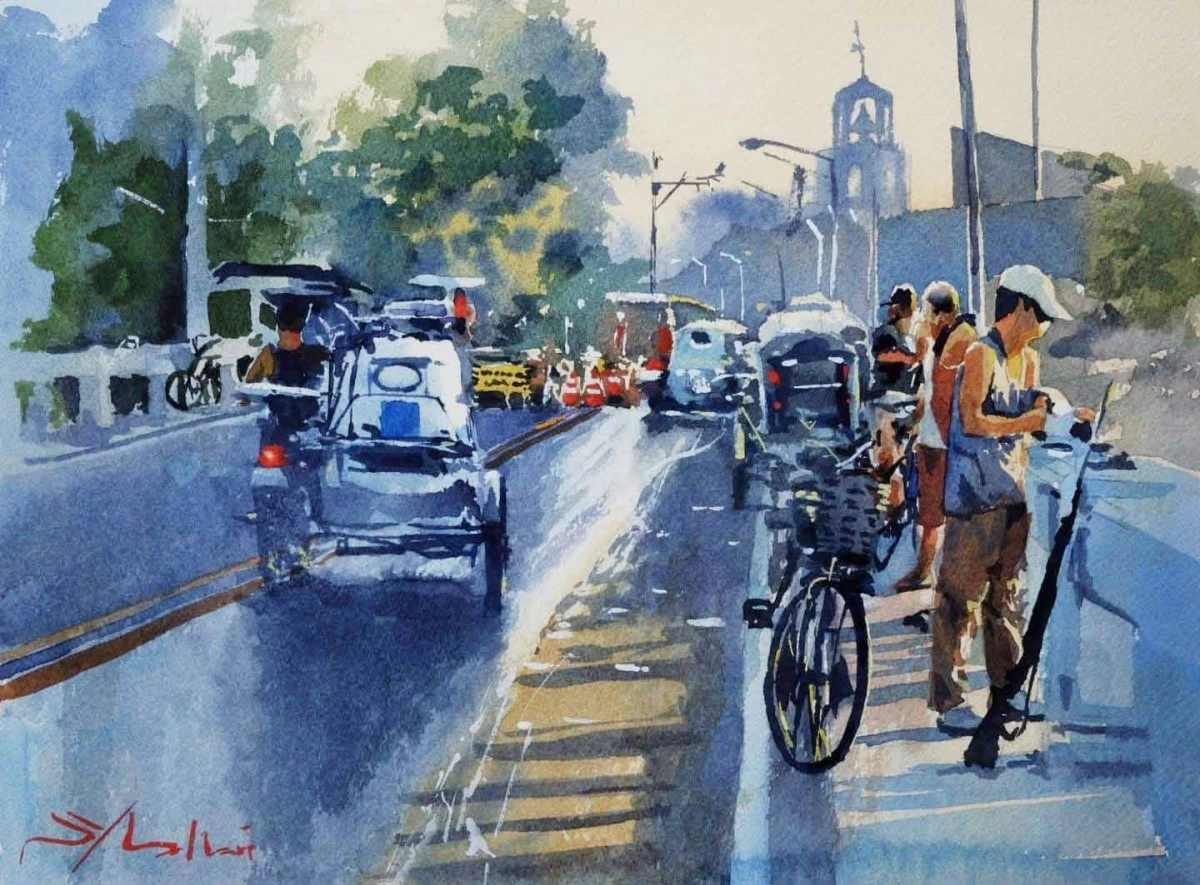
In another scene, a tricycle moves along a bridge while a few people stand by the roadside with their bicycles, with a church tower rising quietly in the background.
“Halos lahat ng obrang ginagawa ko ay malapit sa puso ko, dahil dito sumasalamin ang diary ng aking buhay.” (Almost all the artworks I create are close to my heart, because they reflect the diary of my life.)
Creating art with watercolor was not easy for him. Because of the constantly changing weather, he had to be even more careful and deliberate with his painting.
“Kailangan prepared ka sa lahat ng posibleng mangyari, kagaya ng tirik ng araw, lakas ng hangin, at maabutan ng ulan,” Erwin shared. (You need to be prepared for all possible situations, such as the scorching heat of the sun, strong winds, and getting caught in the rain.)
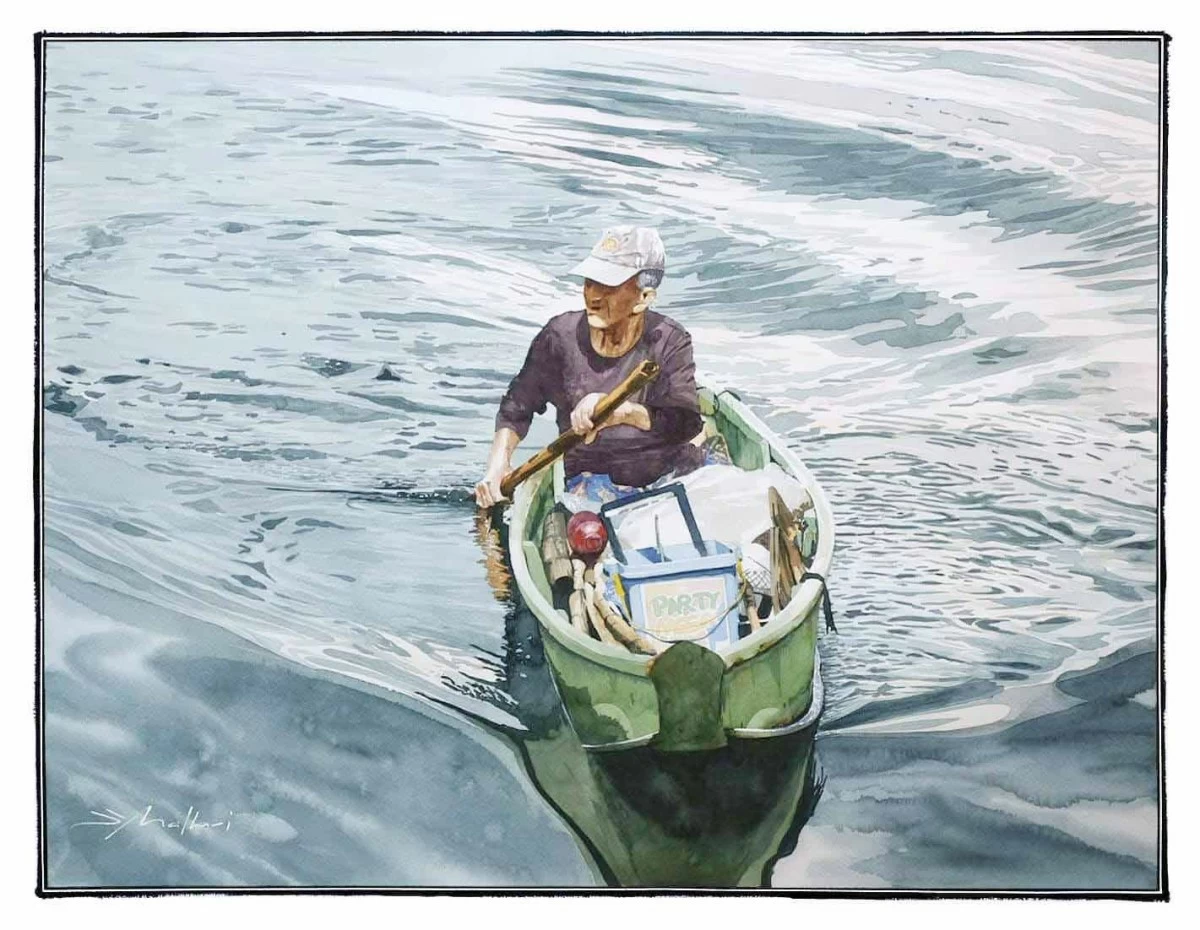
For Erwin, painting was both a passion and a provider; it was his way of being a storyteller. He is a full-time artist, and this is how he covered all his needs, especially to support his family, but he didn’t earn money from it every day. “Sa katulad kong nag-e-exhibit, tuwing may show lang ako kumikita kung magiging matagumpay ito,” he said. (For someone like me who exhibits, I only earn whenever I have a show, and only if it becomes successful.)
Time and savings were his main challenges. He considered his work as “sacrificial,” especially when it was a personal creation.
“Pero kapag na-meet ng painting mo ang kanyang collector, napakasarap sa damdamin. Bukod sa na-survive mo ang nagastos mong materyales, nakatulong ito sa finances; ay nabigyan ng magandang wall ang iyong obra,” he said. (But when your painting meets its collector, it feels incredibly fulfilling. Aside from recovering the cost of your materials, it helps your finances; and your artwork even got a place to hang it on a beautiful wall.)
Erwin had only one advocacy: to archive the places close to his heart.
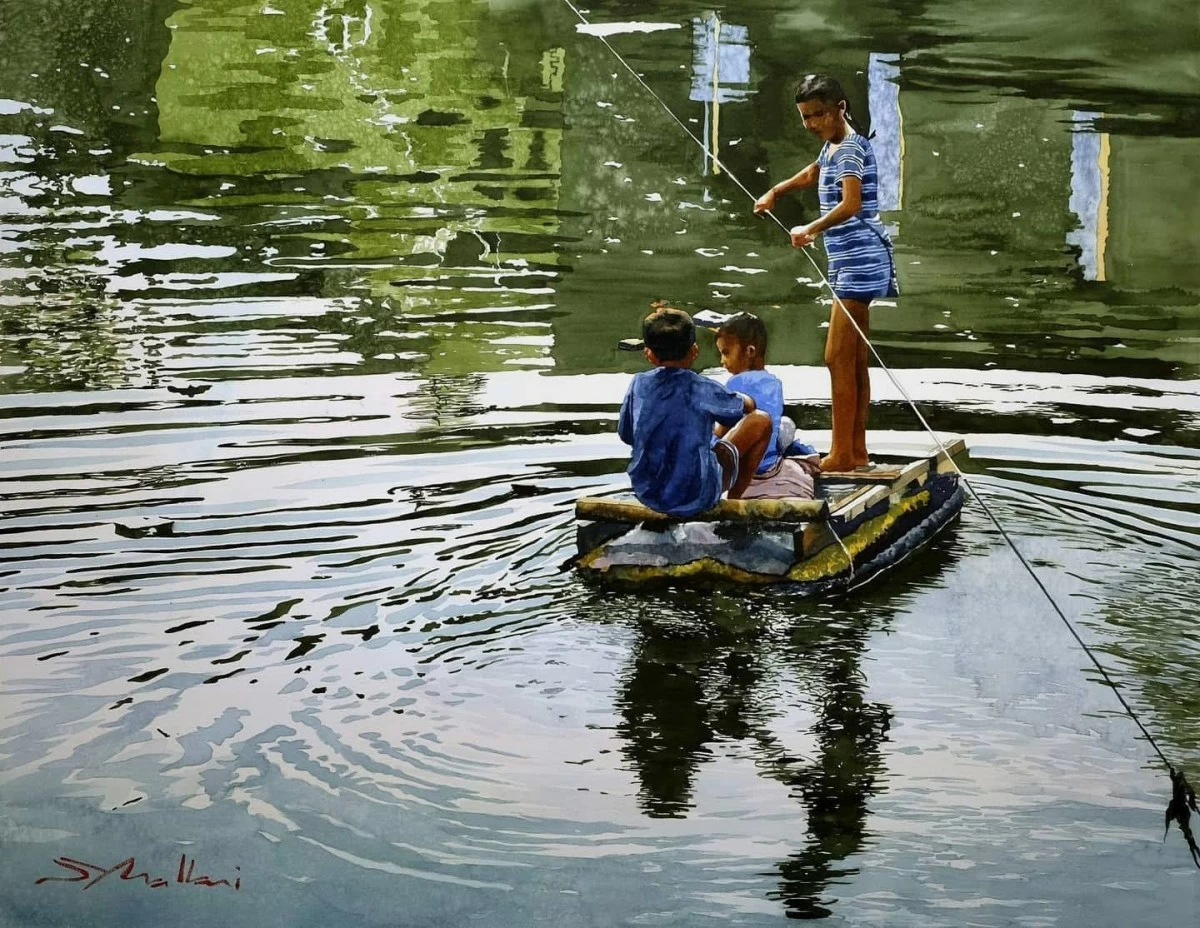
He is a firm believer that his story is also the story of others.
“‘Yung presence ng isang artist sa publiko ay napakaimportante,” he emphasized. (The presence of an artist in the public is very important.)
He gave this message to young artists: “Gawin ang ibinubulong ng puso. Isipin ang mga bagay na may koneksyon sa kanila, para ang kanilang obra ay maninindigan paglipas ng panahon.” (Do what the heart tells you. Think about the things that have a connection to them, so that their artwork will stand strong through the passage of time.)
Erwin’s journey in painting is far from over. He still has many works he wants to share with audiences.
“Keep creating,” said Castillo as he encouraged young local artists to continue exploring their craft with the support of the city government and Rojo Galerie. (Photos from Erwin Mallari)