






Manila Bulletin
 Business
Trade & Industry
Firms urged to share delivery trucks to keep grocery prices low
Business
Trade & Industry
Firms urged to share delivery trucks to keep grocery prices low
Business
Trade & Industry
Firms urged to share delivery trucks to keep grocery prices low
Firms urged to share delivery trucks to keep grocery prices low
Published Mar 18, 2026 05:00 pm


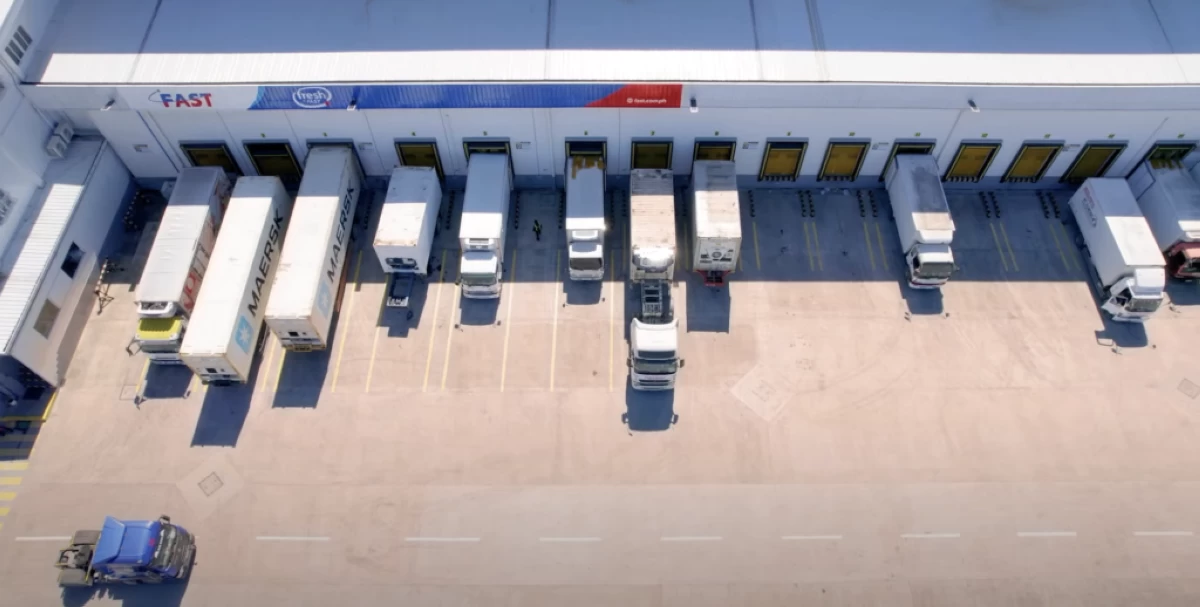
(FAST Logistics Group photo)
Fast-moving consumer goods (FMCG) companies and retailers should consider adopting co-loading delivery schemes to reduce logistics costs as fuel prices soar, according to FAST Logistics Group.
In a statement, the company said there should be a strong pivot toward co-loading, especially with the threat of more expensive goods as higher logistics costs may be passed on to consumers.
Co-loading is a delivery model where multiple companies share space in a single delivery truck and pay only for the portion they use.
At present, the company estimates that around 56 percent of trucks delivering FMCG goods to retail distribution units operate at only 32% to 40% capacity.
Many FMCG companies also rely on smaller vehicles such as Asian utility vehicles (AUVs), which can cost up to 61 percent more than using larger six-wheeler trucks.
FAST Logistics said these traditional direct-to-store delivery setups are becoming increasingly unsustainable on the back of higher oil prices.
“We eliminate half-empty trucks and unnecessary trips so FMCG companies can move goods to retail stores more efficiently, lower logistics costs, and keep shelves stocked despite rising fuel prices,” said FAST Logistics Group chief executive officer for logistics Manuel Onrejas Jr.
Through its co-loading solution called Flow by FAST, the company said it currently consolidates shipments at strategically located hubs across the archipelago.
From these facilities, goods are sorted and delivered to retail outlets based on scheduled receiving windows.
With this system, the company reduces empty miles and fuel consumption while also improving turnaround times at receiving bays and enabling more efficient single-drop deliveries.
“We are offering this solution as a plug-and-play solution using our existing facilities that already serve modern trade. We already have the digital and physical infrastructure in place, and we are ready to begin as soon as our partners are,” said Onrejas said.
Apart from reducing costs, he said the adoption of this solution could also help reduce traffic congestion and carbon emissions.
This is also seen as enhancing the availability and affordability of goods, particularly in Visayas and Mindanao, where transport costs are higher.
FAST Logistics said it recommended the co-loading solution during a recent meeting with the Department of Trade and Industry (DTI) and the Supply Chain Management Association of the Philippines (SCMAP).
DTI Secretary Cristina Roque earlier called a meeting with the country’s top logistics firms as the government sought to ease the impact of higher costs on consumers.
Roque has said that prices of basic necessities and prime commodities may increase as logistics costs climb.
She has since said that major manufacturers have committed to keeping prices stable for the next 30 to 60 days.