






Manila Bulletin
 Business
Trade & Industry
FEF pushes for cheaper corn tariffs to bring down meat prices
Business
Trade & Industry
FEF pushes for cheaper corn tariffs to bring down meat prices
Business
Trade & Industry
FEF pushes for cheaper corn tariffs to bring down meat prices
FEF pushes for cheaper corn tariffs to bring down meat prices
Published Mar 18, 2026 03:59 pm


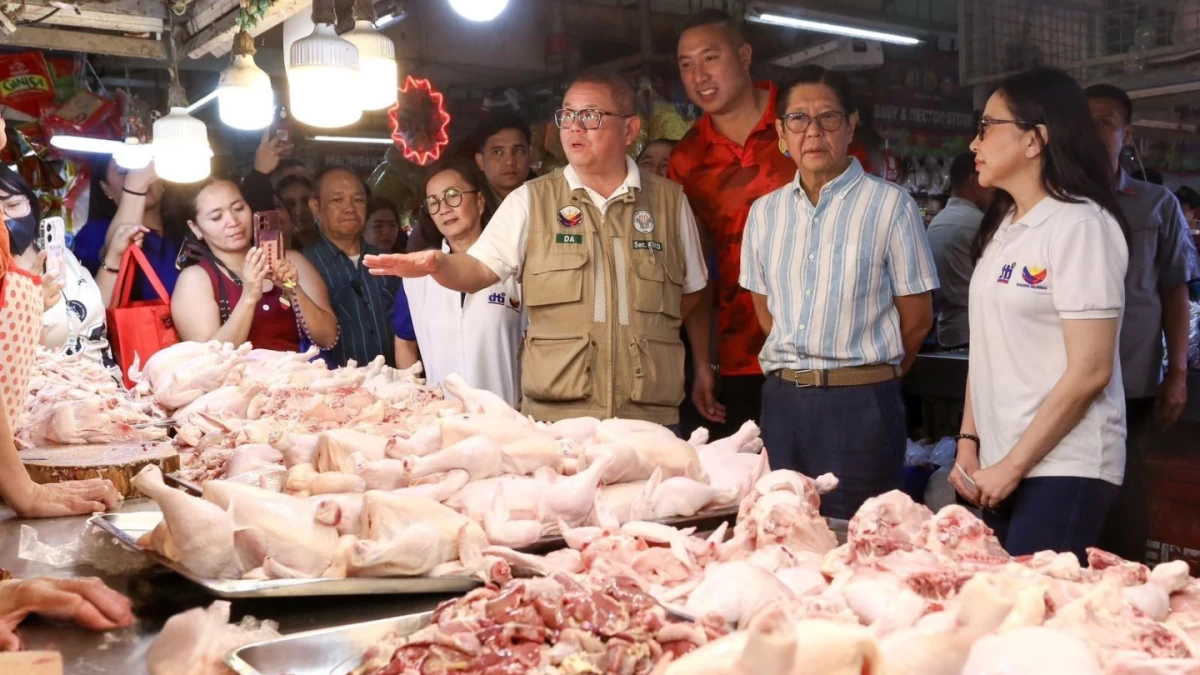
President Ferdinand R. Marcos Jr. leads an inspection of stalls at Agora Market in San Juan City on Wednesday, March 18, 2026. Accompanied by San Juan City Mayor Francis Zamora, Agriculture Secretary Francisco Tiu Laurel Jr., and Trade Secretary Cristina Aldeguer-Roque, the President checked the price and supply of basic commodities amid looming inflation concerns following recent fuel price hikes. (Photo by Santi San Juan I MB)
The Foundation for Economic Freedom (FEF) is calling on the government to slash corn import duties to a uniform five percent, arguing that the current protectionist trade structure is inflating meat prices and fostering corruption.
During the general membership meeting of the Management Association of the Philippines (MAP), FEF president Calixto Chikiamco said the country’s policy on the minimum access volume (MAV) for imported corn is no longer sufficient to meet the “much higher” demand.
He said the current demand for corn shipments is around five million metric tons (MT), well above the MAV allocation of 216,939 MT.
As part of its commitments under the World Trade Organization (WTO), the Philippines implements the MAV system to allow the entry of agricultural commodities at a lower tariff rate.
For corn, imports within the MAV benefit from a five-percent tariff, while those outside the quota face a 15-percent rate.
FEF wants the government to reduce the out-of-quota tariff rate to five percent, essentially liberalizing the country’s corn importation.
The Philippines has been expanding corn imports to fill the gap caused by lower domestic output, having brought in 1.76 million MT of corn for marketing year 2024 to 2025.
The entry of corn subject to higher tariffs has been cited as one of the reasons behind the increase in meat prices, since the commodity accounts for 50 to 55 percent of livestock feed and 50 to 65 percent of poultry feed.
Feed, as a whole, represents 50 to 70 percent of production costs for both pork and chicken.
In a study by FEF fellow Roehlano Briones, meat prices are estimated to have risen by 79 percent from January 2020 to June last year.
By reducing tariffs on corn imports, FEF said pork prices could decline by two percent and chicken prices by 1.7 percent, making them more affordable for consumers.
The group said this could also put an end to “graft and rent-seeking opportunities” under the current MAV policy, which it said has been raising costs and worsening supply constraints.
Sought for comment, Trade Undersecretary Allan Gepty expressed reservations about the proposal, stressing the need to protect local production and farmers from increased corn imports.
“When it comes to our sensitive products, particularly agricultural products, we have been very mindful of the need to protect our farmers,” he told reporters.
While FEF recognized the potential losses from lower tariffs for farmers, it argued that these would be offset by “increases in consumer welfare.”
To reduce the impact on farmers, Chikiamco said the government could provide more assistance through programs funded by tariff revenues.
He added that farmers could also consider shifting to “more productive and higher value-added agribusiness, either as workers, owners, or as part of the agribusiness supply chain.”