

ADVERTISEMENT

Falling peso, high oil costs could trigger April rate hike—DOF

Published Mar 18, 2026 01:14 pm

At A Glance

  • Finance Secretary and Monetary Board (MB) Member Frederick D. Go stated that the monetary authorities are "likely" to turn more hawkish, mulling over a potential hike in key borrowing costs at the April policy meeting should oil price shocks persist.
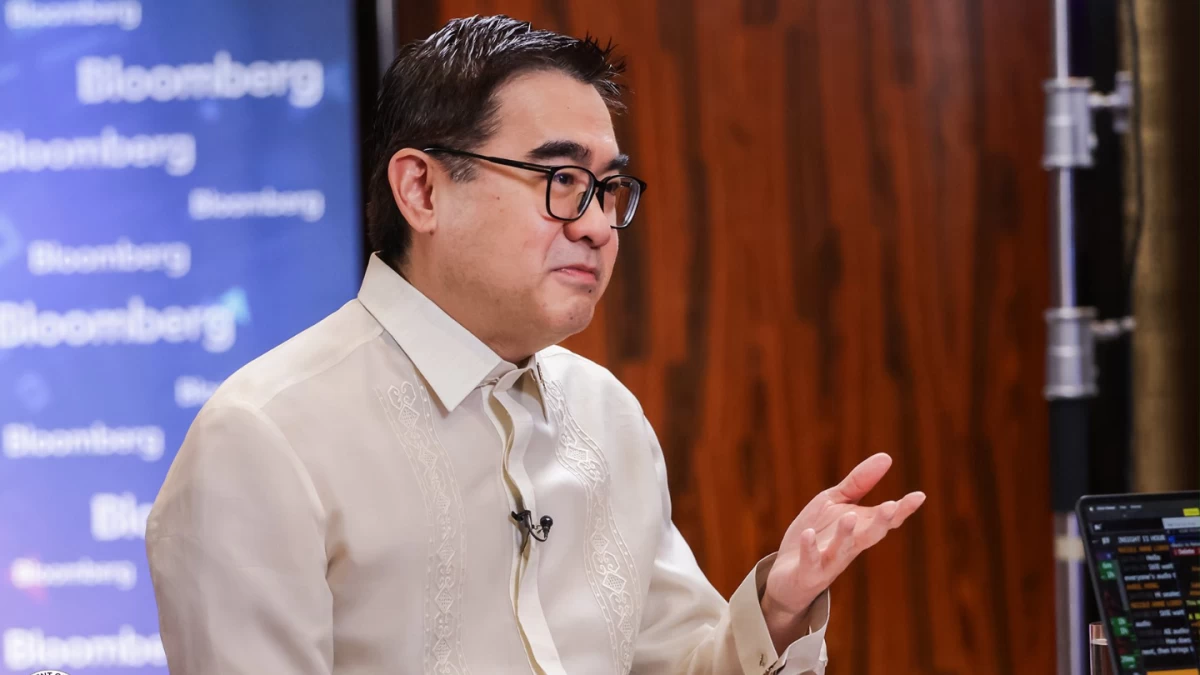
Finance Secretary and Monetary Board Member Frederick D. Go speaks during a Bloomberg interview on March 17. Go signaled a potential interest rate hike in April if global oil prices remain elevated. (From DOF Facebook page)
The Bangko Sentral ng Pilipinas (BSP) is prepared to shift back toward a hawkish stance, with the potential interest rate hike on the table for the April policy meeting if global oil price shocks do not abate.
In a Bloomberg interview on Tuesday, March 17, Finance Secretary and Monetary Board member Frederick D. Go said that the central bank will likely consider tightening if energy prices remain elevated.
Go noted that persistent supply-side pressures are the primary catalyst for the possible return to rate hikes.
“If the price of oil continues to persist at elevated levels, it is likely the Monetary Board will consider tightening in the next meeting,” Go said.
This was Go’s response regarding the country’s significant pressure to contain wild swings in the foreign exchange (forex) market. The Philippine peso has experienced successive slumps against the United States (US) dollar amid ongoing military aggression in the Middle East.
On the first trading day of the week, the local currency plummeted to a fresh record low of ₱59.87 against the greenback. The Bangko Sentral ng Pilipinas (BSP) said it was intervening to help tame forex market volatility, with the peso nearing a new all-time low of ₱60 per dollar.
Sought for his position on whether the BSP needs to deploy more aggressive intervention, Go echoed BSP Governor Eli M. Remolona Jr.’s refrain when asked on the matter.
Go explained that the BSP has a policy of indirectly underpinning the peso, but market intervention only occurs when the currency treads a losing streak to the point that it becomes inflationary.
“They intervene in the market when movements are too abrupt or sharp, but if movements are gradual, they do not intervene,” said Go.
Ayala-led Bank of the Philippine Islands (BPI) earlier said the scale of the peso depreciation has yet to trigger wild price hikes that would prompt forceful central bank intervention.
Go’s assumption aligns with that of the BSP, as BSP Deputy Governor Zeno Ronald R. Abenoja said the central bank stands ready to pivot back to a tightening bias as persistent supply shocks and the rally in global oil prices threaten to derail its inflation targets.
Abenoja said the BSP is closely monitoring geopolitical tensions that have driven up import costs and weakened the domestic currency.
“If we see further disruptions in supply chains, further deterioration, or further increases in prices, then that may prompt the MB to consider policy action moving forward,” Abenoja said.
Prior to the supply shocks, the BSP had signaled that it was nearing the end of its monetary policy easing cycle, which began in August 2024. Key borrowing costs have so far been reduced by a cumulative 225 basis points (bps) to 4.25 percent.
Meanwhile, Go noted that the escalating external shocks threaten to dent local economic expansion. This development could delay the country’s recovery goal for the first quarter of the year.
As gross domestic product (GDP) is seen grappling with this external pressure, Go stressed that the most critical variable to look at now is oil price hikes “and how long it stays elevated.”
He explained that in a scenario where higher oil prices persist for a short period, GDP could shave 10 basis points off its actual growth rate. “But if it persists for six months, it will have a more pronounced effect,” he added.
After a sharp slowdown in 2025 to 4.4 percent, the government is aiming to grow the economy by at least 5 percent this year.
Meanwhile, Go said remittances may remain unscathed as only a small portion of overseas Filipinos (OFs) is at risk, particularly those in Iran and Israel. Approximately 85 percent of OFs in the Middle East remain employed and continue to remit, said Go.
ADVERTISEMENT
.most-popular .layout-ratio{ padding-bottom: 79.13%; } @media (min-width: 768px) and (max-width: 1024px) { .widget-title { font-size: 15px !important; } }

{{ articles_filter_1561_widget.title }}

.most-popular .layout-ratio{ padding-bottom: 79.13%; } @media (min-width: 768px) and (max-width: 1024px) { .widget-title { font-size: 15px !important; } }

{{ articles_filter_1562_widget.title }}

.most-popular .layout-ratio{ padding-bottom: 79.13%; } @media (min-width: 768px) and (max-width: 1024px) { .widget-title { font-size: 15px !important; } }

{{ articles_filter_1563_widget.title }}

{{ articles_filter_1564_widget.title }}

.mb-article-details { position: relative; } .mb-article-details .article-body-preview, .mb-article-details .article-body-summary{ font-size: 17px; line-height: 30px; font-family: "Libre Caslon Text", serif; color: #000; } .mb-article-details .article-body-preview iframe , .mb-article-details .article-body-summary iframe{ width: 100%; margin: auto; } .read-more-background { background: linear-gradient(180deg, color(display-p3 1.000 1.000 1.000 / 0) 13.75%, color(display-p3 1.000 1.000 1.000 / 0.8) 30.79%, color(display-p3 1.000 1.000 1.000) 72.5%); position: absolute; height: 200px; width: 100%; bottom: 0; display: flex; justify-content: center; align-items: center; padding: 0; } .read-more-background a{ color: #000; } .read-more-btn { padding: 17px 45px; font-family: Inter; font-weight: 700; font-size: 18px; line-height: 16px; text-align: center; vertical-align: middle; border: 1px solid black; background-color: white; } .hidden { display: none; }
function initializeAllSwipers() { // Get all hidden inputs with cms_article_id document.querySelectorAll('[id^="cms_article_id_"]').forEach(function (input) { const cmsArticleId = input.value; const articleSelector = '#article-' + cmsArticleId + ' .body_images'; const swiperElement = document.querySelector(articleSelector); if (swiperElement && !swiperElement.classList.contains('swiper-initialized')) { new Swiper(articleSelector, { loop: true, pagination: false, navigation: { nextEl: '#article-' + cmsArticleId + ' .swiper-button-next', prevEl: '#article-' + cmsArticleId + ' .swiper-button-prev', }, }); } }); } setTimeout(initializeAllSwipers, 3000); const intersectionObserver = new IntersectionObserver( (entries) => { entries.forEach((entry) => { if (entry.isIntersecting) { const newUrl = entry.target.getAttribute("data-url"); if (newUrl) { history.pushState(null, null, newUrl); let article = entry.target; // Extract metadata const author = article.querySelector('.author-section').textContent.replace('By', '').trim(); const section = article.querySelector('.section-info ').textContent.replace(' ', ' '); const title = article.querySelector('.article-title h1').textContent; // Parse URL for Chartbeat path format const parsedUrl = new URL(newUrl, window.location.origin); const cleanUrl = parsedUrl.host + parsedUrl.pathname; // Update Chartbeat configuration if (typeof window._sf_async_config !== 'undefined') { window._sf_async_config.path = cleanUrl; window._sf_async_config.sections = section; window._sf_async_config.authors = author; } // Track virtual page view with Chartbeat if (typeof pSUPERFLY !== 'undefined' && typeof pSUPERFLY.virtualPage === 'function') { try { pSUPERFLY.virtualPage({ path: cleanUrl, title: title, sections: section, authors: author }); } catch (error) { console.error('ping error', error); } } // Optional: Update document title if (title && title !== document.title) { document.title = title; } } } }); }, { threshold: 0.1 } ); function showArticleBody(button) { const article = button.closest("article"); const summary = article.querySelector(".article-body-summary"); const body = article.querySelector(".article-body-preview"); const readMoreSection = article.querySelector(".read-more-background"); // Hide summary and read-more section summary.style.display = "none"; readMoreSection.style.display = "none"; // Show the full article body body.classList.remove("hidden"); } document.addEventListener("DOMContentLoaded", () => { let loadCount = 0; // Track how many times articles are loaded const offset = [1, 2, 3, 4, 5, 6, 7, 8, 9, 10]; // Offset values const currentUrl = window.location.pathname.substring(1); let isLoading = false; // Prevent multiple calls if (!currentUrl) { console.log("Current URL is invalid."); return; } const sentinel = document.getElementById("load-more-sentinel"); if (!sentinel) { console.log("Sentinel element not found."); return; } function isSentinelVisible() { const rect = sentinel.getBoundingClientRect(); return ( rect.top < window.innerHeight && rect.bottom >= 0 ); } function onScroll() { if (isLoading) return; if (isSentinelVisible()) { if (loadCount >= offset.length) { console.log("Maximum load attempts reached."); window.removeEventListener("scroll", onScroll); return; } isLoading = true; const currentOffset = offset[loadCount]; window.loadMoreItems().then(() => { let article = document.querySelector('#widget_1690 > div:nth-last-of-type(2) article'); intersectionObserver.observe(article) loadCount++; }).catch(error => { console.error("Error loading more items:", error); }).finally(() => { isLoading = false; }); } } window.addEventListener("scroll", onScroll); });

Sign up by email to receive news.