







Escudero bats for PH's own petroleum reserve


At A Glance
- Senator Francis "Chiz" Escudero is now pushing for a bill that seeks to establish a government-owned crude oil tank storage facility to ensure fuel security for the Philippines.
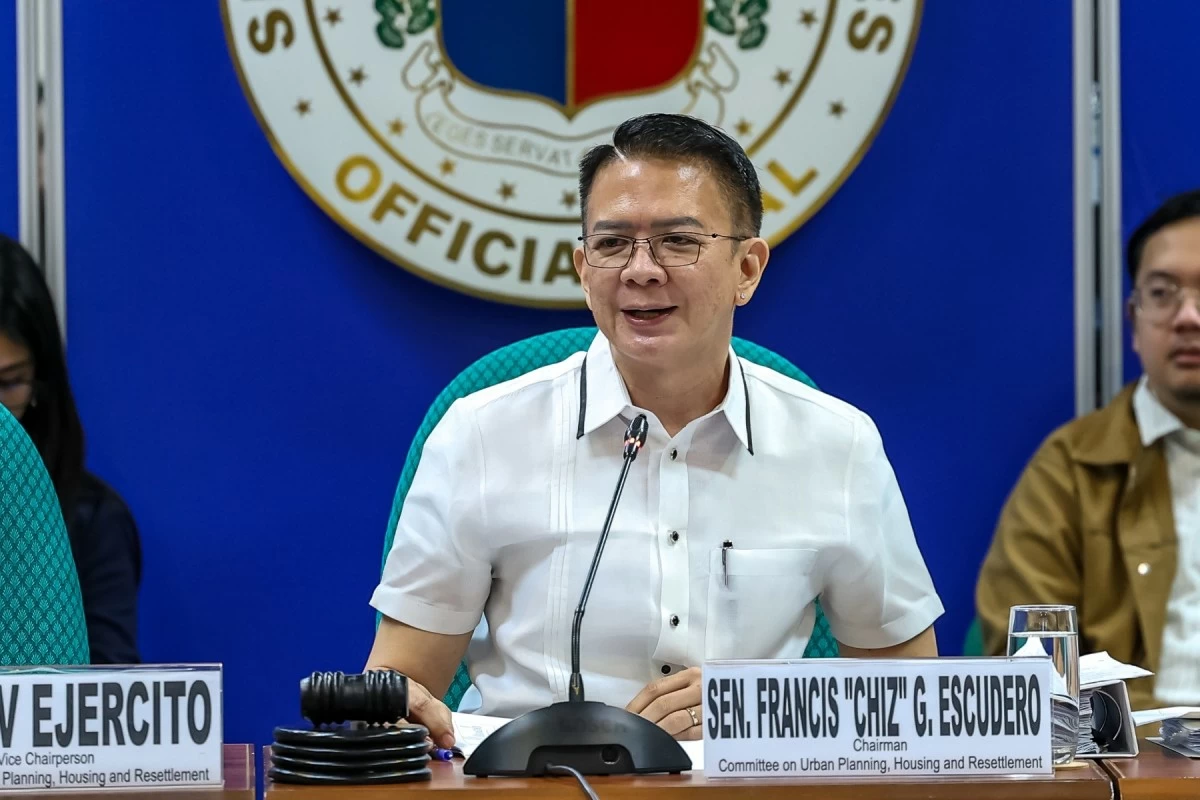
Senator Francis “Chiz” Escudero is now pushing for a bill that seeks to establish a government-owned crude oil tank storage facility to ensure fuel security for the Philippines.
In filing Senate Bill No. 1993, Escudero said it is imperative for the government to provide a national buffer to cushion sudden supply cuts, geopolitical crises, refinery shutdowns, extreme price spikes, and shipping disruptions.
The Bicolano senator underscored the need for a national buffer to cushion sudden supply cuts, geopolitical crises, refinery shutdowns, extreme price spikes, and shipping disruptions.
Currently, the Philippines imports about 90 to 95 percent of its crude oil and refined petroleum needs, making it highly vulnerable to external shocks, the senator lamented.
He said the escalating tension in the Middle East underscores the need for the country to establish its own petroleum reserve depot to cushion any impact on the oil prices.
“Even temporary disruptions in the Strait of Hormuz have immediately sent fuel prices soaring in the Philippines, with cascading effects on transport, food logistics, and power generation,” Escudero said.
Under SB No. 1993, the Philippines will build a crude oil tank farm capable of storing 90 days’ worth of national consumption, estimated to be at P30-billion up to 180 days, estimated to be at P60-billion.
Escudero pointed out that the current inventory is said to last only until the end of April, and orders for May delivery are still being worked out, citing the recent statements of Energy Secretary Sharon Garin.
“A strategic crude oil stockpile is our shield. Every time tensions rise in the Middle East, every time shipping lanes are disrupted, our economy absorbs the shock within days,” the senator said.
“We need a national buffer that protects Filipino families and industries from crises happening thousands of miles away,” he said.
SB 1993 seeks an initial funding of P60-billion for the construction of the fuel reserves facility.
Under the bill, the acquisition of fuel inventory for the reserve shall be undertaken by the Department of Energy (DOE) or through the Philippine National Oil Company (PNOC) or its subsidiary.
These agencies shall also be responsible for the construction, management, maintenance, and operation of fuel storage facilities, as well as the procurement, handling, storage, quality maintenance, rotation and transport of fuel reserves.
Likewise, the measure seeks to establish a Targeted Fuel Relief Program to provide direct cash assistance or fuel vouchers to sectors most affected by severe petroleum supply disruptions, sharp increases in international petroleum prices, or a declared state of calamity of emergency.
Included in these cash assistance programs include small farmers and fisherfolk, public transport and delivery drivers, micro and small enterprises (MSMEs) engaged in fuel-dependent activities, among others.
The proposed oil depot would not interfere with private sector operations but would serve as a stabilizing mechanism during extraordinary circumstances, the senator also said
“By releasing crude during shortages or extreme price spikes, the government would be able to protect essential sectors such as transport, agriculture, and power generation, while also strengthening the country’s negotiating position during global market disruptions,” the senator said.
Many other countries, like the United States, Japan and members of the International Energy Agency (IEA) have beefed up their national oil stockpile by holding reserves equivalent to at least 90 days of net imports.
Yet, the Philippines is among the few major Asian economies that are heavily import‑dependent yet lack a strategic petroleum reserve, he noted.
“We cannot continue living at the mercy of global events. A modern economy needs a modern safety net. We must catch up,” Escudero stressed.