







Ensure energy security; boost renewable power generation now
Published Mar 18, 2026 12:05 am
|
Updated Mar 17, 2026 06:11 pm


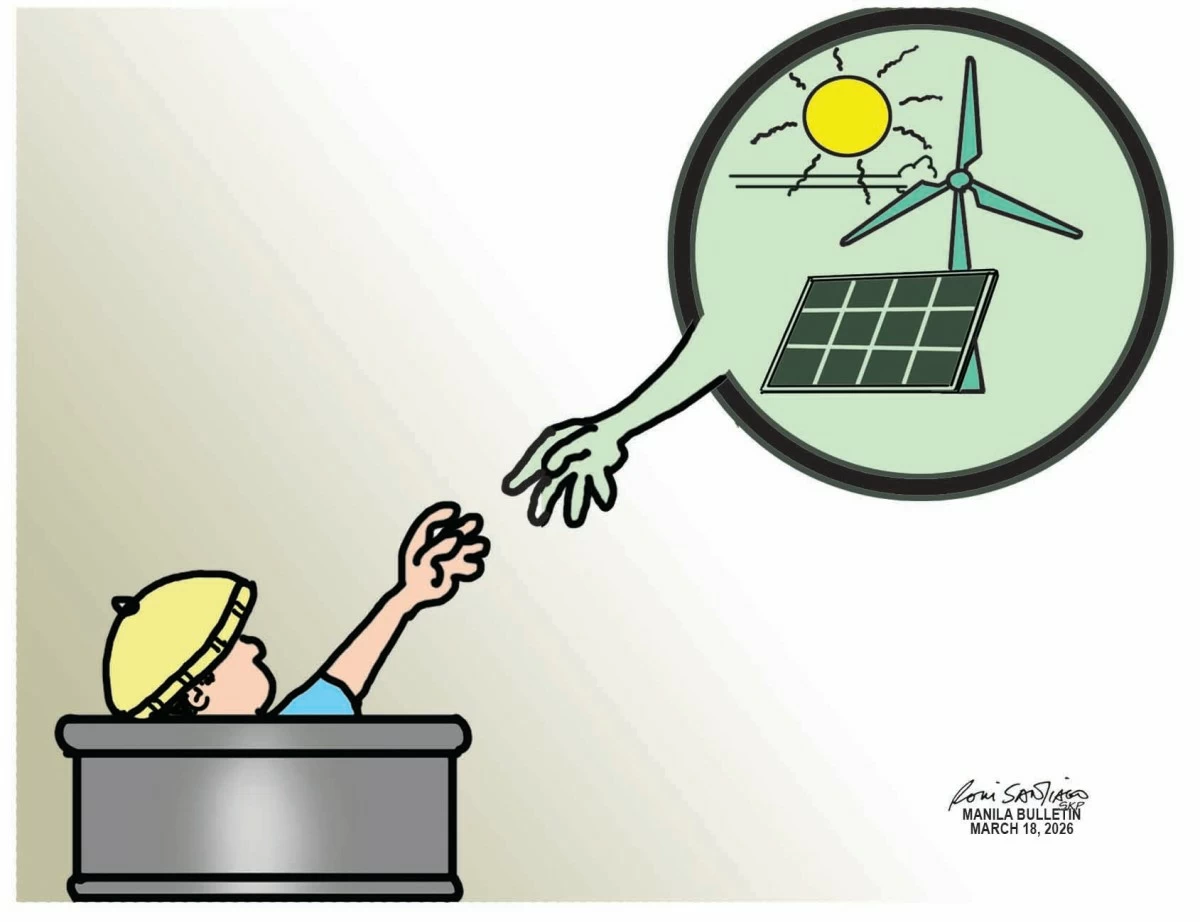
Everyone is feeling the pinch of the oil price shock.
Each escalation of conflict in the Middle East sends this familiar shock through the Philippine economy. Oil prices surge, fuel costs rise, and the consequences cascade quickly—from increased prices of basic goods and higher cost of transport to mounting inflation. These disruptions occur because the Philippines remains heavily dependent on imported fossil fuel. Every geopolitical tremor in oil-producing regions reverberates in the daily lives of Filipino consumers.
This recurring vulnerability should compel policymakers to reassess how the nation approaches energy policy. Renewable energy must no longer be treated simply as environmental compliance or as a regulatory requirement under the Renewable Energy Act of 2008. It must be recognized for what it truly is: a pillar of national economic security.
Countries that invested early in renewable energy have demonstrated how strategic foresight can reduce exposure to global oil shocks. Nations such as Denmark, Germany, and Iceland have built energy systems that rely heavily on wind, solar, and other renewable resources. Their economies are not immune to global energy fluctuations, but they are far less vulnerable because a significant share of their power is produced domestically from inexhaustible sources.
The Philippines possesses similar advantages. With its tropical climate and long coastlines, the country has vast potential for solar and wind energy. Sunlight is abundant around the archipelago, while strong wind corridors—from Northern Luzon to the Visayas and offshore waters—could support large-scale wind generation. In practical terms, the country has the natural resources required to reduce its reliance on imported fossil oil. What remains lacking is decisive policy momentum.
The executive branch must begin by elevating renewable energy development to a central national priority. Energy independence should be pursued with the same seriousness given to food security or fiscal stability. Clear and ambitious national targets for renewable generation would send a powerful signal to investors that the government is committed to a long-term transformation of the energy sector.
Equally urgent is the removal of regulatory barriers that slow investment. Renewable energy projects often face prolonged permitting processes, overlapping approvals, and bureaucratic uncertainty. A streamlined, single-window system for permits would dramatically speed up project timelines and reduce the financial risks that discourage investors.
Legislators also have a critical responsibility. Congress must strengthen the country’s policy framework by expanding fiscal incentives that encourage investment in renewable infrastructure. Tax holidays, duty-free importation of renewable energy equipment, and accelerated depreciation schemes can significantly reduce the cost of entry for developers. At the same time, lawmakers must support the modernization of the national grid so that electricity generated from remote wind and solar facilities can be efficiently transmitted to urban and industrial centers.
The private sector, for its part, should recognize that renewable energy is not merely a corporate social responsibility initiative. It is an economic opportunity. Large corporations can accelerate the transition by investing in rooftop solar installations, entering long-term renewable power purchase agreements, and supporting the financing of renewable projects. Such commitments create stable demand, which in turn encourages further investment and technological innovation.
Financial institutions likewise play an indispensable role. By expanding green financing and prioritizing capital for renewable ventures, banks and investment funds can help mobilize the resources necessary for large-scale energy transformation.
The lesson from today’s oil price volatility is unmistakable. Dependence on imported fossil fuel exposes the Philippine economy to risks it cannot control. Renewable energy offers not only environmental benefits but also strategic resilience.
The Philippines cannot control global oil prices or geopolitical tensions. But it can control its energy future—whether it continues to remain vulnerable to them, or it builds an energy system strong enough to withstand them.