







Cagayan agripreneur starts hog farm, helps OFW parents
By Pam Pascual
Published Mar 18, 2026 04:56 pm


At just 24 years old, Kate Ashley Pattaui stepped into a field she never imagined entering. Driven by the desire to help her Overseas Filipino Worker (OFW) parents build a sustainable livelihood back home, she ventured into agriculture and founded Kikay Farm in Tuguegarao City, Cagayan.
Established on July 8, 2024, Kikay Farm began with only four sows. Within a year, the farm has grown to house 29 sow-level breeders.
Kate’s father, Zaldy Pattaui, guided her into the business. Together, they saw the potential in using their idle property to start a hog farm.
“My father’s mindset has always been that it’s better to be your own boss—to have control over your time,” Pattaui said. “So we thought of a business that would always be in demand, something people constantly need.”
Most of Kikay Farm’s pigs are Landrace crossed with Large White. Kate chose this hybrid because of its strong characteristics and high productivity compared to pure breeds.
Learning through trial and error
As a first-time farmer, Pattaui admitted that her journey was not easy. With no close relatives or mentors in the same line of work—and with her parents working abroad—she had to rely on research, and online videos to learn hog raising.
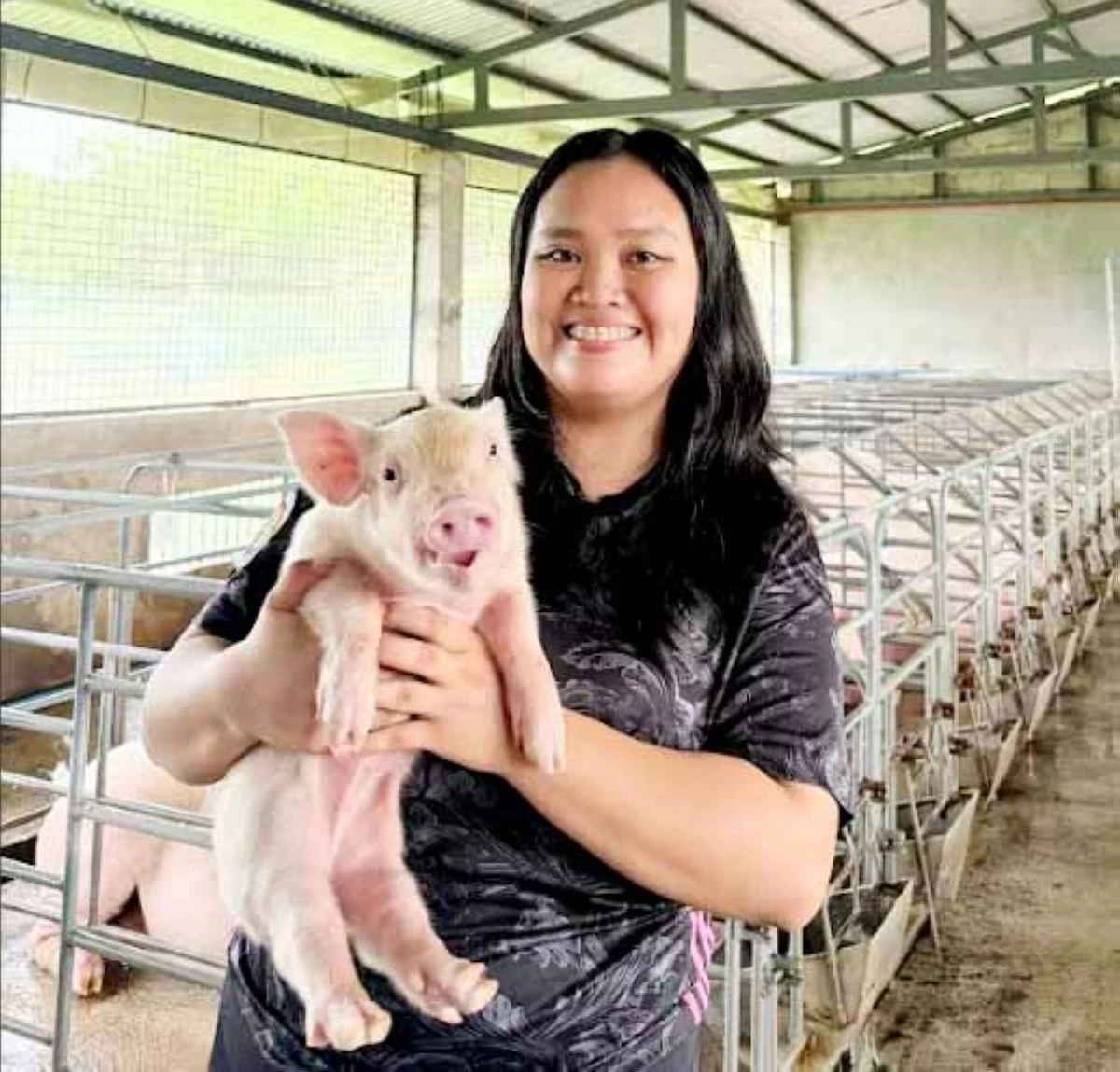
YOUNG FARMER — Kate Ashley Pattaui, owner of Kikay Farm, gently holds a piglet inside their piggery in Tuguegarao City, Cagayan.
One of the most challenging aspects of the work, she added, is monitoring pregnant sows.
“Sometimes we have to stay awake through the night, waiting to see if they’re about to give birth,” she said. “At first it was difficult, but as I gained more experience, I learned to read the signs better.”
A well-managed pig farm
After more than a year of operation, Pattaui has developed a more organized system to keep Kikay Farm running efficiently.
Vaccinations are administered on schedule—from piglets to fatteners and sows—following a complete program. Feeding is also carefully managed, especially during the first 30 days of a piglet’s life when proper portions are crucial for growth.
Housing design also plays an important role in maintaining pig comfort, health, and productivity. At Kikay Farm, the pens are designed to ensure proper ventilation and hygiene. Large windows measuring 1.5 meters high and 3 meters wide allow maximum airflow and natural light.
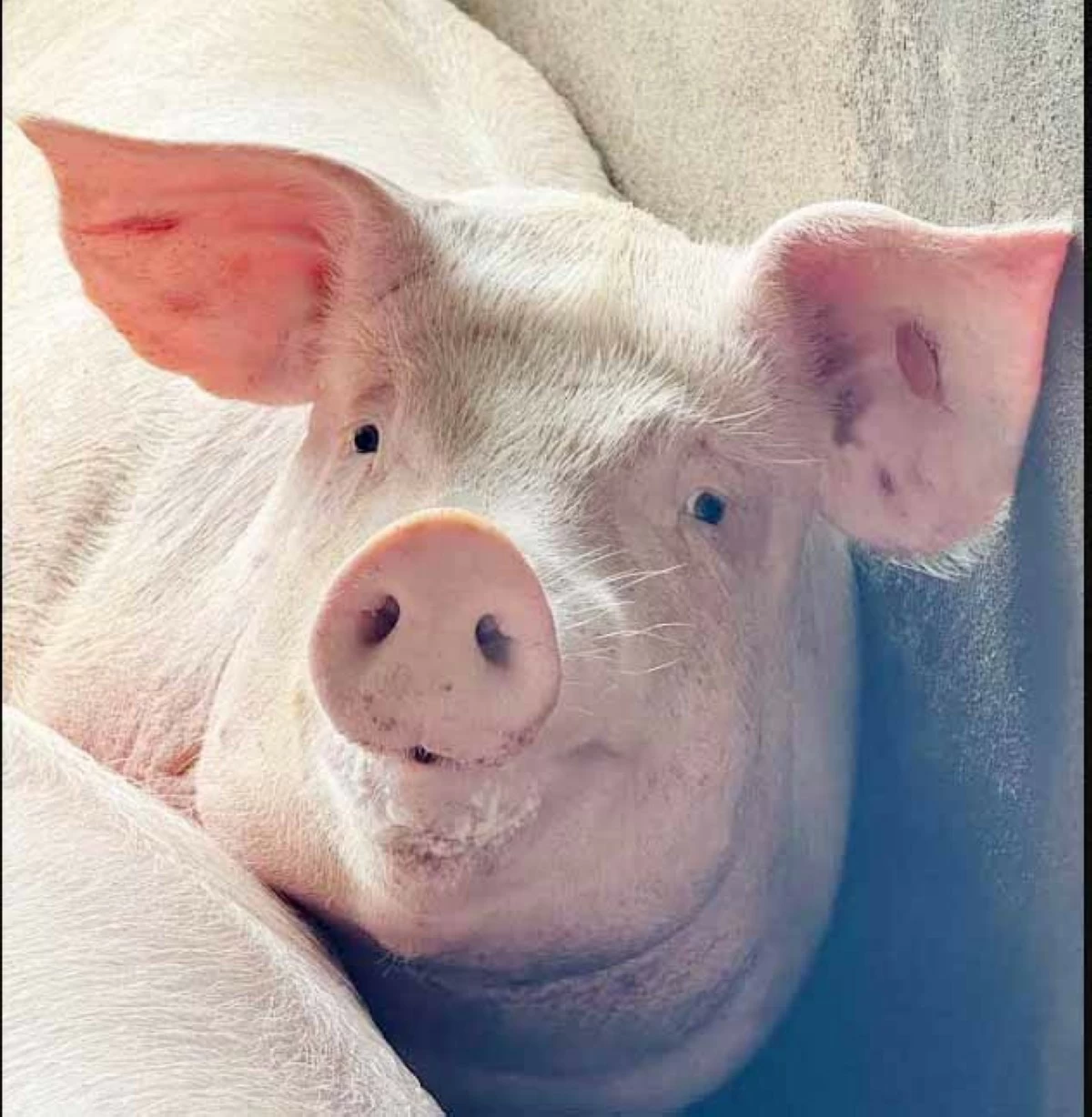
THAT'LL DO, PIG — A close-up shot of one of Kikay Farm’s healthy sows.
“Ventilation is very important. If the pen is enclosed and lacks airflow, the smell of urine and feces gets trapped,” Pattaui explained.
The farm uses elevated farrowing pens and concrete gestation pens to improve sanitation and pig welfare. The elevated pens, raised about one foot above the ground, help keep the area dry—especially for sows about to give birth—reducing the risk of infection.
When it comes to feeding, Pattaui prefers to use quality commercial feeds even if they cost more.
Record-keeping is also a key part of her management system. She emphasized the importance of tracking the pigs’ growth, feed consumption, vaccinations, and breeding cycles to maintain efficiency on the farm.
Prioritizing biosecurity
“Before anything else, learn biosecurity,” Pattaui emphasized. “Prevention is always better than cure.”
At Kikay Farm, strict biosecurity measures are in place. Visitors must schedule their visits in advance and are asked not to come from other farms within three days. A stay-in caretaker manages daily operations to minimize outside exposure, while Pattaui follows strict disinfection protocols whenever she visits.
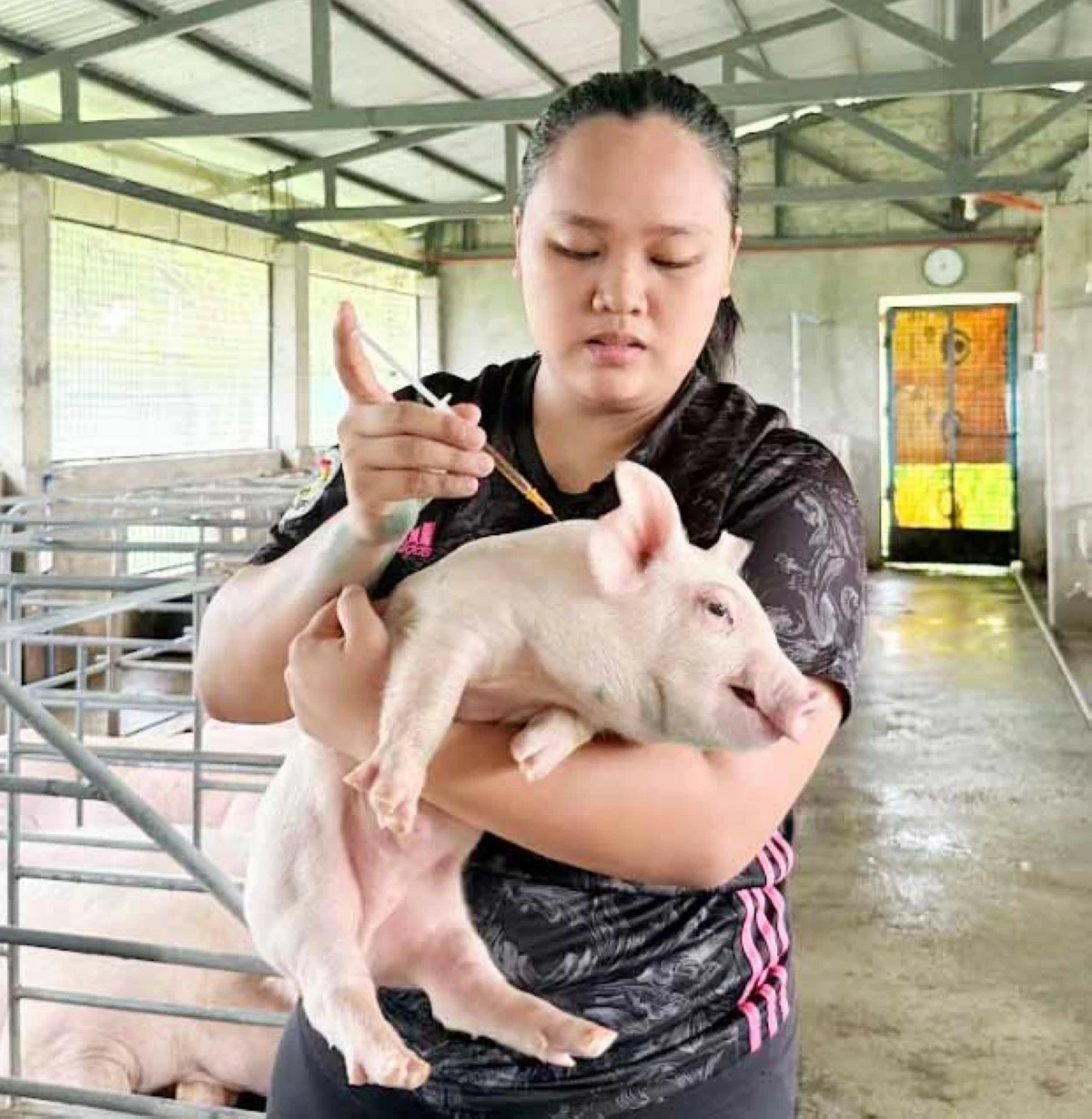
HEALTH IS WEALTH — Pattaui administers a vaccine to a piglet.
The farm also maintains footbaths and uses separate slippers and boots exclusively inside the piggery. Cleaning is done weekly with soap, while disinfection is carried out daily inside and outside the pens.
A growing business
On the business side, Kikay Farm has developed its own marketing strategies.
“For our fatteners, our goal is to reach at least 90 kilograms within five months,” Pattaui said. “We plan our feed supply and start looking for buyers even before the pigs are market-ready.”
They sell pigs through social media posts or directly to “party door” buyers—clients who purchase pigs in bulk for events.
From learner to advocate
Having learned much from watching other farmers online, Pattaui now shares her own experiences through her Facebook page, Kikay Farm Life, which has grown to more than 53,000 followers. There, she documents daily farm activities and offers practical advice for beginners.
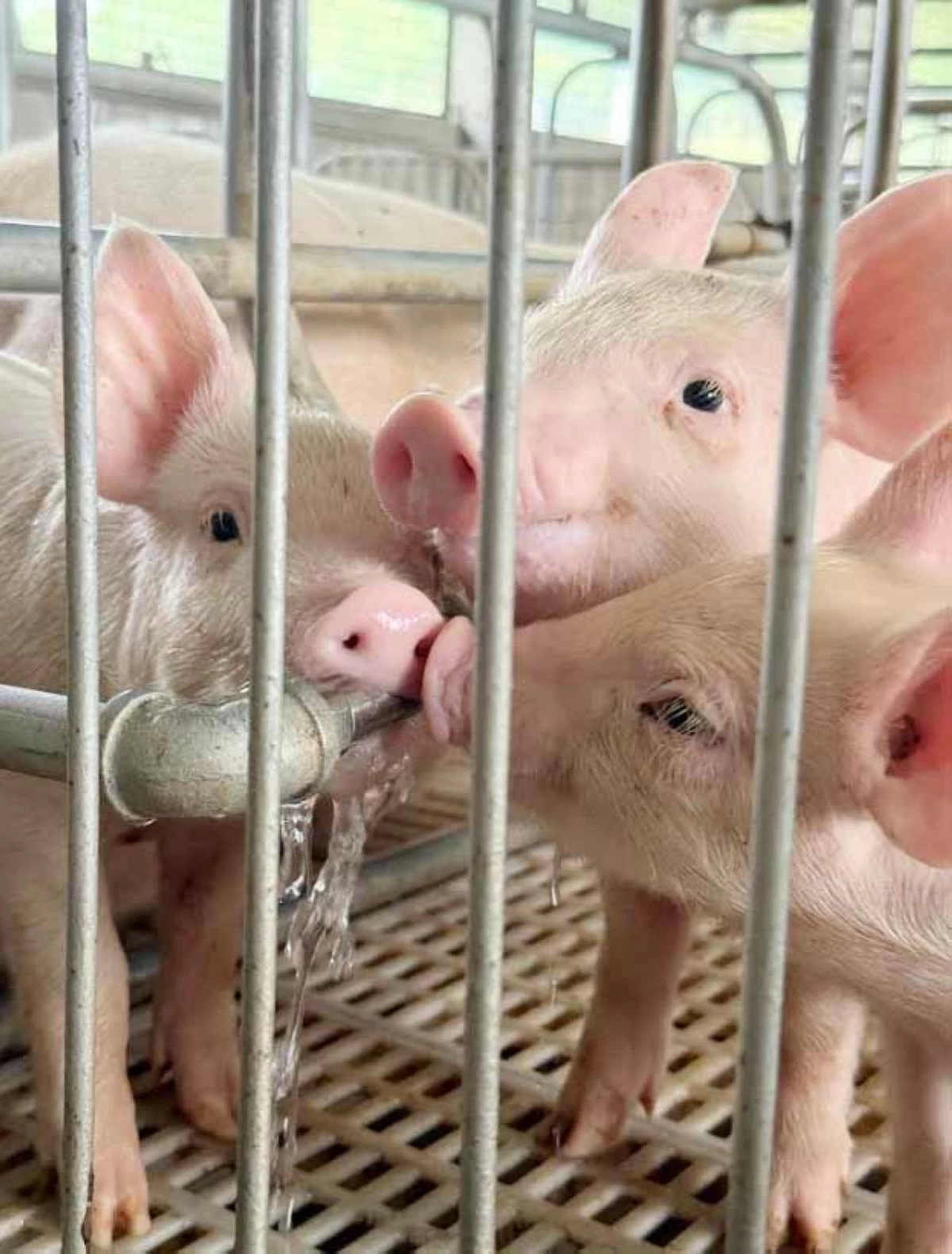
“Our goal is to educate and inspire others. We share what we learn every day so others can also find confidence to start their own farms,” she said.
Beyond highlighting successes, she also shares the realities of farming.
“Through social media, we show that farming isn’t always about winning,” she said. “Farmers experience losses too, but what matters is perseverance and the heart to keep going.”
Building a legacy
For Pattaui, agriculture is not just about earning a living—it is about building something meaningful for her family.
“Start small,” she advised. “Everyone begins small, but study and work hard as if you’re building a million-peso business. Always aim high. Hog farming isn’t just a fallback—it can be a legacy if done with proper planning and heart.” (Photos from Kate Ashley Pattaui)