







Washoku, poured and plated
A curated Davao luncheon pairs regional Japanese ingredients with heritage sake, marking 70 years of Philippines-Japan relations
Published Mar 17, 2026 07:52 pm


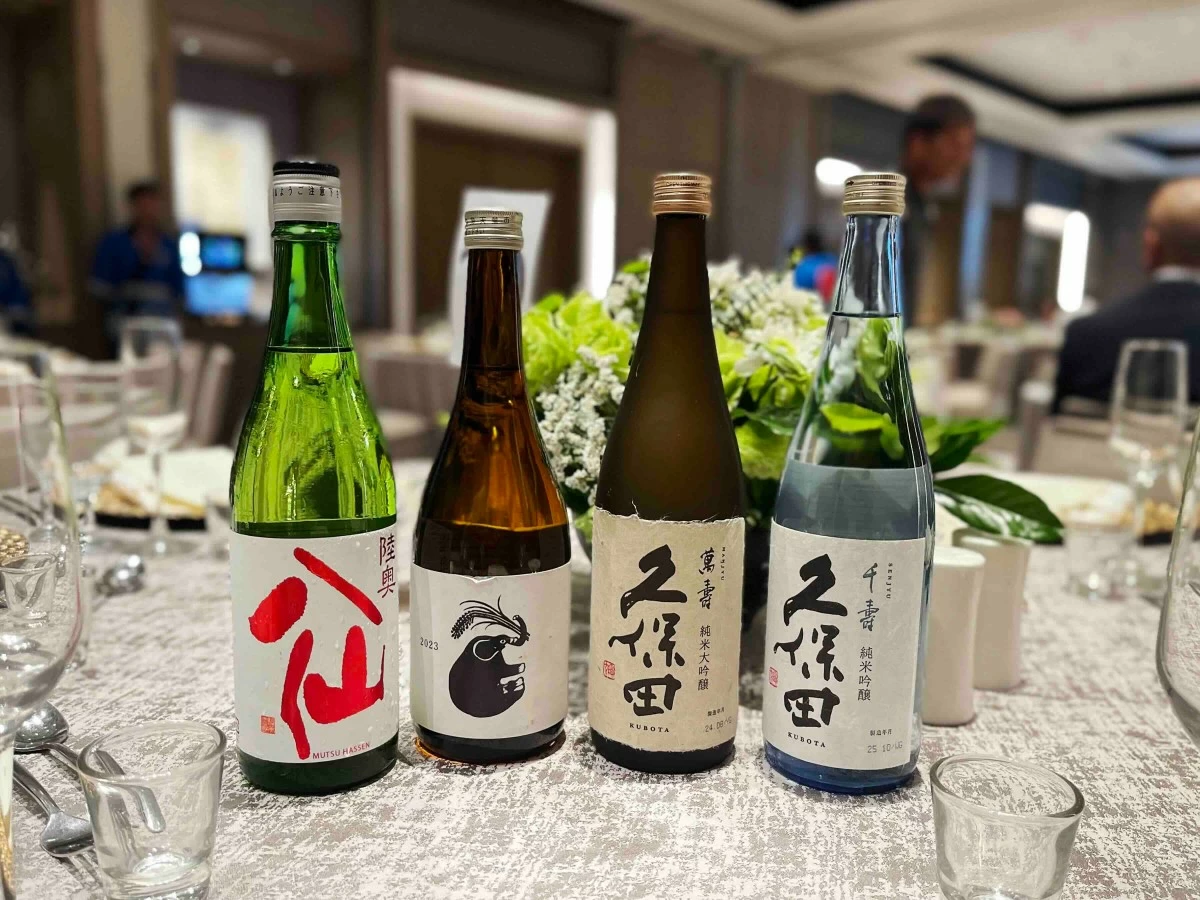
SAKE FLIGHT Mutsu Hassen Red Label from Aomori, Inazo Junmai Ginjo from Yamagata, Kubota Manju from Niigata, and Kubota Senju from Niigata
By Jinggoy I. Salvador
It was a delightful journey across Japan, and the Consulate General of Japan in Davao made it possible. How? Through the Art of Washoku and Sake—a Japanese cuisine tasting and sake pairing luncheon affair at the dusitD2 Davao on March 6, 2026.
The Art of Washoku and Sake was a culinary journey presenting a curated menu featuring ingredients sourced from the shores of Hokkaido, Japan’s northernmost prefecture, to the pasturelands of Shiga in central Japan, from the seas of Nagasaki and Kagoshima on the southwestern island of Kyushu to the fertile lands of Mindanao, and across the Tohoku region, including Aomori, Niigata, and Yamagata, where some of Japan’s finest distilleries produce sake.
Consul General Hirotaka Ono welcomed select guests to the exclusive gathering and proudly shared that washoku and sake represent living cultural traditions carefully preserved and passed down through generations.
“Washoku—traditional Japanese cuisine—was inscribed in 2013 on UNESCO’s Representative List of the Intangible Cultural Heritage of Humanity. This distinction is not simply about taste; it recognizes philosophy. Washoku reflects respect for nature, harmony with the seasons, balanced nutrition, and aesthetic presentation inspired by the natural world.”
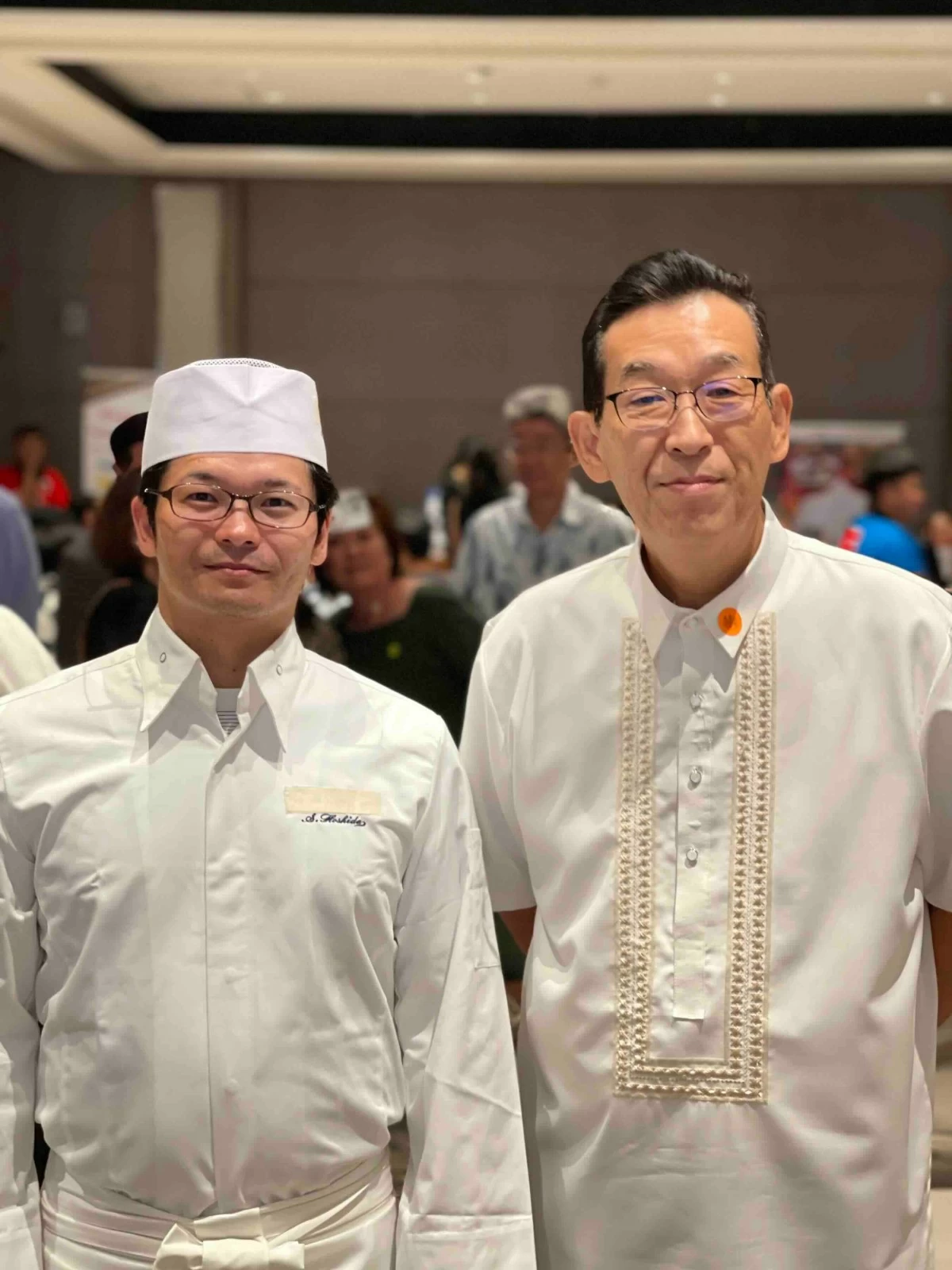
6 Japanese chef Shunsuke Hoshida, the official chef for the Consulate-General of Japan in Davao, with Consul General Hirotaka Ono.jpg
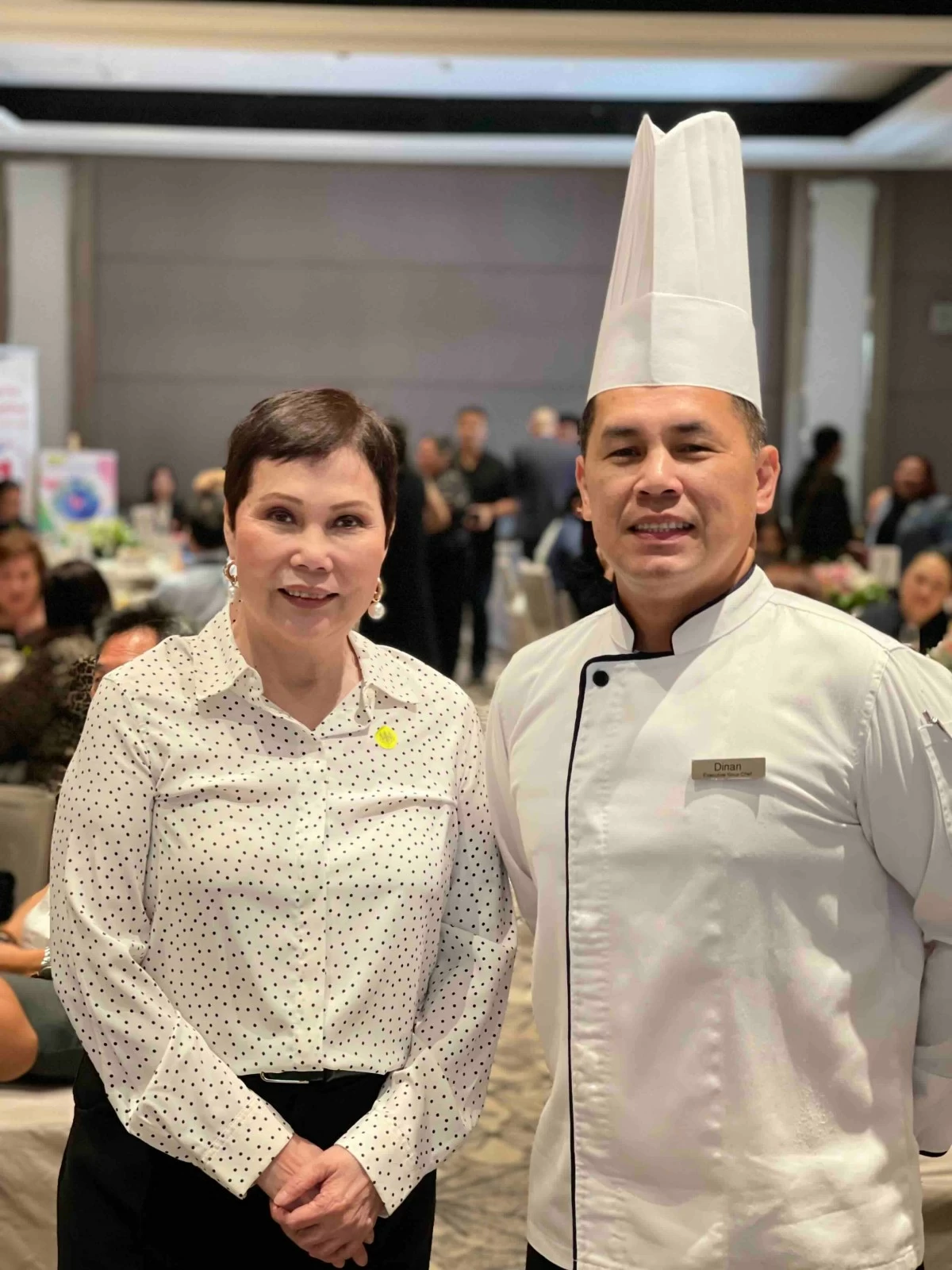
HOST DUO Dusit Thani Davao General Manager Vanessa Suatengco and executive sous chef Ferdinand Recaborda at the luncheon
“Japan’s traditional brewing—officially titled 'traditional knowledge and skills of sake-making with koji mold in Japan'—was likewise inscribed as UNESCO Intangible Cultural Heritage in December 2024. This recognition honors centuries of craftsmanship and the cultural heritage sustained by brewers across Japan.”
Inspired by the relaxed and chill vibe of the izakaya, a curated four-course menu was whipped up by Japanese chef Shunsuke Hoshida, the official chef for the Consulate-General of Japan in Davao. Chef Hoshida, who possesses expert knowledge in sake (kikizake), meticulously paired each dish with sake sourced from renowned Japanese breweries. Collaborating in the kitchen for the dessert course was Ferdinand Recaborda, the executive sous chef of Madayaw Café, Dusit Thani Davao.
Japan’s seafood excellence shone in the first two courses. First up, the appetizer of Scallop Carpaccio using scallops from Hokkaido. The scallops were sourced from the cold, nutrient-rich waters of northern Japan, and these premium scallops are world-renowned for their firm texture and natural sweetness. The refreshing Mutsu Hassen Tokubetsu Junmai Red Label, a sake from Aomori with a vibrant floral aroma and a clean, crisp finish, complemented the delicate sweetness of the scallops.
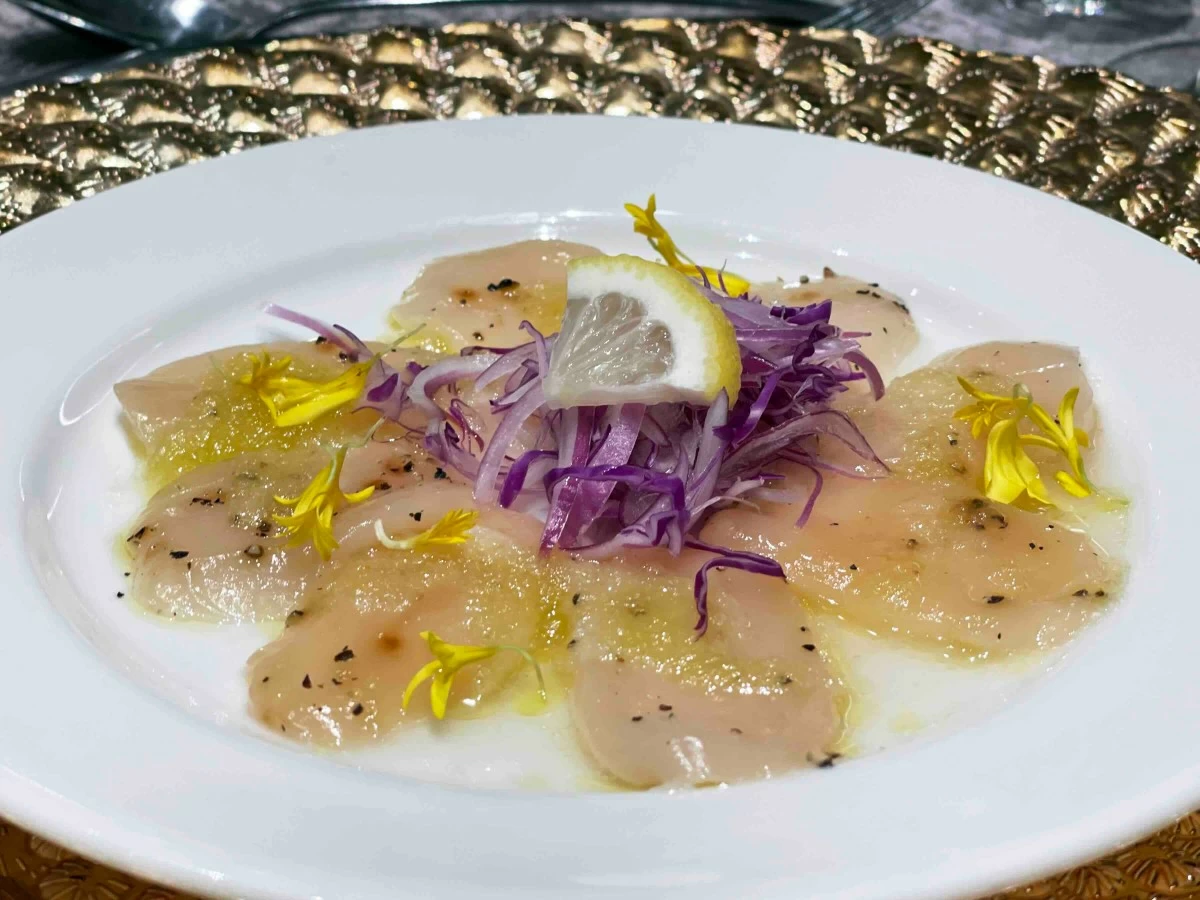
SEA STARTER Scallop carpaccio made with Hokkaido scallops
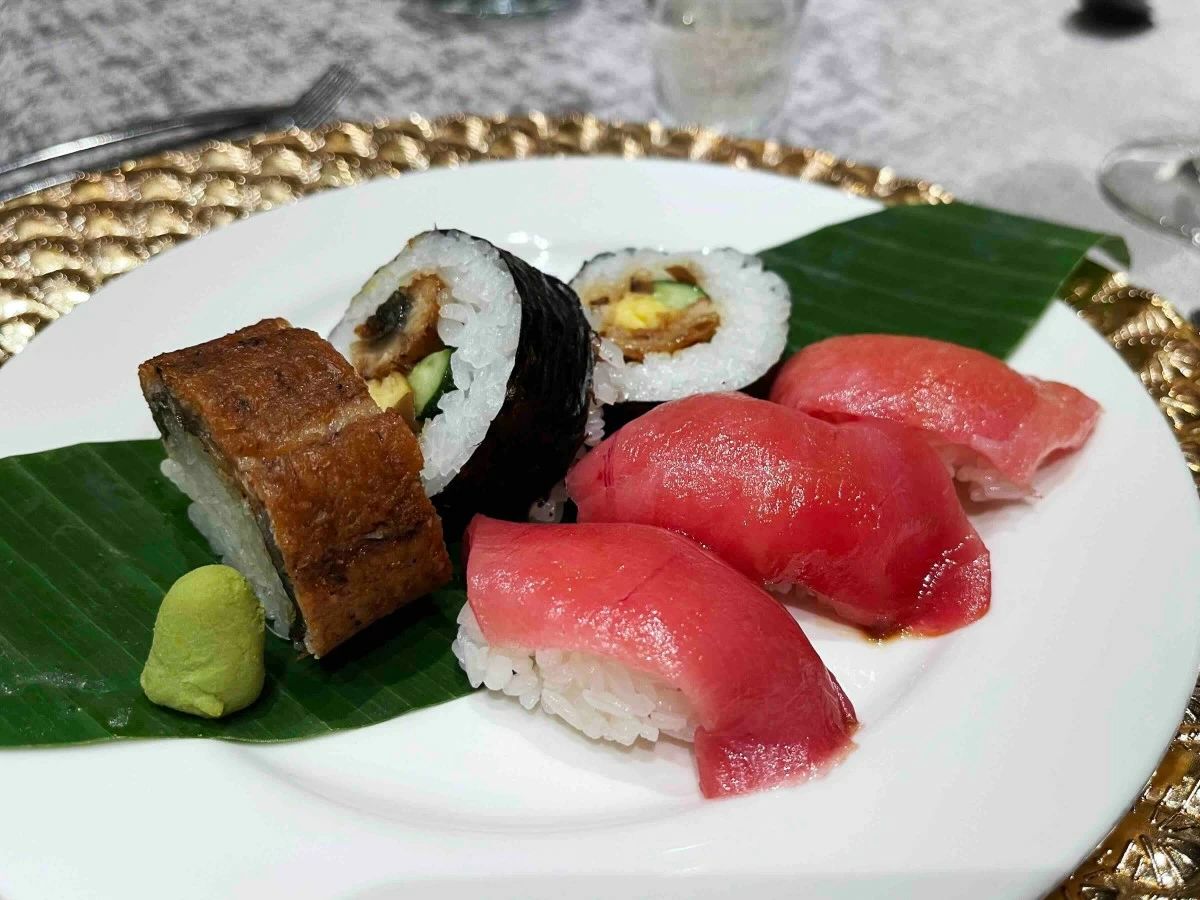
SUSHI COURSE Sushi selections featuring Goto Islands bluefin tuna from Nagasaki and eel from Kagoshima
The second course presented the sushi selections, which featured the Goto Islands bluefin tuna harvested from the Nagasaki prefecture. The tuna is prized for its superior marbling and clean flavor profile, representing the peak of Japanese sushi culture. Completing the sushi tableau were the tender grilled eel from Kagoshima and the futomaki. Enhancing the natural richness of the fatty seafood was the Inazo Junmai Ginjo sake from Yamagata. The sake’s elegant aroma with a balanced umami and savory taste makes the paired dish rich and delicious.
The entrée was highlighted by Japan’s "King of Meats"—the Omi Wagyu from Shiga Prefecture. Omi Wagyu is one of the "Top Three" wagyu brands in Japan, with a history dating back over 400 years. It is characterized by its high oleic acid content, which gives the beef an incredibly low melting point and a melt-in-the-mouth luxury.
Sharing the plate with the King of Meats from the Kansai region were the sea's treasures from the neighboring region of Chugoku—the Hiroshima oysters. Hiroshima is Japan’s leading producer of oysters; these are deep-fried to create a "Kaki Fry" that balances a crunchy exterior with a rich, creamy interior.
The royalties of Japan's land and sea deserve a sake brand of equal status. The Kubota Manju from Niigata Prefecture was the "crown jewel" of the sake lineup. With a flavor profile that's exceptionally smooth and refined, with an elegant, lingering finish, the Kubota Manju matches the intensity of the premium beef.
The dessert course served as a tribute to the thriving economic partnership between Japanese enterprises and the Davao Region. The sweetest fusion of Mindanao’s high-quality tropical fruits, featuring the mango pudding and slices of fresh banana, pineapple, and papaya, was the perfect meal ender. Providing a sophisticated, dry counterpoint to the dessert's sweetness was the Kubota Senju from Niigata prefecture. The sake bears a clean, smooth, and elegantly dry profile with a refined finish.
The Art of Washoku and Sake Pairing culinary event forms part of the year-long commemoration of the 70th Anniversary of the Normalization of Diplomatic Relations between Japan and the Philippines.
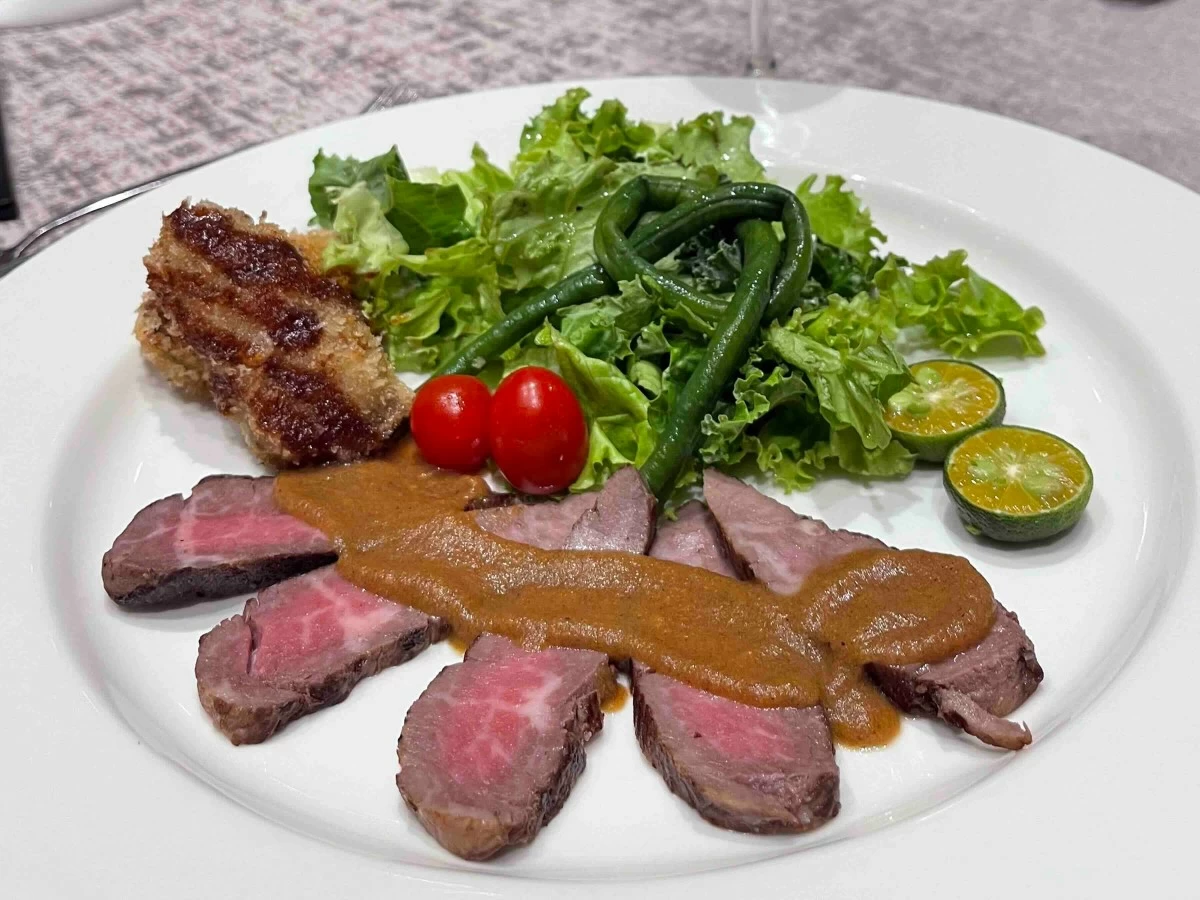
SURF TURF Omi wagyu from Shiga Prefecture with deep-fried Hiroshima oysters
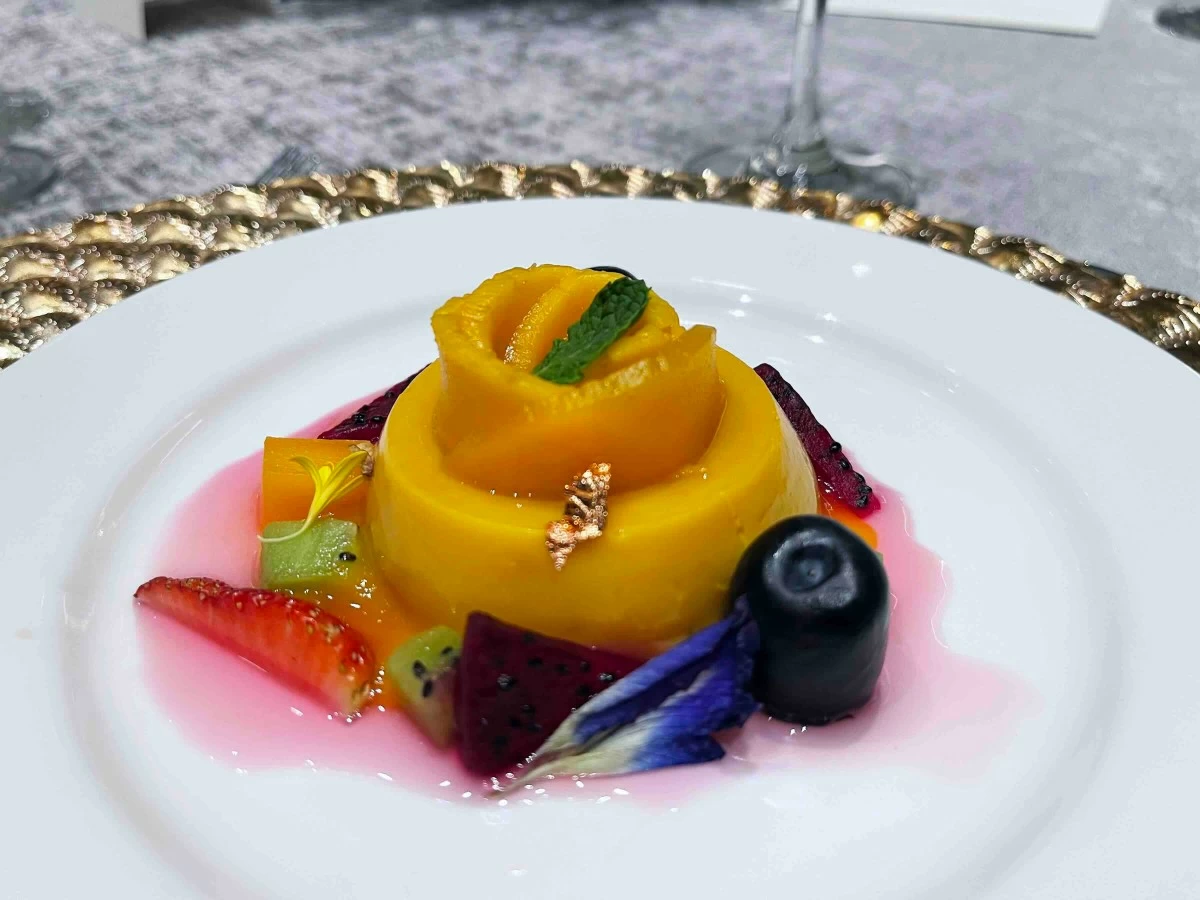
TROPICAL SWEET Mango pudding made with Mindanao mangoes