







Travel tax abolition bill gets final House nod
Published Mar 17, 2026 08:36 am
|
Updated Mar 17, 2026 03:34 pm


At A Glance
- The measure seeking to abolish the burdensome travel tax has moved a step closer to enactment after the House of Representatives approved House Bill (HB) No. 8464 on third and final reading on Monday night, March 16.
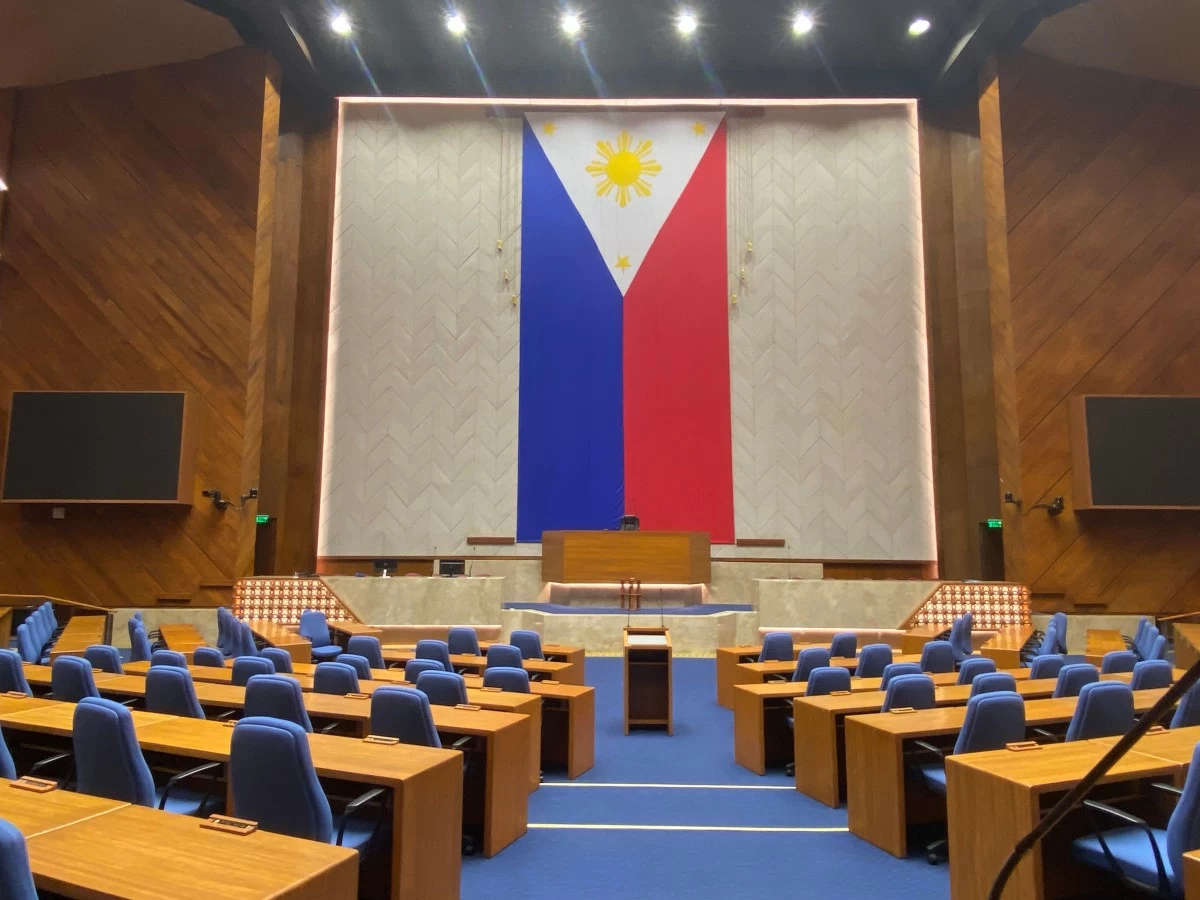
The House plenary (Contributed photo)
The measure seeking to abolish the burdensome travel tax has moved a step closer to enactment after the House of Representatives approved House Bill (HB) No. 8464 on third and final reading on Monday night, March 16.
Also known as the proposed Travel Tax Abolition Act of 2026, HB No.8464 was one of several Legislative-Executive Development Advisory Council (LEDAC) priority bills that were given final approval during plenary session.
Nominal voting showed 257 affirmative votes for the measure, with one negative vote and one abstention.
A pet bill of ilocos Norte 1st district Rep. Sandro Marcos, HB No.8464 recognizes how travel for Filipinos has shifted from a luxury for a few into a necessity for many who now fly for work, family reunions, education and urgent personal needs.
“The travel tax belongs to a different era, when flying was mostly seen as a privilege for an opulent few. Today, many Filipinos travel because they have to, for business, for family, for school, or to seize livelihood opportunities, and government should not keep treating that necessity as if it were still a luxury,” Marcos said.
The bill was sponsored by Romblon lone district Rep. Eleandro Jesus “Budoy” Madrona, chairman of the House Committee on Tourism, during Plenary deliberations.
“The proposed abolition of travel tax is but a timely initiative that will not only reduce travel costs, but will also stimulate tourism-dependent sectors and encourage our countrymen to travel, thereby fostering economic opportunities and cultural exchange,” Madrona said.
“In the span of almost two decades after its enactment, the Philippines became a signatory to the ASEAN Tourism Agreement, which sought the removal of travel tax among Member States to facilitate travel, which consequently renders the country as a regional outlier after most of the Member States have eliminated travel-related levies,” Madrona said.
The measure abolishes the travel tax imposed under Presidential Decree (PD) No. 1183, as amended, and Section 73 of Republic Act (RA) No. 9593, or the Tourism Act of 2009, as amended, effectively removing the legal bases for the levy that outgoing travelers have long paid on top of airfare and other travel-related charges.
Proponents say that this move carries weight far beyond the airport counter, because the tax has long been seen as one more added cost that families, workers and small entrepreneurs have to absorb before they can even begin a trip that may already be expensive for reasons completely outside their control.
Under the bill, once the law takes effect, no travel tax shall be collected by any government agency or private entity, a blanket prohibition designed to ensure that the abolition is not diluted in implementation and that travelers are no longer charged.
The measure also addresses the transition period by requiring that for flights scheduled on or after the date of effectivity, the collecting authority must immediately refund any previously paid travel tax to the passenger, a provision intended to protect those who may have paid before the law kicked in but whose trip falls after the abolition takes effect.
At the same time, the bill recognizes that certain programs have long relied on travel tax collections, and it therefore requires the National Government to provide the necessary funding through the annual General Appropriations Act so that the end of the tax does not abruptly cut off ongoing commitments.
Specifically, the bill provides continued funding through the GAA for the Tourism Infrastructure and Enterprise Zone Authority (TIEZA), for tourism development projects and the subsidy for its operating expenditures when necessary, for the Commission on Higher Education (CHEd) for the Higher Education Development Fund (HEDF), and for the National Commission for Culture and the Arts (NCCA) for the National Endowment Fund for Culture and the Arts.
To guide the shift away from travel tax collections, the measure directs TIEZA, in coordination with the Department of Budget and Management, to issue the implementing rules and regulations within 60 days after approval, with those rules meant to cover both the refund mechanism and the transition to GAA-based funding.
The bill also contains standard legal safeguards, including a repealing clause for inconsistent laws and issuances, a separability clause to preserve the rest of the law if one part is struck down, and an effectivity provision stating that the measure shall take effect 15 days after publication in the Official Gazette or in a newspaper of general circulation.