ADVERTISEMENT

Right policy mix on fuel tax relief

Published Mar 17, 2026 12:05 am  |  Updated Mar 16, 2026 06:09 pm
The renewed tensions in the Middle East have once again sent tremors through the global oil market. For an import-dependent country like the Philippines, such geopolitical shocks are felt almost immediately at the fuel pump, and soon after, in the prices of food, transport, and other basic goods.
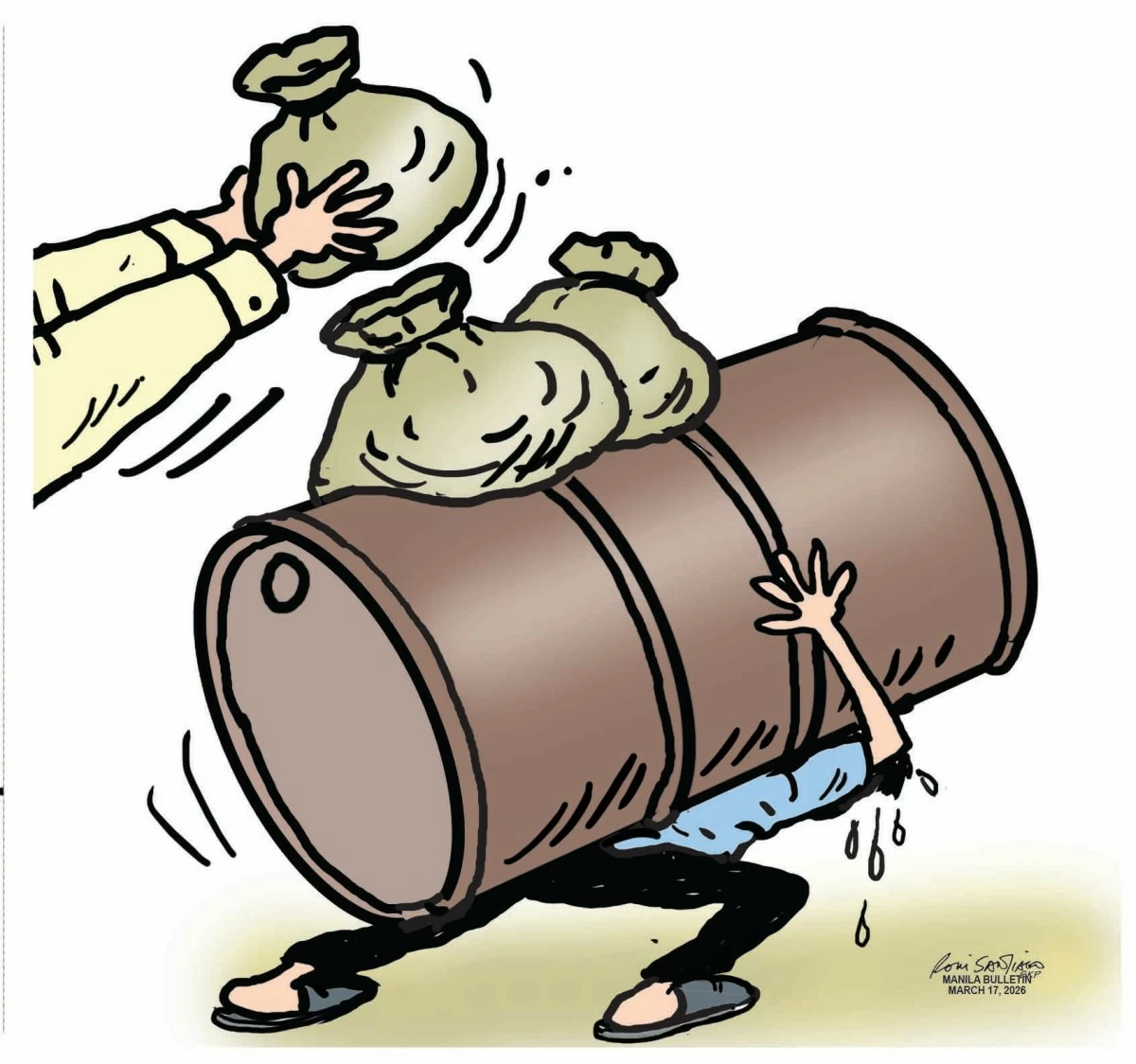
This explains the urgency behind the current move in Congress to authorize President Marcos to temporarily suspend or reduce excise taxes on petroleum products. The measure seeks to give the Executive branch flexibility to cushion Filipino consumers from sudden spikes in global oil prices arising from the ongoing conflict involving the United States, Israel, and Iran.
The intent is sound. Fuel prices play a pivotal role in shaping inflation trends in the Philippines. When oil prices surge, the impact cascades across the entire economy. Transport costs rise, electricity generation becomes more expensive, and the cost of bringing agricultural products from farms to markets increases. Ultimately, it is the ordinary Filipino household that bears the heaviest burden.
Excise taxes on petroleum products were introduced and increased under the Tax Reform for Acceleration and Inclusion (TRAIN) Law in 2018 as part of the government’s comprehensive tax reform program. These taxes have since contributed significantly to government revenues used for infrastructure, social services, and development programs. However, the law itself recognized the need for flexibility in times of extraordinary global oil price spikes.
Providing the President with the authority to suspend or reduce these excise taxes during periods of extreme volatility is therefore a reasonable and pragmatic step. It creates a policy safety valve that can moderate pump prices and help prevent a wider surge in inflation.
Yet tax suspension alone cannot be the government’s only response.
First, any tax relief must be temporary, calibrated, and guided by clear economic thresholds. A mechanism tied to global crude oil price levels would ensure that such relief is activated only during extraordinary circumstances and lifted once markets stabilize. This protects consumers without undermining fiscal stability.
Second, government must strengthen targeted support for vulnerable sectors. Public utility vehicle operators, farmers, and fisherfolk are among those most directly affected by rising fuel costs. Carefully designed fuel subsidies or temporary assistance programs can prevent fare hikes and protect food supply chains while ensuring that government resources reach those who need them most.
Third, fiscal managers must maintain prudence and discipline. Excise taxes on fuel contribute billions of pesos annually to the national treasury. Any temporary revenue loss from tax suspension must therefore be offset through efficient tax collection, prudent spending, and careful management of public borrowing.
Fourth, the present crisis underscores the need to accelerate the country’s long-term energy security strategy. Reducing dependence on imported oil should remain a national priority. Expanding renewable energy, improving mass transport systems, and promoting energy efficiency are essential steps toward insulating the Philippine economy from external shocks.
Global conflicts beyond our shores should not be allowed to unduly disrupt the daily lives of Filipino families. By equipping the Executive with the flexibility to ease fuel taxes—while pursuing targeted assistance, fiscal discipline, and long-term energy reforms—government can respond to today’s crisis without compromising tomorrow’s stability.
Sound policy, after all, lies not merely in reacting to shocks, but in ensuring that the nation emerges from them stronger and more resilient.
ADVERTISEMENT
.most-popular .layout-ratio{ padding-bottom: 79.13%; } @media (min-width: 768px) and (max-width: 1024px) { .widget-title { font-size: 15px !important; } }

{{ articles_filter_1561_widget.title }}

.most-popular .layout-ratio{ padding-bottom: 79.13%; } @media (min-width: 768px) and (max-width: 1024px) { .widget-title { font-size: 15px !important; } }

{{ articles_filter_1562_widget.title }}

.most-popular .layout-ratio{ padding-bottom: 79.13%; } @media (min-width: 768px) and (max-width: 1024px) { .widget-title { font-size: 15px !important; } }

{{ articles_filter_1563_widget.title }}

{{ articles_filter_1564_widget.title }}

.mb-article-details { position: relative; } .mb-article-details .article-body-preview, .mb-article-details .article-body-summary{ font-size: 17px; line-height: 30px; font-family: "Libre Caslon Text", serif; color: #000; } .mb-article-details .article-body-preview iframe , .mb-article-details .article-body-summary iframe{ width: 100%; margin: auto; } .read-more-background { background: linear-gradient(180deg, color(display-p3 1.000 1.000 1.000 / 0) 13.75%, color(display-p3 1.000 1.000 1.000 / 0.8) 30.79%, color(display-p3 1.000 1.000 1.000) 72.5%); position: absolute; height: 200px; width: 100%; bottom: 0; display: flex; justify-content: center; align-items: center; padding: 0; } .read-more-background a{ color: #000; } .read-more-btn { padding: 17px 45px; font-family: Inter; font-weight: 700; font-size: 18px; line-height: 16px; text-align: center; vertical-align: middle; border: 1px solid black; background-color: white; } .hidden { display: none; }
function initializeAllSwipers() { // Get all hidden inputs with cms_article_id document.querySelectorAll('[id^="cms_article_id_"]').forEach(function (input) { const cmsArticleId = input.value; const articleSelector = '#article-' + cmsArticleId + ' .body_images'; const swiperElement = document.querySelector(articleSelector); if (swiperElement && !swiperElement.classList.contains('swiper-initialized')) { new Swiper(articleSelector, { loop: true, pagination: false, navigation: { nextEl: '#article-' + cmsArticleId + ' .swiper-button-next', prevEl: '#article-' + cmsArticleId + ' .swiper-button-prev', }, }); } }); } setTimeout(initializeAllSwipers, 3000); const intersectionObserver = new IntersectionObserver( (entries) => { entries.forEach((entry) => { if (entry.isIntersecting) { const newUrl = entry.target.getAttribute("data-url"); if (newUrl) { history.pushState(null, null, newUrl); let article = entry.target; // Extract metadata const author = article.querySelector('.author-section').textContent.replace('By', '').trim(); const section = article.querySelector('.section-info ').textContent.replace(' ', ' '); const title = article.querySelector('.article-title h1').textContent; // Parse URL for Chartbeat path format const parsedUrl = new URL(newUrl, window.location.origin); const cleanUrl = parsedUrl.host + parsedUrl.pathname; // Update Chartbeat configuration if (typeof window._sf_async_config !== 'undefined') { window._sf_async_config.path = cleanUrl; window._sf_async_config.sections = section; window._sf_async_config.authors = author; } // Track virtual page view with Chartbeat if (typeof pSUPERFLY !== 'undefined' && typeof pSUPERFLY.virtualPage === 'function') { try { pSUPERFLY.virtualPage({ path: cleanUrl, title: title, sections: section, authors: author }); } catch (error) { console.error('ping error', error); } } // Optional: Update document title if (title && title !== document.title) { document.title = title; } } } }); }, { threshold: 0.1 } ); function showArticleBody(button) { const article = button.closest("article"); const summary = article.querySelector(".article-body-summary"); const body = article.querySelector(".article-body-preview"); const readMoreSection = article.querySelector(".read-more-background"); // Hide summary and read-more section summary.style.display = "none"; readMoreSection.style.display = "none"; // Show the full article body body.classList.remove("hidden"); } document.addEventListener("DOMContentLoaded", () => { let loadCount = 0; // Track how many times articles are loaded const offset = [1, 2, 3, 4, 5, 6, 7, 8, 9, 10]; // Offset values const currentUrl = window.location.pathname.substring(1); let isLoading = false; // Prevent multiple calls if (!currentUrl) { console.log("Current URL is invalid."); return; } const sentinel = document.getElementById("load-more-sentinel"); if (!sentinel) { console.log("Sentinel element not found."); return; } function isSentinelVisible() { const rect = sentinel.getBoundingClientRect(); return ( rect.top < window.innerHeight && rect.bottom >= 0 ); } function onScroll() { if (isLoading) return; if (isSentinelVisible()) { if (loadCount >= offset.length) { console.log("Maximum load attempts reached."); window.removeEventListener("scroll", onScroll); return; } isLoading = true; const currentOffset = offset[loadCount]; window.loadMoreItems().then(() => { let article = document.querySelector('#widget_1690 > div:nth-last-of-type(2) article'); intersectionObserver.observe(article) loadCount++; }).catch(error => { console.error("Error loading more items:", error); }).finally(() => { isLoading = false; }); } } window.addEventListener("scroll", onScroll); });

Sign up by email to receive news.