







House gives final approval to 2 education reform bills
Published Mar 17, 2026 09:14 am


At A Glance
- The House of Representatives approved on third and final reading during plenary session on Monday night, March 16 two education reform bills that were designed to benefit and uplift poor families with deserving students.
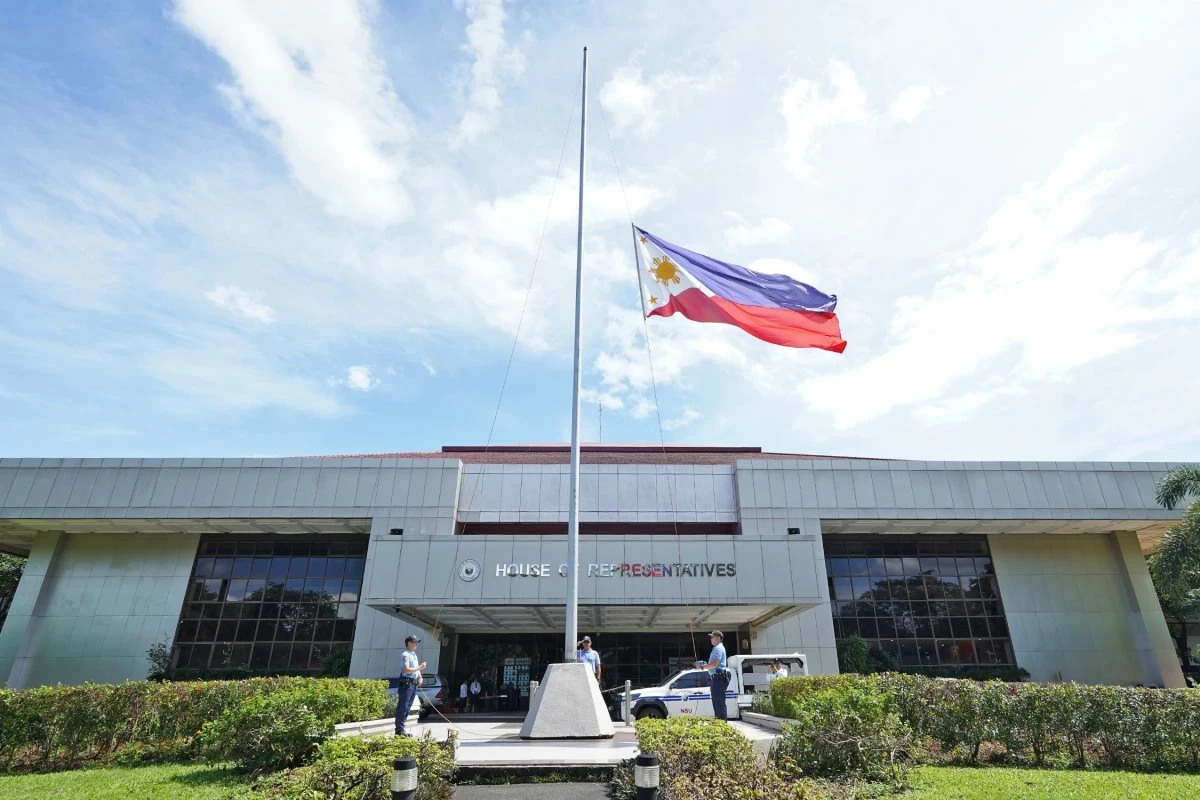
The House of Representatives (Contributed photo)
The House of Representatives approved on third and final reading during plenary session on Monday night, March 16 two education reform bills that were designed to benefit and uplift poor families with deserving students.
Gaining the chamber’s final approval were House Bill (HB) No. 8476, which introduced a voucher system under the Universal Access to Quality Tertiary Education Act; and HB No. 8477, or the proposed Presidential Merit Scholarship Act.
Both were overwhelmingly approved on third reading, with the bills garnering 257 and 259 affirmative votes, respectively, during nominal voting in the 300-plus strong legislative chamber.
The two bills--principally authored by House Majority Leader Ilocos Norte 1st district Rep. Sandro Marcos--were also listed as priority measures under the Legislative-Executive Development Advisory Council (LEDAC).
In HB No.8476, the voucher pathway is specifically created for qualified Pantawid Pamilyang Pilipino Program (4Ps) beneficiaries who choose to study in private higher education and technical-vocational institutions.
Essentially, the bill seeks to ensure that academic potential among poor households does not stall at senior high school (SHS) because of inability to pay tuition.
Once these students qualify for admission in a Commission on Higher Education (CHEd)-recognized higher education institution (HEI), they are to be prioritized and automatically included in the Tertiary Education Subsidy (TES), subject to available funds, so they no longer have to struggle through repeated layers of screening after government has already identified their families as among the poorest in the country.
For the remaining TES slots, the measure introduces a more updated targeting mechanism by using the Community-Based Monitoring System or CBMS, which allows applicants to be ranked according to per capita household income based on localized socioeconomic data gathered by local governments.
Students not yet captured in the CBMS may still qualify through proof-of-income rules to be set by the UniFAST Board.
The bill also addresses a long-standing geographic problem that has quietly punished students from underserved towns. It provides that prioritization rules shall not apply to students from cities or municipalities with no existing state university or college, local university or college, or public technical-vocational institution.
Meanwhile, the proposed Presidential Merit Scholarship Act under HB No. 8477 establishes the Presidential Merit Scholarship Program (PMSP) and integrates the existing Bagong Pilipinas Merit Scholarship Program into a national framework that supports academically outstanding students, particularly those from families in need of financial assistance.
The measure seeks to ensure that academically gifted Filipino students are given the opportunity to complete their college education and contribute to national development.
Under the bill, the CHEd will administer the PMSP, which will be open to Filipino or dual-citizen SHS graduates belonging to the top one percent of their graduating class.
Eligible applicants must also pass the admission requirements of CHEd-identified priority programs offered by state universities and colleges, local universities and colleges with a Certificate of Program Compliance, or private higher education institutions with government recognition.
The program will prioritize students admitted to CHEd-identified priority programs offered by Level III or IV institutions or those with autonomous or deregulated status.
Applicants must also belong to families with a combined annual household income of not more than P2 million, although CHEd may adjust the threshold periodically to account for inflation and the normative cost of education.
Under the measure, scholarship benefits may include tuition subsidies, stipends and other education-related allowances, subject to the availability of funds.
Students enrolled in state universities and local universities will have their tuition and other school fees covered under Republic Act (RA) No. 10931, or the Universal Access to Quality Tertiary Education Act.
Scholars will also receive a Certificate of Presidential Recognition signed by the President of the Philippines acknowledging their exemplary academic achievement. The bill requires scholars to maintain the academic standards prescribed by CHEd and complete their degree programs within the prescribed timeframe.
Tingog Party-list Rep. Jude Acidre, chairman of the House Committee on Higher and Technical Education, sponsored and defended both bills in plenary.
Welcoming the third reading passage of the PMSP bill was Lakas-Christian Muslim Democrats (Lakas-CMD) President Leyte 1st district Rep. Martin Romualdez. Romualdez’s House Bill (HB) No. 5763 was incorporated into the consolidated measure that was passed on third reading.
“The program will extend substantial financial assistance to the cream of the crop in senior high school. Hopefully, we can produce the best and the brightest professionals who can be our country’s future leaders among these graduating senior high school graduates,” the former two-time House Speaker said.
Romualdez said he also hoped that program beneficiaries would choose fields of higher education whose graduates are in demand in the country and abroad.
“This will expedite their employment so they can be of help to their families as soon as possible,” he noted.