






Manila Bulletin
 Embassies & Foreign Affairs
Dutch firms recognized as PH–Netherlands mark 75 years of diplomatic ties
Embassies & Foreign Affairs
Dutch firms recognized as PH–Netherlands mark 75 years of diplomatic ties
Embassies & Foreign Affairs
Dutch firms recognized as PH–Netherlands mark 75 years of diplomatic ties
Dutch firms recognized as PH–Netherlands mark 75 years of diplomatic ties
Published Mar 17, 2026 04:05 pm


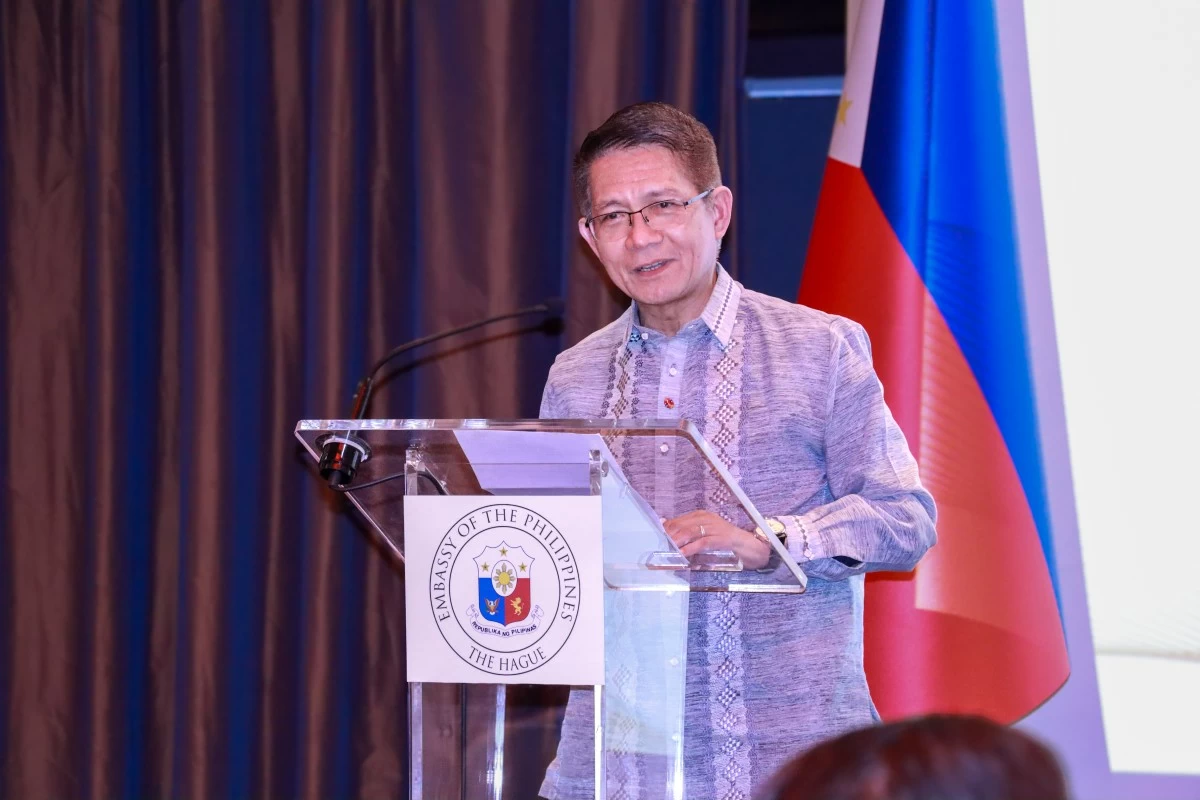
Ambassador J. Eduardo Malaya delivers his opening remarks at a gathering that brought together CEOs, senior corporate executives, government officials, and members of the diplomatic and business communities
Dutch companies with longstanding operations in the Philippines were recognized for their contributions to the Philippine economy during an appreciation dinner hosted by the Philippine Embassy in The Hague on March 9. The event formed part of the commemoration of the 75th anniversary of diplomatic relations between the Philippines and the Netherlands.
The gathering brought together CEOs, senior corporate executives, government officials, and members of the diplomatic and business communities. Twenty companies and organizations received plaques of recognition in acknowledgment of their investments and partnerships in the Philippines.
Among those honored were semiconductor companies Nexperia B.V. and Ampleon Netherlands B.V., agricultural firm East-West Seeds, infrastructure and engineering consultancy Royal Haskoning, and ING Bank, which operates a back-office services hub in the Philippines employing around 6,000 workers.
In his welcome remarks, Ambassador J. Eduardo Malaya noted that the anniversary offered an opportunity to reflect on how economic cooperation has shaped the relationship between the two countries over the past seven decades.
“This year is special as we mark the 75th anniversary of the establishment of diplomatic relations between our two countries. It has been 75 years of steady and growing partnership, largely built on robust business-to-business engagements,” Malaya said. He added that the Philippine government and the embassy wished to express their appreciation to Dutch companies whose investments have helped sustain the dynamic Philippines–Netherlands partnership.
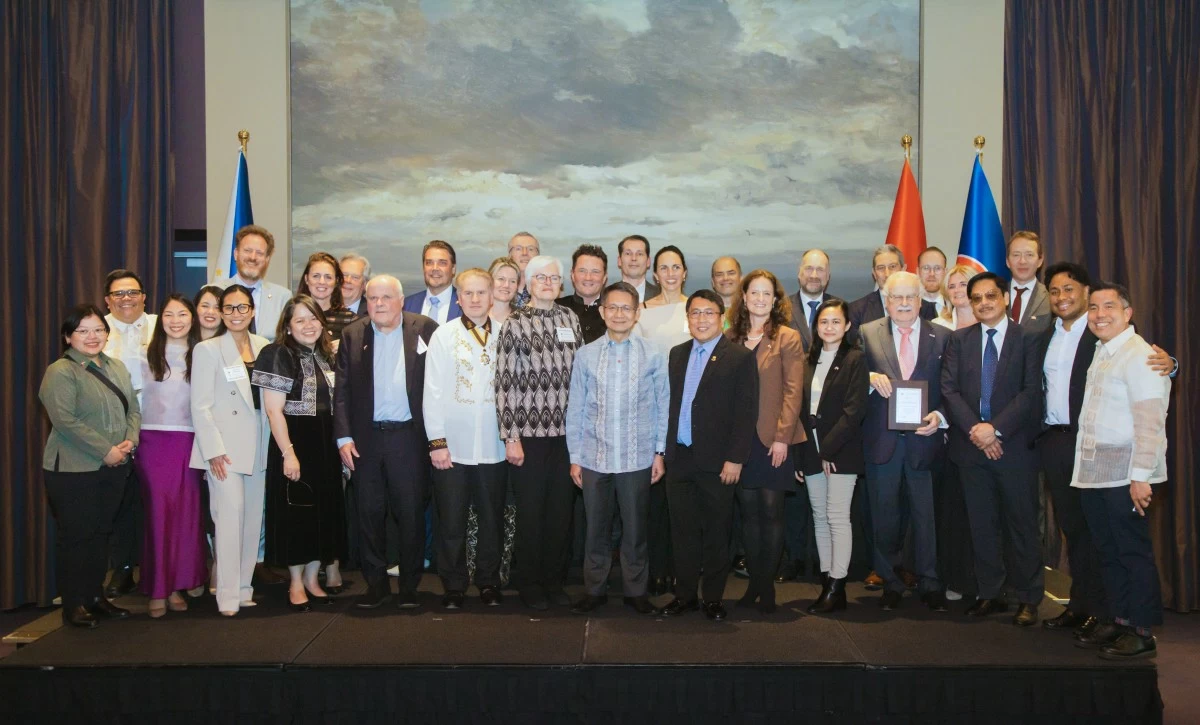
Top executives and representatives of Dutch companies and Filipino business who received the Embassy-led awards, along with Trade and Industry Undersecretary Allan Gepty, Ambassador J. Eduardo Malaya, and PNBC Chair Ambassador Saskia De Lang, and Embassy officials
Mark Jacobs, director for International Trade Policy and Economic Governance at the Dutch Ministry of Foreign Affairs, highlighted the breadth of cooperation between the two countries, particularly in diplomacy, development, trade, and investment.
He pointed to strong prospects for deeper collaboration in areas where Dutch expertise has long been recognized, including water management and flood protection, semiconductors, and broader trade relations.
“The message is clear: the Netherlands wants to be an even closer and more strategic economic partner for the Philippines—not only in the trade of today, but in building the economy of tomorrow: digital, green, and inclusive,” Jacobs said.
The keynote address was delivered by Undersecretary for International Trade Allan B. Gepty, the Philippines’ lead negotiator for the ongoing Philippines–European Union Free Trade Agreement talks. He noted that Dutch companies continue to expand their presence in key Philippine industries, particularly semiconductors, electronics, software development, and IT-BPM services.
These sectors, Gepty said, align well with the Philippines’ strengths, including a highly skilled digital workforce, strong English proficiency, and a growing innovation ecosystem. He also cited opportunities for collaboration in areas such as sustainable and circular economies, water technology and flood management, offshore wind development, smart agriculture, and food security.
“The Netherlands and Europe need to strengthen their presence in Asia not only as a market but also to sustain their comparative advantage in innovation and industrialization strategies,” Gepty said, adding that the Philippines can serve as an important partner in supporting innovation-driven industries and regional trade connectivity.
Department of Trade and Industry Secretary Ma. Christina A. Roque addressed the gathering through a video message, commending the roughly 130 Dutch companies operating in the Philippines. Their investments, she said, support thousands of jobs while contributing to innovation, economic growth, and shared prosperity.
The event was organized in partnership with the Philippines-Netherlands Business Council, chaired by Saskia de Lang, who served as the Netherlands’ ambassador to the Philippines from 2019 to 2022.
De Lang emphasized that the strength of the Philippine workforce remains a key factor in attracting Dutch investment.
“It’s all about the people of the Philippines—their creativity, work ethic, educational levels, and strong command of the English language,” she said. “That is why the Dutch merchant navy mainly employs Filipino seafarers, why business process outsourcing thrives in the Philippines, and why the semiconductor and integrated circuit sector in the Netherlands is recruiting Filipino experts.”
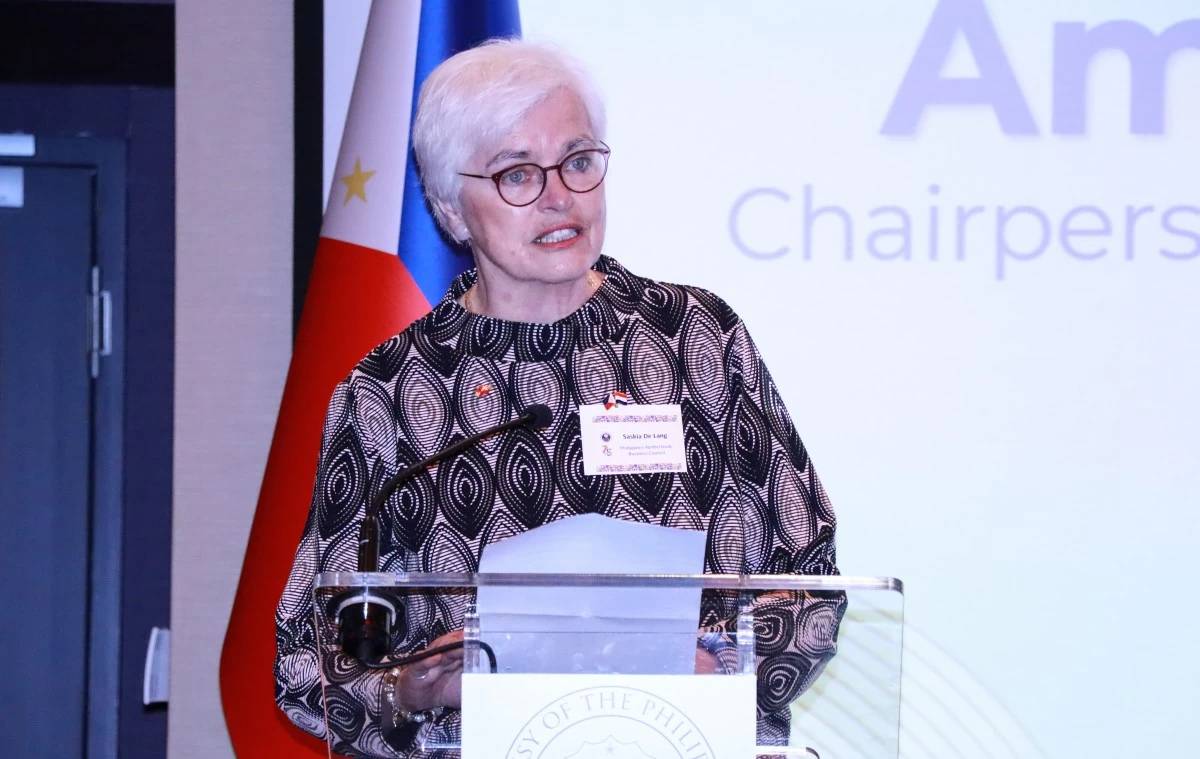
PNBC Chair Ambassador Saskia De Lang
Among the awardees were organizations advancing sustainability and environmental protection, including The Ocean Cleanup and Ecoplant Europe B.V. Also recognized were Manila Trading and Heuschen & Schrouff Oriental Food Trading B.V., suppliers of Filipino food products to the Dutch and European markets.
KLM Royal Dutch Airlines received recognition as it marks 75 years of continuous flights to the Philippines. Xinyx IC Design B.V., a Filipino-owned IT company with offices in Eindhoven, was also among those honored.
Institutional awards were given to the Philippines-Netherlands Business Council and the Dutch Chamber of Commerce in the Philippines for promoting bilateral business ties. Consul General a.h. Eppo Horlings and Mr. Anton Lutter were likewise recognized for their efforts in strengthening people-to-people connections between the two countries.
The Netherlands has consistently ranked among the Philippines’ top sources of foreign investment and is often the largest investor from the European Union. Over the past 12 years, Dutch investors have brought approximately ₱755 billion (€12 billion) into the Philippine economy.
Bilateral trade between the two countries has also grown steadily, increasing by around 10 percent annually. Much of the Philippines’ exports to Europe pass through the Port of Rotterdam, one of the continent’s largest logistics hubs.