








DAVAO CITY – Davao residents expressed concern and frustration as domestic oil prices surged on Tuesday, March 17, with increases reaching as high as P23.90 per liter on a staggered basis.
Fuel companies implemented price hikes ranging from P12.90 to P16.60 per liter for gasoline, P20.40 to P23.90 per liter for diesel, and P6.90 to P8.90 per liter for kerosene.
As a result, pump prices climbed to P91.69 per liter for gasoline, P114.90 for diesel, and P143.79 for kerosene, prompting the majority of the general public to grow concerned.
Additional strain
Motorists and commuters said the sharp increase is placing additional strain on already tight household budgets, forcing many to cut back on essential spending and reconsider daily travel expenses.
"Can’t the government control the increase in gasoline prices? The cost of goods is also rising. It's difficult for us taxi drivers," said Rodel Constancia, 43, who hails from Santo Tomas in Davao del Norte.
He added that taxi drivers like him opted to take turns waiting at malls to avoid wasting fuel to enable them to save a little rather than roaming the city looking for passengers.
Cristine E. Candia, 52, a government employee and resident of Barangay 2-A in Davao City, said she now limits her trips due to rising fuel costs. "This is just my way to save however I can."
She noted that, instead of her car, she uses her motorcycle only when necessary and tries to conserve gasoline, saying travel has become significantly more expensive.
Another resident, Joseph B. Flores, 38, a government employee, resident of Barangay 2-A, also expressed his disappointment with the ongoing increase in fuel and commodity prices.
"The ongoing price hikes are discouraging," Flores said, expressing concern over the impact on daily expenses, particularly transportation, which directly affects not only him but all Filipino families.
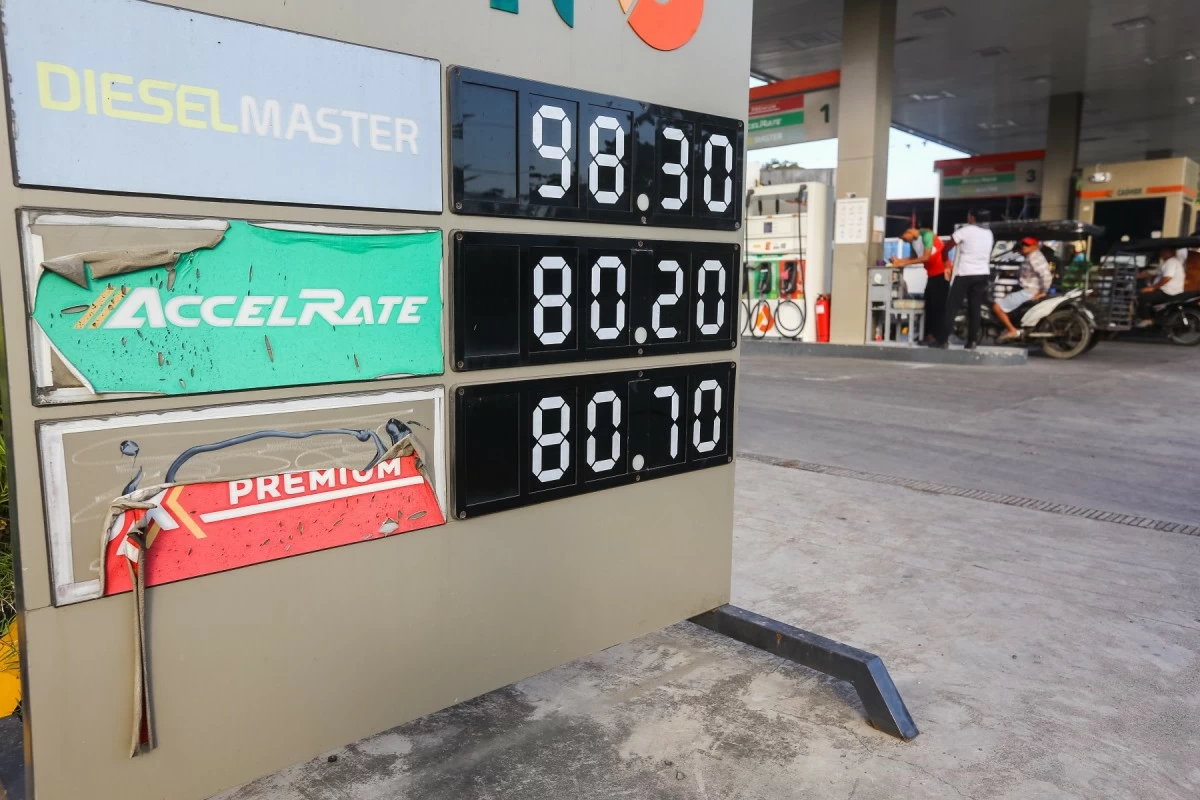
A PRICE board shows the price of gasoline in a gasoline station in Davao City on Tuesday, March 17. (Keith Bacongco)
Arjoy Ceniza, 56, a photojournalist from Calinan District here, noted that his previous P500 fuel budget—once enough for a round trip between downtown and Calinan—is now sufficient for a one-way trip.
Commuters like Jann Ramel Ramirez and Edlyn Mae Peña echoed sentiments similar to those of people with wheels, saying they spend about P100 per day on transportation.
Ramirez, 24, a freelancer who hails from Malita town in Davao del Sur and rents a house in Matina, Davao City, said that due to the fuel price hike, the minimum fare now increases.
"If your workplace is close to where you live, you won’t feel the increase in gasoline as much. But if you still have to travel, it really becomes expensive," Ramirez added.
Peña, 36, a government employee and resident of Barangay Bago Gallera, reported resorting to ride-sharing with a friend or a colleague, or walking short distances to save money.
She added that rising fuel prices have forced her family to cut back on non-essential expenses, as transportation costs now take up a larger share of their daily budget.
Declining earnings
Public utility drivers also reported declining earnings. An association of jeepney drivers in Matina Aplaya, who refused to be named, said drivers are forced to absorb the increase.
According to the association, some taxi and jeepney drivers are already considering reducing their trips or temporarily stopping operations on some days to save.
Residents are calling for government intervention to mitigate the impact of the price hikes, with some urging subsidies or adjustments to help both drivers and commuters cope with the rising cost of fuel.
The latest fuel price increase marks one of the largest in recent months, further intensifying public concern about the affordability of basic goods and services.
Complete validation
The Land Transportation Franchising and Regulatory Board Region-11 called on public utility drivers and operators to complete their validation processes for a fuel subsidy.
In an advisory, the LTFRB-11 urged drivers of public utility jeepneys, multicabs, and taxis across the Davao region to submit the required documents to qualify for government fuel assistance.
According to the agency, the fuel subsidy program is part of government efforts to cushion the impact of rising fuel prices on the transport sector, particularly drivers and operators.
The LTFRB approved on Tuesday, March 17, the fare adjustments for public utility vehicles, citing rising operational costs and increasing fuel prices driven by global geopolitical tensions.
LTFRB Chairperson Vigor D. Mendoza II said the decision, made under the guidance of Department of Transportation Secretary Giovanni Lopez, aims to balance the welfare of commuters with the viability of the transport sector.
Mendoza said the fare adjustments were based on extensive consultations and cost analyses, with support from the Department of Economy, Planning, and Development.
“This decision reflects the government’s concern for both commuters and transport operators, especially as the sector faces challenges due to rising petroleum prices linked to tensions in the Middle East,” Mendoza said.
How much?
Under the new rates, traditional jeepneys will see a P1 increase in the minimum fare, from P13 to P14, and a 20-centavo increase in the per-kilometer rate, from P1.80 to P2.
Modern jeepneys will have a P2 increase in minimum fare, from P15 to P17, along with a 10-centavo increase in the per-kilometer rate, from P2.20 to P2.30.
Airport taxis will increase the flag-down rate by P40, from P75 to P115, while charges for distance and waiting time remain unchanged.
For transport network vehicle services, the LTFRB approved a P20 increase in base fares and a P15 increase in pickup fares.
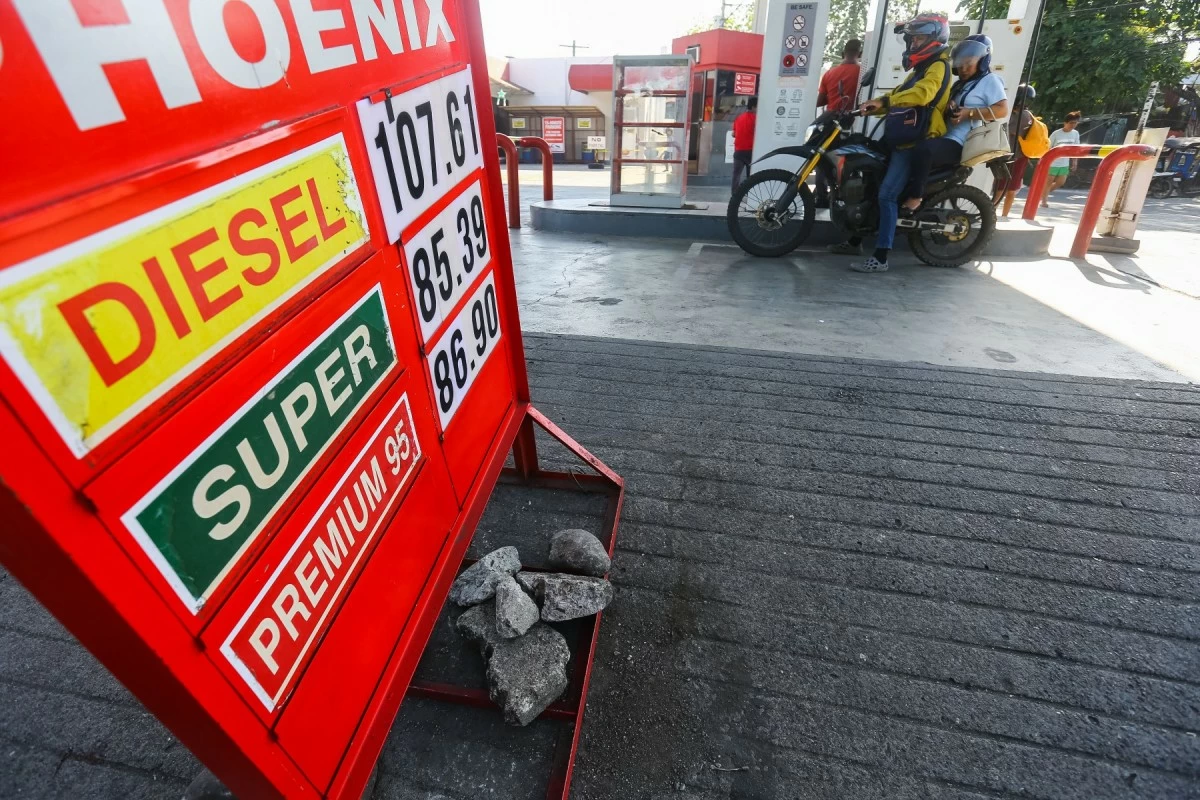
THE price of diesel per liter in this gasoline station in Davao City is more than P100. (Keith Bacongco)
The new base fares are P65 for sedans (from P45), P75 for AUVs (from P55), P55 for hatchbacks (from P35), and P165 for premium units (from P145). The per-kilometer and per-minute rates remain unchanged.
Metro Manila and city buses will also implement fare hikes. Ordinary buses will raise the minimum fare for the first five kilometers from P13 to P15, with an additional P0.24 per succeeding kilometer, up from P2.25 to P2.49.
Air-conditioned buses will increase minimum fares from P15 to P18 for the first five kilometers, with an additional P0.10 per succeeding kilometer, from P2.65 to P2.98.
Provincial buses will have a P1 increase for the first five kilometers. Additional per-kilometer charges vary: P0.30 for ordinary buses (P1.90 to P2.20), P0.35 for deluxe and super deluxe buses (P2.10 to P2.45), and P0.45 for luxury buses (P2.90 to P3.35).
Petitions for fare increases for ordinary taxis and UV Express services are still under review.
Overall, Mendoza said the adjustments represent an average fare increase of about 19 percent nationwide.
Why?
The LTFRB cited a sharp rise in maintenance and operational expenses, which increased from 7.54 percent in 2022 to 54.29 percent in 2024.
The agency also pointed to global developments such as the Russia-Ukraine war and recent tensions in the Middle East, as well as wage increases across the country.
“These compelling circumstances prompted the Board to allow a reasonable rate of increase,” the agency said in its decision.
Mendoza noted that while fares increased by about 15 percent, wages rose by about 19 percent over the same period.
The new fare rates will take effect once operators have secured updated fare matrices and displayed them in their vehicles.
The LTFRB required operators to continue granting a 20 percent discount to senior citizens, Persons with Disabilities, and students during school days.
Despite the expected rollout of a P5,000 fuel subsidy for operators, the agency said the provisional approval for provincial bus fare hikes was necessary due to “extraordinary increases” in fuel prices.