







Airfares soar in April as CAB hikes fuel surcharge


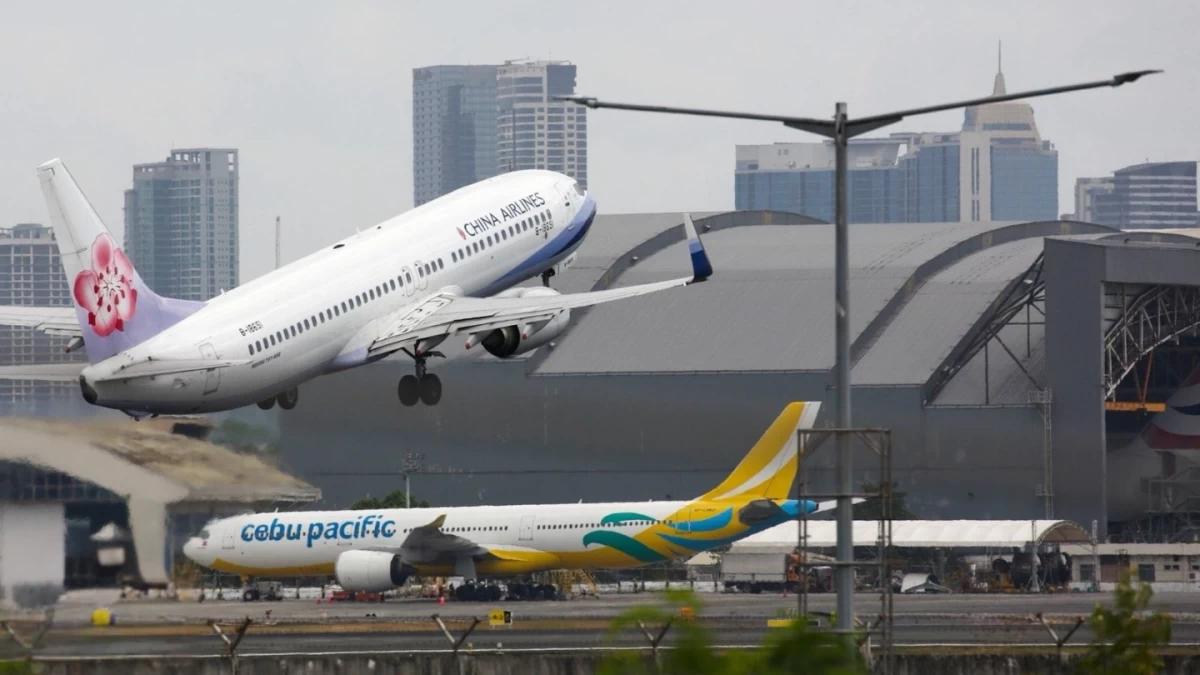
Travelers will be spending more when booking flights next month after the Civil Aeronautics Board (CAB) raised the passenger fuel surcharge that airlines may impose from Level 4 to Level 8 due to higher jet fuel prices.
In an advisory, CAB said the higher surcharge level would be implemented from April 1 to 15 to address the impact of fuel price hikes on airline operations.
Under Level 8, passengers may pay an additional ₱253 to ₱787 for domestic flights, depending on the distance. Meanwhile, for international flights, the surcharge ranges from ₱835.05 to ₱6,208.98.
At Level 4, which remained in place for eight straight months, the surcharge for domestic flights ranged from ₱117 to ₱342. For foreign routes, the lower end of the fee is ₱385.70, while the higher end is ₱2,867.82.
Due to the volatility in fuel prices, CAB is revising the evaluation period of the surcharge from monthly to a shorter cycle of 15 days to allow for a faster response to market changes.
“The more gradual and incremental implementation of fuel surcharge to be collected from passengers can be a way of softening the impact of higher fuel surcharge increases, and enable faster reduction when fuel prices decline,” it said.
The passenger fuel surcharge is an optional fee that airlines may impose and collect to recover costs from losses caused by upward spikes in fuel prices.
This is not part of the basic airfare and may be reduced or removed depending on the price of jet fuel in the market.
The applicable fuel surcharge is determined based on a one-month average of jet fuel Mean of Platts Singapore (MOPS) prices in their peso-per-liter equivalent.
According to the International Air Transport Association (IATA), the average global price of jet fuel nearly doubled to $175 per barrel as of March 15, from $89.63 per barrel last month.
In Asia and Oceania, which covers the Philippines, average prices were slightly higher at $175.74 per barrel.
Based on its advisory, airlines planning to impose or collect a fuel surcharge next month must file their application on or before April 1.
For fuel surcharges to be collected in equivalent currency, the applicable conversion rate in February is ₱58.11 per United States (US) dollar.
CAB said the applicable level for the fuel surcharge for the second half of April would be announced at least three days prior to effectivity.
“This interim measure shall be in effect until the current situation stabilizes, or as may be revised or revoked accordingly,” it said.
In response to the higher surcharge, budget carrier AirAsia Philippines said it continues to implement operational efficiencies to help mitigate its impact on travelers.
“We understand that any increase in travel costs may affect passengers,” the carrier said in a statement. “We continue to reaffirm our commitment to keeping fares affordable for travellers as a leading low-cost carrier.”
The Association of Asia-Pacific Airlines (AAPA), the leading voice of airlines based in the region, is asking governments to consider rolling out measures to support the airline industry as the Middle East conflict ramps up operational costs.
AAPA said governments should provide timely threat information, maintain clear and responsive airspace restrictions, and facilitate coordinated repatriation arrangements, among other measures.
“Asia-Pacific airlines remain committed to maintaining the highest levels of safety and operational resilience, and will continue working closely with governments and industry partners to sustain global air connectivity during this challenging period,” the group said in a statement.