







Women-led peacebuilding
Published Mar 16, 2026 12:05 am
|
Updated Mar 15, 2026 02:57 pm


PEACE BY PEACE
When President Ferdinand Marcos Jr. stood before the United Nations General Assembly in New York City last March 10, he carried with him a clear and strong message: the Philippines’ unwavering commitment to women-led peacebuilding efforts.
This historic week at the UN was further highlighted by the President’s remarks during the opening session of the 70th United Nations Commission on the Status of Women (CSW70) on March 9. It marked the first time a Philippine President addressed the Commission, a powerful gesture that underscores our country's leadership in global gender equality.
In his speech at the General Assembly, President Marcos emphasized that this commitment serves as the cornerstone of the country’s campaign for a non-permanent seat in the United Nations Security Council for the 2027–2028 term.
“Our experience has taught us that at its core, peacekeeping is service to the community. We firmly support peacekeeping models that place paramount consideration for the needs of the community,” he declared.
Addressing the CSW70, the President expanded on this vision, asserting that “when women rise, societies rise with them. When women lead, nations move forward.” He reminded the global community that “we cannot solve the great challenges of our time if half of humanity is excluded from shaping those solutions.” His message was clear: women must be present wherever decisions are made—in government, business, diplomacy, and most critically, in peacebuilding.
The President stressed that the Philippines utilizes peacekeeping approaches that are inclusive, responsive, and free from political biases that seek to protect the welfare of women, children, older persons, persons with disabilities, and other vulnerable sectors.
“Then and now, we stand ready to do our part to stay the forces of war, to end conflict, to ease suffering,” the President declared, his words resonating deeply with members of the diplomatic corps and the peacebuilding community.
Over the years, the Philippines has learned from experience that long-lasting peace cannot be achieved through force. It is built, nurtured, and sustained by the people, which include women who are among the nation’s most effective and powerful agents of peace.
The historic Comprehensive Agreement on the Bangsamoro (CAB), signed in 2014 between the Government of the Philippines (GPH) and the Moro Islamic Liberation Front (MILF), proved that peace is possible when parties engage in genuine, meaningful dialogue.
Today, the Bangsamoro Autonomous Region in Muslim Mindanao (BARMM) stands as a concrete symbol of the power of peacebuilding. What was once a land marked by conflict is emerging as a region of hope, development, and limitless opportunities.
The BARMM’s creation is also a testament to the remarkable leadership of Filipino women. They have shown that despite the challenges they continue to face in their communities, they are capable of forging ahead and overcoming these obstacles.
The Philippine government’s negotiating panel during the peace talks with the MILF was in fact led by Dr. Miriam Coronel-Ferrer, the first and only woman in the world to have led and signed a major peace agreement with a rebel group.
And in the implementation phase of the peace agreement, women are also leading, such as MP Laisa Masuhud Alamia, who is currently the chair of the Task Force for Decommissioned Combatants and their Communities, and MP Baitan Ampatuan, who is co-chair of the Joint Task Force on Camps Transformation, overseeing the decommissioning of the MILF and their communities.
Across the country, women negotiators, community leaders, and peace advocates have played key roles in de-escalating conflict, building trust, and ensuring that the voices of families and communities were heard in the peace process.
In recognition of women’s invaluable contribution to peacebuilding, the Philippines continues to advance the global Women, Peace and Security (WPS) agenda that is anchored on United Nations Security Council Resolution 1325.
It is worth noting that the Philippines is the first country in Asia to adopt a National Action Plan on Women, Peace and Security (NAP WPS), translating global commitments into concrete national policies and programs.
Today, the NAP WPS is already in its fourth iteration (2023-2033), which is solid proof of the country’s steadfast determination to strengthen women’s participation in the areas of peacebuilding, conflict prevention, and post-conflict recovery.
Our commitment to pushing forward the WPS Agenda also extends beyond our borders. In 2024, the Philippines convened the International Conference on Women, Peace and Security, bringing together more than 1,700 participants from 75 countries.
The gathering served as a platform for representatives from governments, civil society organizations, and other peace partners to exchange ideas on how to further strengthen the role of women in peace processes and advancing sustainable initiatives.
More importantly, the event reinforced a powerful lesson learned from peace processes around the world: peace agreements become more durable and inclusive when women are meaningfully involved.
At a time when armed conflicts continue to erupt across the globe, the international community urgently needs brave, capable, and strong voices that will advocate for a principled peace.
This is where President Marcos believes the Philippines can significantly contribute. He emphasized that our country stands ready to serve as “an independent, trusted partner, an innovative pathfinder, and a committed peacemaker.”
Our campaign for a seat in the UN Security Council is driven primarily by our desire to aid other nations that are still recovering from conflict. It is anchored on the belief that countries with lived experiences in peacebuilding can offer practical lessons to the world.
The Bangsamoro peace process, our leadership in the Women, Peace and Security agenda, and our decades of participation in United Nations peacekeeping efforts demonstrate the Philippines’ enduring commitment to building a more peaceful world.
As the world navigates an era marked by volatility, uncertainty, and conflict, the Philippines continues to be a beacon of hope and a shining example that peace must be built on the principles of inclusiveness, respect, and mutual understanding.
And when women are placed at the forefront of peacebuilding efforts, communities become stronger, agreements become more sustainable, and the promise of peace becomes a lived reality.
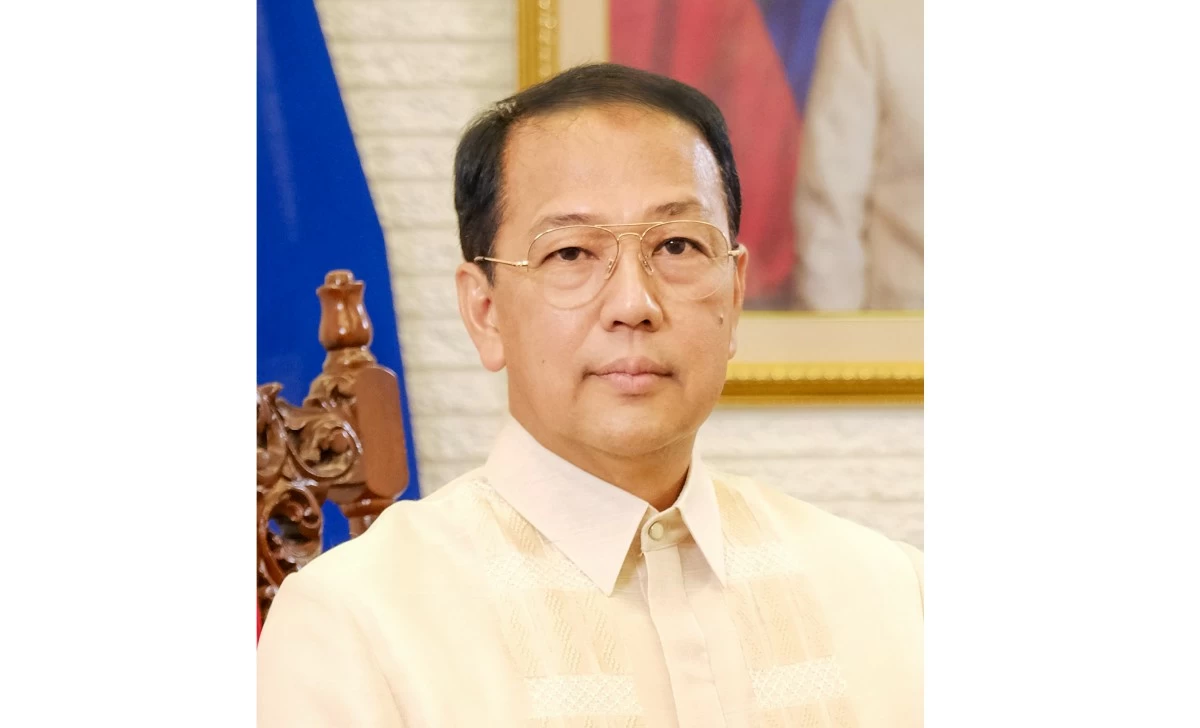
(Secretary Carlito G. Galvez, Jr. is the presidential adviser on peace, reconciliation, and unity.)