






Manila Bulletin
 Embassies & Foreign Affairs
Sweden's first astronaut urges Filipino students to pursue STEM careers
Embassies & Foreign Affairs
Sweden's first astronaut urges Filipino students to pursue STEM careers
Embassies & Foreign Affairs
Sweden's first astronaut urges Filipino students to pursue STEM careers
Sweden's first astronaut urges Filipino students to pursue STEM careers
Published Mar 16, 2026 02:15 pm


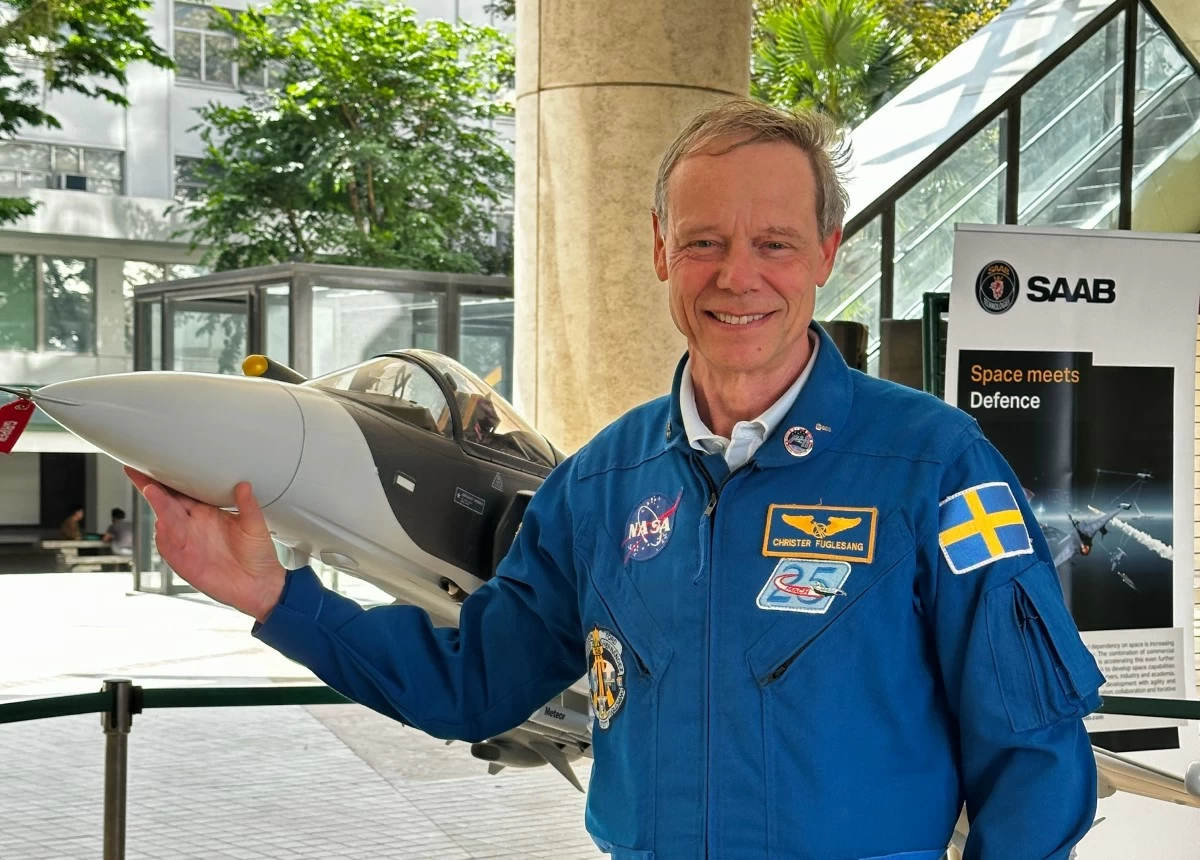
Dr. Christer Fuglesang, the first Swede to fly in space. He is also a professor at Sweden's Royal Institute of Technology (KTH) and a Strategic Planning and Development Analyst for Space Domain at major Swedish defense and security company Saab AB
For Dr. Christer Fuglesang, the first Swedish astronaut to travel to space, the journey began with something simple: curiosity.
Speaking to students at De La Salle University (DLSU) in Manila on March 14, Fuglesang encouraged young people to explore careers in science, technology, engineering, and mathematics, or STEM, emphasizing that curiosity and passion for learning are often the first steps toward extraordinary opportunities.
“I’ve always been curious and interested in understanding how things work,” Fuglesang said in an interview after his talk. “When I was in school, I focused on science, particularly physics and mathematics, and later continued with a PhD in physics. When the opportunity came to go to space, it combined everything I loved to do.”
Fuglesang spent 18 years as an astronaut with the European Space Agency (ESA). In 1996 he was stationed at NASA’s Johnson Space Center in Houston and later served as a mission specialist aboard the Space Shuttle Discovery. He flew to the International Space Station twice, in 2006 and 2009. Currently, he is a professor at Sweden's Royal Institute of Technology (KTH) and a Strategic Planning and Development Analyst for Space Domain at major Swedish defense and security company Saab AB.
For students who may still be uncertain about pursuing STEM, Fuglesang offered straightforward advice: study what genuinely interests you.
“If you are interested in any STEM subject, you should definitely study it,” he said. “It does not matter whether it is physics, medicine, or engineering. What matters is that you become good at what you do. And it is easier to be good at something you truly enjoy.”
Even for those who do not end up traveling to space, Fuglesang noted that STEM education opens many doors.
“You may not have the luck to become an astronaut,” he said with a smile. “But with a strong STEM education, you will have many opportunities and the chance to find a very good job.”
Why space research matters on Earth
One of the misconceptions Fuglesang addressed is the idea that space exploration is detached from everyday life. In reality, he said, space research plays a crucial role in improving life on Earth.
“Humans going to space have an enormous inspirational impact, especially for young people,” he explained. “But we also do unique science in space that cannot be done on Earth.”
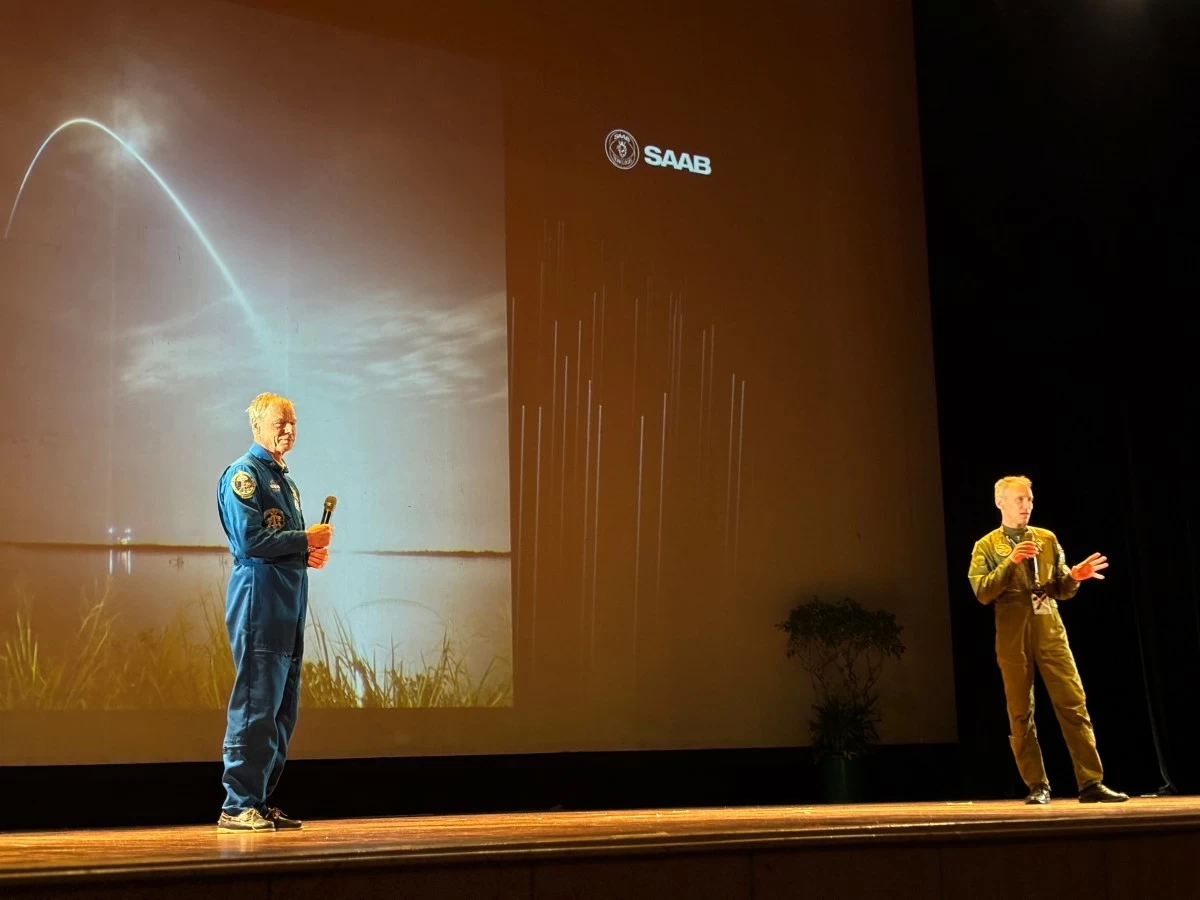
Dr. Fuglesang and Jussi Halmetoja, Senior Operations Advisor, Air Domain of Saab AB speaking to students at DLSU
Experiments conducted in microgravity aboard the International Space Station help scientists better understand physics, biology, and medicine. These studies can lead to new insights about the human body and help researchers develop treatments for illnesses.
Beyond scientific experiments, Fuglesang said space technology already shapes everyday life in ways many people do not realize.
“Most of the way we use space today is actually as infrastructure for better life on Earth,” he said. “Thousands of satellites help us understand the climate, improve weather forecasts, and monitor disasters.”
Earth observation satellites, for example, allow scientists to track typhoons, assess damage after natural disasters, and monitor environmental changes across the planet.
Preparing for the next era of exploration
Looking ahead, Fuglesang said the next generation of explorers may help humanity return to the Moon and eventually travel to Mars.
For young people who want to be part of that future, he said technical knowledge is important, but personal qualities matter just as much.
“To be part of the frontier of exploration, you usually have a university degree in a STEM subject,” he said. “But it is also about what kind of person you are.”
Astronauts must work closely with others under demanding conditions, making teamwork and emotional stability essential. “You need to be able to cooperate well with others. You have to be psychologically stable and medically healthy,” Fuglesang explained.
Space agencies also look for people who pursue interests beyond academics. For example, Fuglesang himself once sailed across the Atlantic Ocean twice. “I did that because I thought it was interesting and adventurous,” he said. “But experiences like that show space agencies that you are the kind of person who may fit well into exploration.”
Few people have experienced what Fuglesang describes as the most powerful perspective of all: seeing Earth from space. During one of his missions aboard the International Space Station, he and his crewmates represented multiple nationalities and cultural backgrounds. Working together in orbit highlighted how artificial many of the divisions on Earth can seem.
“It takes only 90 minutes to orbit the Earth,” he said. “When you look down, you never see borders. You start to think, why do we fight over imaginary lines instead of working together?”
The view also reveals how fragile the planet’s atmosphere truly is. “You see how thin the atmosphere is. It is a very thin layer that allows life to exist,” Fuglesang said. “It reminds you that we need to take care of it.”
Opening doors for the next generation
As space exploration expands through international partnerships and private initiatives, Fuglesang believes more opportunities will emerge for people interested in working in the space sector. While only a small number will become astronauts, thousands more contribute to missions from the ground, including engineers, scientists, technicians, and data specialists.
“Space is becoming part of almost every sector of society,” he said. “If you understand the technology and the data coming from space, you can bring that knowledge into many industries.”
Ultimately, Fuglesang hopes students will see STEM education as a pathway not only to careers but also to solving some of humanity’s biggest challenges. “It is a good education that opens many possibilities,” he said. “And engineering solutions are what will help us improve our societies.”
For the students who listened that day, the message was clear: the journey to space begins with curiosity and is nurtured in the classroom.