






Manila Bulletin
 Philippines
Metro Manila
Mayor Isko hails SC decision rejecting TRO petition on Manila garbage fee hike
Philippines
Metro Manila
Mayor Isko hails SC decision rejecting TRO petition on Manila garbage fee hike
Philippines
Metro Manila
Mayor Isko hails SC decision rejecting TRO petition on Manila garbage fee hike
Mayor Isko hails SC decision rejecting TRO petition on Manila garbage fee hike
Published Mar 16, 2026 01:15 pm


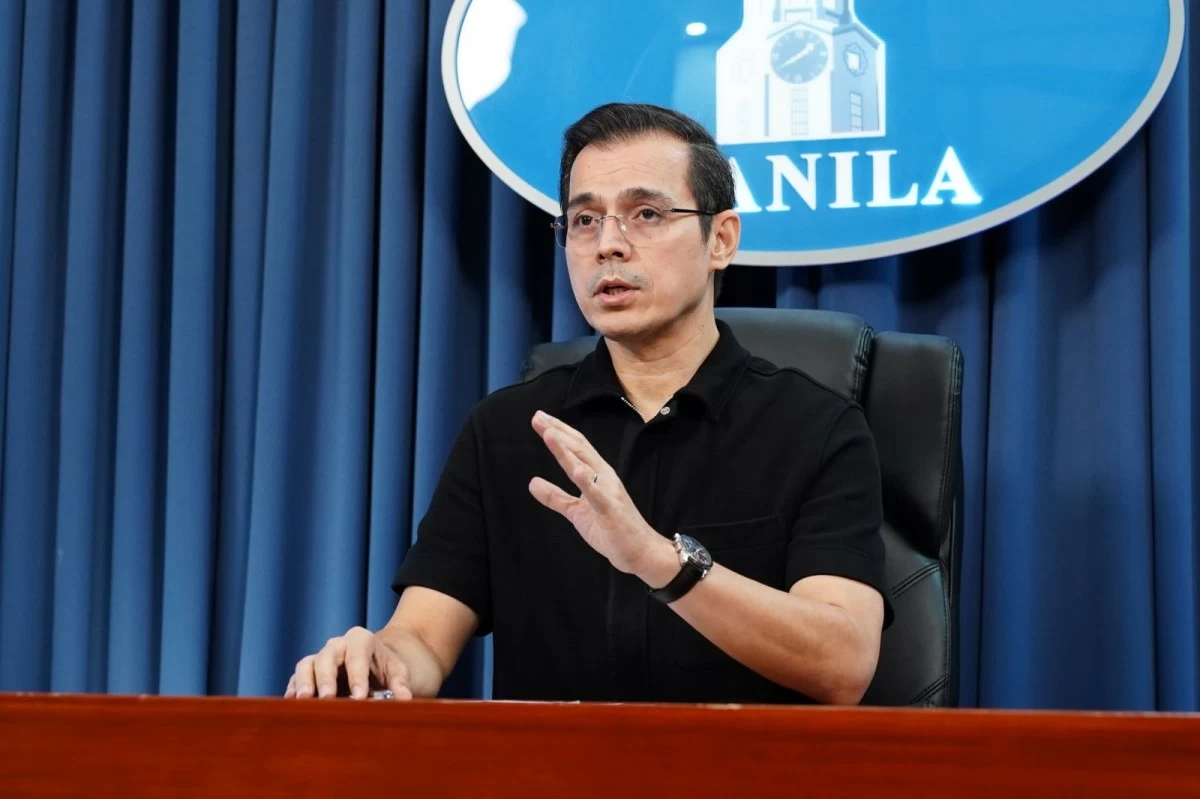
Manila Mayor Francisco "Isko Moreno" Domagoso (Photo from Manila PIO)
Manila Mayor Francisco "Isko Moreno" Domagoso welcomed the Supreme Court's (SC) decision rejecting Las Piñas high school teacher Barry Tayam's petition urging it to issue a Temporary Restraining Order (TRO) against Manila's increased garbage collection fee ordinance.
"We welcome the Supreme Court’s resolution dismissing the petition against Manila City Ordinance No. 9151, and we thank the Honorable Court for upholding the rule of law. The updated garbage collection fees are necessary to sustain efficient waste management services in our city and to ensure that Manila remains clean and orderly," Domagoso said in a statement on Monday, March 16.
"Rest assured that the City Government of Manila will continue to implement policies that promote public health, environmental protection, and better services for every Manileño," he added.
In its resolution promulgated on Feb. 25, the en banc said Tayam did not have legal standing to file the petition for certiorari and prohibition, saying that he is only a "tourist" in Manila.
"Clearly, petitioner is not among the covered persons under the assailed Ordinance who may suffer any direct injury as a result of the regulation's implementation,” the SC said, noting that Tayam's petition cannot be treated as a taxpayer’s suit, which can be an exception to the standing requirement.
“By petitioner's own admission, the assailed ordinance, which imposes garbage fees, is a form of regulation and is not a revenue or tax measure,” it added.
Tayam filed the petition on Feb. 5, questioning the validity of Manila Ordinance No. 9151, which allows for the significant increases in the garbage collection tax for businesses in order to support the city’s sanitation services, including garbage collection, hauling, and disposal, while encouraging businesses to reduce waste generation. However, some business owners raised eyebrows at the substantial increase in garbage collection fees.
In his petition, Tayam alleges that the approval of the ordinance was not preceded by adequate public hearings.
Despite rejecting the teacher's petition, the SC explained his claims involve factual questions, such as whether a public hearing was conducted and that the court is not a trier of facts.
“Hence, the Court must dismiss petitions directly filed before it when they involve factual issues that must be resolved first for the case's proper disposition,” the SC's decision read.
The city's clarification
On Jan. 18, the Manila City Council clarified that the increase in garbage collection fees under Ordinance No. 9151 is computed based on the actual volume of waste generated by each business industry, stressing that establishments producing more garbage are charged higher rates.
“According to the ordinance, the adjustment in garbage collection fees is computed based on actual garbage production of each business industry. The higher the garbage generation for each industry, the higher the garbage collection fee,” the council said.
It explained that businesses are classified by industry and scale, with corresponding rates imposed depending on the estimated amount of waste they generate, stressing that the system aims to promote fairness by aligning fees with actual waste output rather than imposing a uniform increase across all sectors.