







Stocks slump to three-month low as peso hits record
Published Mar 16, 2026 05:24 pm


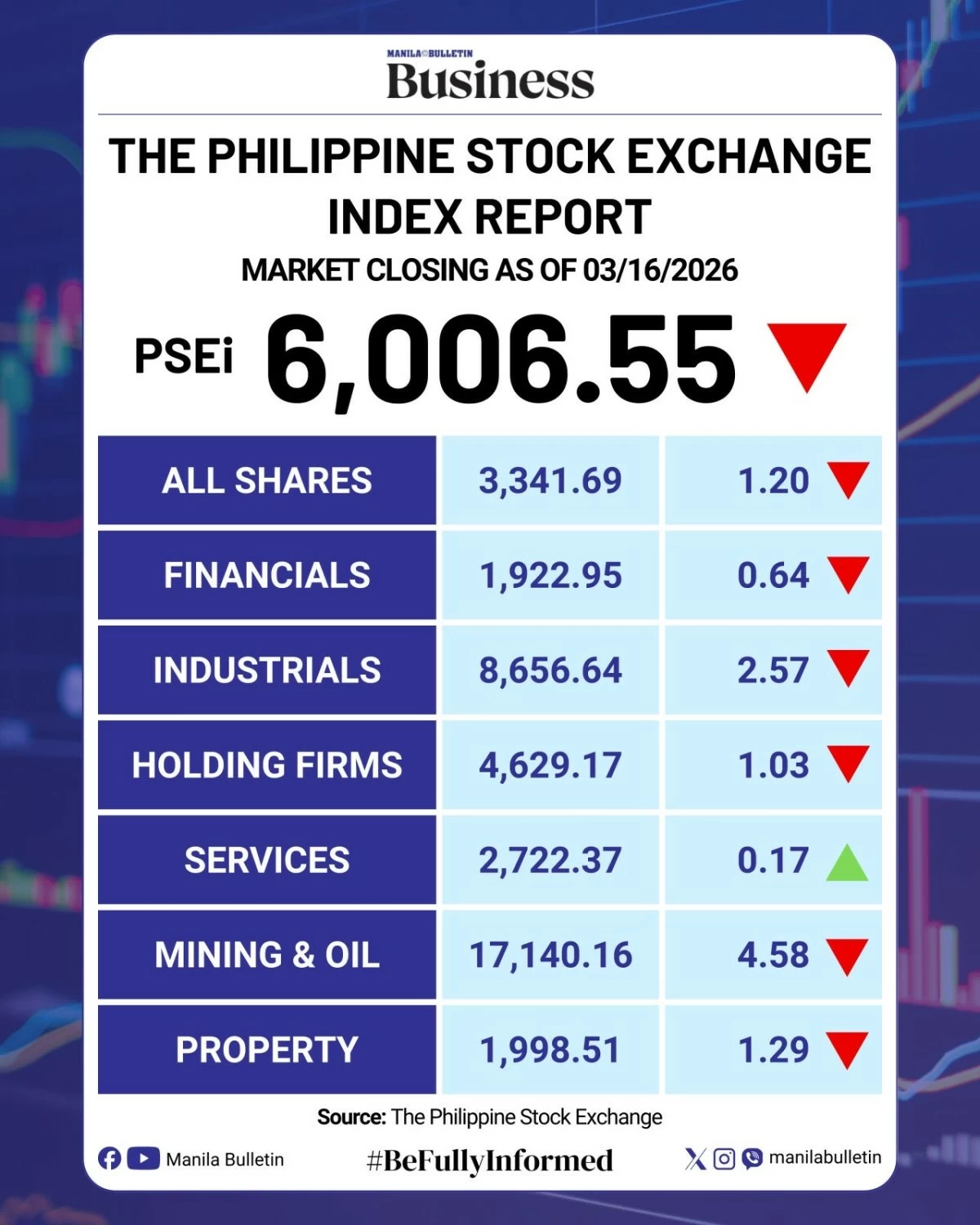
Local stocks retreated for a third consecutive session on Monday, March 16, briefly sliding below the critical psychological threshold as the escalating conflict in the Middle East pressured the local currency and fueled concerns over imported inflation.
The Philippine Stock Exchange index (PSEi) declined 52.39 points, or 0.86 percent, to finish at 6,006.55. The benchmark index saw steeper losses during intraday trading, dropping below the 5,900 level before a late-session effort to reclaim the 6,000 handle.
The Mining and Oil sector led the downturn among sub-indices, while the Services counter was the sole performer to finish in positive territory.
Market activity remained robust despite the cautious tone, with 3.29 billion shares changing hands valued at ₱9.53 billion. Breadth was decidedly negative as declining issues overwhelmed gainers 153 to 53, while 53 stocks remained unchanged.
Luis Limlingan, managing director at Regina Capital Development Corp., noted that the local bourse extended a sell-off that began last week, driven by a global shift toward defensive assets.
He pointed out that while the Bangko Sentral ng Pilipinas has signaled its intent to support the currency, market sentiment remains pessimistic. Investors are staying on the sidelines, wary that a breach of current support levels could trigger a more aggressive downward correction in the near term.
The equity market is reacting primarily to volatility in the foreign exchange market, where the peso reached a new record intraday low of ₱59.95 against the dollar. The currency eventually settled at a record closing rate of ₱59.87.
Michael L. Ricafort, chief economist at Rizal Commercial Banking Corp., said the stock index's finish was its lowest since Dec. 19, 2025.
He emphasized that the combination of high global oil prices and a weaker peso creates a double-whammy for the Philippine economy, as it significantly raises the cost of importing essential fuel and commodities.
Japhet Tantiangco, research manager at Philstocks Financial, said the prevailing sentiment is anchored on fears that these external shocks will inevitably filter through to consumer prices.
The rise in energy costs and the persistent depreciation of the peso suggest a higher inflation trajectory, which may force the central bank to maintain a restrictive monetary policy stance for longer than previously anticipated.