







Soldier's reflection: Private citizens, not the institution
Published Mar 16, 2026 12:05 am
|
Updated Mar 15, 2026 03:00 pm


BARRACKS AND STRATEGY
In recent days, public discourse has been stirred by a press conference featuring 18 individuals described in some reports as “ex-Marines,” who have alleged large-scale corruption and other grave wrongdoing. The timing — on the eve of the 40th anniversary of the People Power Revolution — has inevitably invited comparison to moments in our past when soldiers figured prominently in national turning points.
As a retired general of the Armed Forces of the Philippines (AFP), I believe clarity is essential.
First, facts matter. The individuals in question are private citizens. They are no longer in active service. Reports themselves indicate that the group is not composed solely of former Marines, but includes individuals from other services and a reservist background. No active-duty AFP personnel have been publicly named in the affidavit. That distinction is not technical — it is fundamental.
When a soldier retires or separates from service, he or she returns to civilian life. That transition is not symbolic; it is legal and institutional. The AFP does not control, direct, or endorse the activities of former personnel. Their statements, actions, and affiliations are their own.
Conflating private citizens with the Armed Forces as an institution is unfair to the 150,000 men and women currently serving under the flag.
I say this not to diminish the seriousness of any allegation. In a democracy, accusations of corruption must be examined by the proper authorities. Due process must take its course. But that process belongs to civilian investigative bodies, the courts, and appropriate oversight institutions — not to the chain of command of a military organization that is not a party to the claims.
What concerns me more is the narrative frame emerging around the issue — the suggestion that this represents “soldiers standing up again,” echoing 1986. That is a powerful image. It is also a dangerous oversimplification.
The lesson of 1986 was not that soldiers should periodically intervene in political controversy. The lesson was that the Armed Forces must ultimately anchor themselves to the Constitution and civilian supremacy. Over the last four decades, that lesson has been institutionalized through reforms, professionalization, and a culture that emphasizes non-partisanship.
The AFP of today is not an actor in political disputes. It is a security institution with a defined mandate: territorial defense, disaster response, counterterrorism, and support to civil authorities when lawfully directed.
While headlines focus on press conferences, active-duty troops are conducting maritime patrols, responding to natural disasters, and protecting communities. They are not drafting affidavits. They are not appearing on television panels. They are performing missions.
To suggest that a group of former service members speaking as private citizens represents the voice of the military is to blur a line that must remain bright and unmistakable in any healthy democracy.
Some may argue that former soldiers retain moral authority because of their past service. That may be true as individuals. But moral authority does not equal institutional mandate. Once out of uniform, they speak only for themselves.
As someone who has commanded troops, I know how deeply active personnel value the principle of non-partisanship. Young officers and enlisted members today have grown up in a professionalized military culture that emphasizes constitutional obedience and subordination to civilian authority as non-negotiable pillars. They understand that public trust is their most valuable asset.
That trust can be eroded if the public begins to see the Armed Forces as divided — retirees versus active duty, conscience versus obedience, one faction versus another. That perception, even if inaccurate, harms the institution.
It is therefore important to separate three things clearly:
• Allegations of wrongdoing, which must be handled by lawful investigative bodies.
• The rights of private citizens, including former service members, to speak and seek redress through legal channels.
• The Armed Forces as an institution, which remains bound to its constitutional mandate and chain of command.
Blurring these categories risks politicizing the uniform.
I have spent decades in service to this Republic. I have seen how fragile democratic institutions can be when narratives outpace facts. We must resist the temptation to turn every controversy into a historic inflection point. Not every press conference is an EDSA. Not every allegation is a civil-military moment.
Sometimes, it is simply a matter for prosecutors, investigators, and courts.
The strength of our democracy lies in institutions that stay within their lanes. Civilians investigate and adjudicate. The military secures and defends. Former soldiers, like all citizens, may participate in civic life — but they do so without the mantle of the institution they once served.
Forty years after People Power, the most important proof that we have matured as a democracy is this: the Armed Forces no longer need to be protagonists in political drama. Their professionalism is steady, quiet, and constitutional.
That is not weakness.
That is progress.
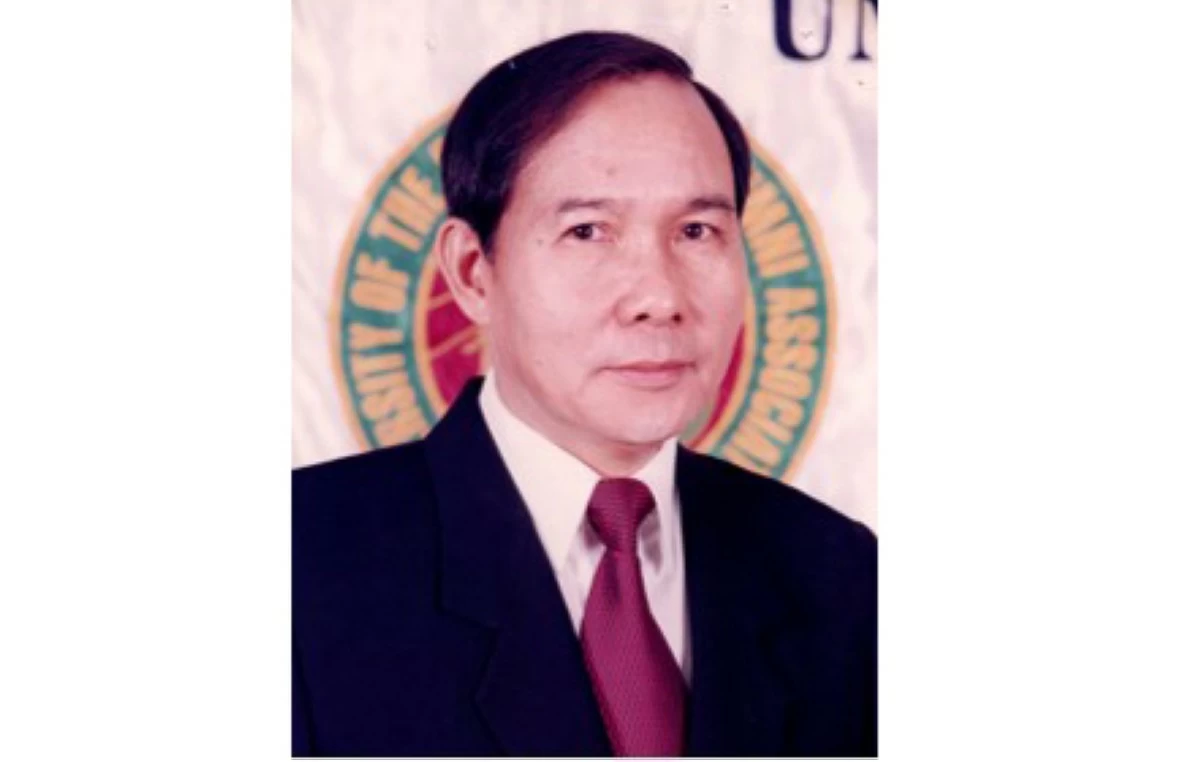
(Lt. Gen. Jaime S. de los Santos served with distinction as a military professional, 42nd Commanding Gen. Philippine Army, 1st Force Commander, UN Multi-National Peacekeeping Force in East Timor, former member, UP Board of Regents and Professorial Lecturer II (part-time), UP-Diliman.)