






 Entertainment
Hallyuwood
Over 6,500 cops to be deployed, 31 buildings under watch for BTS' live event in Seoul
Entertainment
Hallyuwood
Over 6,500 cops to be deployed, 31 buildings under watch for BTS' live event in Seoul
Over 6,500 cops to be deployed, 31 buildings under watch for BTS' live event in Seoul



More than 6,500 police officers will be deployed while 31 buildings around the Gwanghwamun Square in Seoul are under watch for “BTS The Comeback Live: Arirang” on March 21.
The “BTS The Comeback Live: Arirang” is a concert to mark K-pop superstars BTS’ comeback. It will be held on March 21, 8 p.m. KST (7 p.m. Philippine time) at Gwanghwamun Square in Seoul and will be live streamed on Netflix.
The Seoul Metropolitan Police Agency announced the implementation of plans to ensure the safety and security of people. It is estimated that up to 260,000 people may flock to the area to be part of the epic event.
Over 6,500 police officers, including about 70 riot police units as well as traffic, criminal, crime prevention, and special forces, will be deployed for the event, Korean media reported.
About 5,400 pieces of equipment, including aerial observation vehicles, broadcast lighting vehicles, and foldable fences, will also be mobilized.
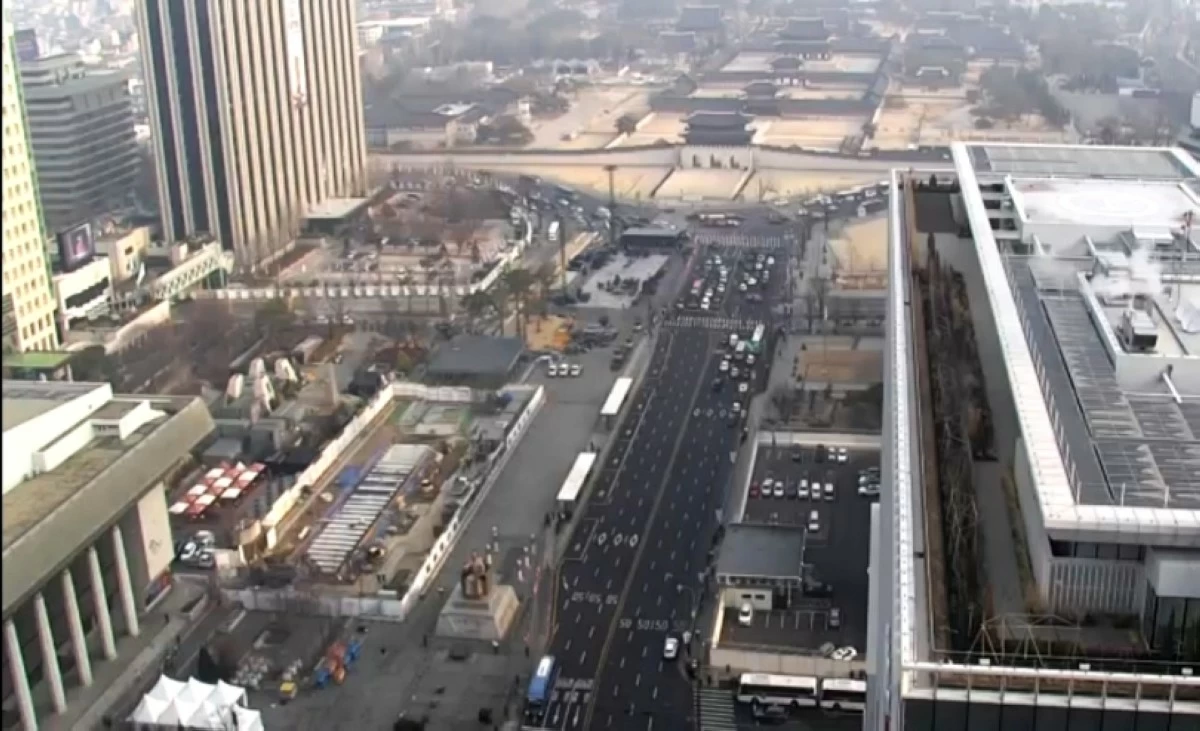

The police will install metal detectors at 31 official entrances starting at 7 a.m. KST on March 31 and deploy special police units and riot police inside the gates.
To completely block threats such as vehicle ramming attacks, authorities will deploy steel spikes, signboards, barricades, and police buses around the event venue.
If the crowd exceeds two people per square meter, the 31 official entrances will be closed to block entry.
Vehicles will be prohibited on the Gwanghwamun to Seoul City Hall section of Sejong-daero for 33 hours, from 9 p.m. on March 20 until 6 a.m. on March 22.
In addition, the police and the Seoul Metropolitan Government have stepped in to block the so-called viewing tactics, such as entering through building entrances indirectly or viewing from rooftops.
The two government agencies have designated 31 buildings near Gwanghwamun Square as targets for intensive management and are currently consulting with security personnel at each building regarding safety management measures.
The police met with the management of six buildings immediately adjacent to the square and requested their cooperation in closing the front entrances on March 21 and opening only the rear entrances.
This is intended to prevent spectators from bypassing the 31 official entrances to enter the concert venue by entering through the back doors and exiting through the front doors.
The Seoul Metropolitan Government has requested access restrictions on upper floors, including rooftops, for 24 buildings excluding public facilities.
This measure is intended to prevent accidents that could occur if fans unable to obtain tickets attempt to enter rooftops or balconies without permission to watch the performance.
Under the fire safety regulations, completely closing a rooftop without an automatic opening/closing device constitutes a violation of the obligation to secure emergency evacuation routes.
The Seoul Metropolitan Government’s Architecture Planning Division has been visiting sites individually since March 13 to inspect the installation of automatic rooftop opening/closing devices and is coordinating customized management plans for each building.